How To Know When To Replace Old Cookware: Signs & Tips
Replace cookware when nonstick peels, pans warp, rust appears, or heat cooks unevenly.
I’ve spent years testing pans and pots in busy kitchens, and I’ll walk you through exactly how to know when to replace old cookware. You’ll learn clear inspection steps, material-specific red flags, safety risks, and smart choices for new cookware based on real use and expert guidance. This guide blends practical experience, easy checks you can do at home, and simple rules to help you decide when to replace cookware confidently.
How to know when to replace old cookware: Key signs
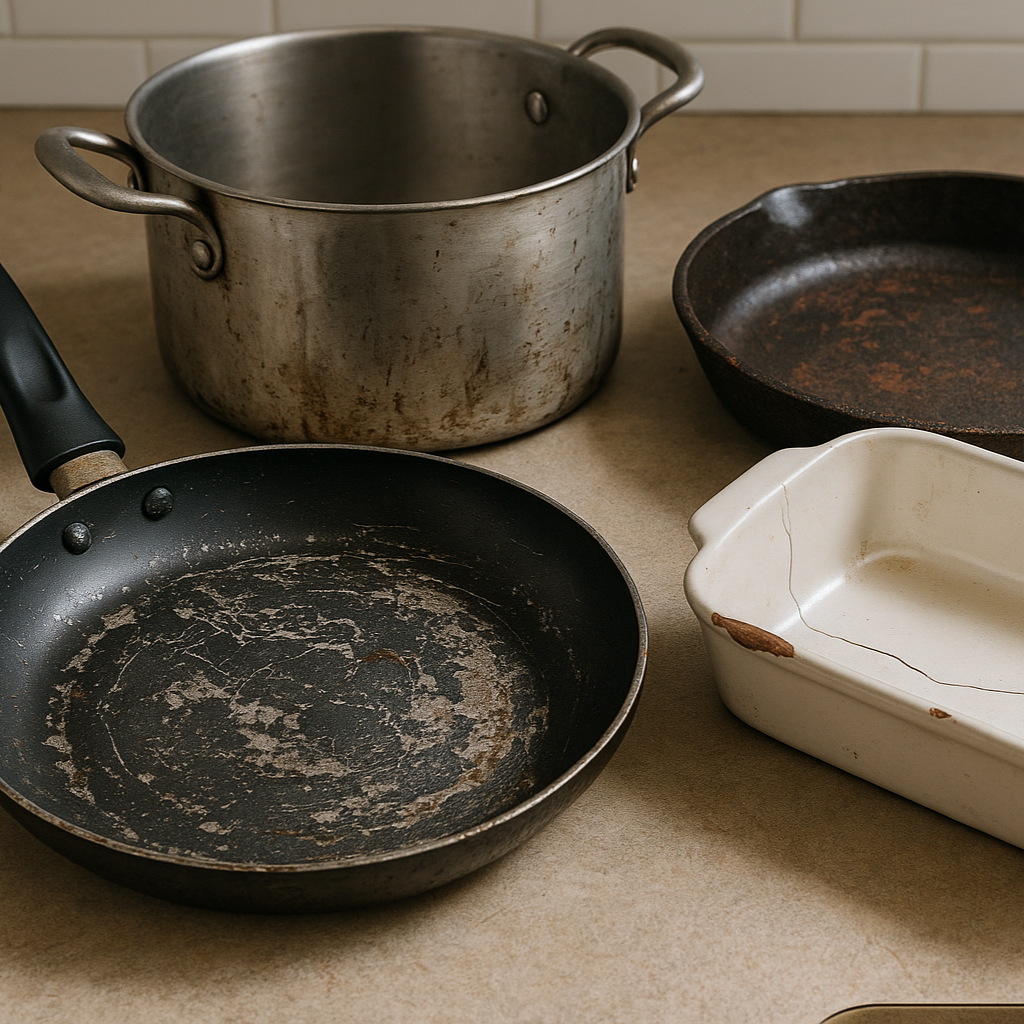
Start with a basic inspection. Look for peeling, flaking, or missing coating on nonstick pans. Those are immediate signals that you need to replace them.
Check for warping. Place pans on a flat surface and see if they wobble. Warped pans heat unevenly and can lead to burnt spots. If a pan doesn’t sit flat, it is time to replace it.
Look closely at handles and rivets. Loose, cracked, or missing handles are safety hazards. If the handle cannot be tightened or the rivets are corroded, replace the cookware.
Watch for rust and deep scratches. Surface rust on steel or pitting on cast iron means the metal is compromised. Deep scratches in enamel or protective coatings let acid react with metal. Replace items with hard-to-clean rust or deep damage.
Test heat distribution. If food cooks unevenly or hot spots appear even on moderate heat, the base is likely damaged. Uneven heat is a sign to stop using that cookware and get a new piece.
How to know when to replace old cookware comes down to safety, performance, and repairability. If a simple fix can’t restore safe function, replacement is the smarter, safer choice.
Material-specific red flags and timelines
Different materials age differently. Knowing each one helps you decide when to replace it.
Nonstick (PTFE)
- Look for flaking or peeling. Once coating peels, stop using it.
- If pans lose nonstick performance and require excessive oil, consider replacement.
- Typical lifespan ranges from 1 to 5 years depending on quality and use.
Stainless steel
- Replace if warped, heavily pitted, or if base delaminates.
- Minor scratches are cosmetic. Deep pits from corrosion or repeated bleach exposure are problematic.
- Good stainless can last decades if cared for.
Cast iron and carbon steel
- Replace only when cracks appear or metal is so thin it warps.
- Rust is fixable, but severe pitting weakens structure and warrants replacement.
- Well-maintained cast iron can last generations.
Enameled cookware
- Replace if enamel chips expose bare metal. Small chips can expand over time.
- Stains are cosmetic; chips that reach the base metal are safety concerns.
Copper
- Replace if base layers delaminate or if lining (often tin or stainless) wears through.
- Lining wear requires repair or replacement for food safety.
How to know when to replace old cookware varies by material. High-use, cheaper pieces will need replacing more often than high-quality items.

Safety and health concerns to prioritize
Health and safety should guide many replacement decisions.
Toxic coatings
- Flaked or peeling nonstick coatings can end up in food. Replace immediately if this happens.
- If you’re unsure of a pan’s coating age or composition, opt for replacement for peace of mind.
Metal exposure
- Exposed base metal from chipped enamel or worn linings can react with acidic foods.
- This reaction may alter flavor and cause discoloration. Replace where lining is gone.
Structural failure
- Loose handles or cracked pans can cause burns and spills.
- Cooking accidents from failing cookware are preventable. Replace unsafe items right away.
Cross-contamination
- Deeply scored surfaces trap food and bacteria. If cleaning can’t fully restore hygiene, replace the piece.
When you ask how to know when to replace old cookware, always put safety first. If continued use risks health or injury, replace it now.

How to choose replacement cookware wisely
Pick cookware that matches your cooking style, budget, and safety needs.
Match materials to use
- Choose cast iron or carbon steel for high-heat searing and oven use.
- Pick stainless steel for browning, deglazing, and durability.
- Select quality nonstick for low-fat cooking and delicate foods, replacing more often.
Check construction
- Look for thick, bonded bases for even heat.
- Avoid very thin metals that warp easily.
- Seek solid handles that feel secure and stay cool on stovetops.
Consider coatings and health claims
- Prefer PTFE-free options if you want to avoid traditional nonstick chemicals.
- Read warranties and manufacturer care guidance to extend life.
Budget vs. long-term value
- A mid-range pan often outperforms a cheap one and saves money over time.
- Spend more on core pieces you use daily and save on specialty items.
When deciding how to know when to replace old cookware, plan purchases around longevity and how often you’ll use the item. A smart buy now reduces replacements later.

Extend life: repair and maintenance tips
Good care delays replacement and improves safety.
Cleaning
- Clean gently. Use nonabrasive sponges on nonstick and enamel.
- For stuck food, soak rather than scrub hard.
Seasoning and restoration
- Season cast iron and carbon steel after cleaning to prevent rust.
- Remove light rust with steel wool, then season. Replace if pitting is severe.
Handle and rivet maintenance
- Tighten loose screws and replace missing screws or rivets when possible.
- If handles are welded and cracking, replacement is safer.
Preventive habits
- Avoid high heat on empty nonstick pans.
- Use wood or silicone utensils to protect coatings.
- Store pans carefully; avoid stacking that scratches surfaces.
Knowing how to know when to replace old cookware includes learning basic repairs. Fix small issues early and replace when repairs don’t restore safe use.
Cost vs value: repair or replace decision steps
A quick decision framework helps.
Step 1: Assess safety
- If flaking coating, exposed metal, or broken handles exist, replace.
Step 2: Check repair cost
- If repair equals or exceeds replacement, buy new.
Step 3: Consider performance
- If pan cooks unevenly or warps, replacement is worth it.
Step 4: Think long term
- Sometimes upgrading to better-quality cookware saves money and time.
Use this simple guide to answer how to know when to replace old cookware in practical terms. If your cookware fails safety checks or loses key function, replacement is the best value.
Frequently Asked Questions of how to know when to replace old cookware
How long should nonstick pans last before I replace them?
Nonstick pans typically last 1 to 5 years depending on quality and usage. Replace sooner if the coating peels, flakes, or food sticks heavily.
Is scratched stainless steel dangerous and when should I replace it?
Minor scratches in stainless steel are cosmetic and safe. Replace if you see deep pitting, delamination, or warped bottoms that affect cooking.
Can I fix a warped pan or should I replace it?
Minor warping may be tolerable, but most warped pans cook unevenly and should be replaced. Repair is rarely cost-effective for low-cost pans.
Is it safe to use a pan with a loose handle?
No, a loose handle is a safety risk. Tighten the handle if possible, but replace the pan if the attachment is corroded or fails to hold.
When should I replace cast iron or carbon steel cookware?
Replace cast iron only for cracks or extreme thinning from pitting. Most wear can be fixed by cleaning and re-seasoning unless there is structural damage.
Conclusion
Regular checks, simple tests, and a few practical rules make it easy to decide how to know when to replace old cookware. Focus on safety first, then performance and repair cost. If a pan flakes, warps, leaks heat, or becomes unsafe, replace it without delay. Take what you’ve learned here into your kitchen: inspect monthly, fix small issues early, and invest in better pieces for items you use daily. Share your experiences or questions below, and consider subscribing for more hands-on kitchen guides and practical buying tips.