Microwave power levels control how often the magnetron runs, changing heat intensity by percentage.
I’ve worked with kitchen tech for years and tested many settings. This guide explains microwave power levels? clearly and simply. You will learn what each setting means, how to use them for real cooking, and tips I learned the hard way. Read on to make your microwave smarter, not just faster.
How microwave power levels? actually work
Microwaves heat food by sending waves that excite water molecules. The magnetron creates those waves. Power levels change how long the magnetron runs in each cycle. At 100% the magnetron runs nearly all the time. At 50% it cycles on and off, giving gentler heat.
Think of it like a faucet. Full power is a steady strong flow. Lower power is a shorter stream in pulses. This changes how heat spreads inside food. That reduces hotspots and prevents overcooking.
My tests show that many ovens labeled 50% run in 10-second pulses. Others use longer cycles. Check your manual if you want the exact timing. Knowing this helps with delicate tasks like melting chocolate.

Common power settings and what they mean
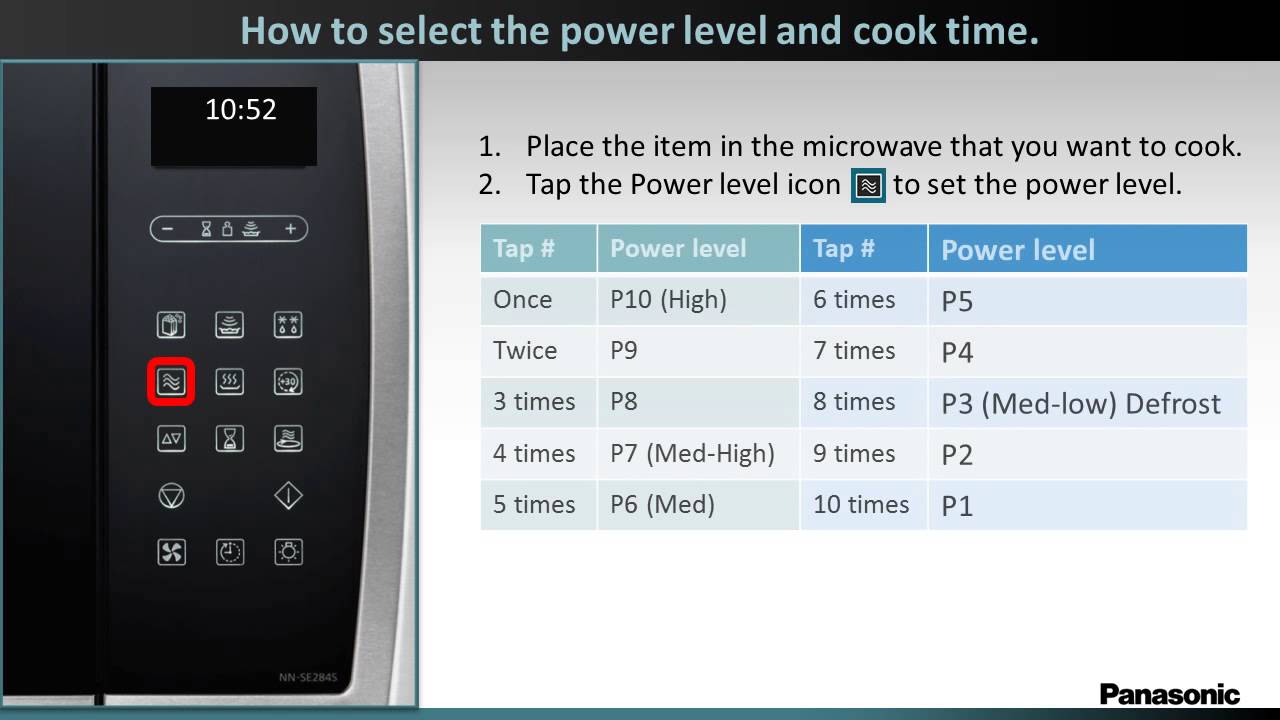
Most microwaves use simple numbered or percentage settings. Here are the usual ones:
- 100% or High
- Full magnetron output. Best for boiling, reheating, and browning-safe tasks. Use for quick heating.
- 70% to 80% or Medium-High
- Good for cooking casseroles and denser foods. Reduces surface overcooking.
- 50% or Medium
- Ideal for cooking meats slowly and defrosting small items. Helps heat evenly.
- 30% or Low
- Use for simmering sauces and finishing cooking. Gentle and controlled.
- 10% or Defrost
- Lowest power, focused on thawing without cooking the edges.
Labeling varies by brand. The same percentage can feel different across models. If you cook a lot, test your microwave by boiling 1 cup of water at different settings to see timing differences.

Practical uses and step-by-step examples
Here are clear, simple steps you can use right away.
-
Reheating leftovers (best practice)
- Cover food with a lid or damp paper towel. Use 70% to 80% power for 1–2 minutes. Stir or rotate halfway to avoid cold spots.
-
Defrosting meat safely
- Set to 10% or defrost mode. Check every few minutes. Remove thawed parts to prevent cooking.
-
Melting chocolate or butter
- Use 30% power. Heat in 15–20 second bursts. Stir between bursts until smooth.
-
Cooking eggs (scrambled)
- Mix eggs in microwave-safe bowl. Cook on 50% power for 30 seconds, stir, then 15–20 second bursts until set.
-
Steaming vegetables
- Add a splash of water. Cover and use 80% power for short bursts. Check crispness every 30 seconds.
I learned that high power melts the top while leaving the middle cold. Lower power and stirring fixed that. Try my steps and adjust times for your model.
Safety, myths, and best practices
Microwaves are safe when used properly. The oven shields and seals keep radiation inside. Still, follow these rules:
-
Use microwave-safe containers.
- No metal or foil unless your manual says otherwise.
-
Avoid super-high heat for delicate foods.
- Prevent explosions from sealed items like eggs in shells.
-
Let food rest after heating.
- Standing time evens temperature and finishes cooking.
Common myths to ignore:
-
Myth: Higher power always cooks faster and better.
- Fact: Faster can mean uneven cooking and dried edges.
-
Myth: Microwaves destroy nutrients.
- Fact: Shorter cook times often preserve nutrients better than long boiling.
I once tried microwaving a whole potato on full power and it burst. I now use medium settings and pierce the skin. Small habits like that keep your food safe.
Troubleshooting common problems
If food is soggy, overcooked, or cold in the middle, try these fixes:
-
Cold center, hot edges
- Use lower power and longer time. Stir or rotate food mid-cycle.
-
Microwave not heating properly
- Try boiling water to test. If it barely heats, the magnetron might be failing. Seek repair.
-
Uneven heating
- Use a turntable or rotate food by hand. Use shallow, even layers.
-
Sparking or arcing
- Remove foil and metal. Check for damaged cookware. Stop the oven immediately if sparks appear.
When things go wrong, take small steps. Test with water and adjust power. I’ve fixed many issues by simply reducing power and increasing time.

Frequently Asked Questions of microwave power levels?
What do microwave power levels mean?
They control how often the magnetron runs during each cycle. Lower levels mean the magnetron runs less, giving gentler heat.
Can I cook everything on high power?
Not always. High power cooks fast but can overcook surfaces and leave centers cold. Use lower power for thick or delicate foods.
How do I convert stove recipes for the microwave?
Reduce power and shorten cook bursts. Test in short intervals and stir. Start with 50% power for dense foods and adjust.
Is it better to defrost at room temperature or in the microwave?
Microwave defrosting is faster and safer. Use low power and check often to avoid partial cooking.
How do I check my microwave’s real power output?
Boil 1 cup of water for 1 minute at full power and see if it reaches rolling boil. Compare times across settings to learn your oven’s cycles.
Conclusion
Understanding microwave power levels? turns your oven into a smarter tool. Use lower settings to cook evenly, and higher settings for quick tasks. Test your model, use simple steps I shared, and adjust as you go. Try one tip today: reheat leftovers at 80% and stir halfway. If this helped, leave a comment or subscribe for more kitchen tips.