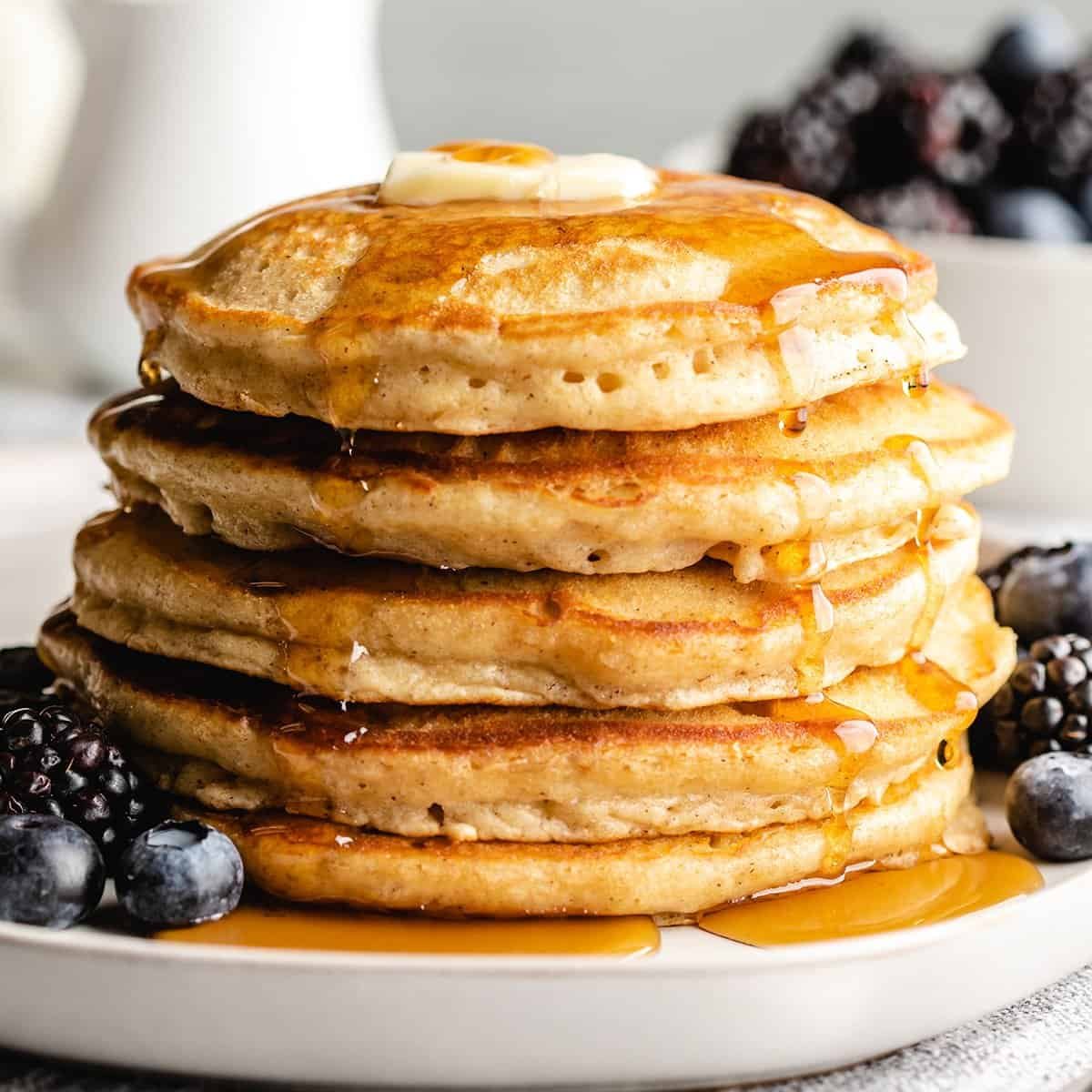
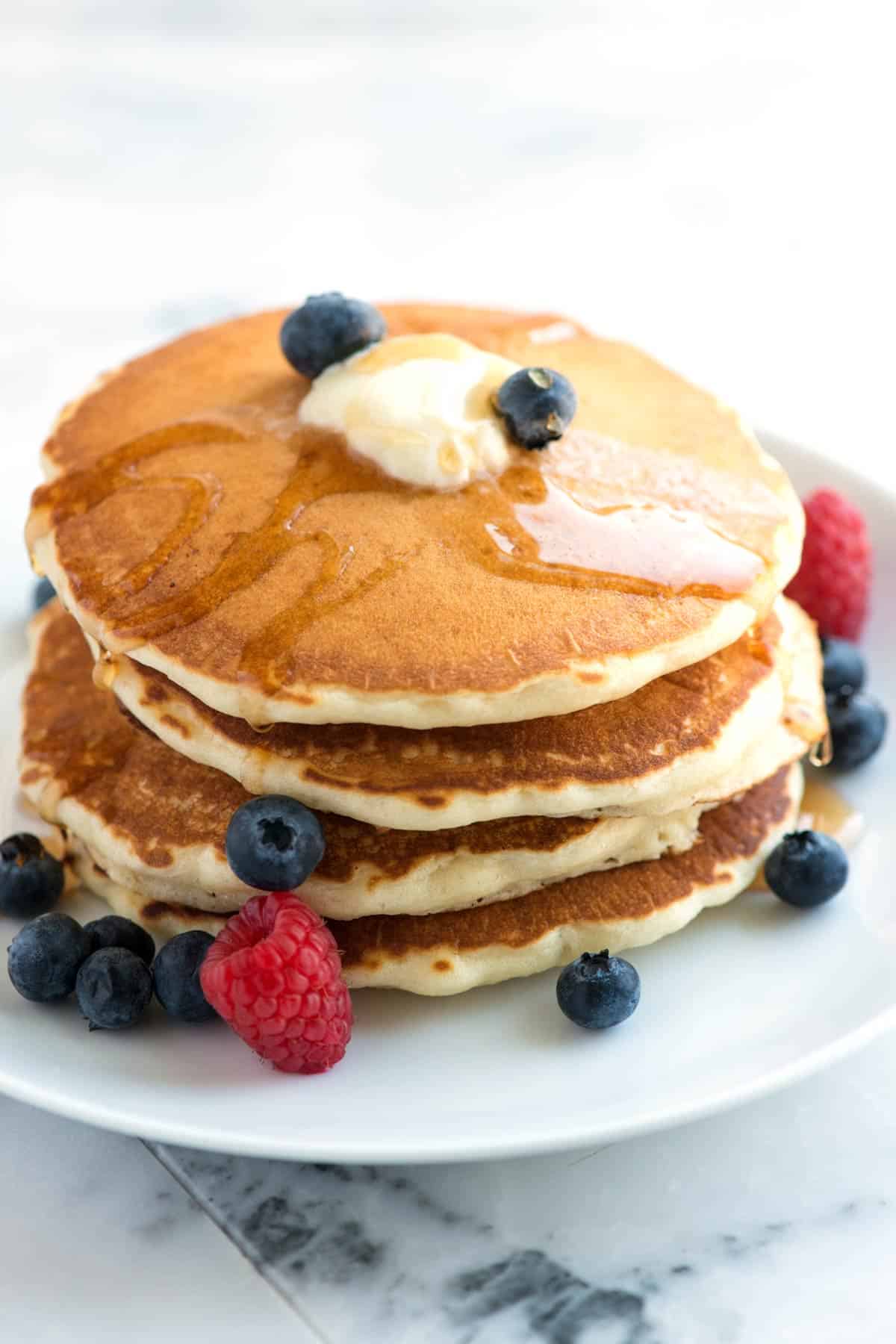
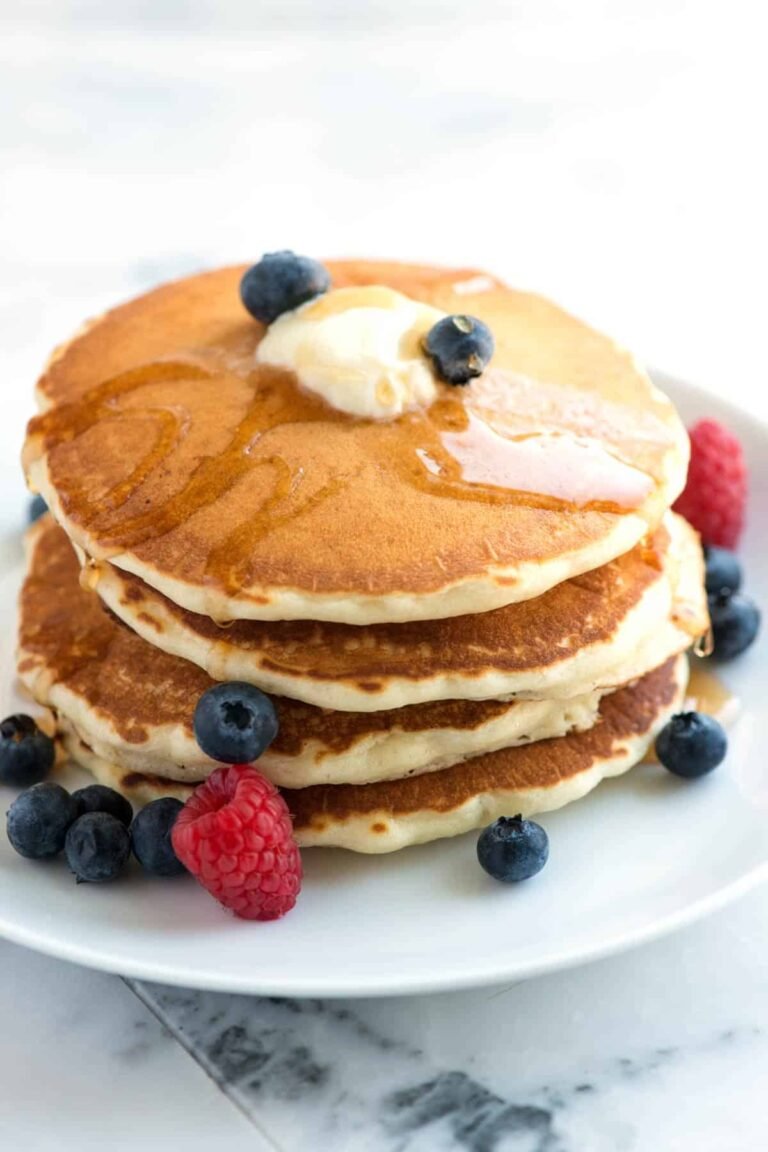
A homemade pancake recipe uses simple ingredients like flour, eggs, milk, baking powder, and butter to create soft, fluffy pancakes with better control over flavor and texture than many ready-made mixes.
Across the United States, pancakes are a familiar breakfast food served in homes, diners, and restaurants. A good homemade pancake recipe does not require special equipment or complex steps. The key is understanding how ingredients work together and how small choices affect the final texture.
This guide explains how to make pancakes from scratch, how to adjust the batter for different preferences, and how to fix common problems such as flat, dry, or unevenly cooked pancakes. The goal is a reliable method that works for everyday breakfasts, weekend meals, and family gatherings.
Source: helenbackcafe.com
What Makes A Homemade Pancake Recipe Work
A homemade pancake recipe works because each ingredient has a specific job. Flour creates structure, eggs add binding and richness, milk provides moisture, butter adds flavor, and baking powder creates bubbles that make pancakes rise.
The texture of a pancake depends on balance. Too much flour can create a heavy pancake, while too much liquid can make the batter spread too thin. The best batter is thick enough to slowly pour but loose enough to spread slightly on a hot pan.
Source: quickrecipecook.com
Flour
Provides the main structure of the pancake. All-purpose flour is commonly used because it creates a soft but stable texture.
Baking powder
Creates carbon dioxide bubbles that help pancakes become light and fluffy.
Eggs and milk
Add moisture, help ingredients combine, and contribute to the final texture.
The Role Of Mixing
Mixing affects pancake texture. When flour is mixed with liquid, gluten begins forming. Some gluten is useful because it gives pancakes structure, but too much can make them chewy instead of tender.
A few small lumps in pancake batter are normal. The goal is to combine ingredients until no large dry pockets remain.
Better approach
Stir gently and stop once the ingredients are combined.
Simple Ingredients For A Classic Homemade Pancake Recipe
A basic homemade pancake recipe uses ingredients that are commonly found in American kitchens. Measuring ingredients accurately helps create consistent results, especially when making pancakes often.
The ingredient list can be adjusted based on taste, dietary needs, and the type of pancake you want to make. Classic pancakes are usually mild in flavor, which makes them easy to customize with toppings or mix-ins.
Source: core.25carroll.com
2 cups all-purpose flour
Creates the foundation of the pancake batter.
2 tablespoons sugar
Adds mild sweetness and helps browning.
1 tablespoon baking powder
Helps pancakes rise and become fluffy.
2 large eggs
Improves structure and richness.
1 3/4 cups milk
Provides the liquid needed to form batter.
4 tablespoons melted butter
Adds flavor and a softer texture.
Ingredient Changes That Affect Results
Different ingredients create different pancake styles. Buttermilk can add a slight tang and may create a tender texture. Whole milk can produce a richer taste, while lower-fat milk creates a lighter result.
Adding extra sugar can increase browning but may also make pancakes cook faster on the outside. Balance is important when changing the basic recipe.
For thicker pancakes
Use slightly less liquid or allow the batter to rest briefly before cooking.
For thinner pancakes
Add a small amount of extra milk until the batter reaches the desired consistency.
How To Make Homemade Pancakes Step By Step
The process is simple: prepare the batter, heat the cooking surface, cook each pancake, and serve while warm. The most important parts are keeping the batter balanced and controlling the heat.
A rushed process often causes uneven pancakes. Giving the pan time to heat and avoiding repeated flipping creates better results.
Source: recipeshype.com
Step 1: Combine dry ingredients
Mix flour, sugar, baking powder, and salt in a bowl.
Step 2: Combine wet ingredients
Whisk eggs, milk, and melted butter in a separate container.
Step 3: Make the batter
Add wet ingredients to dry ingredients and stir gently.
Step 4: Cook pancakes
Pour batter onto a heated lightly greased pan and cook until bubbles appear.
Step 5: Flip once
Turn the pancake and cook until the second side is golden.
How To Know When A Pancake Is Ready To Flip
A pancake is usually ready to flip when bubbles appear across the surface and the edges look slightly dry. Flipping too early can create uneven cooking because the center may still be liquid.
After flipping, the second side often cooks faster because the pancake has already gained heat.
Good sign
The pancake lifts easily with a spatula and holds its shape.
Common Homemade Pancake Problems And Fixes
Most pancake problems come from a few causes: incorrect measurements, poor mixing, or unsuitable cooking heat. Finding the cause makes it easier to improve the next batch.
Pancakes are forgiving, and small adjustments can create noticeable improvements without changing the entire recipe.
Source: recipesdina.com
Flat pancakes
Possible causes include old baking powder, thin batter, or insufficient heat.
Dry pancakes
Too much flour or overcooking can remove moisture.
Tough pancakes
Overmixing can create excess gluten and a firmer texture.
Burned outside, raw inside
The pan temperature may be too high.
How To Adjust Batter Consistency
If pancake batter is too thick, add milk one tablespoon at a time. If it is too thin, add a small amount of flour. Making gradual changes prevents overcorrecting.
The ideal batter should flow slowly from a spoon instead of running like water.
Too thick
Add small amounts of liquid until the batter spreads naturally.
Too thin
Add flour carefully and allow the batter to rest briefly.
Ways To Customize Homemade Pancakes
A classic pancake recipe can become many different breakfasts with simple additions. The best changes maintain the balance between dry and wet ingredients.
Add-ins should be used carefully because too many heavy ingredients can prevent pancakes from cooking evenly.
Source: Inspired Taste
Fruit pancakes
Fresh berries or sliced bananas add natural sweetness and flavor.
Chocolate pancakes
Small amounts of chocolate chips can create a sweeter breakfast option.
Whole grain pancakes
Replacing some all-purpose flour with whole wheat flour changes texture and flavor.
Keeping Pancakes Soft After Cooking
Pancakes can lose moisture when exposed to air for too long. Keeping cooked pancakes covered helps slow moisture loss while preparing the rest of the batch.
For larger breakfasts, pancakes can be kept warm briefly in a low oven, but long holding times may dry them out.
Best practice
Serve pancakes soon after cooking for the softest texture.
Frequently Asked Questions
Q
Can I make homemade pancakes without a pancake mix?
Yes. A homemade pancake recipe uses basic pantry ingredients and allows more control over sweetness, thickness, and texture.
Q
Why are my homemade pancakes not fluffy?
Flat pancakes may result from old baking powder, overmixing, thin batter, or cooking at the wrong temperature.
Q
Should pancake batter rest before cooking?
A short rest can help flour absorb liquid and may improve texture, although it is not required for a simple pancake recipe.
Q
Can I store leftover homemade pancakes?
Yes. Cooked pancakes can be stored in the refrigerator for a short period or frozen for longer storage. Reheat gently to avoid drying them out.
Q
What is the best pan for making pancakes?
A flat skillet or griddle with even heat distribution works well because it helps pancakes cook consistently.
✦ Wrapping Up
Conclusion
A homemade pancake recipe becomes reliable when you understand the role of each ingredient and follow a simple cooking method. The biggest improvements usually come from gentle mixing, correct batter thickness, and steady heat.
Once you learn the basic method, you can create many variations while keeping the same foundation. Homemade pancakes are flexible, affordable, and easy to adjust for different tastes.
💡 Key Takeaway
Start with the classic recipe, focus on batter consistency and cooking temperature, then adjust flavors and ingredients based on your preference.