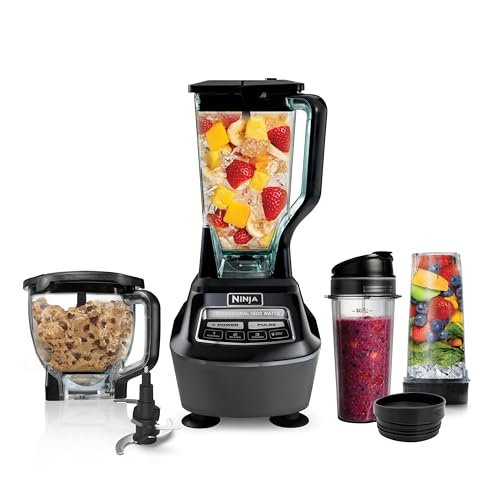
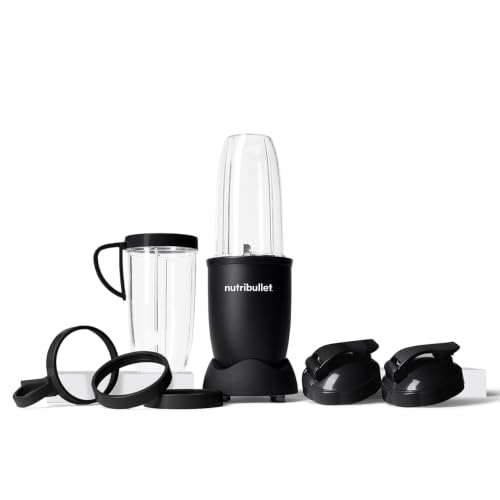

Is NutriBullet Pro 900 Good?
Yes, the Pro 900 is worth considering for basic shakes and fruit blends. I would put it on my short list for a small kitchen or a first personal blender. Its appeal is clear: add your food and liquid, fit the blade, then press and twist to blend. There is no menu to learn. The standard US product page lists a 900-watt base with 32-ounce and 24-ounce cups, though retail kits can vary. Check the box contents for the exact offer you choose.
For a breakfast of milk, banana, and peanut butter, I would value that simple setup. For a post-gym shake, I would also prefer blending in the cup I plan to drink from. Those are examples of how I would use it, not reports from a hands-on trial. The key question is how much help you want from the base. In the NutriBullet Pro 900 vs Pro 1000 choice, the 900 suits someone who likes to judge when a blend is done. Think of it as a plain light switch: easy to grasp, with few choices to slow you down.
What Makes It Stand Out
- 900-watt motorThe rated motor power is 900 watts. That figure alone does not prove blend quality.
- Press-and-twist startFit the filled cup and blade to the base, then press and twist to start.
- Direct blend controlYou decide when to stop the blend rather than rely on a timed recipe cycle.
- Personal cup formatBlend in a cup rather than a large family pitcher.
- Removable bladeThe blade twists off the cup for serving and cleaning.
My Recommendation
I would choose the Pro 900 for simple shakes, direct control, and a lower total price when offers favor it. Check the exact kit first.
| Best For | Why |
|---|---|
| First-time buyers | Few controls make the setup easy to grasp. |
| Basic shake routines | A timed cycle may add little to a simple recipe. |
| Price-focused shoppers | It makes sense if the verified kit costs less. |
Is NutriBullet Pro 1000 Good?
Yes, the Pro 1000 makes sense if you want a set blend cycle. Its main draw is the way it runs, rather than the small rise in rated power alone. The Pro 1000 manual describes a one-minute cycle that starts when you lock the cup onto the base. You can stop it early. That gives the routine a clear end point, though you should stay near the unit while it runs. The manual also lists an easy-twist blade and a 1000-watt rating.
For a morning with a packed lunch and a school run, I would like having one less time cue to track. For a light shake, I would still stop early if it were ready. These are practical use cases, not personal test results. I would not pay much more just for the extra 100 watts. That is about an 11% rise in the rating, not proof of an 11% gain in speed or smoothness. In the NutriBullet Pro 900 vs Pro 1000 decision, the timed cycle is the stronger reason to upgrade. Before buying, confirm the model, US electrical rating, and box contents. The supplied second shopping link points to a different product.
What Makes It Stand Out
- 1000-watt motorThe rated power is 100 watts higher than the Pro 900.
- One-minute cycleThe documented blend cycle ends on its own after one minute.
- Early stopYou can end the cycle before the full minute.
- Easy-twist bladeThe removable blade assembly screws onto the cup.
- Liquid-based blendingThe manual calls for liquid and rules out use as a dry grinder or standalone ice crusher.
My Recommendation
I would choose a verified Pro 1000 for its timed cycle when the price gap is small. Confirm the exact model and US electrical rating before buying.
| Best For | Why |
|---|---|
| Daily smoothie makers | A timed cycle adds structure to a repeat routine. |
| Buyers who dislike timing blends | The cycle stops without a separate timer. |
| Shoppers comparing close prices | The extra control feature may justify a small premium. |
NutriBullet Pro 900 vs Pro 1000: Side-by-Side Comparison
The NutriBullet Pro 900 vs Pro 1000 comparison is mostly about control and buying value. Neither a watt number nor a timed cycle can tell us the full story of texture.
The scores below reflect my feature-based judgment. They are not lab results. For NutriBullet Pro 900 vs Pro 1000, I would weigh the exact kit and price alongside the base.
Motor Power: How Big Is the Gap?
The NutriBullet Pro 900 vs Pro 1000 power gap is modest on paper.
| Feature | Pro 900 | Pro 1000 |
|---|---|---|
| Rated motor power | 900 watts | 1000 watts |
| Rating gap | Baseline | 100 watts more |
| Proof of smoother results | Requires controlled testing | Requires controlled testing |
⭐ Pro 900 – 8/10 | Pro 1000 – 8.5/10
The Pro 1000 has the edge in rated power, but the blend-quality gap remains unproven here.
Controls: Which Makes the Routine Easier?
Controls are the clearest difference in NutriBullet Pro 900 vs Pro 1000.
| Feature | Pro 900 | Pro 1000 |
|---|---|---|
| Start method | Press and twist | Twist to lock and start |
| Timed blend cycle | No | One minute |
| Stop before done | User stops the blend | User can end the cycle early |
⭐ Pro 900 – 8/10 | Pro 1000 – 9/10
The Pro 1000 wins for a defined cycle; the Pro 900 suits direct control.
Daily Drinks: Which Fits Your Recipes?
For NutriBullet Pro 900 vs Pro 1000, recipe needs matter more than a small watt gap.
| Feature | Pro 900 | Pro 1000 |
|---|---|---|
| Basic shake routine | Simple controls suit short blends | Cycle can be stopped early |
| Repeat smoothie routine | You choose each blend length | Timed cycle offers a set end point |
| Measured texture winner | Not established | Not established |
⭐ Pro 900 – 8/10 | Pro 1000 – 8/10
This is a tie without a matched recipe test; choose the control style you prefer.
Cups and Kits: What Should You Check?
A NutriBullet Pro 900 vs Pro 1000 deal can change once you count the useful extras.
| Feature | Pro 900 | Pro 1000 |
|---|---|---|
| Main format | Personal blending cup | Personal blending cup |
| Exact cup and lid count | Check the selected retail kit | Check the selected retail kit |
| Replacement part fit | Match the exact model | Match the exact model |
⭐ Pro 900 – 8/10 | Pro 1000 – 8/10
Neither wins by name alone; the best kit includes the cups and lids you will use.
Cleanup: Which Creates Less Work?
Cleanup is close in NutriBullet Pro 900 vs Pro 1000 because both use a cup and removable blade.
| Feature | Pro 900 | Pro 1000 |
|---|---|---|
| Parts to handle after blending | Cup and blade assembly | Cup and blade assembly |
| Blade access | Twists off the cup | Twists off the cup |
| Care approach | Follow the exact unit’s care guide | Follow the exact unit’s care guide |
⭐ Pro 900 – 8/10 | Pro 1000 – 8/10
Cleanup is a tie in this feature review; rinse promptly to keep food from drying in place.
Buying Value: Which Deserves Your Money?
The NutriBullet Pro 900 vs Pro 1000 value call needs a correct listing and a real price gap.
| Feature | Pro 900 | Pro 1000 |
|---|---|---|
| Main reason to buy | Simple control at a good price | A timed cycle at a fair premium |
| Supplied shopping link | Identifies a Pro 900 special edition | Identifies a Pro+ 1200W instead |
| Best next check | Confirm price and box contents | Find a correct Pro 1000 listing first |
⭐ Pro 900 – 8/10 | Pro 1000 – 8/10
The Pro 900 is the clearer supplied purchase option; Pro 1000 value needs a verified listing.
Final Verdict: Which Should You Buy?
My NutriBullet Pro 900 vs Pro 1000 recommendation is simple: choose the Pro 900 for direct control and a good verified deal. Choose the Pro 1000 if its one-minute cycle will ease your daily routine and the price gap is small.
The Pro 1000 has the feature edge, but I would not upgrade for 100 extra watts alone. Neither has a proven texture win in this review. Also, replace the supplied second purchase link before using this article to sell a Pro 1000; it identifies a Pro+ 1200W.