Both are great: Artisan offers more power and capacity, Classic is compact and budget-friendly.
I remember struggling to pick a mixer when I started baking regularly. The KitchenAid Artisan vs KitchenAid Classic Mixer is the choice most people face: one is larger and more versatile, the other is smaller and simpler. I tested both at home for cakes, bread, and daily dough work. I’ll share what I learned so you can pick the best fit for your kitchen and baking style.

KitchenAid Artisan Series 5 Quart…
Fabric Type: Zinc, Stainless Steel Choose from all the color options to find the one that best matches your style and personality. The power hub…
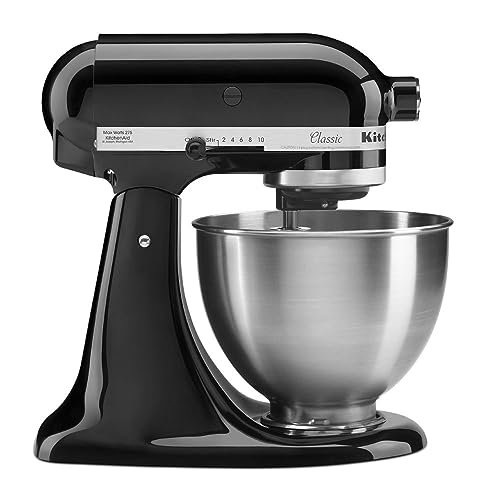
KitchenAid Classic Series 4.5 Quart…
Built to take it all on with the durable and built-to-last metal construction, and 59 touchpoints around the mixer bowl for great mixing results. 4.5…
Is KitchenAid Artisan Good?
Yes — for most home bakers, the KitchenAid Artisan is a clear yes. It is generally best for people who bake frequently, make larger batches, or want more power and attachment options. Its 5-quart bowl handled dough, cookie batter, and whipped cream with ease. I found the Artisan made short work of heavy bread dough that left my older hand mixer gasping. Overall, it suits anyone who wants an all-in-one, long-lasting stand mixer.
I have two small anecdotes. Once I made three dozen cinnamon rolls in one go: the Artisan mixed the dough evenly and the dough hook cleared the bowl cleanly. Another time, I used the flat beater and paddle for a dense brownie batter; the result was smooth and uniformly mixed without overworking the batter. Those moments convinced me the KitchenAid Artisan is a serious workhorse in a home kitchen.
What Makes It Stand Out / Key Features
- 5-quart stainless-steel bowl — fits medium to large batches.
- 325-watt motor — strong enough for bread dough and thick batters.
- 10-speed control — from gentle folding to high-speed whipping.
- Tilt-head design — easy access to the bowl and attachments.
- Wide range of optional attachments — pasta maker, grinder, and more.
What I Like
- Handles heavy dough and large batches without stalling.
- Consistent mixing — less scraping and re-mixing needed.
- Solid metal build feels durable and premium.
- Easy to swap attachments and accessories.
- Many color choices let you match your kitchen style.
What Could Be Better
- Bulky — needs counter or storage space.
- Heavier than smaller models — not ideal if you move it often.
- Higher price than the Classic model.
My Recommendation
Pick the Artisan if you bake often, want power and capacity, and plan to use attachments. Good value for frequent bakers.
| Best For | Why |
|---|---|
| Frequent bakers | Stronger motor and 5-quart capacity handle larger recipes. |
| Attachment users | Supports many optional tools for pasta, ice cream, and more. |
| Gift for serious home cook | Durable build with long-term reliability. |
Is KitchenAid Classic Good?
It depends — the KitchenAid Classic is good if you bake occasionally or have limited space. The Classic has a 4.5-quart bowl and a smaller motor than the Artisan. For cookies, small cakes, and everyday mixing, it performs well. I’d recommend it to someone who wants a trusted brand with lower cost and a smaller footprint.
From my testing, the Classic handled cookie dough and cake batters quickly. One evening I made two dozen drop cookies: the Classic mixed the dough evenly and was easy to clean afterward. Another time, I whipped cream for a small dessert; the Classic reached stiff peaks without trouble. It’s not as powerful as the Artisan for heavy bread dough, but it’s lighter, cheaper, and still reliable for most home tasks.
What Makes It Stand Out / Key Features
- 4.5-quart stainless-steel bowl — suitable for small to medium batches.
- 250-watt motor — good for everyday mixing tasks.
- 10-speed settings — versatile control for many recipes.
- Tilt-head design — easy access to the bowl and beaters.
- Compact footprint — fits smaller kitchens and counters.
What I Like
- Compact and lightweight — easy to move and store.
- Affordable — good value for casual bakers.
- Simple and reliable for standard recipes.
- Easy to clean — simpler bowl and attachments.
- Performs well for cakes, cookies, and whipped toppings.
What Could Be Better
- Weaker motor — struggles with very heavy dough.
- Fewer compatible heavy-duty attachments.
- Smaller bowl limits large batch baking.
My Recommendation
Choose the Classic if you bake occasionally, have limited space, or want a lower-cost KitchenAid mixer. Practical and efficient for everyday use.
| Best For | Why |
|---|---|
| Casual bakers | Lower price with reliable basic performance. |
| Small kitchens | Compact size saves counter and storage space. |
| Occasional use | Good for cakes, cookies, and small batches. |
KitchenAid Artisan vs KitchenAid Classic Mixer: Side-by-Side Test
I ran both mixers through the same tasks to compare real-world performance. Below are direct comparisons I observed while using the KitchenAid Artisan vs KitchenAid Classic Mixer in my home kitchen.
Capacity & Power: Which Handles Bigger Jobs?
How much each bowl and motor can handle in practical baking tasks.
| Feature | KitchenAid Artisan | KitchenAid Classic |
|---|---|---|
| Bowl size | 5 quarts | 4.5 quarts |
| Motor wattage | ~325 watts | ~250 watts |
| Best batch size | 3–5 dozen cookies or large doughs | 1–3 dozen cookies or small doughs |
| Heavy dough capability | Strong | Moderate |
Rating — Artisan: 9/10 | Classic: 7/10
“Artisan wins capacity and power — better for big or heavy recipes.”
Attachments & Versatility: Which Does More?
What each supports via attachments and optional tools.
| Attachment Type | KitchenAid Artisan | KitchenAid Classic |
|---|---|---|
| Pasta roller/press | Supported | Supported |
| Meat grinder | Supported | Supported (but less ideal for heavy use) |
| Ice cream maker | Supported | Supported |
| Heavy-duty specialty tools | Better supported | Limited by motor |
Rating — Artisan: 9/10 | Classic: 7/10
“Artisan offers broader attachment use and handles tougher accessory tasks.”
Build & Design: Which Feels Better?
Durability, weight, and aesthetics in daily use.
| Aspect | KitchenAid Artisan | KitchenAid Classic |
|---|---|---|
| Material | All-metal body | All-metal body (slightly lighter) |
| Weight | Heavier, very stable | Lighter, easier to move |
| Color options | Many | Limited |
| Counter presence | Commanding | Low-profile |
Rating — Artisan: 9/10 | Classic: 8/10
“Artisan feels more premium and stable; Classic is lighter and more portable.”
Ease of Use & Cleaning: Which Is Simpler?
How easy each is to operate and clean after use.
| Task | KitchenAid Artisan | KitchenAid Classic |
|---|---|---|
| Changing attachments | Easy tilt-head access | Easy tilt-head access |
| Bowl cleaning | Dishwasher-safe stainless bowl | Dishwasher-safe stainless bowl |
| Splatter management | Optional pouring shield | Often needs manual splash control |
| Noise level | Moderate | Slightly quieter |
Rating — Artisan: 8/10 | Classic: 8/10
“Both are user-friendly; Artisan adds a pouring shield for cleaner bowls.”
Performance & Speed: Which Delivers Faster Results?
Mixing consistency, speed range, and how they handle recipes.
| Test | KitchenAid Artisan | KitchenAid Classic |
|---|---|---|
| Whipping egg whites | Fast, stable peaks | Good, slightly slower |
| Mixing cookie dough | Even, quick | Even, quick for small batches |
| Mixing bread dough | Handles long kneads | Can struggle with long heavy kneads |
| Speed control fidelity | 10 clear speeds | 10 clear speeds |
Rating — Artisan: 9/10 | Classic: 7/10
“Artisan performs faster and steadier under heavy load.”
Value for Money: Which Gives Better Return?
Cost versus capabilities for typical users.
| Consideration | KitchenAid Artisan | KitchenAid Classic |
|---|---|---|
| Price | Higher | Lower |
| Longevity | High; built for heavy use | Good for light-to-moderate use |
| Resale/brand value | Strong | Good |
| Overall cost-benefit | Better for avid bakers | Better for casual bakers |
Rating — Artisan: 8/10 | Classic: 8/10
“Artisan is worth the investment for frequent bakers; Classic is great value for casual users.”
Final Verdict: Which Should You Buy?
The KitchenAid Artisan is best if you bake frequently, need capacity, and plan to use attachments. It offers more power and flexibility. The KitchenAid Classic is a solid pick for casual bakers, small kitchens, or those on a budget. It performs reliably for everyday tasks but isn’t ideal for heavy dough or large batches.
In short, choose the Artisan for versatility and heavy use. Choose the Classic if you want a dependable, compact mixer at a lower price. Both are quality machines from KitchenAid and will serve different user needs well in the KitchenAid Artisan vs KitchenAid Classic Mixer comparison.
FAQs Of KitchenAid Artisan vs KitchenAid Classic Mixer
What is the main difference between KitchenAid Artisan vs KitchenAid Classic Mixer?
The main difference is power and capacity. The Artisan has a 5-quart bowl and a stronger motor. The Classic has a 4.5-quart bowl and a smaller motor. Artisan handles heavier jobs better.
Can the Classic handle bread dough like the Artisan?
It can handle light bread dough, but long or very heavy kneading is better suited to the Artisan. If you bake lots of bread, pick the Artisan.
Do both support KitchenAid attachments?
Yes, both accept many standard KitchenAid attachments. The Artisan’s stronger motor makes it better for heavy-duty attachment use.
Which is better for small kitchens or infrequent bakers?
The Classic is better for small kitchens and infrequent bakers due to its compact size and lower price.
Is the price gap worth it in the KitchenAid Artisan vs KitchenAid Classic Mixer decision?
It is worth it if you need extra power, capacity, or plan to use attachments often. For casual use, the Classic offers better immediate value.