Porcelain plates chip because of impact, thermal shock, poor glazing, and hidden manufacturing flaws.
I’ve worked with ceramics and kitchens for years, and I’ll walk you through why porcelain plates chip, how to avoid it, and how to fix small chips. I blend hands-on experience with clear, practical tips so you can save your favorite dishes and stop guessing what went wrong. Read on to learn simple steps that protect your plates and keep them looking new.

Why porcelain plates chip: common causes
Why porcelain plates chip is a question I hear a lot. The short answer is that force, sudden temperature change, and weak glaze meet in the wrong place. Each plate is a mix of clay, firing, and glaze. Small flaws in any step raise the chance a plate will chip.
Common causes include:
- Impact and drops that hit the rim or edge.
- Thermal shock when a hot plate meets a cold surface or cold water.
- Poor glaze coverage that leaves the clay exposed.
- Manufacturing flaws like fine cracks that form under stress.
- Repeated abrasion from metal utensils or stacked storage.
Why porcelain plates chip can often be traced to more than one cause at once. A tiny factory crack plus a heavy knock is a recipe for a chip. I have seen plates pass tests in the shop but chip fast in real kitchens. That taught me to look at use, not just how plates were made.

How porcelain is made — and why that matters
Why porcelain plates chip starts in the kiln. Porcelain is fired at high heat to reach its strength. But strength depends on:
- Clay mix and purity.
- Firing temperature and time.
- Glaze chemistry and application.
If the clay body or glaze cools unevenly, tiny stresses form. These stresses can be invisible. Over time, normal use exposes them. Why porcelain plates chip is often a delayed result of those hidden stresses. I once tested hand-painted plates that looked perfect. After a few months of use, the rims showed chipping where glaze was thin. That taught me to inspect glaze thickness and rim finish before buying.

Handling mistakes that make chips worse
Simple habits can explain why porcelain plates chip in many homes. Bad handling habits make tiny defects grow.
Avoid these habits:
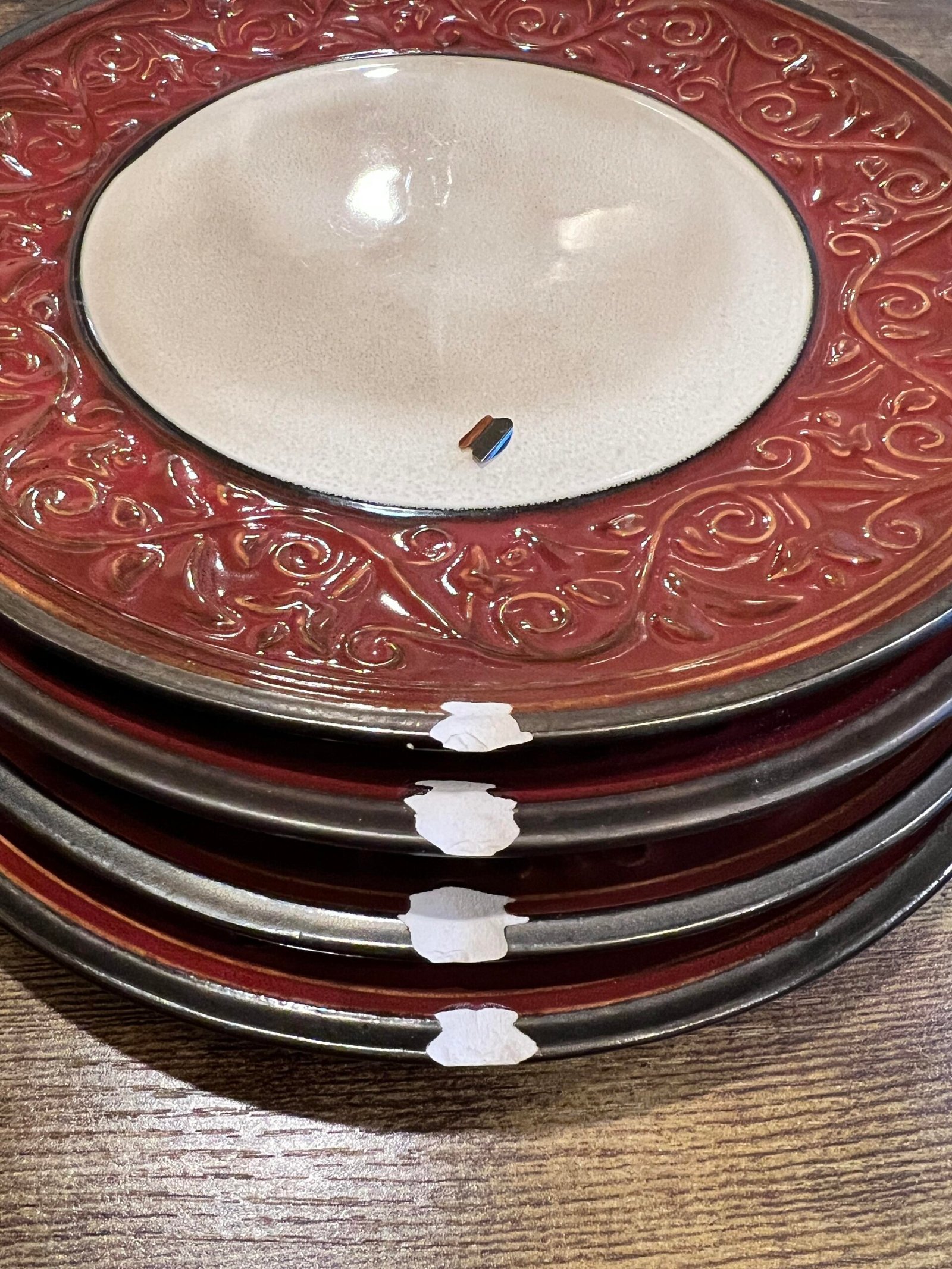
- Stacking plates without padding or separators.
- Slamming plates together when clearing a table.
- Using metal utensils roughly at the rim.
- Placing a hot plate on a cold stone or vice versa.
I used to stack plates straight from a dishwasher to save time. Over months, I saw rim wear and chips. Changing to cloth separators cut chipping by half in my kitchen. Small habit changes matter a lot.

Dishwashers, detergents, and thermal shock
Why porcelain plates chip is linked to the dishwasher environment more than most people expect. High heat cycles and strong detergents can weaken glaze edges. Rapid cool-down inside the machine or when moved to a cold counter causes thermal shock.
Tips to reduce damage:
- Use gentle cycles and lower heat settings.
- Avoid aggressive powdered detergents for delicate sets.
- Let plates cool inside the machine before unloading.
- Load plates so they do not bang into each other.
I once put an heirloom set through a hot sanitizing cycle. Several plates developed small edge chips afterwards. That was a clear lesson: treat delicate porcelain differently than everyday stoneware.

Preventing chips: simple, practical steps
If you want to know why porcelain plates chip less, focus on prevention. Small changes add up to big savings.
Best practices:
- Hand-wash valuable plates with a soft sponge and mild soap.
- Use felt or cloth separators when stacking.
- Avoid metal-on-edge contact; use wooden or silicone utensils.
- Store plates vertically if space allows, or use dish racks with padding.
- Inspect rims when buying — look for thin glaze or uneven edges.
I switched to a “one-handling” rule for my good plates: carry one plate at a time and use cloth between stacked plates. The set lasted years with only one small repair.
Repairing chips and hiding wear
Why porcelain plates chip does not always mean the end of a plate. Small chips can be repaired or hidden.
Repair options:
- Food-safe ceramic fillers to fill tiny chips.
- Epoxy colored to match glaze for non-food use pieces.
- Sand and smooth edges to stop cracking.
- Professional restoration for valuable or sentimental pieces.
I repaired a chipped serving platter with a food-safe filler and matched paint. It never went back to the cabinet for parties, but it worked great at home. Be honest about safety: repairs may be decorative or functional, but check if the surface is safe for food contact.

When to stop using a chipped plate
Knowing why porcelain plates chip helps decide when to retire a plate. A small rim chip can be fine. A deep crack or many chips can be unsafe.
Consider replacing when:
- The chip exposes a rough area that traps bacteria.
- Hairline cracks run into the center of the plate.
- The plate no longer sits flat or is weak to the touch.
- The damage affects heat distribution when used for cooking.
I kept plates with tiny edge chips for display. I retired any plate with cracks that reached the dining area. It’s better to replace a risky plate than to risk food safety.
Buying tips to avoid future chips
To reduce why porcelain plates chip in the future, buy wisely. The right plate set saves time and heartache.
Look for:
- Even glaze thickening at rims.
- Smooth, rounded edges rather than sharp ones.
- A reputation for durable firing and quality control.
- Samples to test for weight and feel before buying a set.
I now tap-test plates before I buy. A clear, ringing tone often means good firing. A dull sound can hint at hidden flaws. Small tests like that catch many future problems.
Frequently Asked Questions of why porcelain plates chip
Why do porcelain plates chip so easily?
Porcelain plates chip when force hits thin edges or poorly glazed spots. Small hidden flaws or sudden temperature changes make chips more likely.
Can temperature changes really cause chips?
Yes. Rapid shifts between hot and cold can cause thermal shock and cause chips or cracks. Slow transitions and letting plates cool slowly reduces this risk.
Are dishwasher cycles bad for porcelain?
Some cycles are too hot or aggressive for delicate porcelain. Use gentler cycles and milder detergents to protect glaze and rims.
Is repaired porcelain safe for food?
Small, food-safe repairs can be safe if the filler and finish are labeled for food contact. For deep repairs, consult a professional to confirm safety.
How can I tell if a chip will get worse?
If the chip has hairline cracks radiating inward or a rough exposed edge, it may spread. Monitor the plate and avoid heavy use if cracks appear.
Does stacking cause chips even with separators?
Yes, stacking can still cause wear if separators are too thin or plates slide. Use firm padding and store plates stably to reduce movement.
Conclusion
Understanding why porcelain plates chip helps you protect plates and choose better habits. Look for thin glaze, avoid thermal shock, handle rims gently, and use simple repairs when needed. Small changes in washing, storing, and buying add many years to a set. Try one new habit this week — like using felt separators — and notice how fewer chips appear. Share your experience below, subscribe for more tips, or ask a question about a specific plate set you own.