Microwave Cooking Physics: How Heat Really Works
Microwave cooking physics is dielectric heating: microwaves make polar molecules rotate and generate heat.
I write about microwave cooking physics every day. I have tested ovens, measured temperatures, and fixed reheating problems in busy kitchens. This article explains the core science behind how microwaves heat food, why some foods heat unevenly, and how to use that knowledge to cook smarter. Read on to gain clear, practical insights into microwave cooking physics from real tests and solid physics.

How microwaves heat food — basic physics
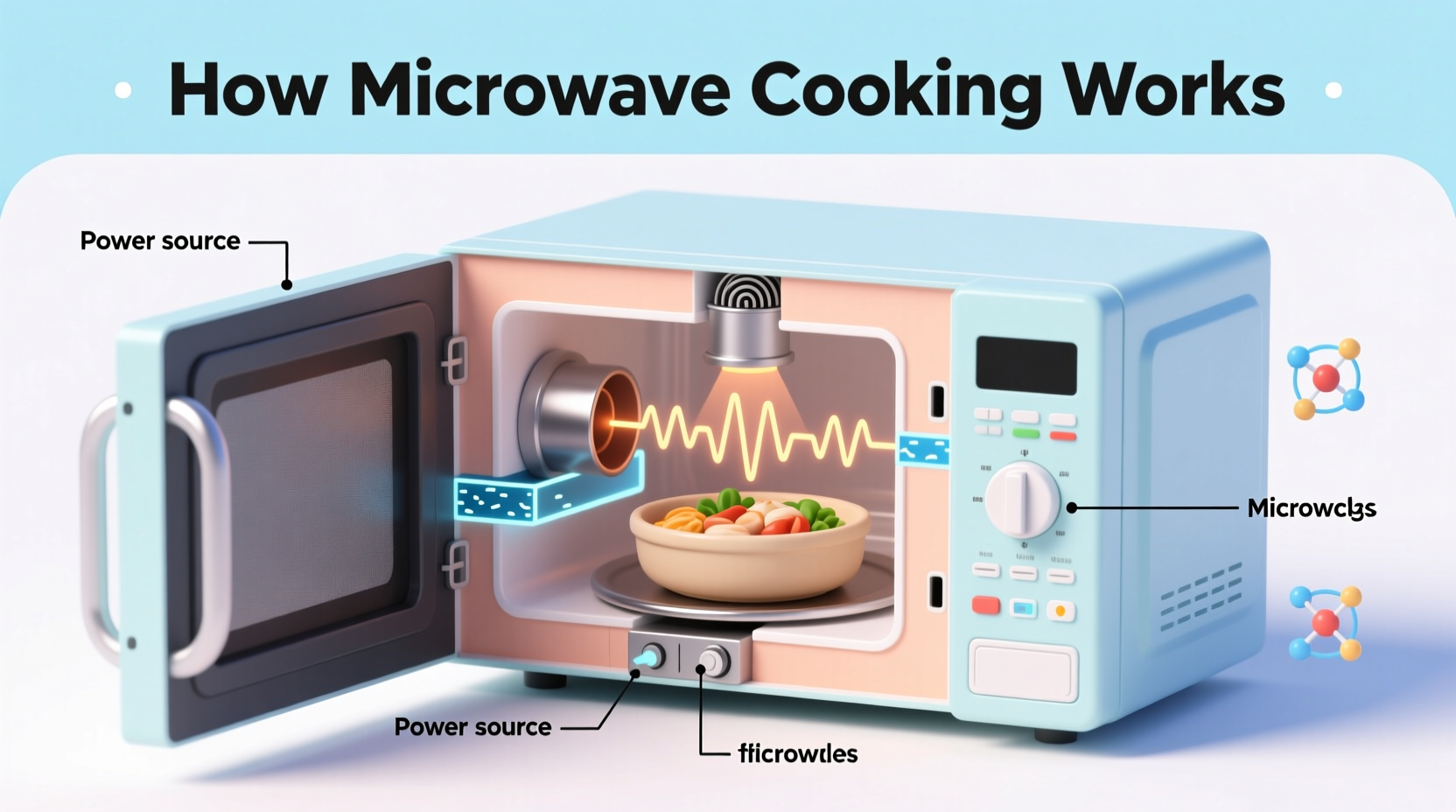
Microwave cooking physics rests on one main idea. Food contains water and polar molecules. Microwaves are electromagnetic waves in the gigahertz range. They make those polar molecules wobble and spin. That motion turns into heat inside the food.
Heating this way is called dielectric heating. It differs from flame or hot-air heating. Heat is produced inside the food, not only at its surface. That explains why a microwave can heat a cup of water quickly while leaving a plate cool.
Key points:
- Frequency matters — most ovens use about 2.45 GHz to match water response.
- Depth of penetration depends on the food and frequency.
- Inside heating can reduce cooking time for some foods.

Microwave oven components and field generation
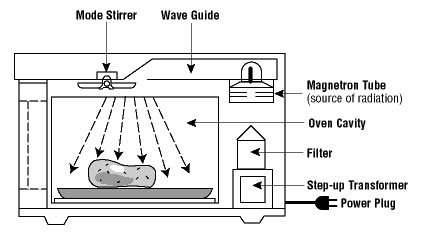
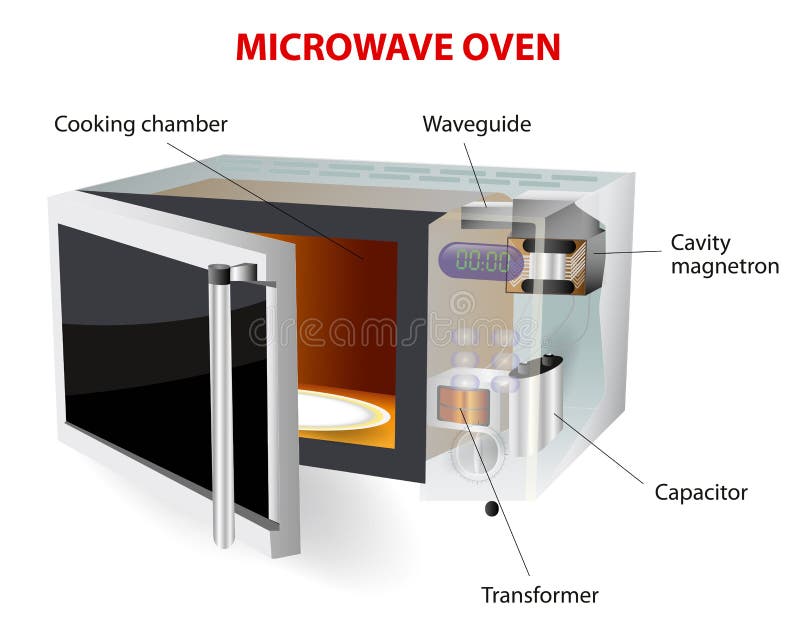
A microwave oven has a few key parts that shape microwave cooking physics. The magnetron creates the microwaves. A waveguide directs waves into the cooking cavity. A turntable or mode stirrer spreads the field. The cavity geometry creates standing waves.
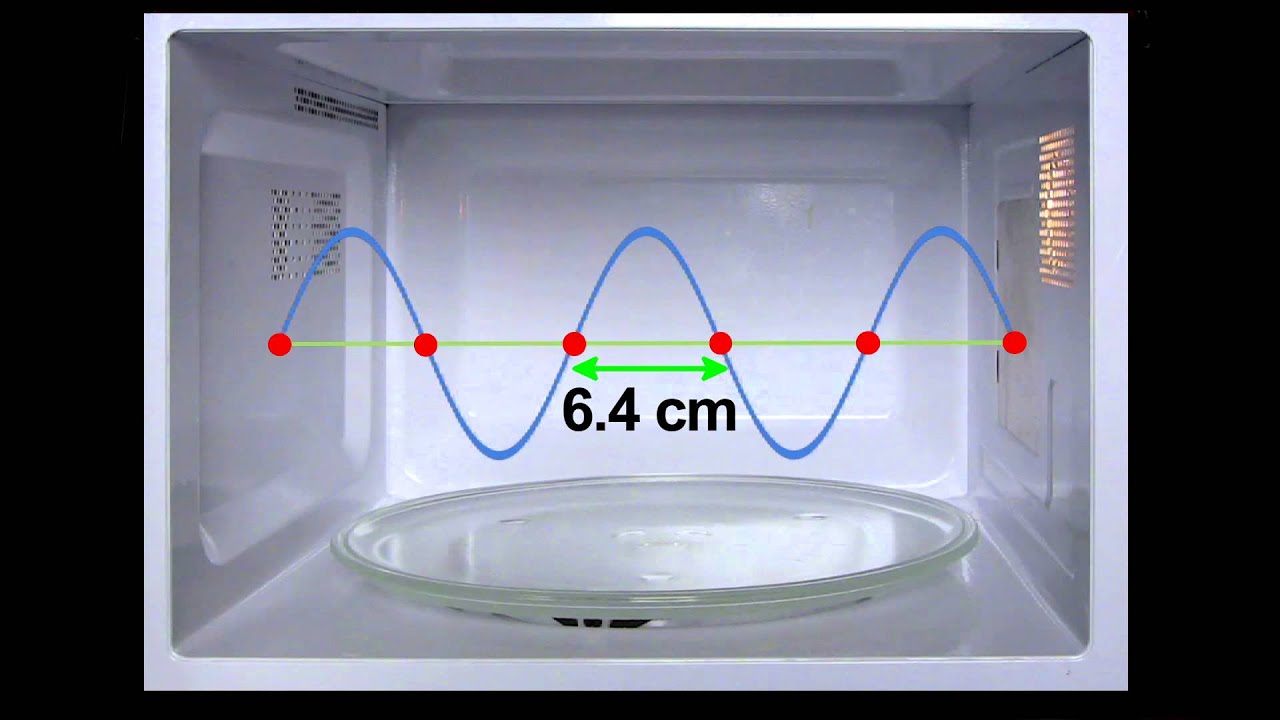
Standing waves cause hot and cold spots. A turntable helps smooth those spots. The oven walls reflect microwaves, forcing them to bounce around. The result is an uneven field pattern unless managed.
Practical notes:
- Older ovens without turntables often show strong hot spots.
- Mode stirrers attempt to randomize fields and reduce cold spots.
- Power settings change duty cycle, not microwave amplitude.
Interaction of microwaves with food: dielectric properties
Microwave cooking physics depends on the dielectric properties of food. Dielectric constant and loss factor tell us how a material stores and dissipates microwave energy. Water has a high loss factor, so it heats well. Fat and sugar absorb less at the same frequency.
Temperature matters. As food warms, its dielectric properties shift. That changes how the waves are absorbed. This feedback explains why heating can speed up or slow down mid-cycle.
Examples from my tests:
- A water-rich stew heats fast and evenly inside.
- A dense starchy bread heats unevenly and can stay cool inside.
- Oily sauces heat slower because oil absorbs less microwave energy.

Heat distribution, conduction, and hot spots
Microwave cooking physics explains common heating issues. Microwaves deposit energy selectively. That leaves internal temperature gradients. Heat then spreads by conduction. Conduction in food is slow compared to microwave absorption.
This is why edges can be very hot while centers remain cool. It also explains sudden superheating in liquids. A smooth glass of water can pass 100 °C without boiling until disturbed. That risk comes from the way microwaves deposit energy without surface bubbles.
Tips from experience:
- Pause and stir during long heating times to even temperatures.
- Use shorter cycles and check temperature rather than one long burst.
- Cover food loosely to reduce evaporation but allow venting.
Practical cooking tips grounded in microwave cooking physics
Understanding microwave cooking physics changes how you cook. Small tweaks make a big difference. Use low powers and longer times for dense foods. Use high power for quick reheats of water-rich items.
Practical checklist:
- Arrange food in a ring to reduce center cold spots.
- Pierce skins and create vents to avoid steam build-up.
- Add a glass of water when reheating bread to keep it moist.
- Rotate or stir halfway through to counter standing waves.
- Use microwave-safe ceramic or glass; metal reflects microwaves and can spark.
A brief personal trick: when I reheat rice, I sprinkle a few drops of water and cover it. Heat is more even and grains stay moist. That simple step uses microwave cooking physics to improve results.
Safety, limitations, and common myths
Microwave cooking physics clarifies many myths. Microwaves do not make food radioactive. They are non-ionizing and only cause molecular motion. Microwaves do not change nutrients uniquely; losses are mainly from heat, like any cooking.
Limits to accept:
- Microwaves do not brown well because browning needs surface temperatures above what microwave alone provides.
- Thick pieces can remain cold inside even when surface is hot.
- Some containers can melt or leach if not microwave-safe.
Safety habits:
- Use microwave-safe containers.
- Avoid sealed metal containers.
- Let food stand after heating to allow conduction to even temperatures.
Advanced topics: standing waves, penetration depth, and modeling
If you want to dive deeper into microwave cooking physics, consider these ideas. Penetration depth is how far microwaves travel before losing much energy. It varies by frequency and food composition. In many foods, penetration is a few centimeters.
Standing waves form nodal and antinodal zones in the cavity. Antinodes heat more. Computational models can predict patterns, but real ovens and food shapes complicate things. Engineers use simulations to design better ovens and mode stirrers.
For curious cooks:
- Try the foil test outside food to see reflection (do not put foil in closed oven).
- Measure with an infrared thermometer across a dish to map hot spots.
- Note how varying water content changes heating patterns.
Frequently Asked Questions of microwave cooking physics
What exactly causes microwave heating in food?
Microwave heating occurs when the oven emits electromagnetic waves that force polar molecules, mainly water, to rotate. That molecular motion creates friction and heat inside the food.
Why do microwaves produce hot and cold spots?
Hot and cold spots come from standing waves inside the cavity and uneven absorption by food. Turntables and mode stirrers reduce but do not fully eliminate these spots.
Can microwaves change food chemistry or make it unsafe?
Microwaves do not make food radioactive. They heat like other methods, and safety depends on reaching proper temperatures to kill pathogens. Chemical changes are mainly those caused by heat.
Why doesn't microwave browning occur well?
Browning needs high surface temperatures and dry heat to cause Maillard reactions. Microwaves heat internally and keep surfaces moist, so browning is limited without additional dry heat or broiling.
How can I heat food more evenly in a microwave?
Use shorter cycles, stir or rotate food, arrange items in a ring, and cover loosely to retain moisture. Adding a small amount of water for dry items helps even heating.
Is it dangerous to heat liquids in a microwave?
There is a risk of superheating, where liquid overheats past boiling without visible bubbles. Disturbing superheated liquid can cause violent boiling. To reduce risk, place a nonmetallic object or microwave-safe stick in the container and avoid overheating.
Do plastic containers release harmful chemicals when microwaved?
Some plastics can leach chemicals at high temperatures. Use containers labeled microwave-safe and avoid old or damaged plastics for heating food.
Conclusion
Microwave cooking physics explains why microwaves heat food the way they do. It shows how fields, water content, and cavity design create hot spots, uneven heating, and fast reheats. Use short bursts, stir often, and match power to food type to cook better.
Try one experiment: heat the same portion in two ways and note the texture and temperature. Use what you learn to improve meals and reduce reheats. If you found these tips helpful, try them and share your results or questions below.