How Microwave Sensors Work: Simple Guide & Uses
Microwave sensors detect motion and distance by emitting microwaves and analyzing reflected signals.
I have spent years designing and testing sensing systems, and I’ll guide you through exactly how microwave sensors work, why engineers choose them, and how to get reliable results in real projects. This article breaks down principles, types, components, real-world tips, and troubleshooting so you can understand and apply microwave sensing with confidence.
How microwave sensors work
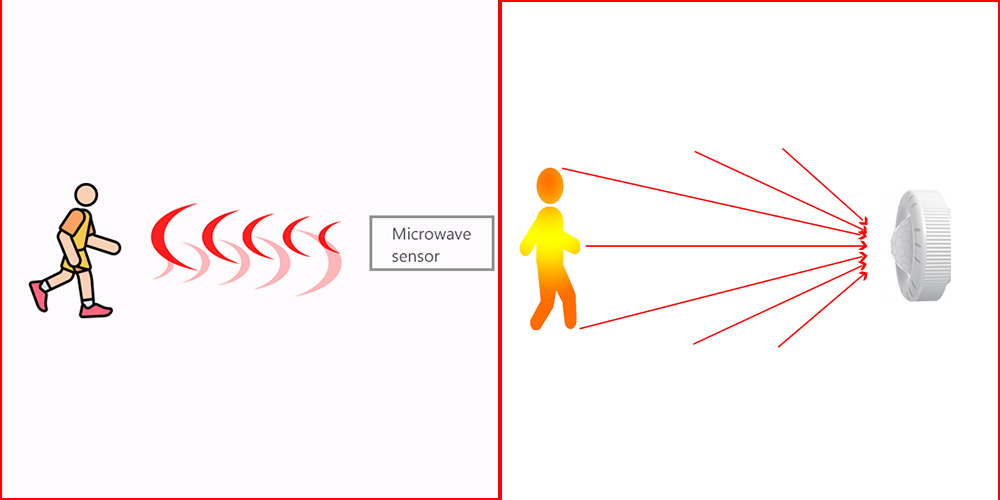
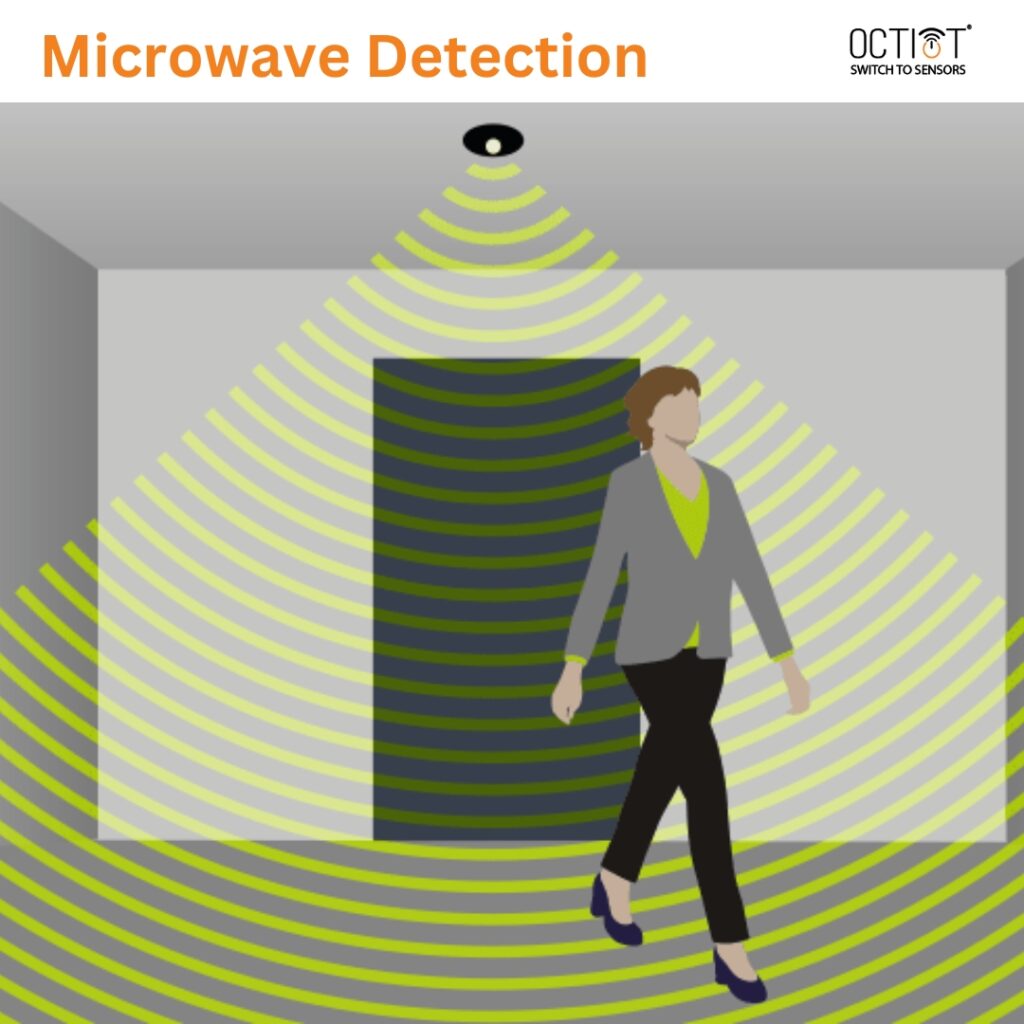
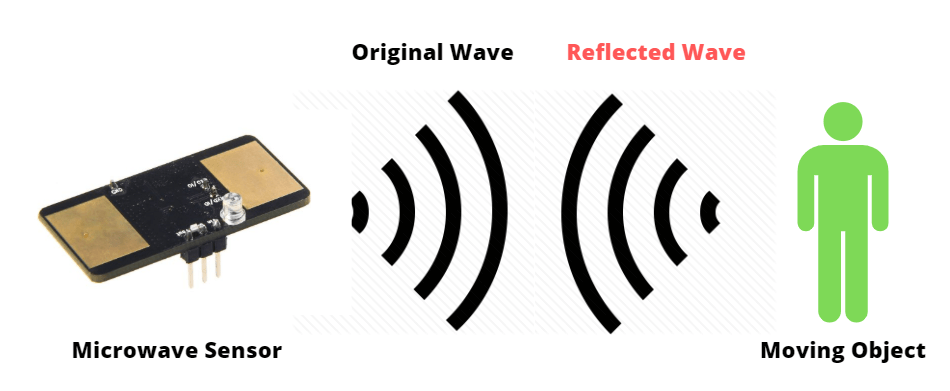
Microwave sensors emit electromagnetic waves in the microwave band and measure returned signals to detect motion, speed, and distance. The sensor sends a continuous or pulsed microwave signal. When that wave hits an object, part of the energy reflects back. The sensor compares the transmitted and received waves to find changes caused by moving or stationary targets.
Two common detection methods explain how microwave sensors work in practice. The Doppler method measures frequency shifts caused by motion. A moving object changes the return frequency slightly, and the sensor interprets that shift as motion and speed. Frequency-modulated continuous wave (FMCW) sensors sweep frequency over time and measure time delay to calculate distance precisely.
When learning how microwave sensors work, it helps to picture a radio echo. The transmitter is a flashlight. The receiver listens to the reflected light. Signal processing translates echoes into meaningful data like presence, speed, or range.
Types of microwave sensors
There are several types, each tuned for specific tasks:
- Continuous-wave Doppler
- Good for motion detection and speed sensing.
- Simple hardware and low cost.
- Frequency-modulated continuous wave (FMCW)
- Measures distance and relative speed with higher accuracy.
- Used in radar, industrial sensing, and automotive applications.
- Pulsed radar
- Sends short pulses and measures return time.
- Useful for longer-range detection and object profiling.
- Through-beam and barrier variants
- Designed for intrusion detection across a fixed path.
- Used in perimeter security and safety gates.
Understanding these types helps decide which sensor fits your need and clarifies how microwave sensors work differently depending on design.
Key components and how they interact
Microwave sensors rely on a few core parts. Each plays a clear role in how microwave sensors work.
- Transmitter
- Generates the microwave signal at a chosen frequency.
- Antenna
- Shapes and directs the microwave beam.
- Receiver
- Captures the reflected signal for analysis.
- Mixer and local oscillator
- Combine signals to extract Doppler shifts or time delays.
- Signal processor
- Filters noise, applies detection algorithms, and reports events.
These components must be matched in frequency and design. Good antenna placement and matched impedance reduce losses and false alarms.

Signal processing, detection and practical considerations
At the heart of how microwave sensors work is signal processing. Raw reflections are noisy. Processing turns that noise into useful events.
- Filtering
- Removes static clutter and environmental noise.
- Thresholding
- Sets the level at which a reflection counts as a valid detection.
- Doppler extraction
- Detects frequency shifts to indicate motion and speed.
- Range calculation (FMCW)
- Uses beat frequency or time delay to estimate distance.
- Classification and smoothing
- Distinguishes humans, vehicles, and small animals using patterns over time.
Can microwave sensors detect through walls? Yes, to an extent. Low-loss materials like drywall or glass allow some microwaves through, but metal and thick concrete block signals and reduce range and accuracy.
How do weather and environment affect sensors? Rain, fog, and dust have much smaller effects on microwave sensors than on optical sensors. Heavy clutter or nearby moving objects can still cause false triggers.

Common applications
Knowing real uses helps explain how microwave sensors work in context.
- Security and intrusion detection
- Perimeter, door, and area monitoring.
- Automotive and traffic sensing
- Speed detection, adaptive cruise control, and collision avoidance.
- Industrial automation
- Object detection on conveyor lines and presence sensing.
- Smart homes and building automation
- Occupancy and lighting control.
- Robotics and UAVs
- Obstacle detection and range finding.
Each application emphasizes different aspects of how microwave sensors work—some prioritize range, others focus on motion sensitivity or immunity to light changes.

Advantages and limitations
Advantages show why engineers pick microwave sensors. Limitations show when to choose alternatives.
Advantages:
- Penetrates dust, smoke, and darkness, making detection reliable in low-visibility environments.
- Good motion sensitivity and ability to measure speed (Doppler).
- Long lifetimes and low maintenance.
Limitations:
- Limited resolution compared with high-frequency radar or lidar.
- Susceptible to interference from other RF sources and metallic clutter.
- False positives can occur if installation is poor.
When you evaluate how microwave sensors work, balance these trade-offs against cost and application needs.
Design, installation and real-world tips from experience
I’ve installed and tuned many microwave sensors for commercial sites. These tips come from hands-on experience and testing.
- Mount height and angle matter
- Aim slightly down for entries and avoid pointing at large metal surfaces.
- Tune sensitivity conservatively
- Start low and increase to avoid false triggers from HVAC or nearby traffic.
- Use shielding and filters
- RF filters and physical shields reduce cross-talk and interference.
- Combine sensors for better reliability
- Pair microwave sensors with passive infrared or ultrasonic sensors for fewer false alarms.
- Regularly perform field tests
- Walk tests and vehicle passes reveal blind zones and over-sensitivity.
A common mistake I made early on was setting the gain too high to “catch everything.” That raised false alarms. Later, I learned to iteratively test and tune.
Troubleshooting common problems
When things go wrong, these checks help you diagnose issues and understand how microwave sensors work under stress.
- No detection
- Check power, wiring, and antenna alignment. Verify frequency match.
- False triggers
- Lower sensitivity, add filtering, and check for moving objects near the beam.
- Intermittent performance
- Inspect for RF interference, loose connectors, or environmental changes.
- Range shorter than expected
- Verify antenna gain, remove obstructions, and ensure correct firmware settings.
A systematic approach saves time: power, cabling, alignment, configuration, and environmental checks in that order usually solves 80% of problems.
Frequently Asked Questions of how microwave sensors work
What frequency band do microwave sensors use?
Most microwave sensors operate in the gigahertz range, commonly 2.4 GHz, 5.8 GHz, or 24 GHz, chosen for balance between range and resolution.
Can microwave sensors measure distance and speed?
Yes. FMCW and pulsed radars measure distance; Doppler sensors measure speed through frequency shifts.
Are microwave sensors safe for humans?
Yes. Typical commercial microwave sensors use very low power levels and comply with international safety limits for RF exposure.
Do microwave sensors work in rain or fog?
Generally yes. Microwaves penetrate weather better than visible light, so rain and fog have less impact than on optical sensors.
How do I reduce false alarms from pets or moving foliage?
Lower sensitivity, use pet-immune models, adjust beam angle, or combine with PIR sensors to improve discrimination.
Conclusion
Microwave sensors detect motion and range by emitting microwaves and analyzing the reflected signals. You now know the core principles, main sensor types, key components, real-world applications, and practical setup tips that show how microwave sensors work in real settings. Try a step-by-step installation: choose the right type, mount carefully, tune sensitivity, and validate with field tests. If you found this helpful, test a small sensor setup, subscribe for more guides, or leave a comment about your projects and questions.