Pan diameter affects how much food fits, how crowded the cooking surface becomes, how quickly moisture evaporates, and how evenly heat reaches the food. A smaller pan concentrates ingredients and can encourage steaming, while a larger pan provides more usable surface area for spreading food out. The best diameter depends on the recipe, portion size, pan shape, and the size of your U.S. stovetop burner or induction cooking zone.
For home cooks in the United States, pan diameter is one of the simplest cookware specifications to understand but one of the easiest to overlook. A recipe calling for a 10-inch skillet is not interchangeable with a 12-inch skillet simply because both can hold the same ingredients. The larger pan gives food more room to spread, while the smaller pan changes the depth of the food layer and the way moisture escapes.
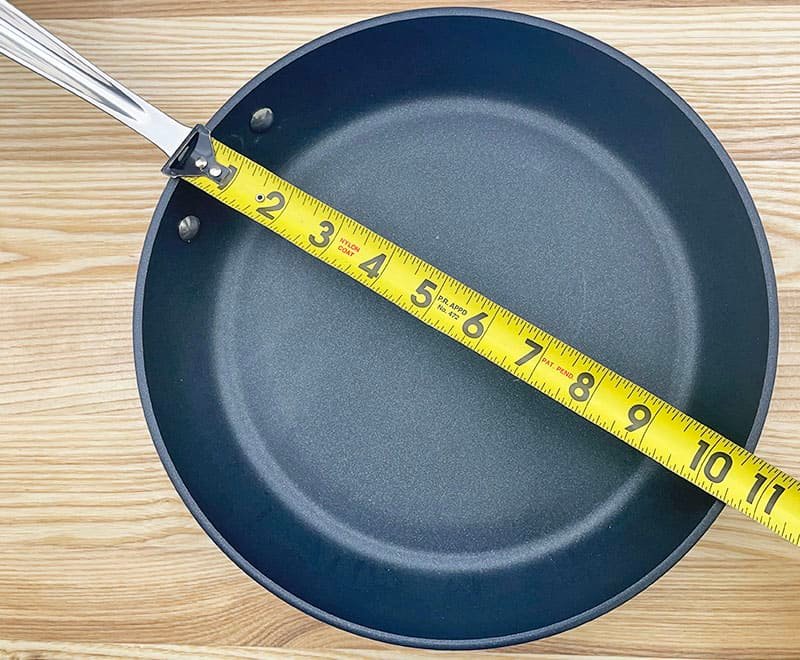
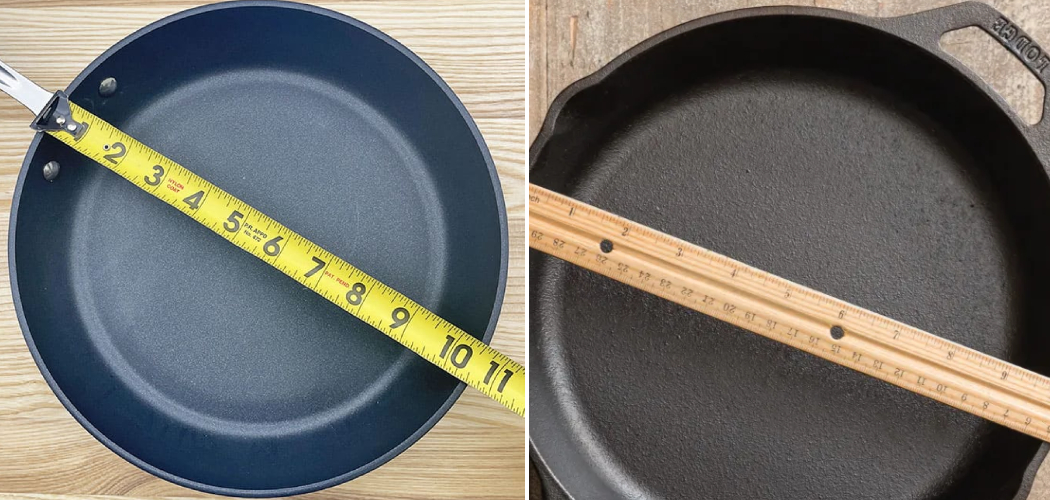
Pan diameter also needs to be considered alongside the actual cooking surface. A pan advertised as 12 inches is generally measured across the top opening, while its flat cooking base can be considerably smaller. That difference matters when you are trying to sear steaks, sauté vegetables, reduce a sauce, or cook several pieces of food in one layer.
The practical goal is not to choose the biggest pan available. Instead, choose a diameter that gives the food enough room for the cooking method while remaining appropriate for the burner or induction zone. Understanding that relationship makes it easier to select the right skillet for everyday American cooking.
Source: Bing
Why Pan Diameter Changes Cooking Results
Pan diameter changes the amount of surface available for food and therefore changes how ingredients are distributed. Because the area of a circular surface increases with the square of its radius, a modest increase in diameter can create a surprisingly large increase in cooking area.
For example, a hypothetical 10-inch circular cooking surface has an area of about 78.5 square inches, while a 12-inch circular surface has about 113.1 square inches. The 12-inch surface is only 20 percent wider by diameter, but it provides roughly 44 percent more circular area. This is why a two-inch difference can have a noticeable effect on cooking.
The extra space is especially useful when cooking foods that need direct contact with the hot surface. Chicken pieces, steaks, mushrooms, onions, potatoes, and other ingredients release moisture as they cook. If too much food is packed into too little space, that moisture can accumulate around the ingredients instead of escaping quickly.
Diameter also affects how a fixed quantity of liquid is distributed. The same amount of sauce in a wide pan forms a shallower layer than it does in a narrow pan. A shallower layer generally exposes more liquid to the surrounding air, which can change the rate at which water leaves the pan.
Source: Bing
More diameter means more surface area
A wider cooking surface gives ingredients more room to spread into a single layer.
Less crowding can improve browning
Extra space can make it easier for moisture to escape and for food surfaces to remain hot enough for browning.
Liquid depth changes
The same volume of sauce or cooking liquid spreads into a different depth when the pan diameter changes.
Diameter affects technique
Searing, sautéing, frying, reducing, and simmering can all respond differently to changes in usable pan area.
Pan Area Grows Faster Than Diameter
The relationship can be expressed with the circle-area formula: area equals pi multiplied by radius squared. This means diameter should not be treated as a simple measure of usable space. Moving from a 10-inch to a 12-inch circular surface increases diameter by 20 percent but increases theoretical area by about 44 percent.
Real cookware will not always match these theoretical figures because sidewalls, curved edges, cooking-surface shape, and pan construction reduce the usable flat area. Still, the calculation explains why a seemingly small size difference can matter.
10-inch circular area
Approximately 78.5 square inches before accounting for curved walls or other design features.
12-inch circular area
Approximately 113.1 square inches before accounting for curved walls or other design features.
How Pan Diameter Affects Browning and Searing
For browning and searing, the main advantage of an appropriately large pan is space. Food needs enough room to make useful contact with the heated surface without being packed tightly against other ingredients.
When a small pan is overloaded, ingredients can release more moisture than the available heat and surface area can handle efficiently. The result may be slower browning and more steaming. A larger pan does not automatically create better browning, because pan material, thickness, burner output, food temperature, and cooking technique also matter, but adequate space removes one common obstacle.
A pan that is too large can create a different problem. If a small quantity of food sits in the center of a very large cooking surface, much of the pan remains unused. Depending on the cookware and stovetop, the outer portion may receive less direct heat than the center. The food itself may still cook well, but the larger pan is not necessarily providing a practical advantage.
For searing steak, chicken breasts, pork chops, or fish fillets, select a pan that allows the pieces to sit in a single layer with visible space between them. If the pieces barely fit, cooking in batches is often better than forcing everything into the pan at once.
Source: Bing
Searing
Choose enough diameter for the food to lie flat with space around individual pieces.
Sautéing vegetables
A wider surface can help vegetables spread out and release moisture instead of sitting in a deep pile.
Browning ground meat
A larger cooking surface can make it easier to brown meat in batches rather than allowing released liquid to accumulate.
Batch cooking
When the pan is too small for the entire quantity, dividing the food into batches can produce more consistent browning.
Does a Larger Pan Always Brown Food Better?
No. Pan diameter is only one part of the process. A large, thin pan on a weak burner may perform worse than a smaller, heavier pan with better heat retention. Cooking temperature, pan material, food moisture, food temperature, and the amount of food added at once all influence browning.
The useful rule is to treat diameter as a space-management factor rather than a guarantee of performance. A properly sized pan gives the food enough room; the rest of the cooking system determines how effectively that surface supplies heat.
Space first
Make sure food is not tightly packed before increasing heat.
Heat matters too
A pan must have sufficient heat input to recover after cold or room-temperature ingredients are added.
Pan Diameter and Heat Distribution
Pan diameter and heat distribution are related, but they are not the same thing. The diameter tells you how large the cooking vessel is; the burner or induction zone, pan material, pan thickness, and base construction determine how heat reaches that surface.
A very wide pan placed over a substantially smaller heating zone may receive the strongest heating near the center while the outer areas receive less direct energy. This does not mean every large pan will have cold edges, because cookware construction varies considerably. Heavy or highly conductive cookware can spread heat farther across its base than a thin pan.
On gas ranges, flame should generally remain under the pan rather than extending dramatically up the sides. Excessively large pans can also make it harder to match the heating area to the cooking surface. On electric and induction cooktops, the relationship between the pan’s flat base and the heating element or induction zone is particularly relevant.
For induction cooking, check the cookware manufacturer’s stated compatibility and recommended cooking-zone sizes when available. The advertised rim diameter is not necessarily the same as the diameter of the magnetic or flat base that interacts with the induction system.
Source: Bing
Burner size
A cooking surface that is much larger than the active heating area may not heat uniformly from center to edge.
Pan construction
Thickness and heat-conductive materials can spread energy across a broader portion of the cooking surface.
Base diameter
The flat base is more relevant to stovetop contact than the pan’s advertised top diameter.
Induction compatibility
Use the manufacturer’s specifications when matching a pan’s magnetic base to an induction cooking zone.
Top Diameter Versus Cooking Surface Diameter
The number printed on cookware packaging generally describes the pan’s nominal size, but the food does not use every square inch inside the rim. Sloped sides mean the flat cooking surface is often smaller than the opening at the top.
When choosing between two pans with the same advertised diameter, compare their actual flat cooking surfaces if the manufacturer provides that measurement. This can be more useful than relying on the nominal diameter alone when your main concern is how many pieces of food will fit in one layer.
Top diameter
The measurement across the pan’s upper opening, commonly used to describe cookware size.
Cooking-surface diameter
The width of the flat interior area where food primarily contacts the pan.
Base diameter
The diameter of the exterior flat base that contacts the stovetop or induction cooking area.
How Pan Diameter Changes Evaporation and Sauce Reduction
A wider pan generally gives liquid a larger exposed surface area, which can affect evaporation and reduction. When the same quantity of liquid is spread across a wider surface, the liquid layer becomes shallower and more of its surface is exposed to the air.
This matters when reducing pan sauces, cooking down stock, concentrating wine, or evaporating excess water from vegetables. A broad sauté pan can encourage faster reduction than a narrow, deep vessel under otherwise similar conditions. The exact rate still depends on heat input, liquid temperature, pan material, humidity, and the amount of liquid.
If a recipe is written for a particular pan size, changing diameter can change the time required to reach the desired consistency. A sauce that reduces quickly in a wide skillet may take longer in a smaller saucepan because the liquid is deeper and has less exposed surface.
For recipes where maintaining a specific liquid level matters, such as simmering or braising, a narrower or deeper vessel may be more appropriate. Pan diameter should therefore match the intended cooking process rather than simply the quantity of food.
Source: Bing
Wide pan
Useful when you want more exposed liquid surface and efficient reduction.
Narrow pan
Can maintain a deeper liquid layer and may reduce more slowly under otherwise similar conditions.
Recipe timing
Changing pan diameter can alter how quickly liquid reaches the intended consistency.
Heat level
Do not assume diameter alone determines reduction speed; heat input remains a major variable.
Why a Pan Sauce Can Reduce Faster in a Wide Skillet
Imagine two pans containing the same 2 cups of stock. In a wide skillet, the stock spreads into a broad, shallow layer. In a narrow pan, the same stock sits deeper. The wider arrangement exposes more liquid surface to the air, so water can leave the liquid more readily when the heat and other conditions are comparable.
This is one reason sauté pans and wide skillets are useful for finishing sauces. The geometry gives the cook more control over the concentration process without requiring an extremely high heat setting.
Same quantity
The amount of liquid can stay constant while the exposed surface changes.
Different depth
A larger diameter creates a shallower liquid layer when volume remains the same.
Choosing the Right Pan Diameter for Common U.S. Cooking Tasks
There is no single pan diameter that works best for every American kitchen. A useful starting point is to match the pan to the quantity and cooking method rather than choosing based only on household size.
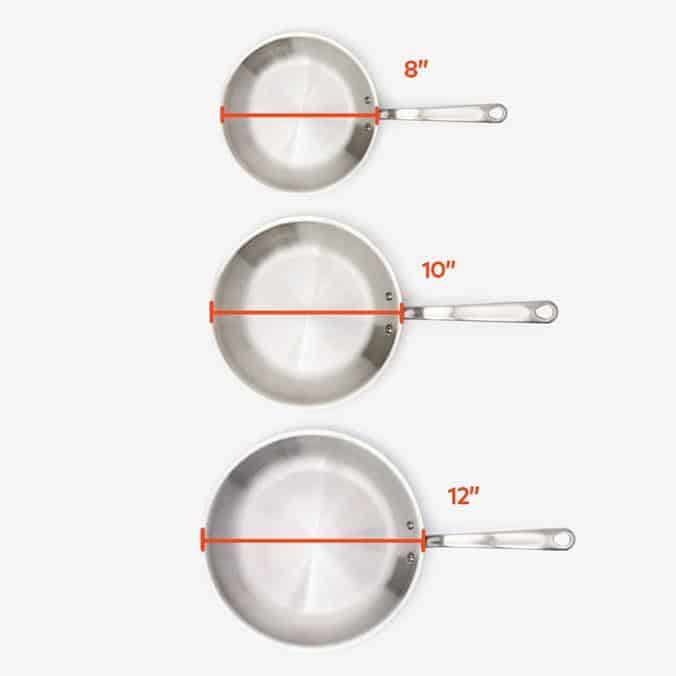
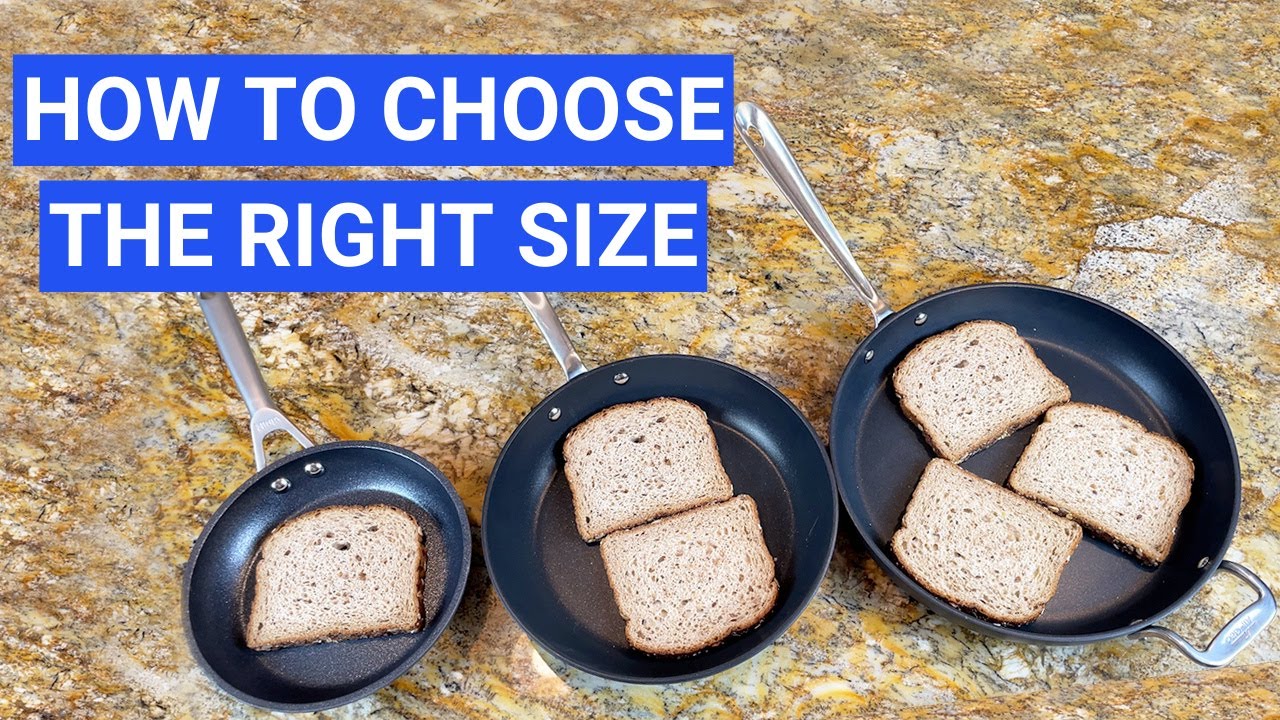
An 8-inch skillet is useful for a single egg, a small grilled cheese sandwich, a small portion of vegetables, or other individual servings. A 10-inch skillet is a versatile size for one or two people and many everyday tasks. A 12-inch skillet offers substantially more surface area and is often more practical for family portions, multiple proteins, or larger batches of vegetables.
A 14-inch pan can provide even more space, but it also requires adequate storage, a suitable heating area, and enough physical room to maneuver safely. Very large pans are more useful when the cooking task genuinely benefits from additional surface area rather than simply because bigger sounds better.
These sizes are general starting points rather than strict rules. A 10-inch pan from one manufacturer may have a different flat cooking base than a 10-inch pan from another manufacturer, so compare actual dimensions when space is important.
Source: Bing
8 inches
Useful for individual servings, eggs, small portions, and compact cooking tasks.
10 inches
A flexible everyday size for smaller households and many two-person meals.
12 inches
A strong general-purpose choice when you regularly cook larger portions or several ingredients at once.
14 inches
Useful for large batches but requires appropriate stovetop space, storage, and handling.
Match Pan Size to the Food, Not Just the Number of People
Two people may need a 12-inch skillet for two large steaks but only an 8-inch or 10-inch pan for a couple of eggs. Likewise, one person preparing a large batch of vegetables for meal preparation may benefit from a 12-inch skillet.
The better question is: how much food needs to fit in one layer? If the answer requires stacking or tightly packing the ingredients, increase the cooking surface or work in batches.
One-layer cooking
Choose enough surface for the main ingredients to spread out without excessive overlap.
Batch cooking
Use a larger pan or divide the ingredients into batches when the food would otherwise be crowded.
Common Mistakes When Choosing Pan Diameter
The most common mistake is assuming that the number printed on a pan tells you exactly how much food will fit on the flat cooking surface. Pan geometry varies, so two pans with the same nominal diameter can provide different usable areas.
Another mistake is choosing a pan based only on the amount of food it can technically hold. Capacity is not the same as cooking performance. A pan can hold a large quantity of ingredients while still being too crowded for good browning.
It is also easy to overlook the stovetop itself. A large pan may physically fit on a burner but still have a base that extends substantially beyond the primary heating area. Conversely, a small pan can concentrate food directly over a strong burner and may become excessively hot if the heat is not adjusted.
Finally, changing pan size without adjusting cooking time can lead to inconsistent results. A wider pan can reduce liquid faster, while a smaller pan can keep ingredients closer together and change moisture behavior. When you change diameter substantially, watch the food rather than following the original timing blindly.
Source: Bing
Mistake: judging by rim size alone
The advertised diameter does not necessarily equal the flat cooking surface.
Mistake: filling the pan to capacity
A pan can physically contain food while still being too crowded for effective browning.
Mistake: ignoring the heating zone
The pan’s base should be considered alongside the size and behavior of the stovetop heating element.
Mistake: copying recipe timing exactly
A different pan diameter can change evaporation and heat response, so cooking time may need adjustment.
Mistake: choosing the largest pan by default
More surface area is useful only when the cooking task, burner, storage space, and food quantity justify it.
What to Do If Your Pan Is Too Small
If food is crowded, the simplest correction is often to cook in batches. Avoid automatically turning up the heat to compensate for overcrowding because excessive heat can burn the exterior while moisture is still leaving the food.
For a recipe that repeatedly requires more surface area, moving to a larger skillet or sauté pan may be more convenient. Before buying one, check the actual cooking-surface diameter and the size of the stovetop heating zone.
Cook in batches
Divide the food into manageable quantities when a single layer is needed.
Avoid excessive heat
More burner power does not eliminate the effects of overcrowding.
What to Do If Your Pan Is Too Large
If a small quantity of food occupies only the center of a very large pan, use a moderate heat level and pay attention to how quickly the food cooks. If the recipe involves reducing liquid, expect the wider surface to potentially change the reduction rate.
For repeated small meals, keeping a smaller skillet available can be more practical than using a large pan for everything.
Use the appropriate heat
Do not assume a larger pan requires maximum burner power.
Watch liquid reduction
A broad cooking surface can change how quickly sauces and other liquids concentrate.
How to Choose a Pan Diameter Step by Step
Choosing a pan size becomes much easier when you evaluate the cooking task in a consistent order. Start with the food quantity, then consider the desired cooking technique, the actual flat cooking surface, and finally the stovetop.
For a versatile U.S. home kitchen, having more than one skillet size is usually more useful than expecting one pan to handle every task. A smaller pan handles individual portions efficiently, while a larger skillet provides the surface needed for family-size meals and batch browning.
Source: Bing
Step 1: Identify the main cooking task
Decide whether you mainly need the pan for eggs, sautéing, searing, frying, reducing sauces, or larger batch cooking.
Step 2: Estimate the food quantity
Determine how much food needs to cook at one time and whether the ingredients should remain in a single layer.
Step 3: Check the cooking surface
Look beyond the advertised rim diameter and check the manufacturer’s flat-base or cooking-surface measurement when available.
Step 4: Check your stovetop
Compare the pan’s base with your gas burner, electric element, or induction cooking zone.
Step 5: Consider handling
Make sure the pan is manageable when filled, especially for large or heavy cookware.
Step 6: Adjust recipes when changing size
Expect cooking time and liquid reduction to change if you move substantially away from the recipe’s stated pan diameter.
A Simple Pan-Size Decision Guide
If you mostly cook individual portions, start with an 8-inch or 10-inch skillet. If you regularly prepare meals for two to four people, a 10-inch or 12-inch skillet is more versatile. If you frequently cook large batches, a 12-inch or larger skillet may be more useful, provided your stovetop can heat it effectively.
For precision cooking, do not rely on diameter alone. Record the top diameter, flat cooking-surface diameter, base diameter, depth, and stovetop compatibility. Those measurements describe how the pan will actually behave in your kitchen.
Small portions
Favor compact cookware that matches the amount of food being prepared.
Everyday versatility
A medium-size skillet offers a useful balance between surface area, capacity, handling, and storage.
Large portions
Choose additional diameter when you genuinely need more cooking surface rather than simply more capacity.
Frequently Asked Questions
Q
Does a larger pan cook food faster?
Not necessarily. A larger pan can provide more surface area and may improve browning or increase evaporation, but cooking speed also depends on burner output, pan material, food quantity, starting temperature, and cooking method. A larger pan can actually take longer to heat if it has substantially more mass.
Q
Is a 12-inch skillet better than a 10-inch skillet?
Neither is universally better. A 12-inch skillet provides substantially more surface area and is useful for larger portions and foods that need space for browning. A 10-inch skillet is easier to handle and can be more appropriate for smaller meals. The better choice depends on what and how much you cook.
Q
Does pan diameter affect how much oil I need?
It can. A wider pan spreads the same amount of oil over a larger area, creating a thinner layer. If a recipe depends on a particular depth of oil, changing pan diameter can change the amount needed to achieve similar coverage. For shallow frying, follow the recipe’s intended oil depth rather than assuming the same volume works in every pan.
Q
Why does the same 12-inch pan size sometimes have a different cooking surface?
Cookware manufacturers can use different shapes and sidewall angles. A pan with strongly sloped sides may have a smaller flat base than a pan with straighter sides, even when both have the same nominal top diameter. Checking the actual cooking-surface measurement is the best way to compare them.
Q
Can I use a large pan on a small burner?
You can use cookware that extends beyond the heating area, but heating may be less uniform depending on the stovetop and pan construction. For best results, compare the pan’s flat base with the manufacturer’s recommended burner or induction-zone size, and avoid assuming that the rim diameter determines heat coverage.
Q
How do I know if my pan is too small?
A pan is often too small when ingredients must be stacked or tightly packed even though the recipe calls for a single layer. Signs include excessive liquid collecting in the pan, slow browning, uneven cooking, or food touching other pieces with little open space. Cooking in batches is a practical solution.
✦ Wrapping Up
Conclusion
Pan diameter affects cooking because it changes the amount of usable surface available to food and liquids. That difference can influence crowding, browning, moisture evaporation, sauce reduction, and how effectively the pan works with a particular stovetop heating zone.
For everyday cooking, choose the pan according to the amount of food and the technique rather than assuming the largest diameter is always best. When comparing cookware, look beyond the number printed on the label and consider the flat cooking surface, base diameter, pan construction, and your burner or induction zone.
If a recipe specifies a pan size, treat that measurement as part of the cooking method. A substantial change in diameter can change the way ingredients cook, so adjust batch size, heat, and timing when necessary.
💡 Key Takeaway
For the most predictable results, choose a pan that lets your ingredients fit comfortably in the intended cooking layer, then confirm that its flat base is appropriate for your stovetop. When in doubt, prioritize adequate cooking space over maximum capacity.
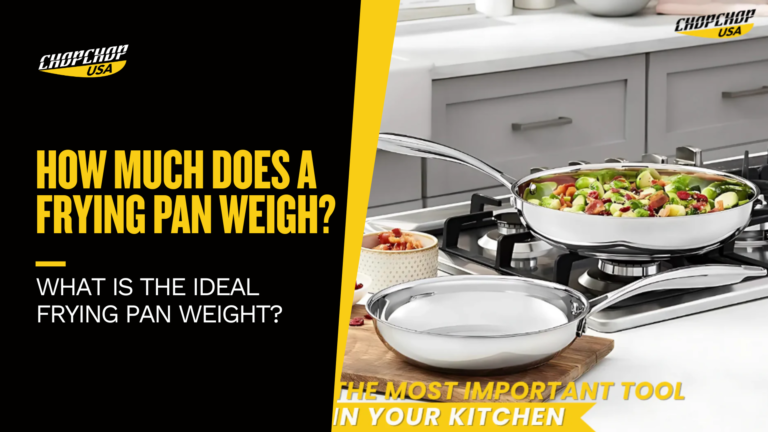
Learn why pan weight matters for cooking, how weight affects heat retention and responsiveness, and how to choose the right pan for searing, sautéing, sauces, and everyday cooking.