Coffee Brewing Method Comparisons: Which Method Makes the Best Cup?
Coffee can taste very different even when you use the same beans. The brewer changes how water meets the grounds, how long they stay together, and how much oil reaches your cup. That is why good Coffee Brewing Method Comparisons should look at more than taste alone.
For many U.S. coffee drinkers, the choice is practical as well as personal. A busy morning may favor a drip machine or AeroPress, while a slow weekend may suit a pour-over or French press. This guide compares the main methods by flavor, ease, speed, cost, grind size, control, and daily use.

How Coffee Brewing Methods Differ
The main difference between brewing methods is how water extracts flavor from coffee grounds. Some methods let water flow through the grounds. Others keep the grounds in water for a set time. Pressure also plays a role in methods such as espresso and AeroPress.
Coffee Brewing Method Comparisons become easier when you focus on four basic factors: contact time, water temperature, grind size, and water flow. Small changes in these factors can make a cup taste sweet, sharp, bitter, weak, or heavy.
The filter also matters. Paper filters catch more coffee oils and fine particles, which can create a cleaner cup. Metal filters allow more oils and small particles into the drink, which often creates more body.

- ✦ Immersion
Coffee grounds sit in water for a set time. French press and many AeroPress recipes use this style.
- ✦ Pour-over
Water passes through the grounds and a filter. This gives the brewer strong control over flow and timing.
- ✦ Pressure brewing
Water moves through coffee with added pressure. Espresso is the main example.
- ✦ Percolation
Water passes through coffee during brewing. Automatic drip machines and moka pots use related forms of this idea.
Why Grind Size Matters
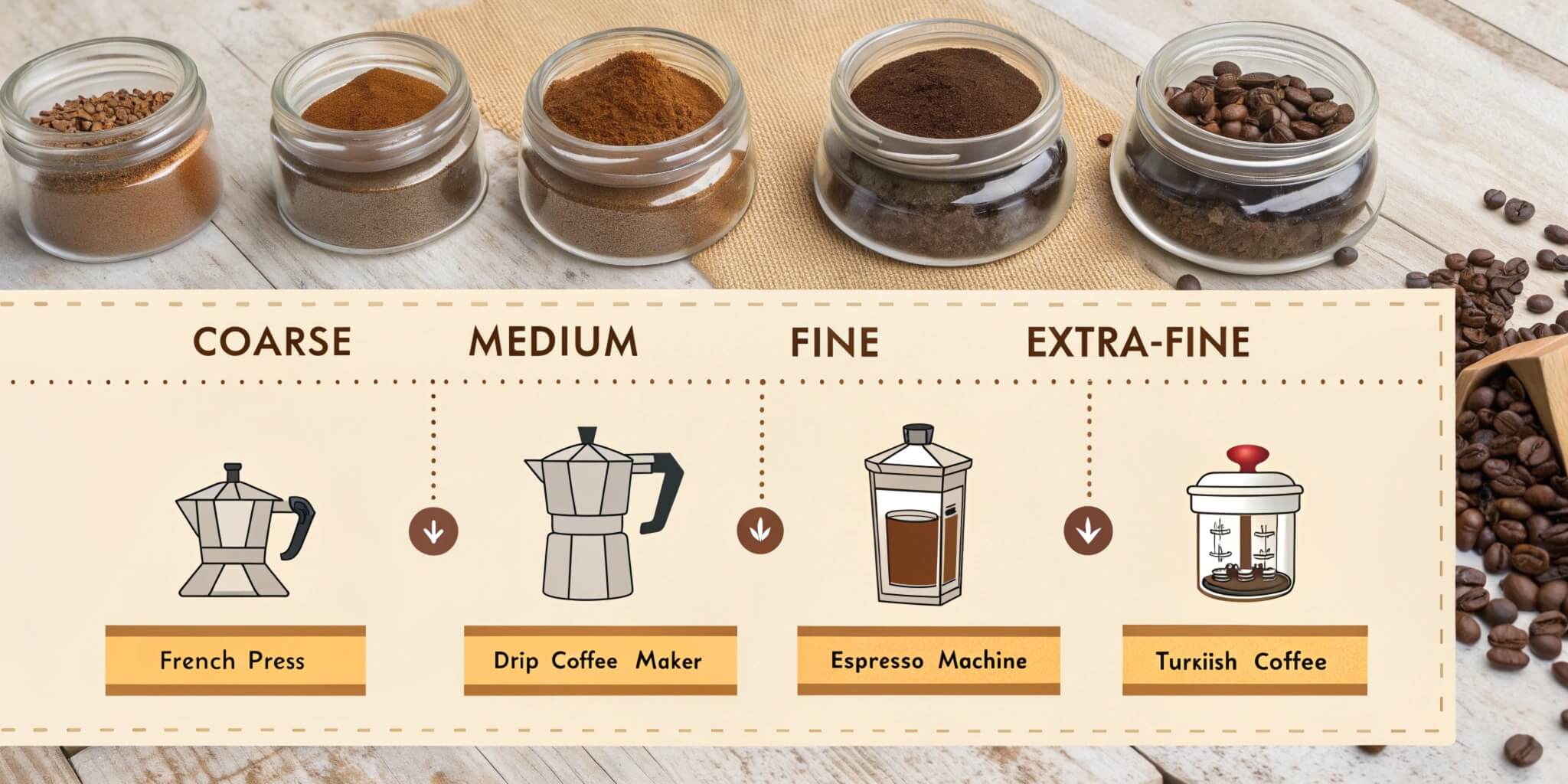
Grind size changes how fast water extracts the coffee. Fine grounds offer more surface area, so they can extract quickly. Coarse grounds slow the process and often work better with longer contact times.
A simple rule helps with most Coffee Brewing Method Comparisons: use a finer grind for faster brewing and a coarser grind for slower brewing. Always follow the brewer’s guidance first, then adjust by taste.
- ✦ Too fine
The coffee may taste bitter, harsh, or dry. It can also slow water flow through a filter.
- ✦ Too coarse
The coffee may taste thin, sour, or weak because the water did not extract enough flavor.
Pour-Over vs French Press
Pour-over and French press are two very different ways to brew coffee at home. Pour-over uses a filter and controlled water flow. French press uses immersion and a metal screen.
Pour-over usually produces a cleaner and brighter cup. It can highlight floral, fruit, and light roasted notes. French press leaves more oils and fine particles in the cup, so the result often feels heavier and richer.
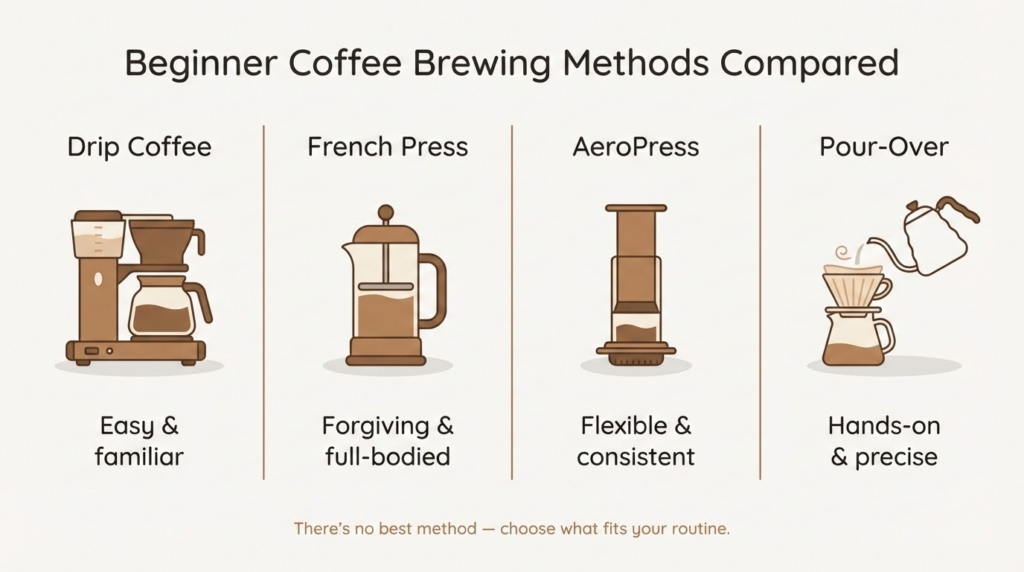
For Coffee Brewing Method Comparisons, the key trade-off is control versus simplicity. Pour-over gives you more control over flow and timing, while French press needs fewer steps and is easy to scale for several cups.

- ✦ Pour-over flavor
Clean, clear, and often bright. It works well when you want to notice the character of the beans.
- ✦ French press flavor
Rich, smooth, and full-bodied. It keeps more coffee oils and fine particles in the drink.
- ✦ Ease
French press is simple to learn. Pour-over takes more practice because water flow and pouring style matter.
- ✦ Best use
Choose pour-over for careful single-cup brewing and French press for simple, fuller coffee.
Which One Is Better for Beginners?
French press is often easier for a first-time brewer because the process has fewer moving parts. Add coffee, add water, wait, and press. A pour-over has more variables, but that control can become useful as your skills grow.
Neither method is better for every person. In Coffee Brewing Method Comparisons, the right choice depends on whether you value ease or control more.
- ✦ Pick French press
If you want a simple process and a rich, heavy cup.
- ✦ Pick pour-over
If you want a clean cup and enjoy adjusting your brew.
Drip Coffee Maker vs Pour-Over
Automatic drip coffee is one of the most practical choices for a U.S. home. A good machine can make several cups with little work. You can set it up while getting ready for work and return to a full pot a few minutes later.
Pour-over takes more hands-on effort. You control the water flow, timing, and pouring pattern. That extra work can help you fine-tune the taste, but it also means you need to pay attention.
These Coffee Brewing Method Comparisons show a clear daily-use difference. Drip coffee favors convenience and repeatability, while pour-over favors control and a more hands-on routine.

- ✦ Drip coffee maker
Best for multiple cups, busy mornings, and simple repeatable brewing.
- ✦ Pour-over
Best for one or two cups when you want more control over the brewing process.
- ✦ Cleanup
Both are fairly easy to clean. Drip machines need regular cleaning of the carafe, basket, and internal water path.
- ✦ Control
Pour-over gives you more direct control over water flow and timing.
Does a Drip Machine Make Good Coffee?
Yes. A drip machine can make excellent coffee when it uses fresh beans, clean water, a suitable grind, and a stable brewing temperature. The machine does not need to be expensive to produce a good cup.
One common mistake is blaming the brewer when the real problem is old coffee or a dirty machine. Regular cleaning and fresh coffee can make a large difference.
- ✦ Use fresh coffee
Freshly roasted and properly stored beans usually give better flavor than stale grounds.
- ✦ Keep the machine clean
Old coffee oils and mineral buildup can affect taste and machine performance.
AeroPress vs French Press
AeroPress and French press both use immersion, but they produce different cups. The AeroPress uses a paper or metal filter and manual pressure. French press uses a plunger with a metal mesh screen.
AeroPress coffee can taste clean and strong without feeling as heavy as French press coffee. It also brews quickly and gives you many ways to change the recipe. French press is better suited to a relaxed brew where body and ease matter most.
In Coffee Brewing Method Comparisons, AeroPress stands out for flexibility. You can change the grind, water amount, steep time, filter, and pressure to shape the final cup.
- ✦ AeroPress speed
A typical brew can be completed in a few minutes, including setup and pressing.
- ✦ AeroPress control
You can change several recipe variables without needing a large or complex setup.
- ✦ French press body
The metal filter allows more oils and fine particles into the cup, giving a fuller feel.
- ✦ Portability
AeroPress is compact and useful for travel, office brewing, and small kitchens.
Which Method Makes Stronger Coffee?
Strength depends on the coffee-to-water ratio and the brewing recipe, not just the brewer. Both methods can make a strong cup if you use more coffee or less water.
AeroPress can also make a concentrated brew that you dilute with water. This gives you more control over how strong the final drink feels.
- ✦ For easy strength control
AeroPress offers many simple ways to change concentration.
- ✦ For a heavy cup
French press often feels stronger because more oils and fine particles remain in the drink.
Espresso vs Moka Pot vs Drip Coffee
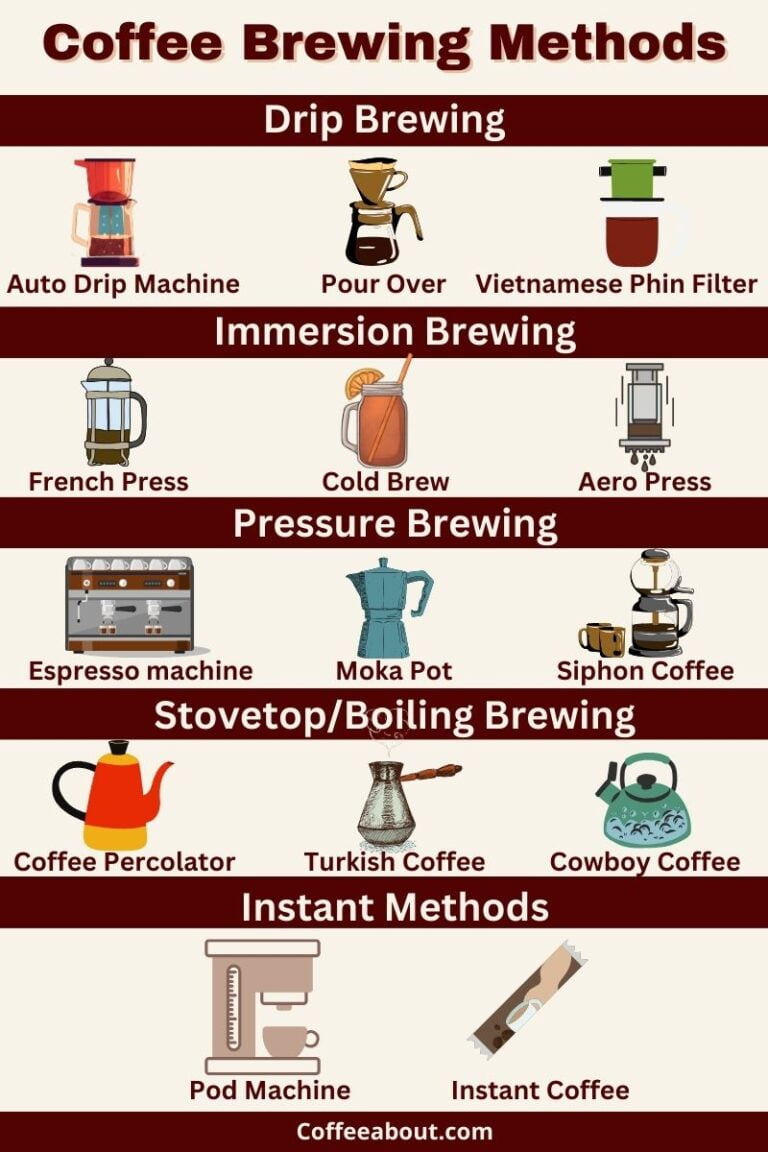
Espresso, moka pot coffee, and drip coffee can all make strong and useful drinks, but they work in different ways. Espresso machines force hot water through finely ground coffee under pressure. A moka pot uses steam pressure to move water through coffee and creates a concentrated brew.
Drip coffee uses gravity and a filter. It normally produces a larger drink with a lighter body than espresso or moka pot coffee. The choice depends on whether you want a concentrated base for milk drinks or a full mug for sipping.
These Coffee Brewing Method Comparisons also show why the word strong can be confusing. Espresso has a high concentration, but a normal serving is much smaller than a mug of drip coffee.
- ✦ Espresso
Small, concentrated coffee made under pressure. It works well as a base for lattes, cappuccinos, and Americanos.
- ✦ Moka pot
Concentrated stovetop coffee with a bold taste. It can work well when you want a strong home-brewed coffee without a full espresso setup.
- ✦ Drip coffee
A larger brewed drink that works well for breakfast, workdays, and serving several people.
Is Moka Pot Coffee Espresso?
No. Moka pot coffee is not the same as espresso. The brewing pressure, equipment, grind, and final extraction are different.
Moka pot coffee can be rich and concentrated, so it can remind you of espresso. It is better described as its own brewing style.
- ✦ Espresso
Uses a dedicated espresso machine and high pressure to produce a small concentrated shot.
- ✦ Moka pot
Uses stovetop pressure to brew coffee through a metal basket.
Cold Brew vs Hot Coffee Brewing Methods
Cold brew uses cool or room-temperature water and a long steep time. This produces a smooth drink that often tastes less sharp than hot-brewed coffee. It is popular in the U.S., especially during warm weather.
Hot brewing extracts coffee much faster. Pour-over, drip, French press, AeroPress, moka pot, and espresso all use hot water in different ways. Temperature and contact time work together, so a cold brew recipe needs much more time.
For Coffee Brewing Method Comparisons, cold brew is best viewed as a different style rather than simply a cold version of hot coffee. It also stores well when made correctly and kept refrigerated.

- ✦ Cold brew taste
Often smooth, rich, and less sharp. The exact taste still depends on the beans, grind, ratio, and steep time.
- ✦ Hot coffee taste
Can show a wider range of bright, sweet, fruity, floral, roasted, or bitter notes.
- ✦ Time
Cold brew needs many hours of steeping, while most hot methods take only a few minutes.
- ✦ Serving
Cold brew is often served over ice and can be diluted with water or milk.
Can You Use Any Coffee for Cold Brew?
You can use many types of coffee for cold brew. Medium and darker roasts are common, but lighter roasts can also work if you enjoy brighter flavors.
The grind matters. A coarse grind is commonly used because it makes filtering easier and helps avoid an overly muddy brew.
- ✦ Start with coarse grounds
A coarse grind is a useful starting point for long immersion brewing.
- ✦ Adjust by taste
Change the coffee-to-water ratio or steep time if the finished drink tastes too weak or too strong.
Coffee Brewing Method Comparison Chart by Key Factor
A direct comparison can make the choice easier. The table below describes the usual character of each method, but recipes can change the result. Coffee type, roast level, grind, water, and technique all matter.
When using Coffee Brewing Method Comparisons to choose a brewer, start with your daily routine. A method that makes excellent coffee but takes too much time may not become part of your regular routine.

- ✦ Pour-over
Flavor: clean and bright. Ease: medium. Speed: medium. Control: high. Best for: careful single-cup brewing.
- ✦ French press
Flavor: rich and full. Ease: easy. Speed: medium. Control: medium. Best for: simple, full-bodied coffee.
- ✦ Drip machine
Flavor: clean to balanced. Ease: very easy. Speed: fast for several cups. Control: low to medium. Best for: daily household coffee.
- ✦ AeroPress
Flavor: clean to rich, depending on the recipe. Ease: easy to medium. Speed: fast. Control: high. Best for: flexible brewing and travel.
- ✦ Espresso
Flavor: concentrated and intense. Ease: medium to high. Speed: fast after setup. Control: high. Best for: espresso shots and milk drinks.
- ✦ Moka pot
Flavor: bold and concentrated. Ease: medium. Speed: medium. Control: medium. Best for: strong stovetop coffee.
- ✦ Cold brew
Flavor: smooth and rich. Ease: easy. Speed: slow because of the long steep. Control: medium. Best for: chilled coffee and batch preparation.
How to Choose the Right Brewing Method
Start with the coffee you enjoy. If you like clear flavors and light roasts, pour-over may suit you. If you prefer body and a simple process, French press may be a better fit.
Think about how many people you serve. A drip machine makes sense for a family or office. An AeroPress or pour-over can work well for one person. Cold brew is useful when you want to prepare several servings ahead of time.
- ✦ Choose pour-over
When flavor clarity and hands-on control are your main goals.
- ✦ Choose French press
When you want rich body with a simple process.
- ✦ Choose drip
When you need several cups with little daily effort.
- ✦ Choose AeroPress
When you want speed, portability, and recipe flexibility.
- ✦ Choose espresso
When you want concentrated coffee or espresso-based drinks.
- ✦ Choose moka pot
When you want bold stovetop coffee without a full espresso machine.
- ✦ Choose cold brew
When you prefer chilled coffee and do not mind preparing it in advance.
How Water, Coffee Ratio, and Temperature Change the Result
A brewer alone does not decide the taste. Water quality, coffee dose, grind size, temperature, and brew time all affect extraction. This is why two people can use the same brewing method and get very different cups.
Fresh, clean water is a strong starting point. Very hard water can create mineral buildup and may change the taste, while poor-tasting tap water can make good coffee taste flat or unpleasant.
Temperature also matters. Water that is too cool can lead to weak extraction, while water that is too hot or used with a very fine grind and long contact time can produce harsh flavors. Use the brewer’s recommended range, then make small changes based on taste.
- ✦ Coffee-to-water ratio
More coffee or less water creates a stronger drink. Less coffee or more water creates a weaker drink.
- ✦ Brew time
Longer contact can increase extraction. Shorter contact can reduce it.
- ✦ Water temperature
Hot water extracts coffee faster. Use a suitable range for the method rather than guessing.
- ✦ Grind size
Fine grounds extract faster. Coarse grounds extract more slowly.
- ✦ Water quality
Clean, good-tasting water helps coffee taste more balanced and can reduce unwanted mineral effects.
How to Fix Weak or Bitter Coffee
Weak coffee often needs more extraction. Try a slightly finer grind, a longer brew time, or a higher coffee dose. Make only one change at a time so you know what helped.
Bitter or harsh coffee can come from too much extraction. Try a slightly coarser grind, a shorter brew time, or a lower temperature within the method’s recommended range. A simple change can improve the cup without buying new equipment.
- ✦ If coffee tastes weak
Try a finer grind, longer contact time, or more coffee.
- ✦ If coffee tastes bitter
Try a coarser grind, shorter contact time, or a suitable lower brewing temperature.
- ✦ If coffee tastes sour
The brew may need more extraction. Try a finer grind or slightly longer contact time.
- ✦ If coffee tastes muddy
Check the grind, filter, and brewing method. Very fine particles can create a heavy or muddy cup.
Coffee Brewing Method Comparisons for Different Lifestyles
The best method is often the one you will use every day. A busy worker may value speed and low cleanup. Someone who enjoys a slow morning may prefer the control of a pour-over setup.
Small kitchens also change the decision. A compact AeroPress needs little space, while an espresso setup can take more room and require more equipment. Budget matters too, but a higher price does not guarantee a better cup.
Good Coffee Brewing Method Comparisons should therefore match the brewer to real life. Think about time, serving size, cleanup, storage, skill, and taste before you buy anything.

- ✦ For busy mornings
An automatic drip machine or AeroPress can provide a practical balance of speed and quality.
- ✦ For one coffee drinker
Pour-over and AeroPress are compact options that work well for single servings.
- ✦ For several people
A drip machine or larger French press can make multiple servings more easily.
- ✦ For small kitchens
AeroPress, pour-over, and moka pot can provide useful brewing options without a large footprint.
- ✦ For milk drinks
Espresso is the traditional choice, while moka pot coffee can also provide a bold base for home milk drinks.
- ✦ For iced coffee
Cold brew is convenient for batch preparation, while hot coffee can also be brewed and chilled with the right approach.
A Simple Way to Test a New Brewing Method
Use the same coffee beans when comparing two brewers. Keep the water quality and coffee dose as similar as practical. This makes it easier to notice what the brewing method changes.
Taste the coffee while it is warm and again as it cools. Look for body, sweetness, acidity, bitterness, aroma, and aftertaste. Write down what you notice, then change one brewing variable on the next attempt.
- ✦ Step 1
Choose fresh coffee and use the same beans for each test.
- ✦ Step 2
Measure coffee and water instead of relying only on visual estimates.
- ✦ Step 3
Keep the recipe steady during the first test.
- ✦ Step 4
Change only one variable when you adjust the recipe.