Food Processor Nuts: How to Chop, Grind, and Make Nut Butter
Food Processor Nuts are useful for home cooks who want fast, even nut prep without using a knife for every batch. A food processor can handle almonds, walnuts, pecans, cashews, peanuts, pistachios, and many other nuts. The key is to match the blade, batch size, and processing time to the result you want.
In home kitchens, the most common mistake is running the machine too long. A few extra seconds can turn chopped nuts into a thick meal or paste. In my experience with food prep, short pulses give much better control when the goal is a clean, even chop.
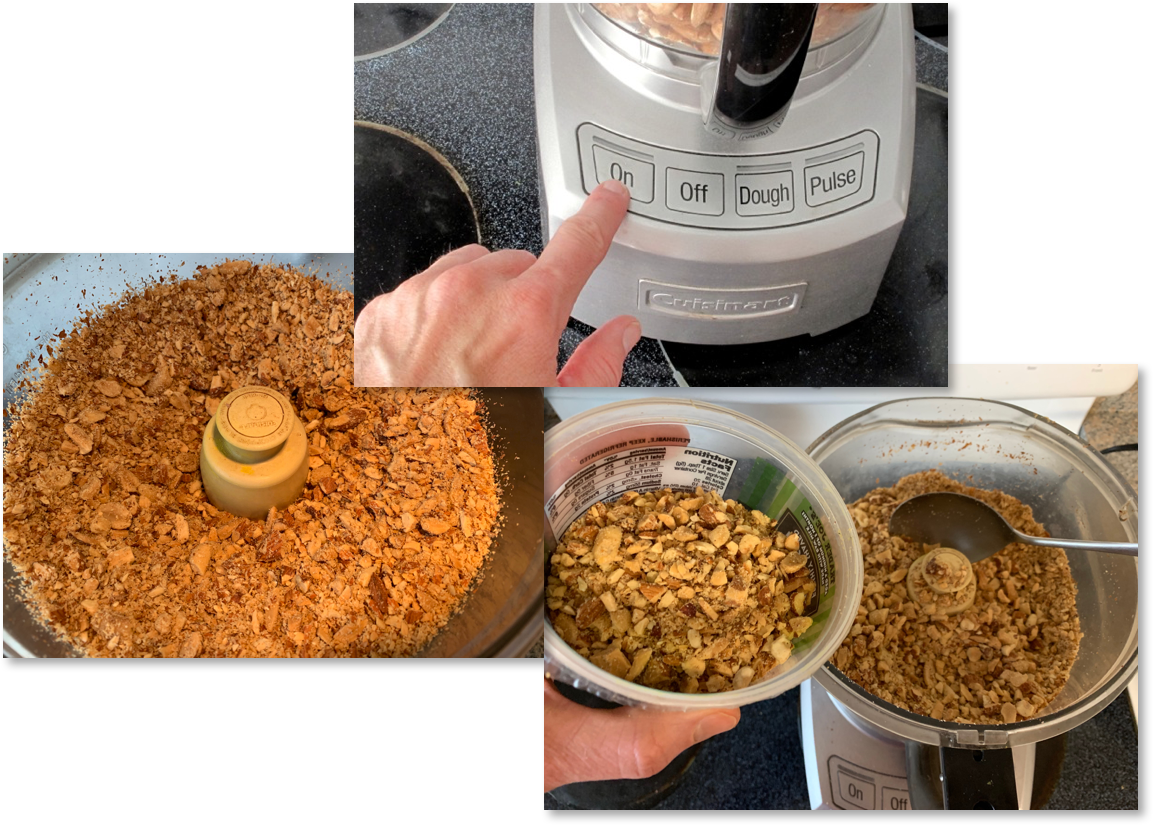
What Can a Food Processor Do With Nuts?
A food processor can do much more than simple chopping. It can break whole nuts into large pieces, fine crumbs, meal, or a paste. With enough processing time, it can also release the natural oils in nuts and make nut butter.
The final texture depends on the nut, its moisture, the blade, the bowl size, and how long you process it. Dry nuts usually chop well, while oily nuts can turn into a paste quite quickly. This is why Food Processor Nuts need close attention during processing.
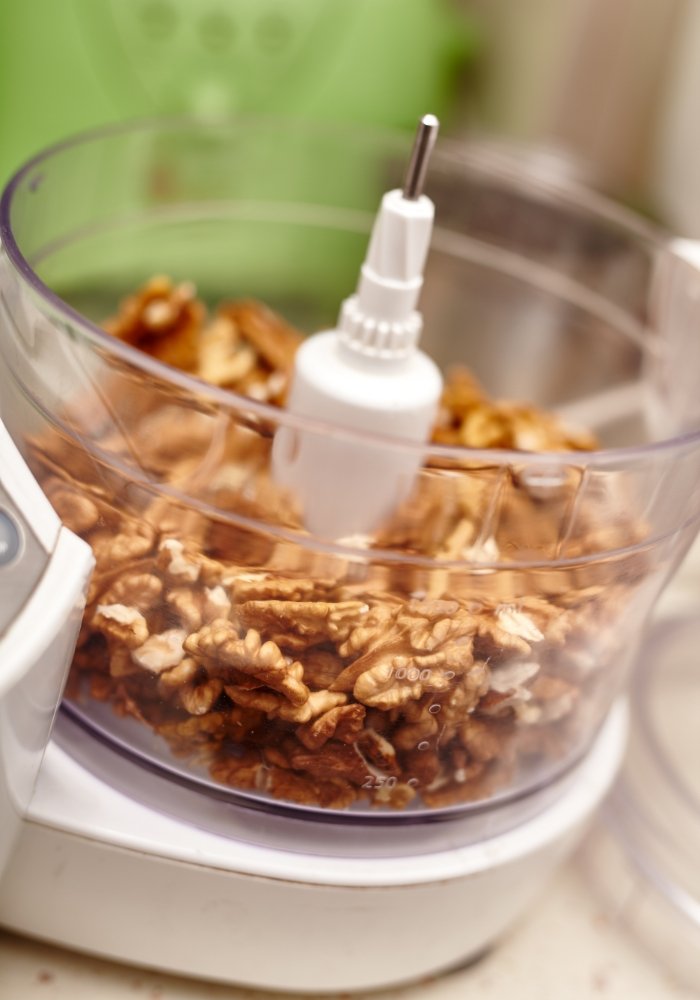
- ✦ Rough chop
Use short pulses to create large pieces for salads, toppings, trail mix, and savory dishes.
- ✦ Fine chop
Use more short pulses to make small pieces for cookies, cakes, bread, and dessert toppings.
- ✦ Nut meal
Process longer until the nuts become a fine, sandy meal for baking and recipes that need a soft nut texture.
- ✦ Nut butter
Keep processing roasted or dry nuts until their natural oils form a thick, spreadable butter.
- ✦ Nut crumbs
A few quick pulses can create crumbs for crusts, coatings, toppings, and energy bites.
Which Nuts Work Well in a Food Processor?
Most common kitchen nuts work well in a food processor. Almonds and hazelnuts are firm, so they may need more pulses. Walnuts, pecans, and cashews are softer and can become fine quite fast.
Peanuts are especially useful for homemade peanut butter because they release oil during blending. Pistachios also work well, but their color and texture can change as they become more finely processed.
- ✦ Firm nuts
Almonds, hazelnuts, and some whole peanuts may need extra processing time.
- ✦ Soft nuts
Walnuts, pecans, and cashews can become fine quickly, so use short pulses.
- ✦ Mixed nuts
Use similar-sized pieces when possible so the batch processes more evenly.
Food Processor Versus a Knife
A knife gives excellent control for a very small amount of nuts. A food processor is faster when you need a larger batch or want a very fine texture.
For a small topping, hand chopping may create less cleanup. For baking several batches of cookies or making nut butter, a food processor can save a great deal of time.
How to Chop Nuts in a Food Processor
Start with clean, dry nuts and a clean work bowl. Do not fill the bowl to the top. A smaller batch gives the blade more room to move the nuts and usually creates a more even chop.
Use the pulse button instead of continuous blending. Check the texture after several pulses. Stop when the nuts reach the size you need, because they can go from chopped to finely ground very quickly.
- ✦ Add the nuts
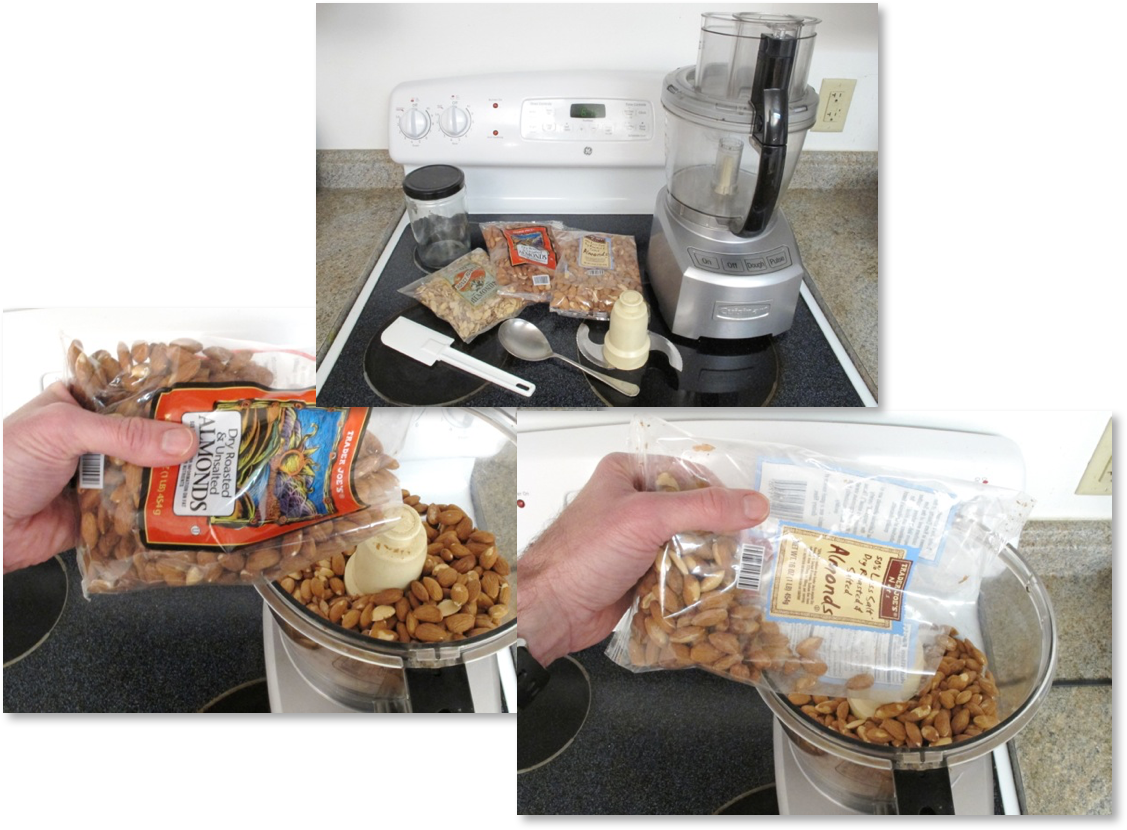
Place a manageable amount in the bowl. Leave enough space for the nuts to move around the blade.
- ✦ Use short pulses
Press and release the pulse button several times instead of holding it down.
- ✦ Check often
Open or inspect the bowl between pulses so you can stop at the right texture.
- ✦ Scrape if needed
If pieces stick to the sides, turn the machine off and move them back toward the center.
- ✦ Stop early
Remember that the blade keeps cutting quickly. Stop as soon as the pieces look right.
How Many Pulses Should You Use?
There is no single pulse count for every food processor or nut. Blade shape, motor speed, bowl size, and nut type all affect the result. Start with a few pulses and inspect the pieces before adding more.
For large pieces, stop sooner. For fine crumbs, add more short pulses. This simple approach gives you more control than using one long blend cycle.
- ✦ Large pieces
Use only a few short pulses and check after each group of pulses.
- ✦ Small pieces
Add more pulses until the nuts reach the size needed for the recipe.
- ✦ Very fine pieces
Process with care because fine nut meal can quickly become oily and pasty.
How to Avoid Uneven Chopped Nuts
Uneven pieces often happen when the bowl is too full. The blade cuts some nuts many times while other nuts stay near the top. Smaller batches help the nuts move through the blade path.
Pulse instead of using a long blend. If needed, stop the machine and redistribute the nuts before continuing.
How to Grind Nuts Into Fine Meal
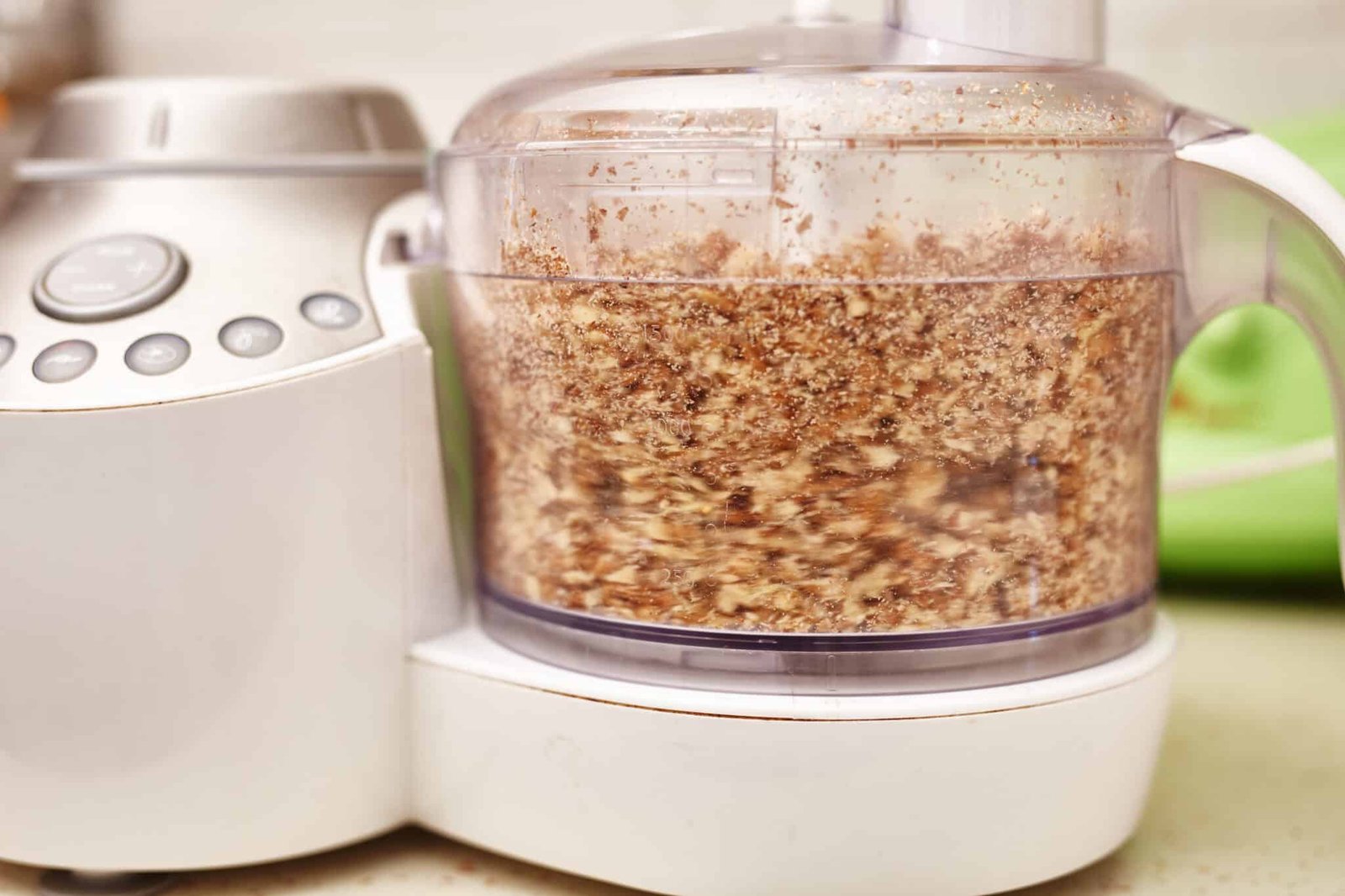
Ground nuts can add flavor and body to cakes, cookies, pie crusts, sauces, and other dishes. A food processor can make nut meal in seconds, but the timing matters. If you keep processing after the meal becomes very fine, the released oil can bind the particles together.
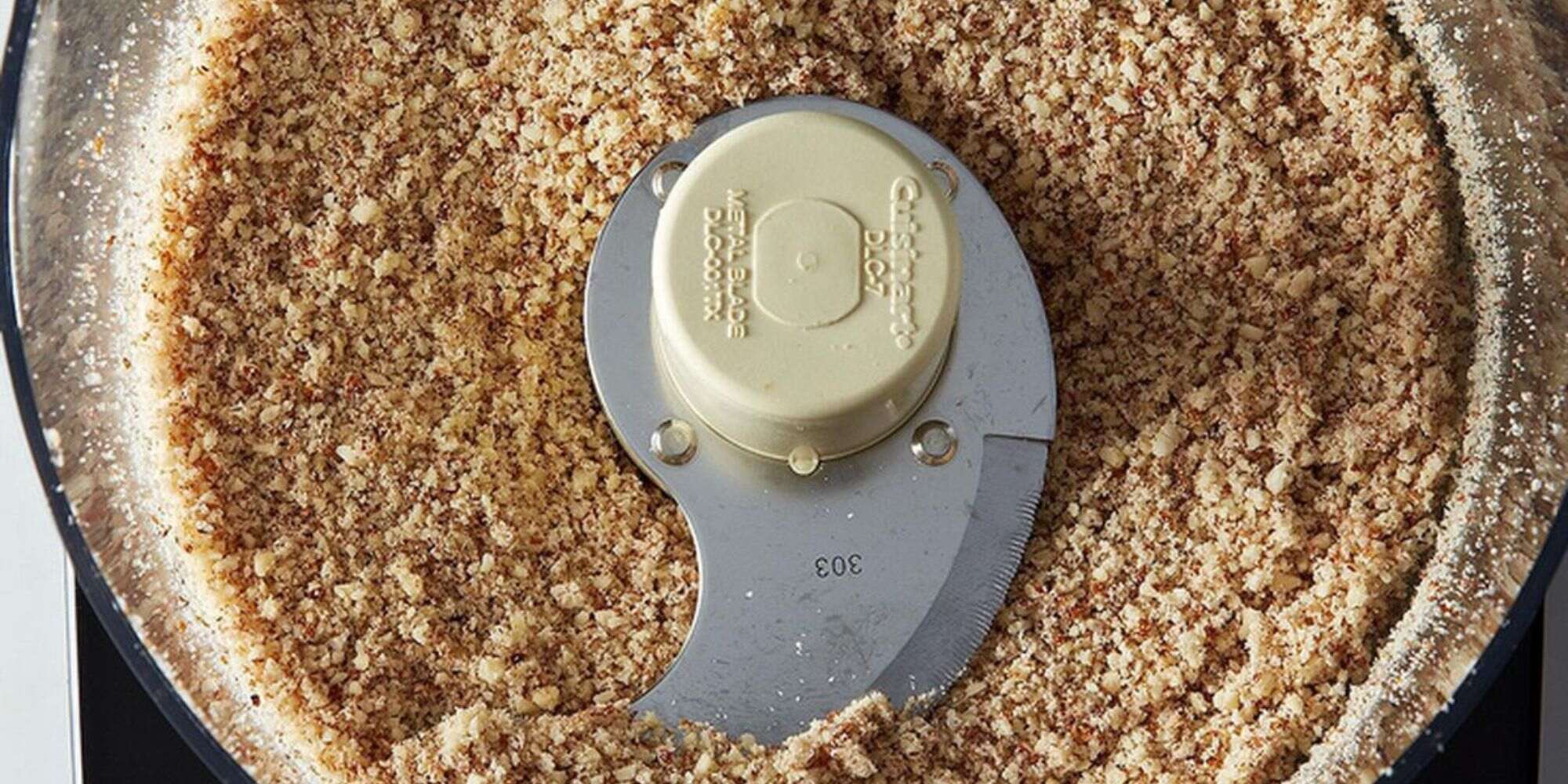
For baking, aim for a dry, loose texture unless the recipe asks for a paste. Almond meal, hazelnut meal, and other ground nuts should look more like fine crumbs than a wet mixture.
- ✦ Use dry nuts
Dry nuts are easier to grind into a loose meal without creating a wet paste.
- ✦ Work in small batches
A smaller amount helps the blade reach more of the nuts.
- ✦ Pulse first
Break the nuts into smaller pieces before using longer processing cycles.
- ✦ Watch the texture
Stop when the nuts look like fine crumbs or meal instead of waiting for a perfectly smooth texture.
Can You Grind Almonds in a Food Processor?
Yes. A food processor is a practical way to grind almonds for baking and cooking. Whole almonds can first be pulsed into small pieces, then processed until they reach the desired meal size.
Almonds contain natural oil, so over-processing can make almond meal clump. For the best texture, use short pulses and stop as soon as the meal looks fine enough for the recipe.
Can You Grind Walnuts and Pecans?
Yes. Walnuts and pecans are softer than many other nuts, so they often grind very quickly. They are excellent for cakes, banana bread, brownies, toppings, and nut-based crusts.
Because they are naturally oily, keep a close eye on them. A few extra seconds can change a fine crumb into a thick mixture.
How to Make Nut Butter in a Food Processor
A food processor can make homemade peanut butter, almond butter, cashew butter, and other nut spreads. The process takes longer than simple chopping because the nuts must release enough oil to form a smooth paste.
Roasted nuts often give a stronger flavor and can process well because heat helps soften their structure and encourages oil release. Start with plain nuts unless you want added salt, sweeteners, or other ingredients.
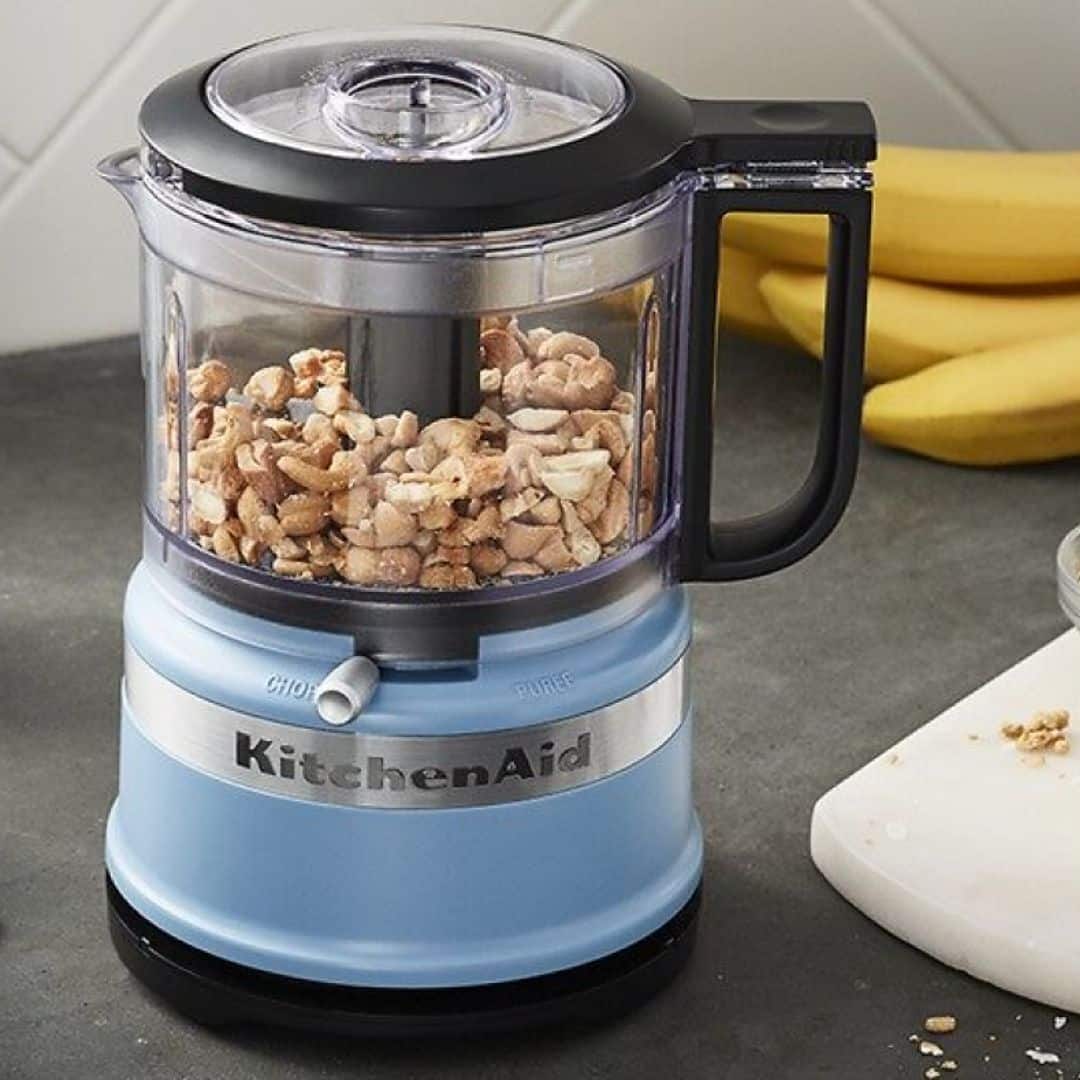
- ✦ Start with enough nuts
A reasonable batch helps the blade catch and move the nuts. Follow your machine maker’s guidance for minimum and maximum loads.
- ✦ Process in stages
The nuts may move from pieces to crumbs, then to a thick paste, and finally to a smoother butter.
- ✦ Scrape the bowl
Stop the machine and scrape the sides when the mixture builds up around the bowl.
- ✦ Allow breaks
If the motor or bowl becomes hot, stop and let the machine cool before continuing.
- ✦ Add extras at the end
Salt, cinnamon, cocoa, or other flavorings can be mixed in after the nut butter reaches the desired texture.
The Stages of Homemade Nut Butter
At first, the nuts become coarse pieces. Soon they turn into a dry, crumbly meal. As the blade keeps working, the natural oils begin to coat the particles and create a thick paste.
The paste may look rough before it becomes smooth. This stage can seem like the process is not working, but continued processing often brings the mixture together. Always follow your food processor’s operating limits and stop if the machine becomes unusually hot or strained.
- ✦ Stage one
Whole nuts break into coarse pieces.
- ✦ Stage two
The pieces become a dry, crumbly meal.
- ✦ Stage three
Natural oils begin to bind the meal into a thick paste.
- ✦ Stage four
The paste becomes smoother and more spreadable.
Do You Need Oil for Nut Butter?
Usually, you do not need extra oil when making nut butter from naturally oily nuts. Peanuts, almonds, cashews, walnuts, and other nuts contain their own fat, which can be released during processing.
If you add oil, use only a small amount and consider how it will change the final texture and flavor. Adding liquid too early can also affect how the nuts move around the bowl.
Best Food Processor Settings and Techniques for Nuts
The best setting for Food Processor Nuts depends on the texture you want. Pulse mode is usually the safest choice for chopping because it gives you control over each cutting cycle. A continuous setting can work for nut butter, but you should still watch the mixture and machine closely.
Do not assume that a higher speed always gives a better result. Speed can increase heat and can make soft nuts turn into paste before you notice. Good technique matters as much as motor power.

- ✦ Pulse for chopping
Short pulses help create a controlled chop and reduce the risk of over-processing.
- ✦ Continuous processing for butter
A steady run can help release oils when making nut butter, as long as the machine remains within its operating limits.
- ✦ Do not overfill
A crowded bowl can lead to poor movement and uneven processing.
- ✦ Watch heat
Long processing can warm both the nuts and the machine, so use breaks when needed.
- ✦ Use the correct blade
Use the blade and bowl recommended by your food processor maker for the task.
Why Do Nuts Turn Into Paste Too Fast?
Nuts contain natural oils. When the blade cuts them into smaller and smaller pieces, those oils spread across the nut particles. Continued processing then changes the dry crumbs into a paste.
This is useful when you want nut butter but not when you need chopped nuts for a cookie or salad. Short pulses and frequent checks are the easiest way to control the texture.
- ✦ Too much processing
Long runs give the blade more time to release and spread natural nut oils.
- ✦ Soft nuts
Walnuts, pecans, and cashews can reach a paste-like texture faster than firmer nuts.
- ✦ Warm nuts
Heat can make oils more mobile and may speed the change from meal to paste.
How to Reduce Heat During Processing
Heat can affect texture and may place extra stress on the machine. If you are processing a large batch, use breaks rather than running the motor continuously for a long time.
For demanding tasks such as nut butter, follow the manufacturer’s instructions for maximum processing time. If the motor smells hot, sounds strained, or the bowl becomes very warm, stop and let the machine cool.
Common Problems When Processing Nuts
Even a good food processor can produce poor results when the batch size or technique is wrong. Most problems come from over-processing, under-processing, filling the bowl too much, or using nuts with the wrong texture for the recipe.
The good news is that most Food Processor Nuts problems are easy to fix. Start with smaller batches, use pulses for chopping, and watch the texture instead of relying only on time.
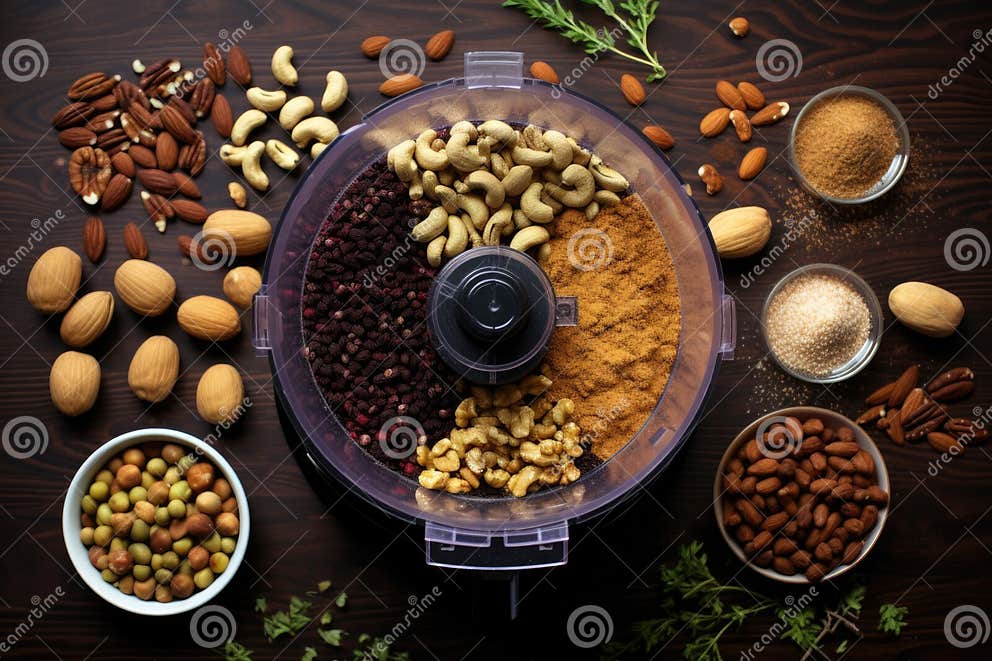
- ✦ Uneven pieces
Use smaller batches and pulse the nuts. Stop and redistribute them if some pieces stay large.
- ✦ Nut paste instead of chopped nuts
You likely processed too long. Stop sooner and use short pulses next time.
- ✦ Nuts stuck to the sides
Turn the machine off, scrape the bowl safely, and continue with shorter cycles.
- ✦ Machine sounds strained
Stop the processor and reduce the batch size. Check the manufacturer’s instructions before continuing.
- ✦ Nut butter stays crumbly
Continue processing in short stages if the machine allows it, with breaks when needed.
- ✦ Texture is too coarse
Add a few more pulses and check after each group until the desired texture is reached.
Can You Fix Over-Processed Nuts?
If chopped nuts have become a little too fine, they may still work in cakes, cookies, oatmeal, sauces, or toppings. Once nuts become a true paste, however, you cannot return them to dry chopped pieces.
Instead, use the paste in another recipe or continue processing it into nut butter. This can prevent food waste while giving the mixture a useful second purpose.
Can You Process Different Nuts Together?
Yes, but choose nuts with similar firmness when possible. Very soft nuts may turn into a paste while harder nuts are still in larger pieces.
If you need a specific texture, processing each nut separately gives more control. You can then mix the finished pieces together.
Safety, Cleaning, and Storage Tips for Food Processor Nuts
Nuts are easy to process, but the blade is sharp and the motor can work hard during thick mixtures. Always turn the machine off before removing the lid, clearing the bowl, or touching the blade. Follow the safety instructions that came with your specific model.
Clean the bowl, lid, blade, and food-contact parts after processing nuts. Nut oils can leave a coating that becomes harder to remove if it sits for a long time. Use the cleaning method approved for your machine and dry the parts well before storage.

- ✦ Handle the blade carefully
Never reach into the bowl near the cutting blade while the machine is connected to power.
- ✦ Stop before scraping
Turn the processor off and disconnect it before moving food around the bowl.
- ✦ Clean oily residue
Wash food-contact parts soon after use so nut oils do not build up.
- ✦ Check manufacturer guidance
Use the recommended cleaning method and dishwasher guidance for your exact model.
- ✦ Store nuts well
Keep processed nuts or nut butter in a suitable airtight container and follow the recipe or food label for storage guidance.
Food Processor Nuts and Allergies
Nut residue can remain on blades, bowls, lids, and seals after processing. This matters in homes where someone has a tree-nut or peanut allergy.
Use separate equipment when needed, or follow strict cleaning and allergen-control practices recommended for the person’s situation. Do not assume that a quick rinse removes all traces of nut residue.
How to Clean Nut Butter From a Food Processor
Nut butter can cling to the bowl and blade because of its high fat content. Remove the bulk of the mixture first, then clean the parts according to the manufacturer’s instructions.
Warm water and suitable dish soap can help with many food-contact parts, but always check whether your specific components are dishwasher safe. Dry all parts fully before putting the processor away.