Microwave Cooking & Reheating Techniques: A Complete Guide
Microwaves are one of the most useful tools in a U.S. kitchen. They can heat a bowl of soup in minutes, cook vegetables, soften frozen food, and bring yesterday’s dinner back to the table. Yet good results depend on more than pressing the Start button. The right power level, container, food shape, moisture, and heating time all matter.
The best Microwave Cooking & Reheating Techniques focus on control rather than speed alone. In practice, I have found that short heating periods give you much more control than one long cycle. Stop, stir, check, and continue as needed. This simple habit helps prevent cold centers, dry edges, tough meat, and overheated sauces.

How Microwave Cooking Works
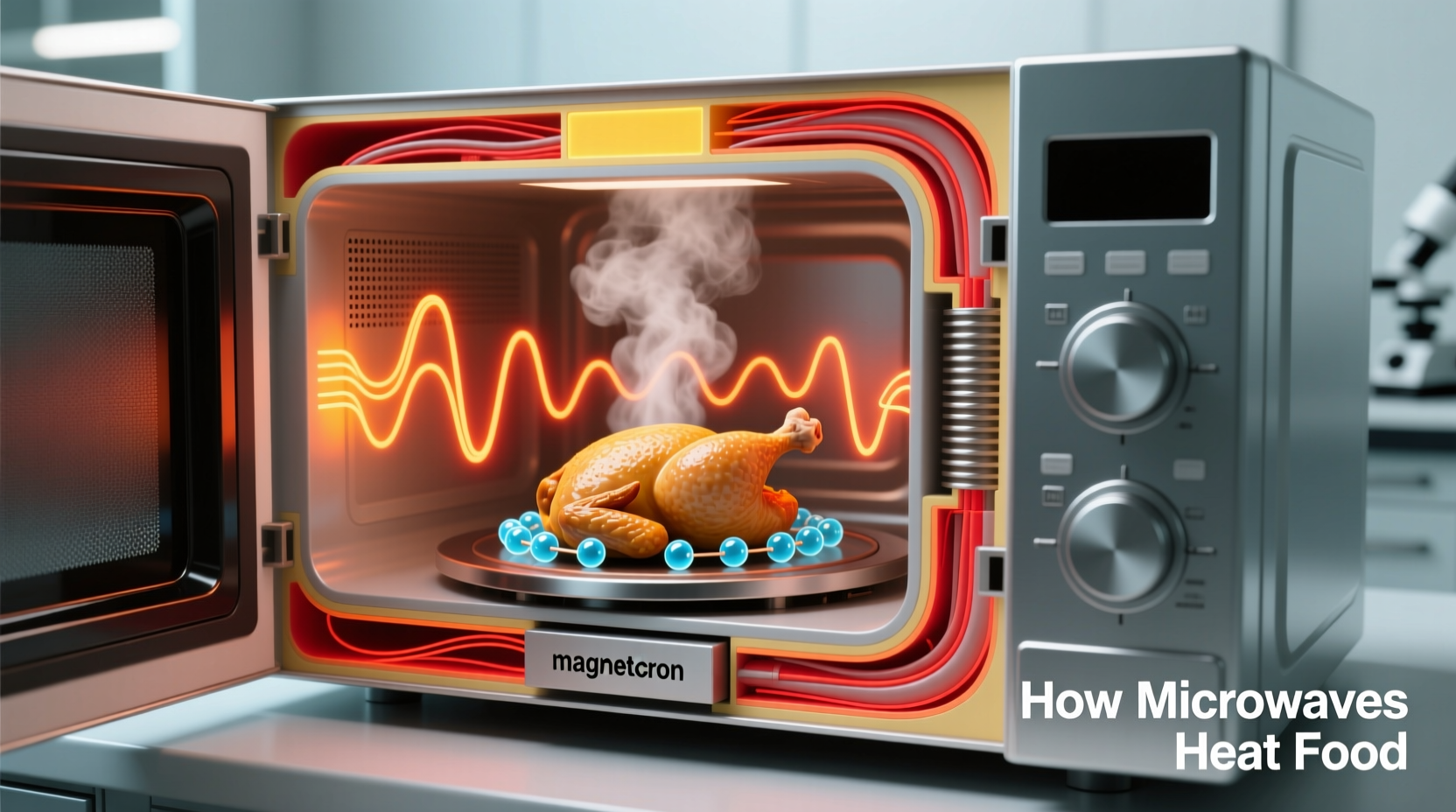
A microwave oven uses electromagnetic energy to heat food. The energy makes certain molecules in the food move rapidly, which creates heat. Water plays a major role, so foods with more moisture often heat more easily than very dry foods.
Microwave energy does not always heat food in a perfectly even way. The shape and size of the food can affect how heat spreads. Dense areas may stay cool while thinner edges become hot. This is why stirring, turning, spreading, and resting are key Microwave Cooking & Reheating Techniques.
The turntable helps expose different parts of the food to the microwave field. Even so, a turntable cannot solve every heating problem. A thick block of frozen food may still have a cold center while the outside becomes hot.
- ✦ Moisture matters
Foods with water usually heat more easily. Adding a small amount of water can help some dry foods regain moisture.
- ✦ Food shape matters
Thin and evenly spread food tends to heat more evenly than a tall, dense pile.
- ✦ Density matters
Dense foods may need more time and a rest period so heat can move toward the center.
- ✦ Movement helps
Stirring, turning, or rearranging food can reduce cold spots and hot spots.
Why Microwaved Food Can Have Hot and Cold Spots
Microwave heating is not the same as heating food in a pan. A pan transfers heat from a hot surface, while a microwave heats food through electromagnetic energy. The result can vary across the same dish.
For this reason, one of the most useful Microwave Cooking & Reheating Techniques is to pause during heating. Stir liquids and soft foods. Turn solid pieces when practical. Then let the food stand briefly before eating.
- ✦ Stir liquids
Stir soup, sauce, gravy, and similar foods after each short heating cycle.
- ✦ Rearrange solid food
Move larger pieces toward the outside and smaller pieces toward the center when suitable.
The Best Microwave Settings for Cooking and Reheating
Many people use full power for everything. That works for some foods, but it is not always the best choice. High power can make the outside of food hot before the center is ready, and it can dry delicate foods quickly.
Lower power gives heat more time to spread through the food. This can be useful for meat, thick portions, sauces, eggs, cheese, and other foods that can become tough or overcooked. Good Microwave Cooking & Reheating Techniques often use medium power with several short cycles.
Your microwave’s wattage also matters. A high-wattage oven may heat food much faster than an older or lower-wattage model. If a package gives microwave instructions, use them as a starting point and adjust the time for your oven.

- ✦ High power
Useful for many quick heating tasks, boiling liquids, cooking vegetables, and following recipes designed for high power.
- ✦ Medium power
Often useful for thicker foods, meat, cheese, eggs, sauces, and gentle reheating.
- ✦ Low power
Helpful for softening foods, warming delicate items, and reducing the risk of rapid overheating.
- ✦ Short cycles
Heat for a short period, check the food, and continue until it reaches the desired temperature.
Why Lower Power Can Give Better Results
A lower setting does not mean the microwave stops producing heat. It usually changes how the oven delivers energy over time. This gives heat more time to move through the food between periods of microwave energy.
For example, a thick serving of pasta may become hot around the edges while the center stays cool on full power. Using medium power and stirring between cycles can produce a more even result.
- ✦ Start conservatively
It is easier to add more heat than to fix food that has already become dry or overcooked.
- ✦ Use the food as your guide
Heating times are estimates. Food size, starting temperature, container shape, and microwave wattage can all change the result.
How to Reheat Leftovers Without Drying Them Out
Reheating leftovers well is mostly about moisture and timing. Food that was tender on day one can become dry when reheated too fast or for too long. The goal is to warm the food without removing more moisture than necessary.
One of the most reliable Microwave Cooking & Reheating Techniques is to cover moist foods loosely. A microwave-safe lid or damp paper towel can help hold moisture near the food. Do not seal a container tightly because steam needs a way to escape.
Spread food across the plate instead of creating a tall mound. Place thicker pieces near the outside when suitable, and pause to stir or rotate the food. After heating, let the food rest for a short time so heat can spread through the portion.
- ✦ Rice and grains
Add a small splash of water, cover loosely, and heat in short cycles. Stir before serving.
- ✦ Pasta
Add a little sauce or water, cover loosely, and heat in short intervals while stirring between cycles.
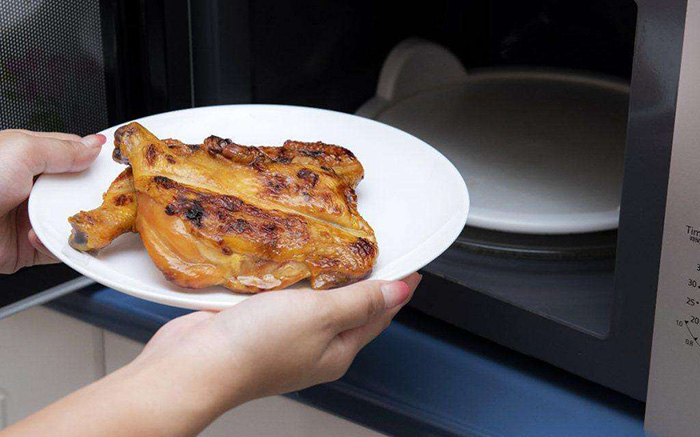
- ✦ Chicken and other meat
Use moderate power when practical and cover the meat to reduce moisture loss. Avoid long, high-power cycles.
- ✦ Vegetables
Add a small amount of water if needed and cover loosely. Heat only until hot and tender.
- ✦ Soup and sauces
Use a deep microwave-safe bowl, cover loosely, heat in short cycles, and stir often.
How to Reheat Rice
Rice can become hard and dry in the refrigerator. A small amount of water can restore some moisture during reheating. Cover the rice loosely and heat it in short intervals, stirring between cycles.
Rice also needs careful food handling before reheating. Cooked rice should be cooled and stored promptly rather than left at room temperature for long periods. Reheating does not make poorly stored food safe.
- ✦ Add moisture
Sprinkle a little water over the rice before heating.
- ✦ Cover loosely
Use a microwave-safe cover that allows steam to escape.
- ✦ Stir well
Mix the rice after heating so hot and cool areas are distributed.
How to Reheat Chicken Without Making It Tough
Chicken can dry out quickly because its texture changes when it loses moisture. Slice thick pieces into smaller portions when appropriate and arrange them in an even layer. Add a little broth, water, or sauce if the recipe allows it.
Use moderate power and short cycles. Turn the pieces during heating and allow them to rest briefly before serving.
- ✦ Add a little liquid
Broth, sauce, or a small amount of water can help protect the surface from drying.
- ✦ Avoid overheating
Stop as soon as the chicken is hot throughout rather than continuing for extra time.
Microwave Techniques for Common Foods
Different foods need different approaches. A bowl of soup behaves very differently from a slice of pizza or a piece of chicken. The most effective Microwave Cooking & Reheating Techniques match the method to the food’s moisture, shape, texture, and density.
For most leftovers, aim for even heating instead of maximum speed. Arrange food well, use the right container, cover when useful, and pause during the process. These small steps can make a large difference.
- ✦ Soup
Use a deep microwave-safe bowl. Cover loosely, heat in short cycles, and stir after each cycle.
- ✦ Pizza
A microwave is fast but can make the crust soft. Heat in short bursts and consider a crisping method afterward if texture matters.
- ✦ Eggs
Use short cycles and stir or break up the mixture as needed. Whole eggs in their shells should not be microwaved because pressure can build inside.
- ✦ Vegetables
Use a small amount of water and a loose cover. Short cooking cycles help preserve texture.
- ✦ Oatmeal
Use a large bowl to prevent overflow. Stir during cooking because thick oatmeal can bubble up quickly.
- ✦ Frozen meals
Follow the package directions first. Stir or rotate the food when the instructions allow it, and check that the center is fully hot.
- ✦ Fried foods
Microwaving can soften crisp coatings. Use short heating cycles and a separate crisping method when the texture is important.
How to Reheat Soup and Sauces
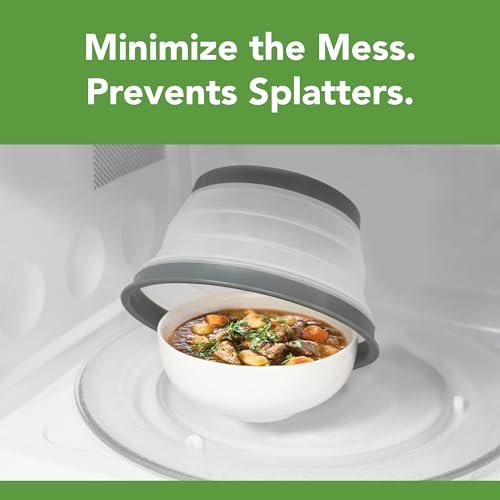
Liquids can heat unevenly and may become very hot in some areas. Use a deep bowl and leave enough room for bubbling. Cover the bowl loosely to reduce splatter.
Heat for short periods and stir between them. Take extra care when removing the bowl because steam and the liquid itself may be much hotter than expected.
- ✦ Use a deep bowl
A deep container reduces the chance of liquid spilling during heating.
- ✦ Stir often
Stirring spreads heat and helps reduce hot spots.
How to Reheat Fried Food
Microwave energy adds heat but does not create the same dry, crisp surface that an oven or air fryer can provide. Fried chicken, fries, and similar foods may therefore become soft.
If speed is the priority, a microwave can still work. Heat briefly, then use an oven, toaster oven, or air fryer when you want the outside to become crisp again.
- ✦ Keep the cycle short
Short heating helps limit moisture loss and prevents the food from becoming rubbery.
- ✦ Use dry heat afterward
An oven, toaster oven, or air fryer can help restore crispness after gentle microwave heating.
Microwave-Safe Containers and Food Safety
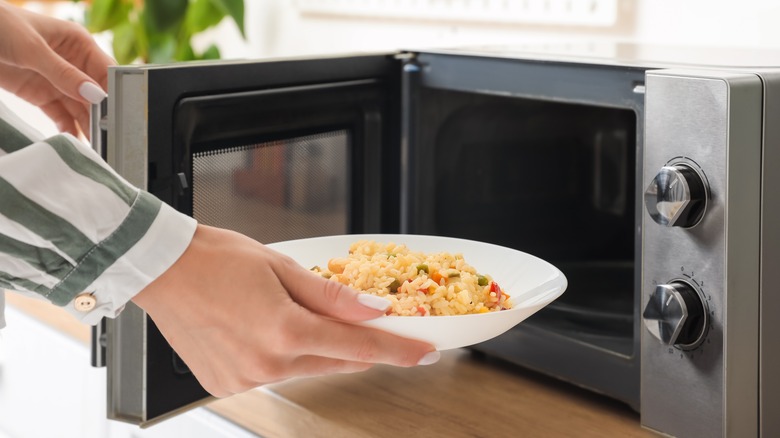
Choosing the right container is an important part of Microwave Cooking & Reheating Techniques. Use containers labeled as microwave-safe and follow the manufacturer’s instructions. Glass and many microwave-safe ceramic containers work well, while some plastics may soften or deform when heated.
Never assume that every plastic container is safe for microwave use. Takeout containers, foam containers, and some disposable packages may not be designed for microwave heating. When unsure, move the food to a container clearly marked for microwave use.
Food safety also depends on how leftovers were stored before reheating. A microwave can heat food, but it cannot undo unsafe storage. Keep perishable food refrigerated and reheat leftovers until they are hot throughout.
- ✦ Use microwave-safe dishes
Choose glass, ceramic, or plastic products clearly marked for microwave use.
- ✦ Avoid sealed containers
Steam can build pressure inside a sealed container and cause it to burst or spray hot food.
- ✦ Do not microwave metal unless the oven instructions allow it
Metal can reflect microwave energy and may cause arcing or damage in many microwave ovens.
- ✦ Be careful with steam
Steam can cause serious burns. Open covers away from your face and hands.
- ✦ Check the center
The surface may feel hot while the middle remains cool. Stir or check the thickest part before serving.
Can You Microwave Plastic?
Some plastics are designed for microwave use, while others are not. Look for a clear microwave-safe label or follow the instructions from the container maker.
If you do not know whether a plastic container is microwave-safe, transfer the food to glass or another suitable container. This is a simple way to reduce uncertainty.
- ✦ Check the label
Use plastic only when the manufacturer indicates that it is suitable for microwave heating.
- ✦ Avoid damaged containers
Cracked, warped, or badly worn containers should not be used for microwave heating.
Why Standing Time Matters
Standing time is not wasted time. Heat can continue moving through food after the microwave stops. A brief rest can improve evenness and make the center hotter without adding another long heating cycle.
For thick foods, this step can be especially useful. Follow package or recipe instructions when a specific standing time is given.
- ✦ Let heat spread
Resting allows heat to move from hotter areas toward cooler areas.
- ✦ Check before eating
Stir or check the center after resting to confirm that the food is hot throughout.
Common Microwave Mistakes and How to Avoid Them
Most microwave problems come from using too much heat for too long. A long, high-power cycle may seem convenient, but it gives you little control. Better Microwave Cooking & Reheating Techniques use short cycles and regular checks.
Another common mistake is ignoring the shape of the food. A tall pile heats differently from a flat layer. Spreading food around the plate can improve heat distribution and shorten the time needed to warm the center.
It is also easy to forget that microwaved food can keep heating after the oven stops. A short rest can be more useful than immediately adding another long cycle.

- ✦ Mistake: Using full power for everything
Try medium power for foods that dry out or overcook easily.
- ✦ Mistake: Heating one long cycle
Use several short cycles so you can stir, turn, and check the food.
- ✦ Mistake: Leaving food in a tall pile
Spread food into an even layer when possible.
- ✦ Mistake: Ignoring moisture
Add a small amount of suitable liquid or use a loose cover when the food needs moisture.
- ✦ Mistake: Eating immediately
Allow thick foods to stand briefly so heat can spread.
- ✦ Mistake: Trusting appearance alone
Food can look hot while the center remains cool. Stir and check the thickest area.
A Simple Reheating Method That Works for Many Foods
Start by placing the food in a microwave-safe dish. Spread it into an even layer and add a small amount of water, broth, or sauce if the food needs moisture. Cover it loosely when appropriate.
Set the microwave for a short heating period. Stop, stir or turn the food, and check the center. Continue in short cycles until the food is hot throughout, then allow it to stand briefly before serving.
- ✦ Step 1
Transfer the food to a suitable microwave-safe container.
- ✦ Step 2
Spread the food evenly and add moisture when needed.
- ✦ Step 3
Cover loosely if the food benefits from trapped moisture.
- ✦ Step 4
Heat for a short cycle at a suitable power level.
- ✦ Step 5
Stir, turn, or rearrange the food.
- ✦ Step 6
Continue heating until the food is hot throughout.
- ✦ Step 7
Let the food stand briefly, then check it before eating.
Advanced Microwave Cooking & Reheating Techniques
Once you understand the basics, you can fine-tune Microwave Cooking & Reheating Techniques for better texture and more consistent results. The key is to control three things: energy, moisture, and time. Change one of these at a time when a result is not right.
For example, if food is hot outside but cold inside, do not simply add more full-power time. Lower the power, shorten the cycles, and stir or rearrange the food. If food is dry, focus on moisture and shorter heating rather than only reducing the temperature.
A microwave also works best when you respect the limits of the food. It is excellent for fast heating and many cooking tasks, but it cannot always replace dry-heat methods. Crisp crusts, browned surfaces, and roasted textures often need an oven, toaster oven, skillet, or air fryer.
- ✦ For uneven heating
Reduce power, use shorter cycles, and stir or rearrange the food.
- ✦ For dry food
Add suitable moisture, cover loosely, and reduce the heating time.
- ✦ For cold centers
Use a flatter layer, lower power, and a standing period.
- ✦ For splattering
Use a loose microwave-safe cover and choose a larger container.
- ✦ For crisp textures
Use the microwave for speed, then finish with dry heat when appropriate.
When to Use a Microwave Instead of an Oven
A microwave is ideal when speed matters. It works well for reheating soup, rice, pasta, vegetables, leftovers, and many frozen meals. It also uses less time to warm a single portion than a full-size oven.
An oven is often better when you want browning, crispness, or a dry surface. For foods such as pizza, fried chicken, roasted vegetables, and baked dishes with a crisp top, a combined microwave and dry-heat approach may give a better result.
- ✦ Choose the microwave
Use it when you need fast heating, moisture retention, or a small portion.
- ✦ Choose the oven
Use it when browning, crisp edges, or a firm surface matters most.
- ✦ Use both
Microwave first for speed, then finish with dry heat when the food and recipe allow it.
How to Improve Results Every Time
Treat the first heating cycle as a test rather than a final answer. Note how quickly your microwave heats the food and adjust the next cycle. This is especially useful when cooking the same meal often.
Keep portions similar when possible. A single serving heats differently from a large family-size dish. Once you learn how your microwave handles common foods, you can build a simple routine around those results.
- ✦ Know your microwave
Learn whether your oven heats faster or slower than the package times suggest.
- ✦ Keep portions even
Similar portion sizes make heating times easier to repeat.
- ✦ Adjust one factor at a time
Change power, time, moisture, or arrangement so you can see what improves the result.