Microwave Charcoal Filter: Replace And Reduce Kitchen Odors
A microwave charcoal filter traps odors and grease from microwave vents to improve air quality.
I have worked with kitchen appliances and filters for years, and I will walk you through what a microwave charcoal filter does, how it works, and how to pick, install, and maintain one. This guide covers definitions, benefits, limits, step-by-step tips, and real-life lessons so you can make smart choices about your microwave charcoal filter.
What is a microwave charcoal filter?
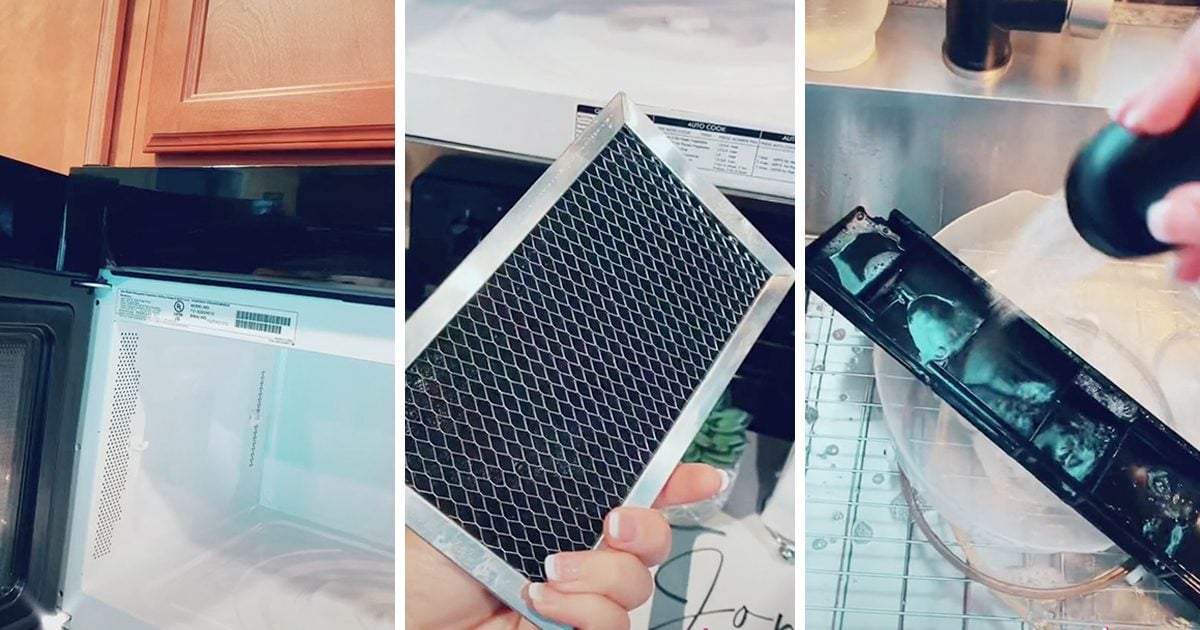
A microwave charcoal filter is an activated carbon filter used in microwaves that have recirculation vents. It captures cooking smells and some grease before the air returns to the kitchen. Many compact and over-the-range microwaves use these filters when ducting to the outside is not available.
A microwave charcoal filter is not a HEPA filter. It mainly adsorbs gases and odors. It also traps some particulates and grease but cannot replace full ventilation.

How microwave charcoal filters work
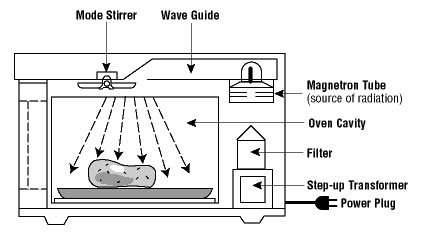
Activated charcoal has lots of tiny pores. Those pores hold odor molecules by adsorption. Air from the microwave fan passes through the charcoal. Smells stick to the charcoal and cleaner air exits back into your kitchen.
The filter often sits behind a grille or under the microwave. It works passively when the vent fan runs. Over time, the surface fills and the filter loses effectiveness. That is why regular replacement matters.

Benefits of a microwave charcoal filter
A microwave charcoal filter offers several useful benefits:
- Reduces cooking odors so the kitchen smells fresher.
- Helps trap grease and larger particles to limit buildup on cabinets.
- Lets kitchens without external vents still recirculate air.
- Is usually affordable and easy to replace on most models.
While not perfect, the microwave charcoal filter is a low-cost way to improve kitchen air when ducting is not an option.

Types and materials
Most microwave charcoal filters use activated carbon. You can find variations such as:
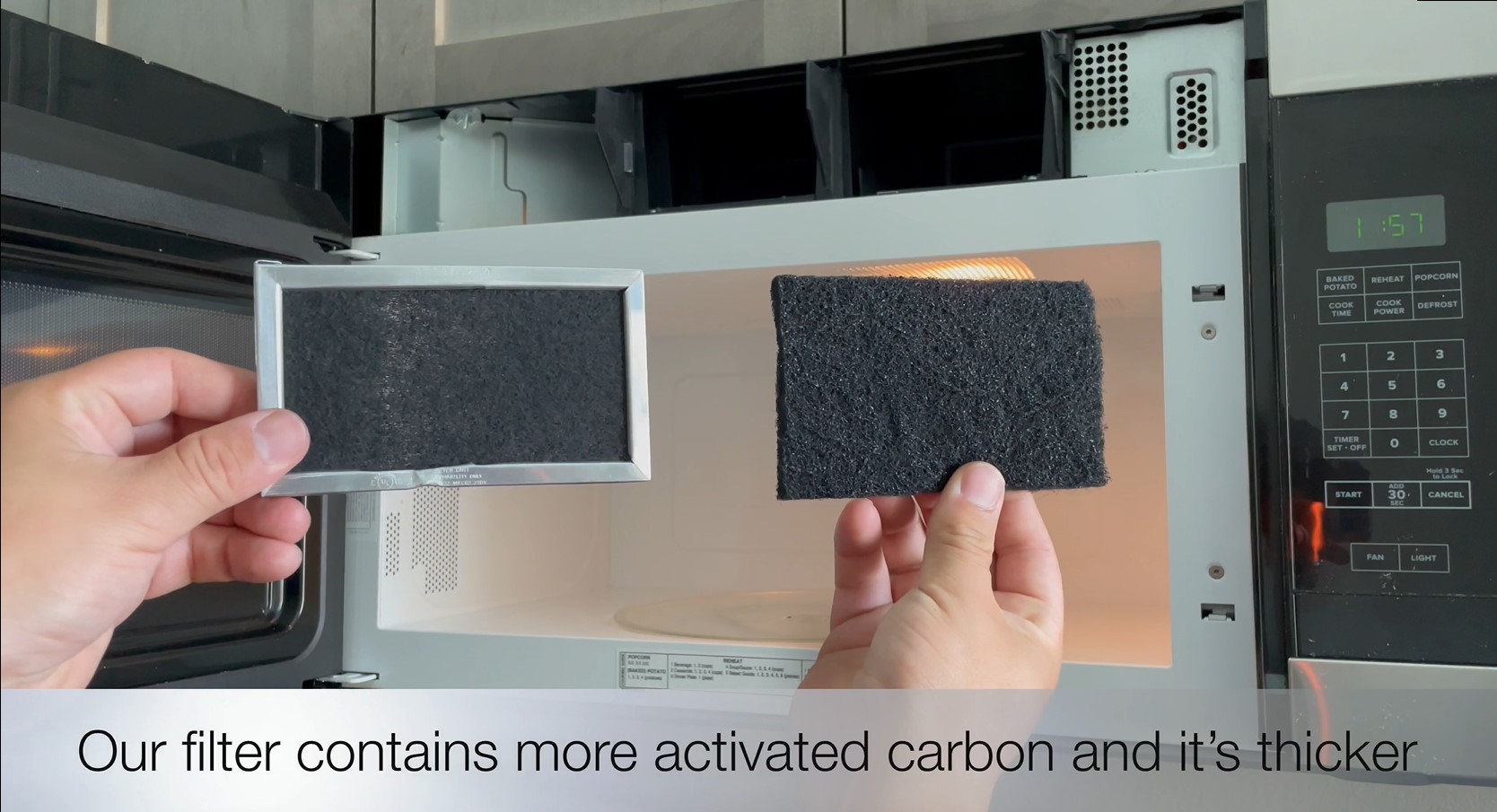
- Granular carbon pads
- Solid carbon blocks
- Carbon bonded to cloth or foam
Some filters combine carbon with a small grease mesh. Models vary by shape, size, and lifespan. Always match the part number for proper fit and performance.

How to replace and maintain microwave charcoal filters
Replacing a microwave charcoal filter is simple. Follow these general steps:
- Turn off power and unplug the microwave.
- Locate the filter behind the vent or under the unit.
- Remove the old filter by sliding or unclipping it.
- Insert the new microwave charcoal filter in the correct orientation.
- Restore power and test the fan.
Maintenance tips for longer life:
- Replace every 6 to 12 months depending on use.
- Inspect the grease mesh often and clean it if washable.
- Note reduced odor removal as the sign to change the filter.
Always consult your microwave manual for model-specific instructions.

Buying guide and compatibility tips
When you buy a replacement, check these points:
- Exact model number fit is critical.
- Look for OEM or high-quality aftermarket filters with good reviews.
- Verify dimensions and mounting tabs.
- Consider multi-packs if you cook a lot.
Price varies by brand and size. A quality microwave charcoal filter balances cost with longer life and reliable odor control.
 problems and troubleshooting”
style=”max-width: 100%; height: auto; border: 2px solid black; border-radius: 10px; display: block; margin: 0 auto;”
loading=”lazy”
/>
Common problems and troubleshooting
Typical issues and quick fixes:
- Weak odor control — Replace the microwave charcoal filter; it may be spent.
- Fan noise or low airflow — Check for clogged grease mesh or blocked vents.
- Filter does not fit — Confirm the part number and measure the cavity.
- Persistent smells after replacement — Check for grease buildup inside the microwave and on the vent path.
If problems persist, consult a technician. Some issues are caused by fan motor faults or damaged ducting.
Personal experience and practical tips
I replaced charcoal filters in several rental kitchens over the years. I learned these easy lessons:
- Always keep a spare filter on hand. Quick swaps prevent long odor exposure.
- Clean the grease mesh monthly. It extends filter life and keeps airflow high.
- Label replacement dates on the filter box. Small reminders reduce forgetfulness.
- If a microwave smells strongly even after a new filter, clean the interior thoroughly. Grease stuck behind panels can keep releasing odors.
These small habits save time and keep kitchens pleasant.
Frequently Asked Questions of microwave charcoal filter
What is the lifespan of a microwave charcoal filter?
Most microwave charcoal filters last about 6 to 12 months, depending on cooking frequency and food types. Heavy frying or strong spices shorten the life.
Can I wash a microwave charcoal filter?
Activated carbon filters are not washable. Rinsing can damage the carbon and reduce effectiveness. Replace the filter when soiled or tired.
Will a microwave charcoal filter remove smoke?
A microwave charcoal filter can reduce light smoke smells but cannot fully remove heavy smoke or particulates. For heavy smoke, a ducted vent or air purifier works better.
Are aftermarket microwave charcoal filters safe to use?
High-quality aftermarket filters are generally safe if they match the model and dimensions. Choose trusted brands and check customer reviews for fit and performance.
How do I know when to replace the filter?
Replace when odors return or airflow drops despite a clean grease mesh. A yearly schedule is a safe rule for typical home use.
Conclusion
A microwave charcoal filter is a simple, low-cost way to cut cooking odors and improve recirculated air. It works best when paired with regular cleaning and timely replacement. Use the tips here to choose the right filter, fit it correctly, and extend its life.
Try replacing your filter if your microwave smells stale. Track replacement dates and keep a spare on hand. If this guide helped, leave a comment, subscribe for more appliance tips, or share your own filter experiences.