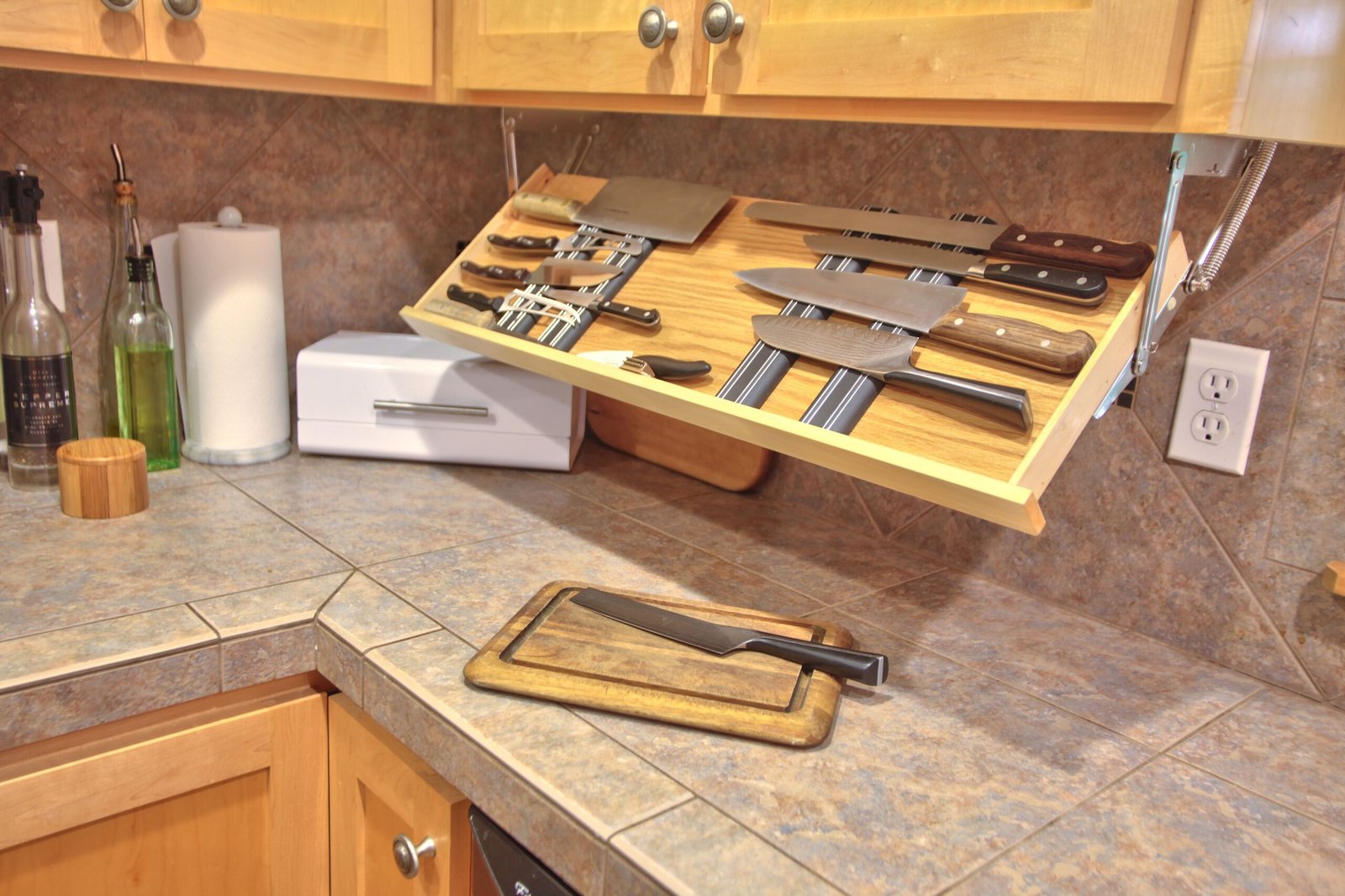
Kitchen Knife Storage & Safety: Complete Guide to Protecting Your Blades and Your Home
Kitchen knives are one of the most useful tools in any American home kitchen, but they need proper care. Good Kitchen Knife Storage & Safety practices protect your family, extend blade life, and make cooking easier.
After years of working with kitchen tools, one lesson stands out: a sharp knife stored safely is much safer than a dull knife left loose in a drawer. A well-planned storage system helps you grab the right knife quickly without risking your hands.
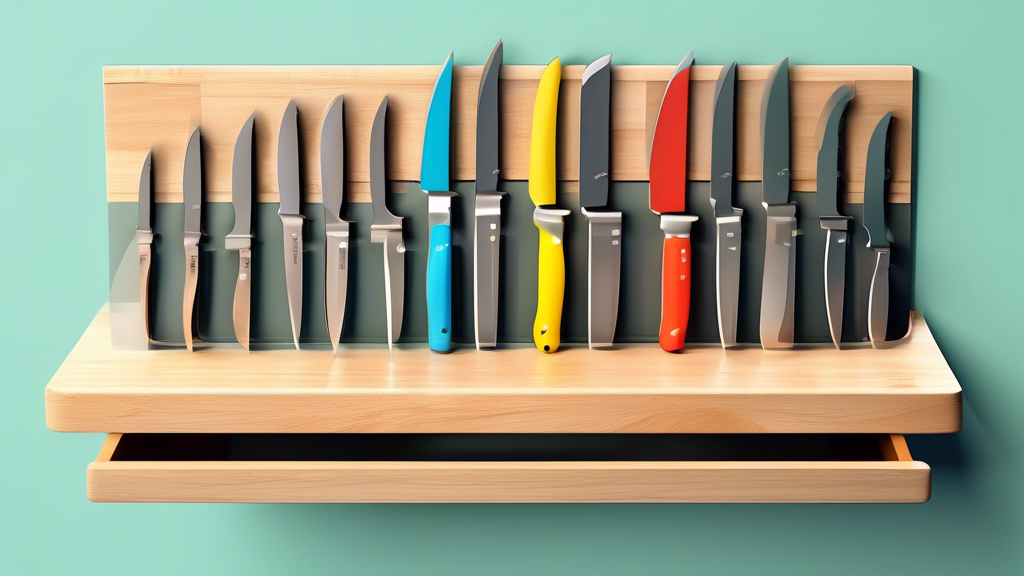
Why Kitchen Knife Storage & Safety Matters
A kitchen knife is designed to cut with very little force. That same sharp edge can cause injury when a knife is stored carelessly. Proper Kitchen Knife Storage & Safety reduces accidental cuts and keeps blades ready for daily cooking.
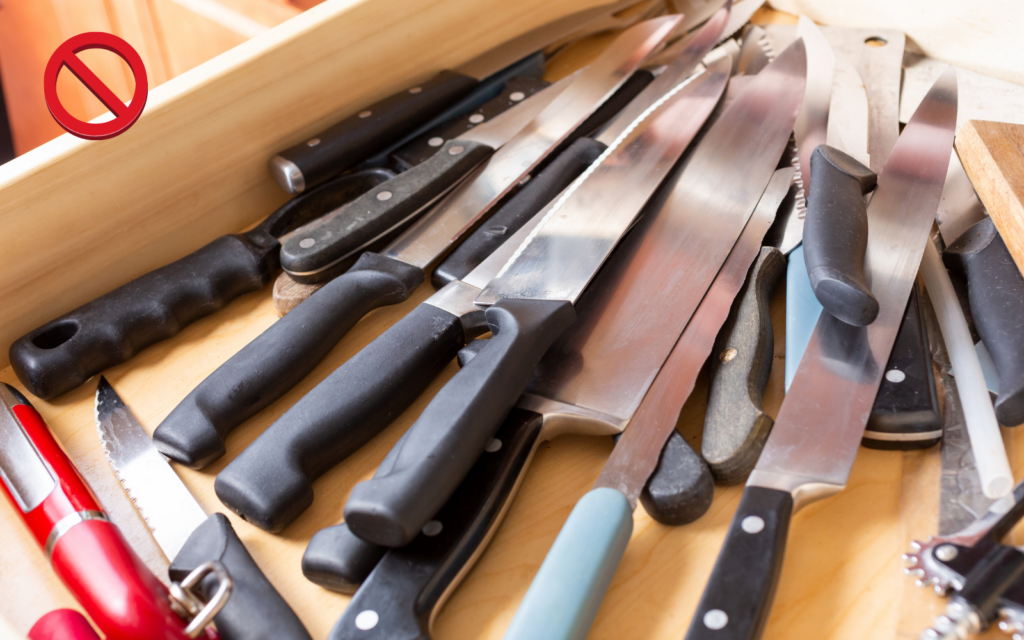
Many home cooks store knives in crowded drawers where blades touch other tools. This can damage the edge and create a hidden hazard when someone reaches inside.
- ✦ Protects your hands
Safe storage prevents unexpected contact with exposed blades.
- ✦ Preserves knife quality
Good storage keeps edges sharp and prevents scratches or damage.
- ✦ Improves kitchen workflow
An organized knife area makes cooking faster and more comfortable.
Common Knife Storage Mistakes
Leaving knives loose in drawers is one of the most common mistakes. Blades can hit other utensils, lose sharpness, and become difficult to identify.
Another mistake is storing wet knives. Moisture can cause rust spots, especially on carbon steel blades.
- ✦ Loose drawer storage
Creates a higher chance of accidental cuts.
- ✦ Wet blade storage
Can lead to corrosion and poor knife performance.
Best Kitchen Knife Storage Options for Home Cooks
The best Kitchen Knife Storage & Safety solution depends on your kitchen size, cooking habits, and knife collection. A professional chef may need quick access to many knives, while a home cook may only need a few safe storage options.
Each storage method has advantages. The key is choosing a system that keeps blades protected and easy to access.
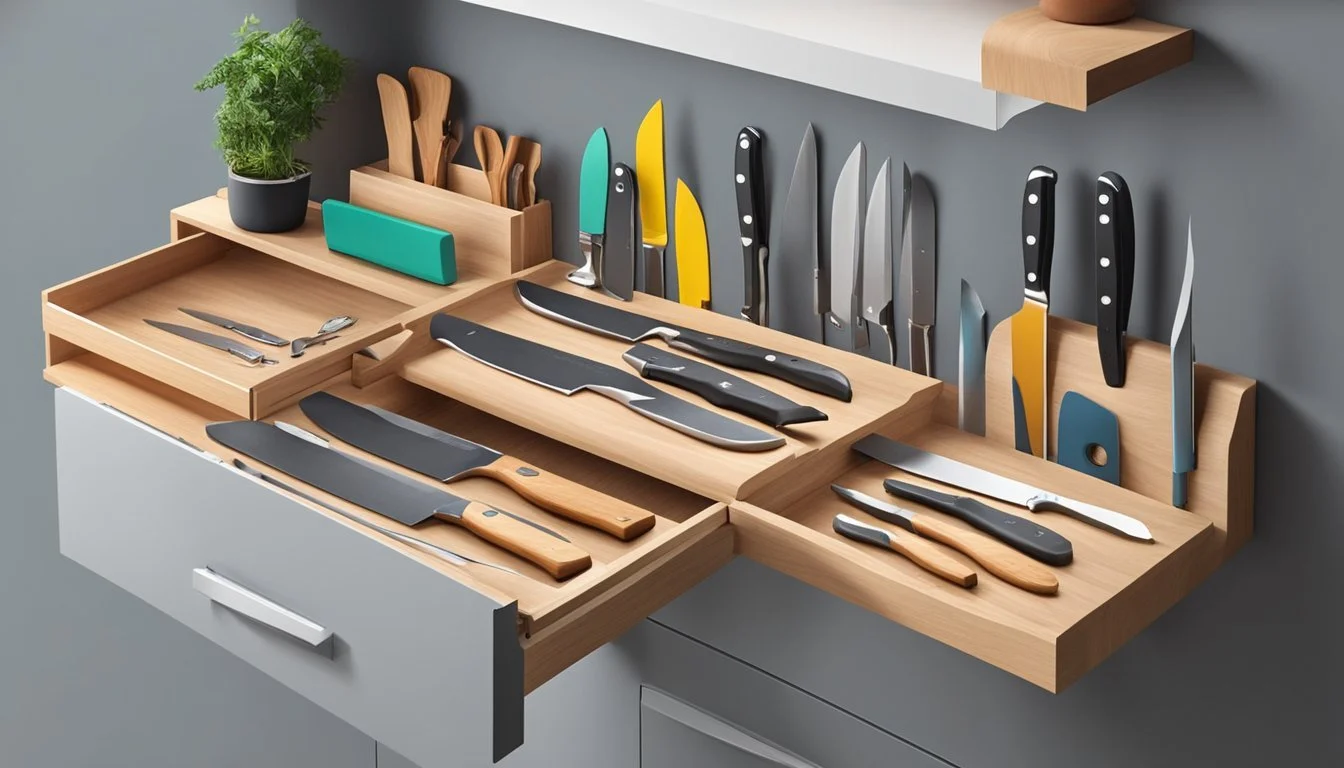
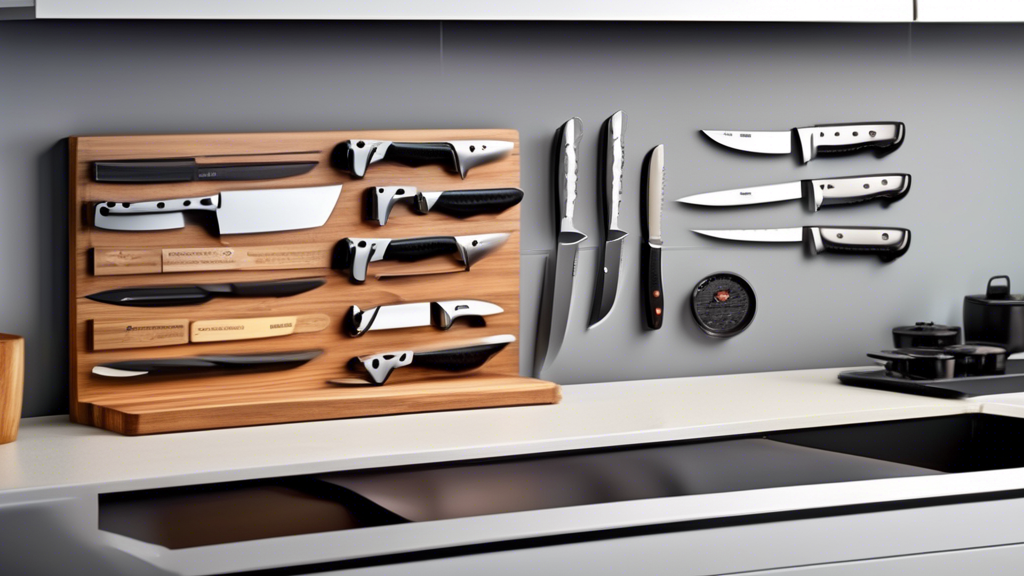
- ✦ Knife blocks
Knife blocks keep blades separated and protected on a countertop.
- ✦ Magnetic strips
Wall-mounted strips save counter space and allow quick access.
- ✦ Drawer organizers
Dedicated inserts keep knives hidden and separated.
- ✦ Blade guards
Protect individual knives when storing them in drawers or cabinets.
Choosing Between Countertop and Drawer Storage
Countertop storage works well for people who cook often and want quick access. Drawer storage is better for smaller kitchens or homes with children.
No matter which option you choose, the knife should stay stable and the blade should not be exposed.
- ✦ Countertop benefit
Provides fast access during meal preparation.
- ✦ Drawer benefit
Keeps knives hidden and creates a cleaner look.
How to Safely Handle Kitchen Knives
Storage is only one part of Kitchen Knife Storage & Safety. Proper handling habits are equally important. Always hold knives by the handle and keep fingers away from the cutting edge.
A good cutting technique also reduces accidents. Use a stable cutting board and avoid rushing through food preparation.
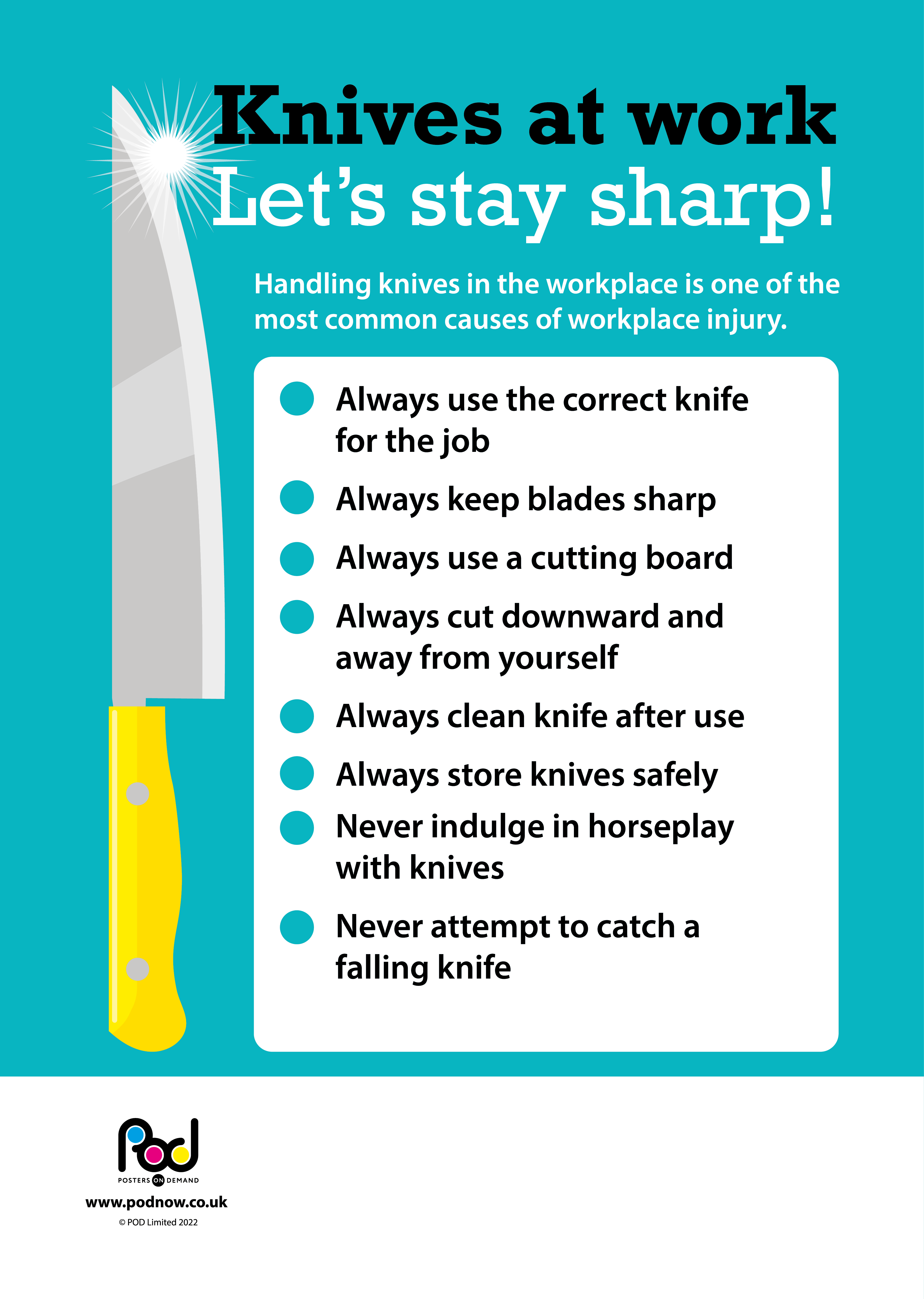
- ✦ Use a stable surface
A secure cutting board prevents slipping while cutting.
- ✦ Carry knives carefully
Hold the blade facing down when moving through the kitchen.
- ✦ Pass knives safely
Place a knife on a counter instead of handing it blade-first.
Teaching Knife Safety to Family Members
Children should learn that knives are tools, not toys. Teach safe habits early and keep sharp knives stored away when not supervised.
Families can create simple kitchen rules, such as returning knives immediately after use.
- ✦ Create clear rules
Simple guidelines help everyone use knives responsibly.
How to Store Different Types of Kitchen Knives
Different knives need different storage approaches. A chef knife, paring knife, bread knife, and specialty tools all benefit from protection that matches their size and shape.
Kitchen Knife Storage & Safety improves when each knife has a dedicated place instead of being mixed together.
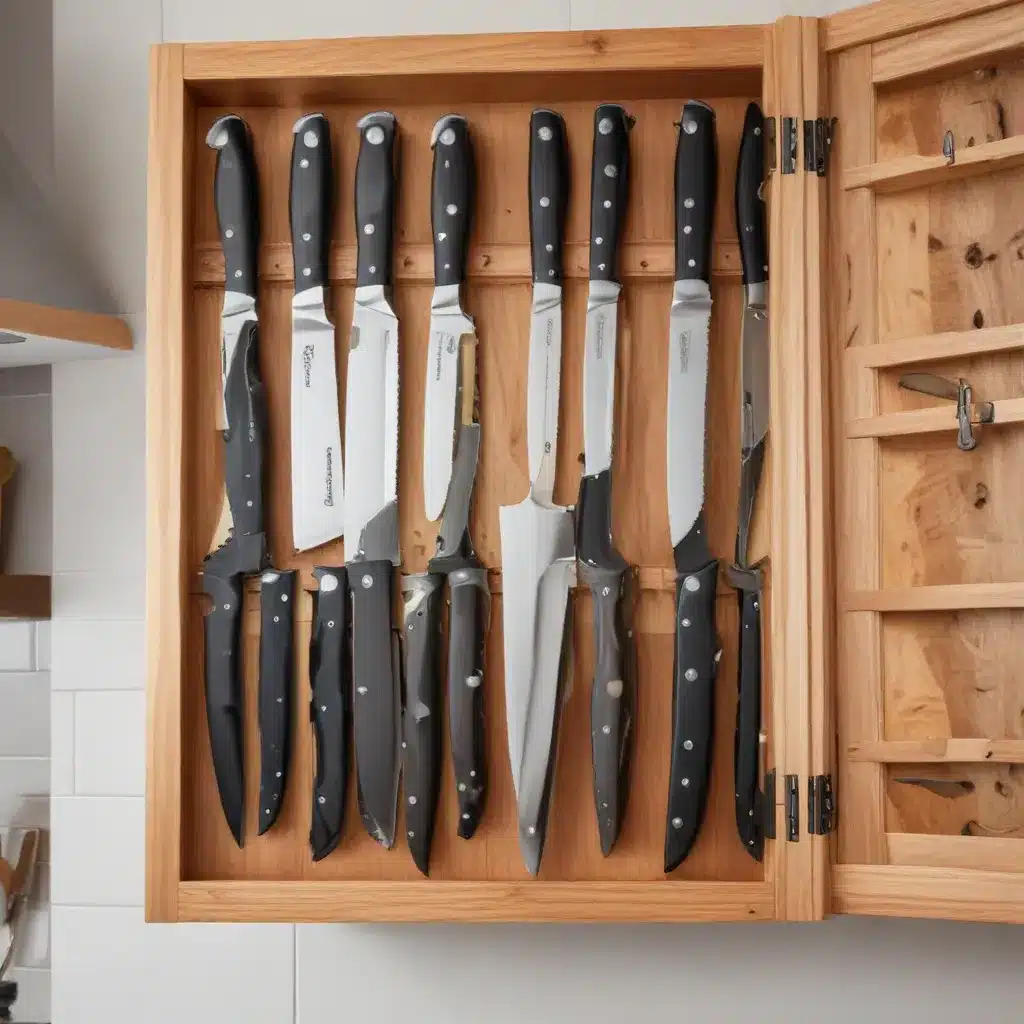
- ✦ Chef knives
Store upright or on a magnetic strip to protect the long edge.
- ✦ Small knives
Use drawer slots or blade covers for compact storage.
- ✦ Serrated knives
Avoid contact with other tools because teeth can become damaged.
Special Care for Expensive Knives
High-quality knives require extra attention. Avoid tossing them into drawers or placing them loosely in storage containers.
Protecting the edge helps maintain cutting performance and reduces the need for frequent sharpening.
- ✦ Use protective covers
Blade guards prevent damage during storage.
Cleaning and Maintenance Before Knife Storage
A clean knife is easier to store safely. Always wash knives according to manufacturer instructions and dry them completely before putting them away.
Kitchen Knife Storage & Safety also includes regular maintenance. A damaged or dull blade can require more pressure, which may increase the chance of slipping.
- ✦ Dry completely
Remove moisture before storage to prevent rust.
- ✦ Check blade condition
Inspect for chips, cracks, or damage.
- ✦ Sharpen when needed
A sharp knife gives better control during cutting.
Kitchen Knife Storage & Safety Tips for Homes With Children
Homes with children need extra attention when storing sharp kitchen tools. Knives should stay out of reach and away from areas where children play.
Safety does not mean hiding every tool forever. It means creating a controlled system where knives are used and stored responsibly.
- ✦ Use locked drawers when needed
Safety locks can add extra protection for young children.
- ✦ Store knives higher
Higher locations reduce accidental access.