Kitchen Knife Cleaning & Hand Washing: The Complete Guide to Safe and Proper Knife Care
Kitchen Knife Cleaning & Hand Washing is one of the simplest ways to protect your favorite kitchen tools. A sharp knife is safer and easier to use when it receives proper care after every meal. Many home cooks in the United States use expensive chef knives, but daily cleaning habits often decide how long those knives last.
From years of kitchen tool care, one lesson stands out: cleaning a knife is not only about removing food. It is also about protecting the steel, edge, and handle. A few careful seconds after cooking can prevent dull blades, rust spots, and unwanted damage.

Why Kitchen Knife Cleaning & Hand Washing Matters
Kitchen knives touch many types of food every day. Raw meat, vegetables, fruits, herbs, and sauces can leave behind oils, acids, and bacteria. Proper cleaning removes these materials and keeps your cooking space safer.
Kitchen Knife Cleaning & Hand Washing also protects the knife itself. Water, food particles, and strong chemicals can slowly affect the blade surface. Regular care helps maintain a smooth edge and clean appearance.
- ✦ Protects the blade
Gentle washing removes residue without harming the sharp cutting edge.
- ✦ Improves food safety
Cleaning after use helps reduce leftover food particles and possible contamination.
- ✦ Extends knife life
Proper care helps prevent rust, stains, and handle damage.
The Correct Way to Hand Wash a Kitchen Knife
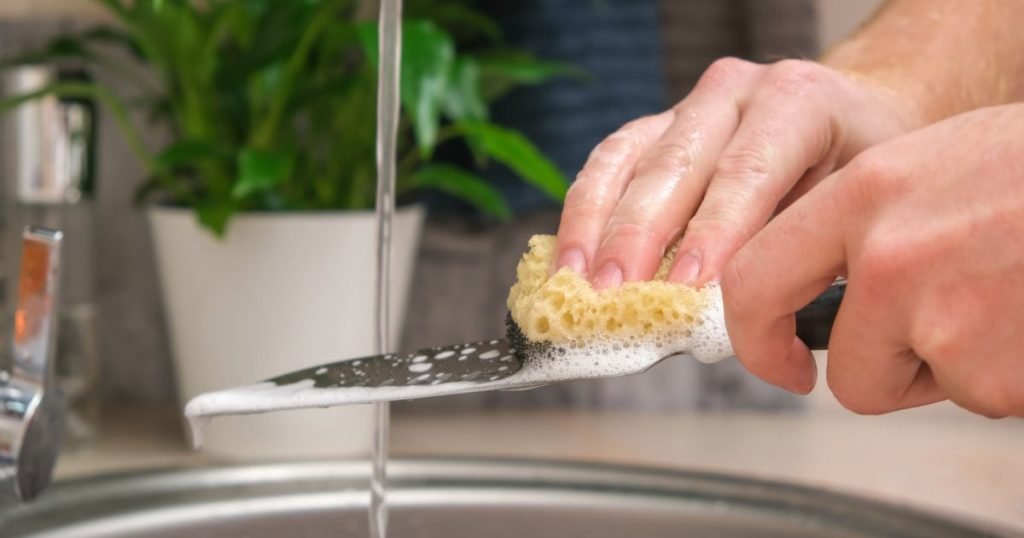
The best Kitchen Knife Cleaning & Hand Washing method is simple. You do not need special equipment. Warm water, mild dish soap, and a soft sponge are enough for most home kitchens.
Always wash the knife soon after use. Letting food dry on the blade makes cleaning harder and may increase the chance of stains or corrosion.

- ✦ Step 1: Hold the knife safely
Keep your fingers away from the cutting edge and hold the handle firmly.
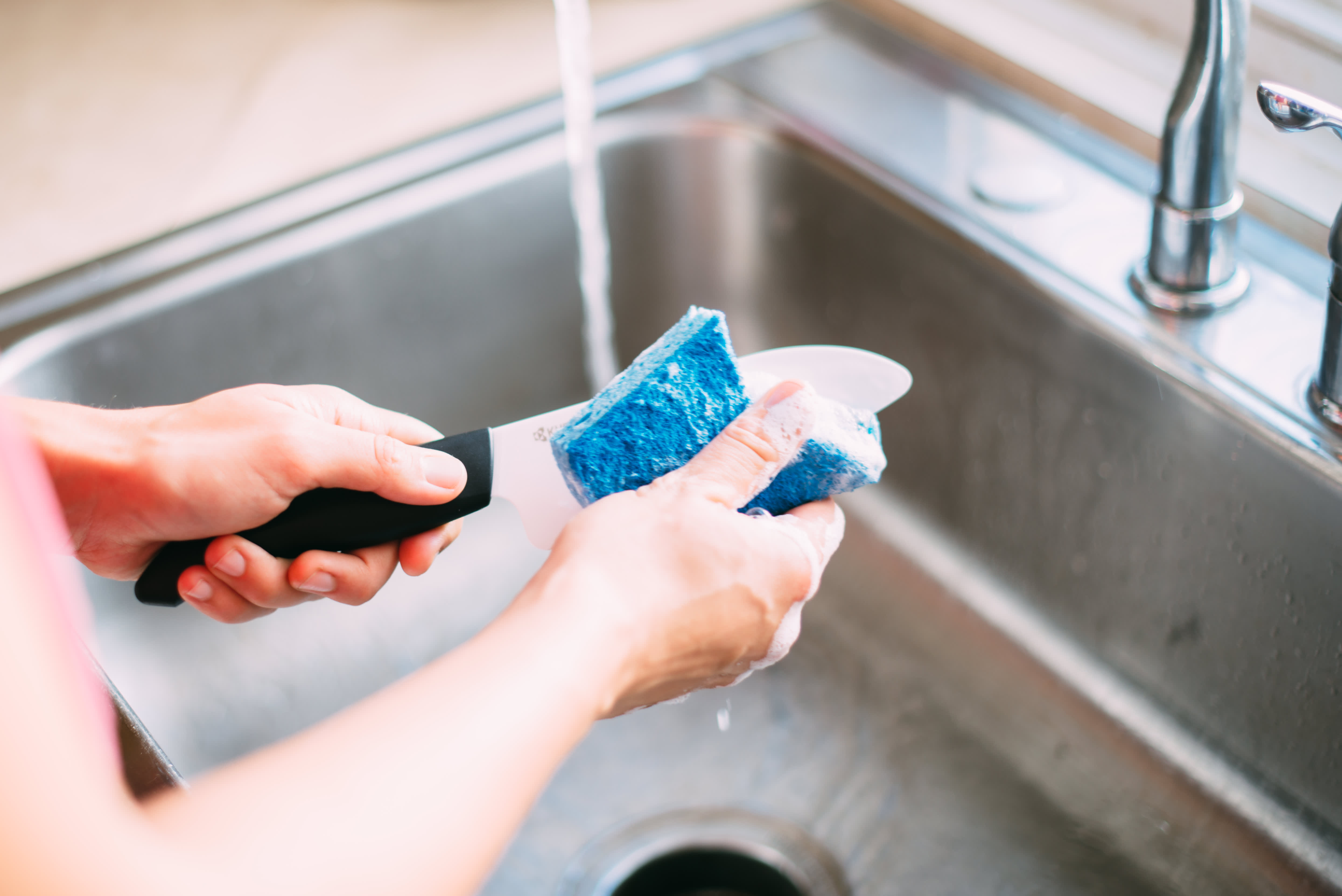
- ✦ Step 2: Use mild soap
Apply soap with a soft sponge and clean both sides of the blade.
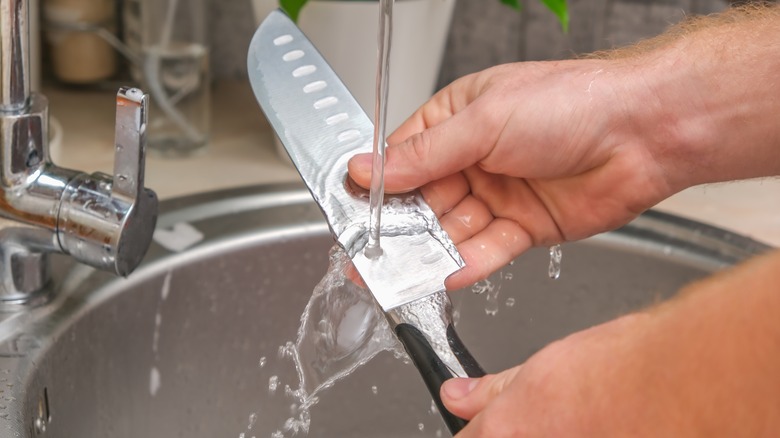
- ✦ Step 3: Rinse completely
Remove all soap and food residue with clean running water.
- ✦ Step 4: Dry immediately
Use a clean towel to remove moisture before storing the knife.
Why You Should Avoid Soaking Knives
Leaving knives in water for a long time can damage some handles and increase the risk of rust. It also creates a safety risk because a hidden knife in a sink can cause accidental cuts.
- ✦ Short cleaning time
Wash the knife quickly instead of leaving it in the sink.
Common Mistakes During Knife Cleaning
Many knife problems come from cleaning mistakes rather than poor knife quality. Even premium knives can lose performance when they are washed incorrectly.
Kitchen Knife Cleaning & Hand Washing should always focus on gentle care. Avoid methods that expose the blade to unnecessary stress.
- ✦ Using a dishwasher
Dishwasher heat, movement, and detergent can damage blades and handles.
- ✦ Using rough scrubbers
Steel wool and harsh pads may scratch the knife surface.
- ✦ Leaving knives wet
Moisture can lead to rust, especially on carbon steel knives.
- ✦ Cleaning carelessly
Always control the blade position to avoid hand injuries.
How to Dry and Store Clean Kitchen Knives
Drying is a key part of Kitchen Knife Cleaning & Hand Washing. A clean knife that stays wet can still develop problems over time.
After drying, store knives in a safe place. A knife block, magnetic strip, or blade guard can protect the edge and reduce accidents.

- ✦ Use a soft towel
Dry the blade from the spine toward the edge with care.
- ✦ Store safely
Keep knives away from loose kitchen drawers when possible.
Extra Care for Carbon Steel Knives
Carbon steel knives can develop a natural patina, but they need more attention than stainless steel knives. Dry them quickly and apply food-safe oil when needed.
- ✦ Prevent moisture damage
Never store carbon steel knives while they are still damp.
Food Safety Tips for Cleaning Kitchen Knives
A clean knife is an important part of a safe kitchen routine. This matters even more when preparing raw foods such as poultry, seafood, and meat.
Kitchen Knife Cleaning & Hand Washing should happen between different food tasks. A quick wash helps prevent unwanted transfer between ingredients.
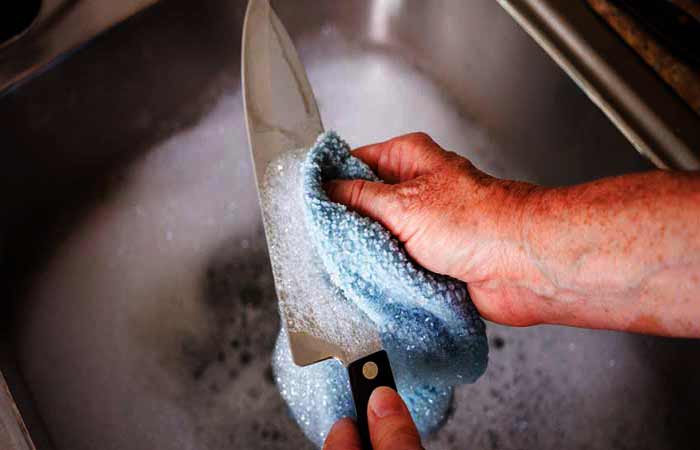
- ✦ Clean after raw foods
Wash knives after cutting raw meat before using them on ready-to-eat foods.
- ✦ Use clean tools
Use fresh towels and clean sponges for better kitchen hygiene.
Kitchen Knife Cleaning Tools You Actually Need
Good knife cleaning does not require a large collection of products. Simple tools often provide the best results.
Choose items that protect the blade instead of adding unnecessary wear. The goal of Kitchen Knife Cleaning & Hand Washing is gentle and consistent care.
- ✦ Mild dish soap
Removes grease and food residue without harsh chemicals.
- ✦ Soft sponge
Cleans effectively while reducing scratches.
- ✦ Clean kitchen towel
Helps prevent moisture-related damage.