Food Processor Size: Complete Guide to Choosing the Right Capacity
Food Processor Size matters more than many shoppers expect. A bowl that is too small can turn a simple task into several batches. A bowl that is too large can take up valuable counter space and may not handle tiny portions well.
The right choice depends on how you cook. A person who makes pesto for two has different needs from a family that makes salsa, pie dough, chopped vegetables, or large batches of hummus. In practice, the best food processor size is the one that matches your normal batch size rather than the largest bowl you can afford.
When comparing food processors, look at both cup capacity and the type of work you do. Bowl size affects how much food you can process at once, but blade design, work-bowl shape, feed tube size, and motor strength also affect how useful the machine feels.

What Does Food Processor Size Mean?
Food Processor Size usually refers to the capacity of the work bowl. Manufacturers often list this capacity in cups in the United States. A 3-cup model, for example, has a much smaller bowl than a 12-cup model.
The listed capacity is not always the same as the amount of food you should put in the bowl. Some tasks need empty space so food can move around the blade. Dough, liquids, and soft mixtures may also have different practical limits.
This is why Food Processor Size should be viewed as a guide, not just a number. The shape of the bowl and the manufacturer’s fill limits matter too.

- ✦ Cup capacity
This is the main size number used when comparing food processors in the U.S.
- ✦ Working capacity
This is the useful amount of food the machine can process safely and evenly in one batch.
- ✦ Physical size
A food processor also has a height, width, and depth that affect counter space and storage.
- ✦ Task capacity
The right size can change by task because chopping, slicing, mixing, and kneading place different demands on the bowl.
Why Listed Capacity Can Be Misleading
A bowl may be advertised by its total volume, but you may not be able to use every cup for every task. Liquids can spill if you fill the bowl too high. Food also needs room to move for good chopping and mixing.
Always check the manufacturer’s instructions for maximum fill levels. This simple step can prevent messy spills and poor results.
- ✦ Read the manual
Check the stated maximum fill level for liquids, dough, and other foods.
- ✦ Think about movement
Food needs enough room to circulate around the blade for even processing.
Food Processor Sizes Explained
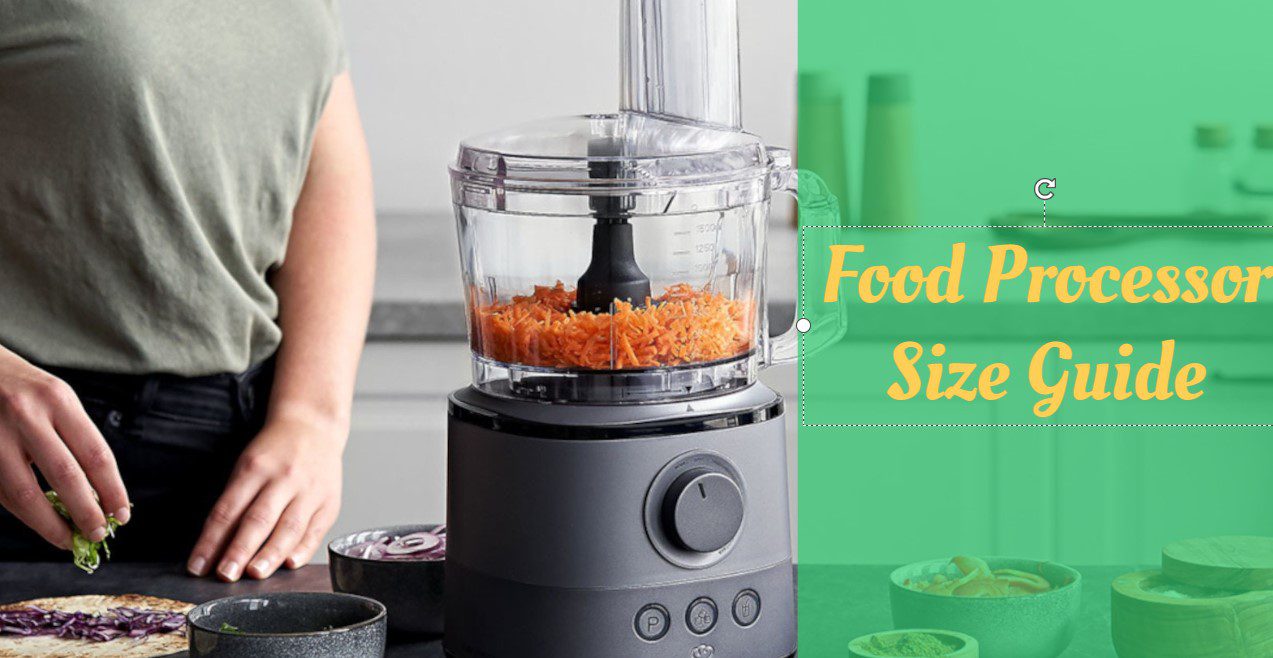
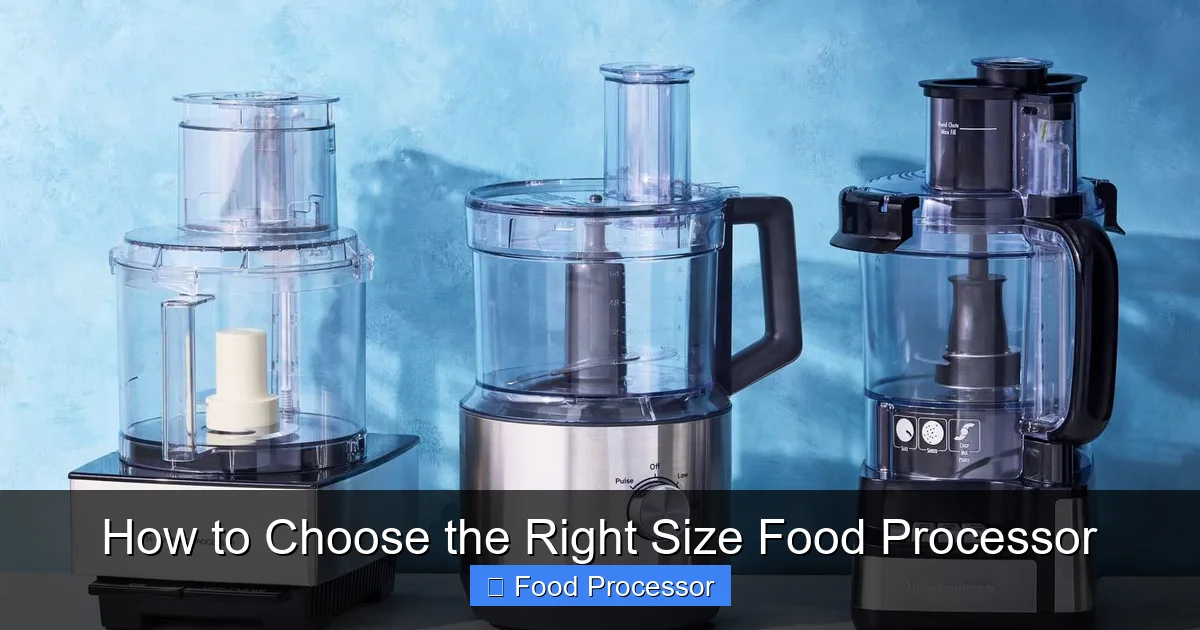
Food processors generally fall into several useful size groups. The exact ranges vary by brand, but these groups make shopping easier.
Mini models are useful for small portions. Small and medium models suit many everyday kitchen jobs. Large models are better when you often cook for several people or prepare food in bulk.
The best Food Processor Size is not always the biggest one. Match the bowl to the amount of food you normally prepare.
- ✦ Mini: about 1 to 3 cups
Good for herbs, garlic, small sauces, dressings, nuts, small dips, and quick chopping jobs.
- ✦ Small: about 3 to 5 cups
A useful step up for small households that need more room than a mini chopper provides.
- ✦ Medium: about 7 to 10 cups
A flexible choice for many home cooks. It can handle common tasks such as chopping vegetables, making dips, grating cheese, and preparing many doughs.
- ✦ Large: about 11 to 14 cups
Useful for bigger families, batch cooking, large salads, sauces, doughs, and frequent meal preparation.
- ✦ Extra-large: 15 cups or more
Designed for very large batches and high-volume preparation. These models need more storage and counter space.
Mini Food Processors
A mini food processor is often the easiest size to store. It works well when you usually cook for one or two people and need quick help with small amounts.
It is not a replacement for a full-size machine for large batches. If you often make dough, large dips, or several cups of chopped vegetables, you may need a bigger bowl.
- ✦ Best for
Herbs, garlic, nuts, small sauces, dressings, and small portions.
- ✦ Main limit
Small bowl capacity makes large batches slow because you must work in several rounds.
Medium Food Processors
Medium food processors are often the practical middle ground. They offer enough room for many daily cooking tasks without the footprint of a very large machine.
For a typical U.S. household, this range can cover a wide mix of chopping, slicing, shredding, mixing, and sauce-making jobs. It is also easier to store than many extra-large machines.
- ✦ Best for
Daily meal prep, dips, sauces, vegetables, cheese, and many baking tasks.
- ✦ Main advantage
Good balance between useful capacity and manageable kitchen space.
Large Food Processors
Large food processors make more sense when you often cook in batches. They can reduce the number of rounds needed for large amounts of vegetables, shredded cheese, dough, salsa, or other foods.
The trade-off is size. A large machine can be heavy and may take up a permanent place on the counter.
- ✦ Best for
Families, meal prep, entertaining, baking, and large recipes.
- ✦ Main limit
The larger footprint can make storage harder in a small kitchen.
What Size Food Processor Do I Need?
The answer depends on how many people you cook for and what you make most often. Household size is helpful, but it should not be the only factor.
A single cook who makes large batches of dough may need a bigger food processor than a family that only uses one for small chopping jobs. Your recipes matter more than the number of people at the table.
Before buying, think about your most common recipes. Write down the largest amount you normally prepare in one batch. Then choose a Food Processor Size that can handle that amount without being filled beyond the recommended limit.
- ✦ One or two people
A 3 to 5 cup model can work well for small portions. Choose 7 cups or more if you often make larger batches.
- ✦ Three to four people
A 7 to 10 cup food processor is often a practical range for general meal preparation.
- ✦ Five or more people
A 10 to 14 cup model can reduce the need for repeated batches when recipes are large.
- ✦ Frequent batch cooking
Choose a larger bowl if you regularly prep several meals or large quantities at once.
- ✦ Small portions
Choose a mini or small processor if most of your work involves herbs, sauces, dressings, and small servings.
Choose by Recipe, Not Just Family Size
Family size can give you a starting point, but recipes give you a better answer. A baker may need a large bowl for dough even if only two people live in the home.
Likewise, a family of four may be happy with a smaller machine if it is used mainly for garlic, herbs, and small sauces. Look at the food you process most often before deciding on capacity.
- ✦ Large dough batches
A larger processor may be more useful when you regularly prepare substantial amounts of dough.
- ✦ Small sauces
A smaller bowl can help the blade work efficiently when ingredients only fill a small portion of the container.
Food Processor Size for Common Kitchen Tasks
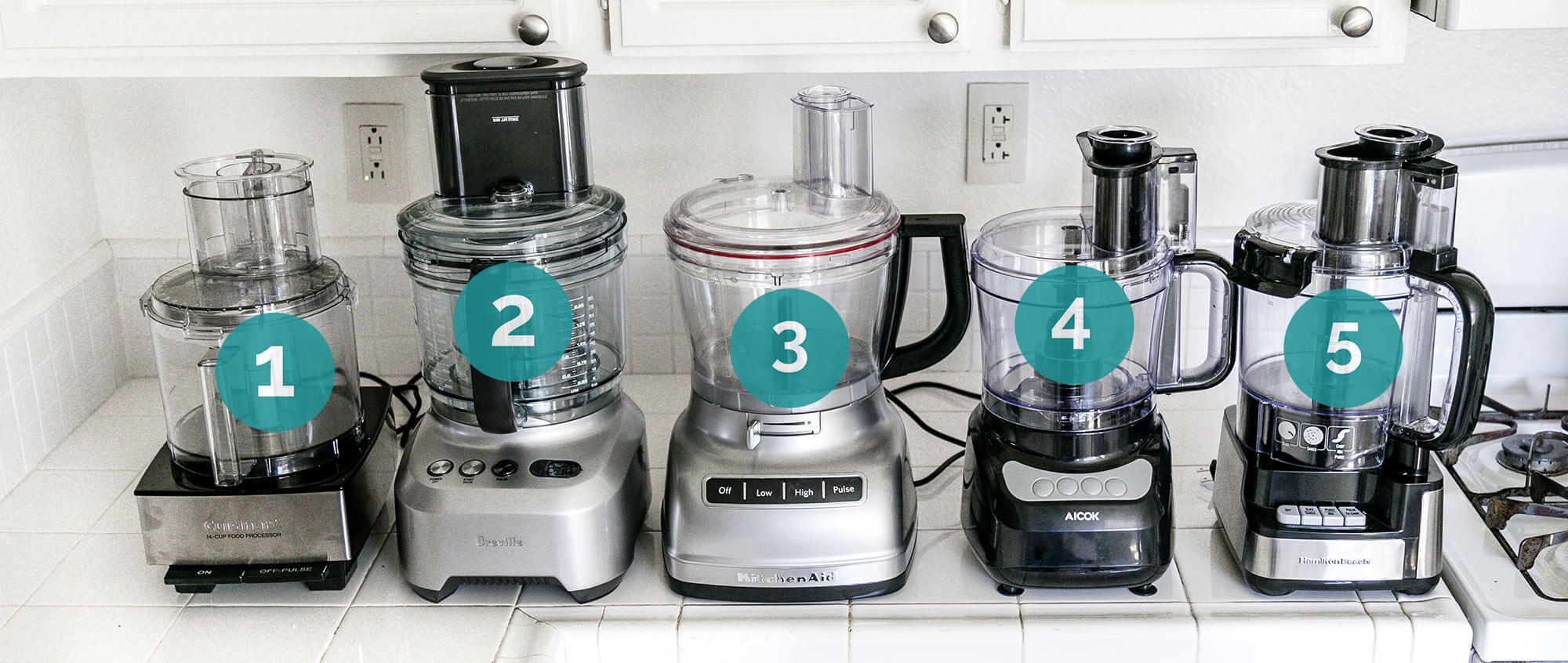
Different foods can change which Food Processor Size feels right. A processor that works well for a small bowl of pesto may feel too small when you prepare vegetables for a family dinner.
Think about the amount of food, not only the food type. If you usually prepare small portions, a compact machine can save space and still do the job well.
- ✦ Chopping vegetables
A medium or large bowl works well when you need several cups of chopped onions, carrots, celery, or other vegetables.
- ✦ Making salsa
Small batches can work in a compact processor, while party-size salsa is easier in a medium or large bowl.
- ✦ Making hummus
A medium bowl gives enough room for many home batches, but follow the appliance’s liquid and fill limits.
- ✦ Making pesto
Small batches may work better in a small bowl because the ingredients can stay close to the blade.
- ✦ Shredding cheese
A larger bowl can save time when shredding a full block or preparing cheese for several meals.
- ✦ Slicing vegetables
Medium and large processors can speed up bigger prep jobs when fitted with the right slicing disc.
- ✦ Pie dough
Choose based on the dough quantity and the manufacturer’s stated dough capacity rather than bowl size alone.
- ✦ Nut butter
A larger, sturdy processor can be useful for bigger batches, but motor design and blade quality also matter.
Small Jobs Need the Right Bowl Too
A very large bowl can be less convenient for tiny amounts. Ingredients may spread across the bottom instead of staying near the blade.
If you often make small sauces or chop a handful of herbs, a mini processor or a smaller work bowl can be a useful companion to a full-size machine.
- ✦ Small quantity
A compact bowl can keep small amounts closer to the blade.
- ✦ Large quantity
A larger bowl reduces the need to process food in several batches.
Food Processor Size vs. Counter and Storage Space
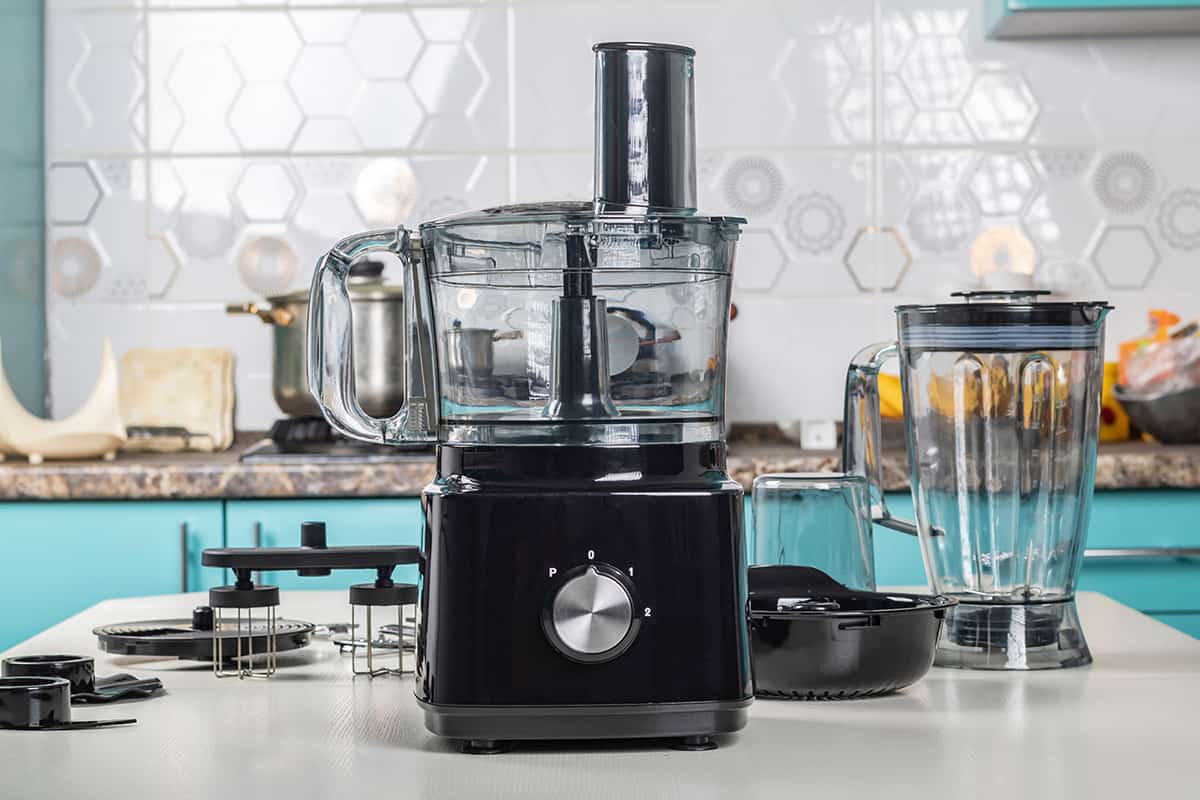
Capacity is only one part of Food Processor Size. A large bowl often comes with a larger motor base, taller lid, and wider footprint. Measure your kitchen before buying.
Check both the space where the processor will run and the space where it will be stored. A machine may fit under a cabinet when the bowl is removed but fail to fit when fully assembled.
Weight matters too. If you plan to store the processor in a cabinet, a heavy large model may become annoying to move every time you cook.
- ✦ Measure counter width
Make sure the motor base can sit safely without blocking nearby appliances or work areas.
- ✦ Check cabinet height
Measure with the bowl and lid attached if you plan to leave the machine assembled.
- ✦ Check storage depth
Make sure the processor and its accessories can fit without being forced into a tight space.
- ✦ Plan for accessories
Slicing discs, shredding discs, blades, and pushers also need storage space.
When a Smaller Processor Makes More Sense
A smaller Food Processor Size can be the smarter choice when kitchen space is limited. It is easier to move, clean, and store.
Do not buy a large machine only because it has more capacity. If most of your recipes are small, the extra size may offer little practical value.
- ✦ Small kitchen
Compact models take up less counter and cabinet space.
- ✦ Frequent small meals
A small bowl may match your normal portion size better.
Does a Bigger Food Processor Work Better?
Not always. A bigger bowl gives you more room, but it does not automatically produce better food. For small amounts, a smaller bowl can sometimes make it easier for ingredients to reach the blade.
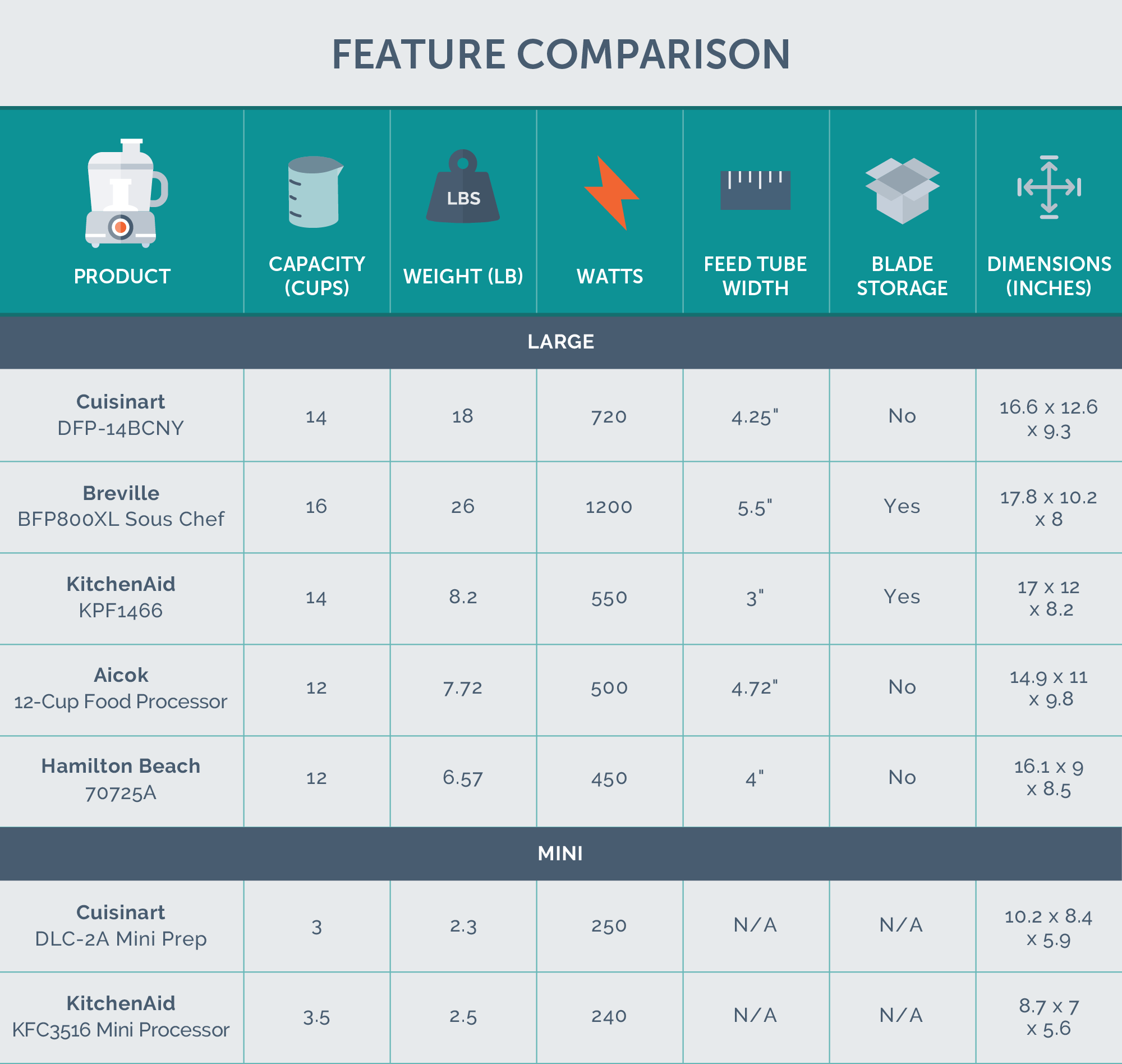
Large models are valuable when you need large batches. They can save time by letting you process more food in one run. But capacity should match your normal use.
The motor also matters. A large bowl with a weak motor may not perform well with heavy foods. Look at the full design rather than judging a machine by bowl capacity alone.
- ✦ More capacity
A large bowl lets you prepare bigger batches without stopping as often.
- ✦ Better for bulk prep
Large capacity is useful for family meals, entertaining, and freezer cooking.
- ✦ Not ideal for tiny batches
Very small amounts may spread too far across a large bowl.
- ✦ Motor still matters
Capacity does not tell you how well a processor handles hard or heavy foods.
Bowl Shape Matters
Two food processors with the same cup rating can feel different in use. Bowl width, blade position, and wall shape affect how food moves.
A well-designed bowl can help ingredients reach the blade and mix more evenly. This is one reason to consider the complete machine instead of comparing cup numbers alone.
- ✦ Wide bowl
Can make loading and scraping easier, but very small amounts may spread out.
- ✦ Tall bowl
Can provide useful volume while using less counter width, depending on the model.
How to Choose the Right Food Processor Size
Start with your largest common recipe. If your usual recipes fit comfortably in a 7-cup bowl, there may be little reason to buy a much larger machine unless you want extra capacity.
Next, consider your smallest common recipe. If you often process only a small handful of ingredients, check whether the model includes a smaller bowl or attachment. This can make a large processor more flexible.
Finally, compare the machine’s physical dimensions, storage needs, accessories, and recommended capacity. A Food Processor Size decision should fit both your cooking habits and your kitchen.

- ✦ Step 1: List your common tasks
Write down the foods you process most often, such as vegetables, cheese, sauces, dough, nuts, or dips.
- ✦ Step 2: Find your largest batch
Use the biggest normal recipe as a starting point for bowl capacity.
- ✦ Step 3: Check small-batch needs
Make sure the machine can handle the small quantities you prepare often.
- ✦ Step 4: Measure your kitchen
Measure the counter, cabinet, and storage areas before buying.
- ✦ Step 5: Check manufacturer limits
Review recommended food and liquid capacities for the exact model.
- ✦ Step 6: Consider accessories
A good set of discs and blades can make a medium processor more useful than a larger model with fewer tools.
A Simple Food Processor Size Decision
If you mainly make small portions, start with a mini or small processor. If you want one machine for most everyday kitchen tasks, look at the medium range.
If you regularly prepare large family meals, large batches, or substantial dough recipes, consider a large model. When in doubt, base the decision on your largest regular batch and your available storage space.
- ✦ Choose small
When space is tight and your recipes are usually small.
- ✦ Choose medium
When you want one flexible processor for common home cooking.
- ✦ Choose large
When batch cooking and large recipes are a regular part of your routine.
Common Food Processor Size Mistakes to Avoid
Choosing a food processor by cup rating alone is one of the most common mistakes. Capacity matters, but the bowl design, motor, controls, attachments, and storage needs matter too.
Another mistake is buying the biggest model for occasional large recipes. If most meals are small, a huge processor may spend more time in a cabinet than on the counter.
It is also easy to ignore the manufacturer’s capacity limits. Never assume that the full advertised bowl volume is suitable for every type of food.
- ✦ Buying too small
Repeated batches can make food preparation slow and frustrating.
- ✦ Buying too large
Extra capacity can mean more weight, more storage needs, and less convenience for small jobs.
- ✦ Ignoring physical dimensions
A machine can have the right bowl size but still fail to fit your kitchen.
- ✦ Ignoring small-batch performance
A very large bowl may not be ideal when you usually process only a small amount.
- ✦ Skipping capacity limits
Overfilling can lead to spills, uneven results, or unnecessary strain on the appliance.
Do Not Confuse Food Processor Size With Power
Bowl capacity and motor strength are different things. A larger bowl tells you how much space you have, while motor design helps determine how the machine handles the food.
For heavy tasks, check the manufacturer’s guidance for dough, nuts, hard vegetables, and other demanding foods. This gives you a better picture of real-world use than the cup rating alone.
- ✦ Capacity
Describes how much food the work bowl can hold.
- ✦ Power
Describes the machine’s ability to drive the blade or disc under load.
Food Processor Size Buying Checklist
Before buying, use a short checklist. This can help you avoid choosing a machine that looks good on paper but does not fit your routine.
The goal is not to find the largest Food Processor Size. The goal is to find a capacity that handles your normal recipes with as few compromises as possible.

- ✦ Capacity
Does the bowl fit your largest regular batch?
- ✦ Small-batch use
Can it handle the small portions you make often?
- ✦ Counter space
Does the base fit comfortably in your work area?
- ✦ Storage
Can you store the machine and all attachments without trouble?
- ✦ Food types
Is it designed for the foods you process most?
- ✦ Manufacturer limits
Have you checked the recommended limits for liquids, dough, and other foods?
- ✦ Cleaning
Can you easily wash the bowl, lid, blades, and discs after use?
- ✦ Future use
Will your cooking habits change as your household or meal prep routine changes?
The Best All-Purpose Size for Many Homes
For many households, a medium Food Processor Size in the 7 to 10 cup range is a useful starting point. It can handle a broad mix of everyday jobs without requiring the space of an extra-large machine.
That does not make this range right for everyone. If you mainly cook small portions, go smaller. If you often cook in large batches, go larger.
- ✦ Why medium works
It offers useful capacity for common home recipes while keeping the machine reasonably manageable.
- ✦ When to size down
Choose smaller when your portions are small and storage space is limited.
- ✦ When to size up
Choose larger when batch cooking, large recipes, or frequent entertaining are common.