Ice Cream Maker Methods & Equipment: A Complete Guide to Choosing and Using the Right Machine
Choosing between Ice Cream Maker Methods & equipment can feel harder than it should. There are simple freezer-bowl machines, self-freezing compressor models, hand-crank makers, soft-serve machines, and larger commercial systems. Each uses a different way to freeze and churn the mix.
In practice, the machine does not work alone. The base must be cold, the bowl or freezing system must be ready, and the mix needs enough time to churn. Small details such as overfilling the bowl or using a warm base can change the final texture.
This guide breaks down the major Ice Cream Maker Methods & Equipment options in plain language. It also explains what each method does well, where it can fall short, and which parts of the process matter most for smooth homemade ice cream, gelato, sorbet, and soft serve.

How Ice Cream Makers Work
Most Ice Cream Maker Methods & Equipment combine two jobs: freezing and churning. The machine removes heat from the ice cream base while a dasher or paddle keeps the mixture moving. This movement helps form small ice crystals and adds air to the mix.
Ice cream starts as a liquid base. As it gets colder, water begins to freeze. The paddle keeps the frozen parts moving through the unfrozen mix instead of letting one large block of ice form.
The goal is not simply to make the mix cold. The goal is to freeze it at a controlled rate while keeping it moving. That is why the machine, base temperature, batch size, and churning time all affect the finished texture.
%3Astrip_icc()/bhg-primary-ice-cream-maker-wdickey-333-1-1a6c2acce841408aab7d1694aac48f6b.jpeg "Types of ice cream makers for home use")
- ✦ Freezing
The machine lowers the temperature of the ice cream base until enough water freezes to create a thick frozen dessert.
- ✦ Churning
A paddle moves through the mix to reduce large ice crystals and keep the texture smooth.
- ✦ Air incorporation
Churning can add air to the mix. The amount of air affects how light or dense the finished ice cream feels.
- ✦ Hardening
Freshly churned ice cream is often soft. A short period in the freezer can firm it to a scoopable texture.
Why Churning Speed Matters
A steady churn helps the frozen layer stay in motion. If the mix freezes too slowly, ice crystals have more time to grow. If the machine struggles because the batch is too large or the mix is too warm, texture can suffer.
Different machines use different paddle shapes and speeds. You do not need to chase a high speed number. A machine that keeps the mix moving well and freezes it at a suitable rate can produce excellent results.
- ✦ Keep the mix cold
Start with a well-chilled base when the machine design calls for it.
- ✦ Avoid overfilling
Leave room for the mixture to expand and move around the paddle.
Freezer-Bowl Ice Cream Makers
Freezer-bowl machines are among the most common home Ice Cream Maker Methods & Equipment choices. They use a removable bowl filled with a freezable liquid or gel. You place the bowl in a freezer before making the ice cream, then attach it to the machine and churn the base.
This design keeps the machine simple. It usually costs less than a compressor model and takes up less space. The main trade-off is planning because the bowl must be frozen before use.
For a family that makes ice cream now and then, this method can be very practical. It also works well when freezer space is available and there is no need to make several batches in a row.
- ✦ Main benefit
The design is simple, compact, and often more affordable than a self-freezing machine.
- ✦ Main limitation
The bowl needs enough freezer time before churning, so spontaneous batches may not be possible.
- ✦ Good fit
This method suits casual home users who make one batch at a time.
- ✦ Freezer space
The bowl takes up room in the freezer while it freezes.
How to Get Better Results With a Freezer Bowl
Follow the maker’s instructions for freezing the bowl. The bowl must be cold enough for the freezing system to work well. A partly frozen bowl can leave the mix too soft.
Chill the ice cream base before churning when the recipe allows it. Add the base only after the machine is running if the manufacturer calls for that order. This can help prevent the mix from freezing against the sides before the paddle starts.
- ✦ Freeze fully
Give the bowl the full freezing time recommended by the manufacturer.
- ✦ Chill the base
A cold base gives the machine less heat to remove.
- ✦ Make one batch
Plan for the bowl to need more freezer time before another batch.
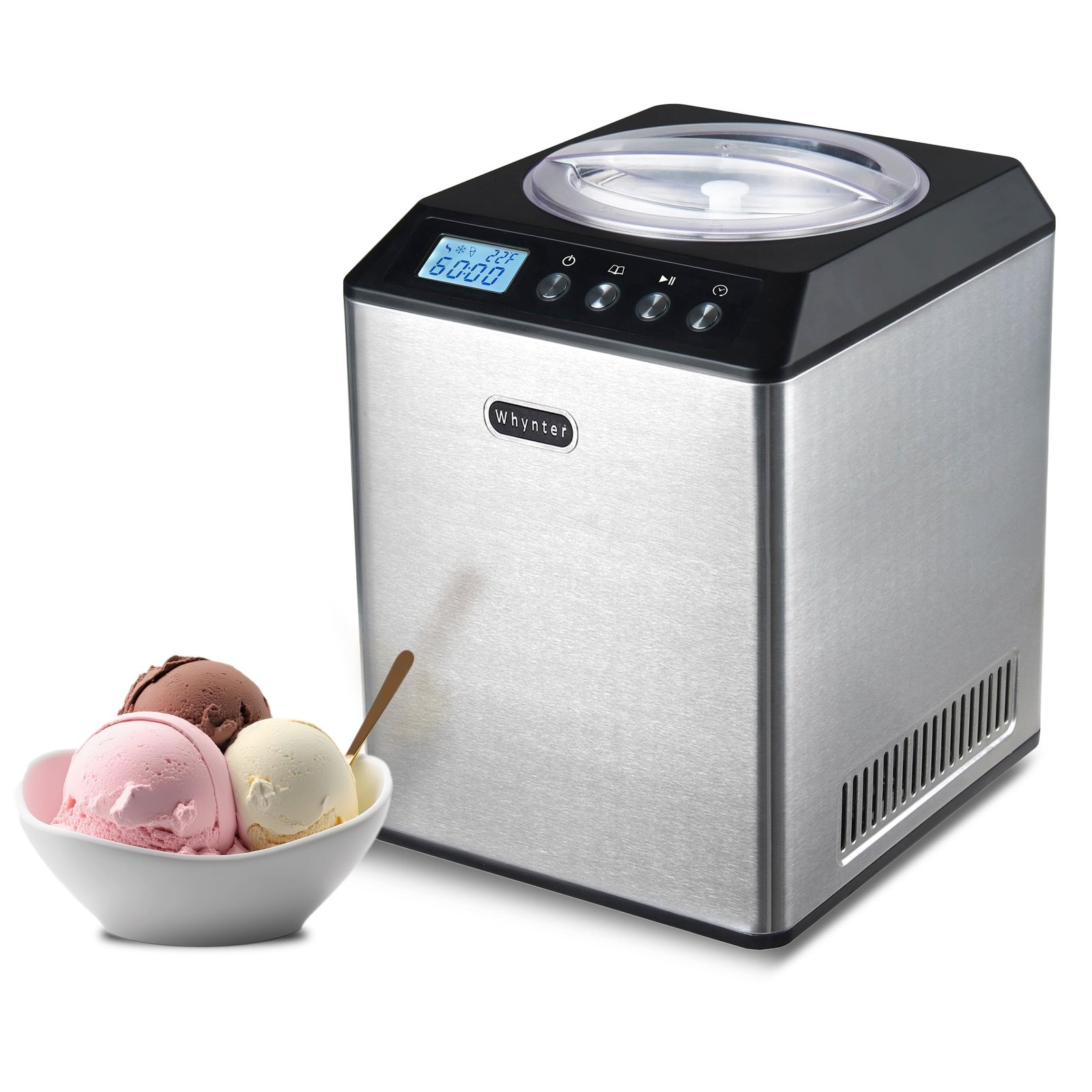
Compressor Ice Cream Makers
Compressor machines have a built-in refrigeration system. Unlike a freezer-bowl model, they do not rely on a bowl that must be frozen in advance. This makes compressor machines useful for people who make frozen desserts often.
The biggest practical advantage is flexibility. You can usually make one batch, remove it, and prepare another without waiting for a bowl to freeze again. This can matter when testing several flavors or serving guests.
The trade-offs are size, weight, noise, energy use, and price. A compressor machine is often a larger investment, so it makes more sense when frequent use justifies the added convenience.

- ✦ No pre-freezing
The built-in cooling system freezes the bowl or chamber during operation.
- ✦ Multiple batches
Many models allow repeated batches without waiting for a removable bowl to refreeze.
- ✦ Higher cost
The built-in refrigeration system adds mechanical parts and usually raises the purchase price.
- ✦ More counter space
Compressor machines tend to be larger and heavier than basic freezer-bowl models.
Who Should Consider a Compressor Machine?
A compressor model is a strong match for a serious home cook who makes ice cream often. It can also help when you want to test several bases in one session. This is useful for recipes with different sugar, fat, or fruit levels.
Before buying one, check the machine’s batch capacity and counter footprint. A large machine that rarely gets used may offer less value than a smaller model that fits your routine.
- ✦ Frequent users
Choose this style when making ice cream is a regular activity rather than an occasional treat.
- ✦ Recipe testing
The ability to make repeated batches is useful when comparing flavors and formulas.
- ✦ Convenience focused
This method removes the need to plan freezer space for a special bowl.
Hand-Crank and Ice-and-Salt Ice Cream Makers
Hand-crank machines use a traditional method. The ice cream canister sits inside a larger container filled with ice and salt. The salt lowers the freezing point of the ice, which helps create a cold environment around the canister.
A hand crank turns the dasher inside the canister. This method takes more physical work than an electric machine, but it can be a fun choice for family gatherings, outdoor events, and traditional ice cream making.
The method also teaches an important lesson about freezing. Ice and salt do not simply make the dessert cold by themselves. They create a colder bath that pulls heat from the ice cream mix.

- ✦ Traditional process
The ice-and-salt method has been used for generations and does not need a refrigeration compressor.
- ✦ Hands-on use
The crank provides direct control but requires more effort than an electric motor.
- ✦ Outdoor friendly
It can work in places where a powered machine is not practical, provided you have enough ice and salt.
- ✦ Mess factor
Melted ice and salt water can create more cleanup than a closed electric machine.
When the Traditional Method Makes Sense
This approach is useful when the process itself is part of the experience. It can be a good activity for children with adult supervision, family parties, and summer events. The finished ice cream can be very good when the mix stays cold and the churning is steady.
The main issue is control. You must manage the ice, salt, water, and churning by hand. That makes the method less convenient for routine weeknight use.
- ✦ Family activity
The visible process makes traditional churning an engaging group activity.
- ✦ No compressor
The system uses ice, salt, and mechanical churning instead of built-in refrigeration.
Soft-Serve Ice Cream Machines
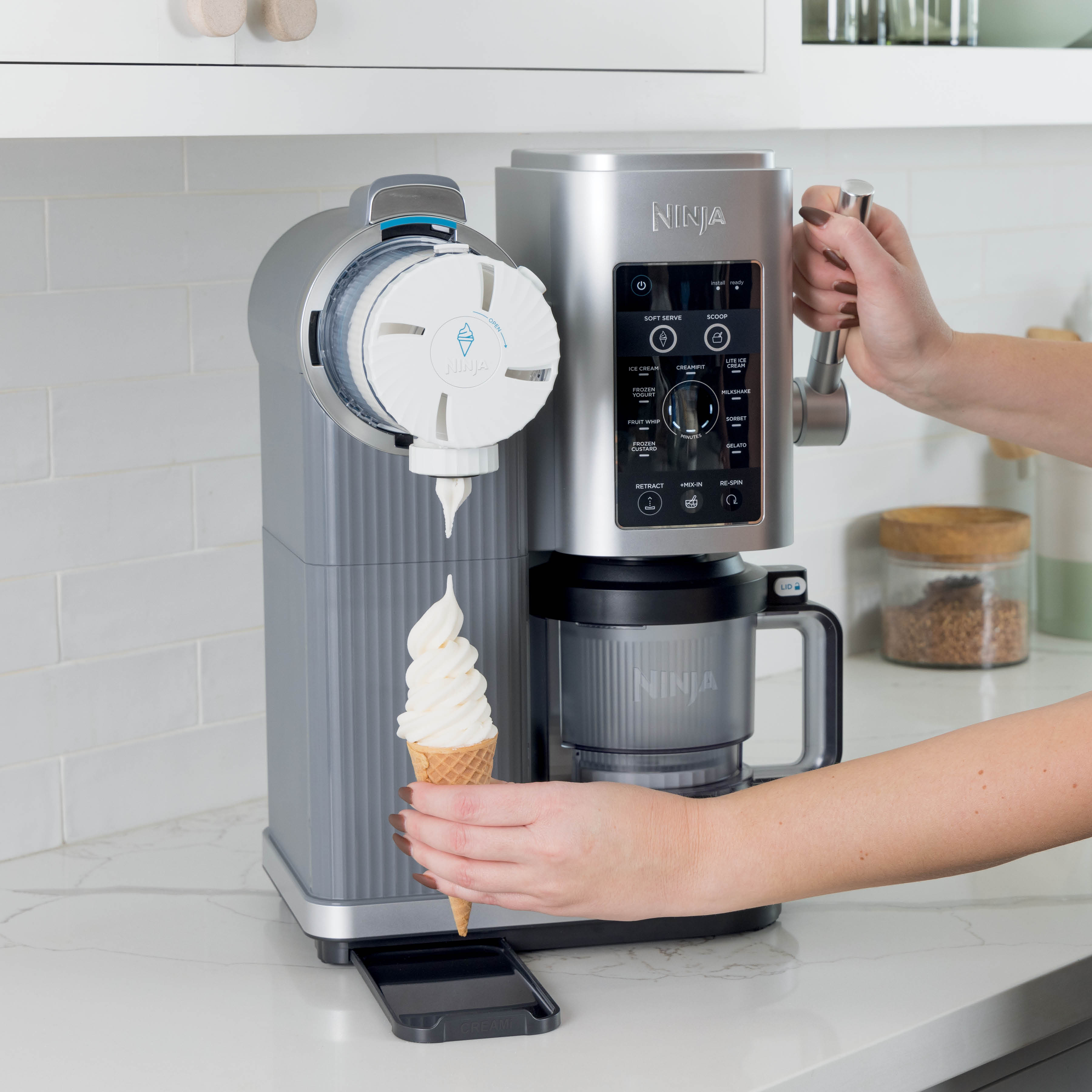
Soft-serve machines are different from standard batch ice cream makers. They freeze and churn a liquid mix while dispensing the product through a nozzle. The result is softer and easier to serve right away.
These machines are common in restaurants, dessert shops, food trucks, events, and other commercial settings. Some smaller countertop units are designed for home or light commercial use, but capacity and cleaning needs vary widely.
Soft serve depends on more than the machine. Mix temperature, fat level, solids, air incorporation, serving temperature, and machine settings can all change the texture. This makes soft-serve equipment more sensitive to setup and maintenance.

- ✦ Immediate serving
The product is dispensed directly from the freezing cylinder instead of being hardened in a separate storage container first.
- ✦ Continuous service
Commercial units are built for repeated portions during a service period.
- ✦ Cleaning needs
Food-contact parts must be cleaned and sanitized according to the equipment maker’s instructions.
- ✦ Capacity matters
A commercial machine may handle far more product than a typical home appliance.
Countertop Versus Commercial Soft Serve
Countertop soft-serve machines can be useful when space is limited. They may suit small events or low-volume service. A commercial unit is built for heavier use and may need more power, ventilation, cleaning time, and service support.
For a business, look beyond the advertised capacity. Check the machine’s recovery time, hopper size, cleaning process, electrical requirements, warranty, and access to replacement parts.
- ✦ Countertop
Best suited to lower-volume use where space and ease of setup are important.
- ✦ Commercial
Designed for regular service and higher demand, with greater attention to durability and sanitation.
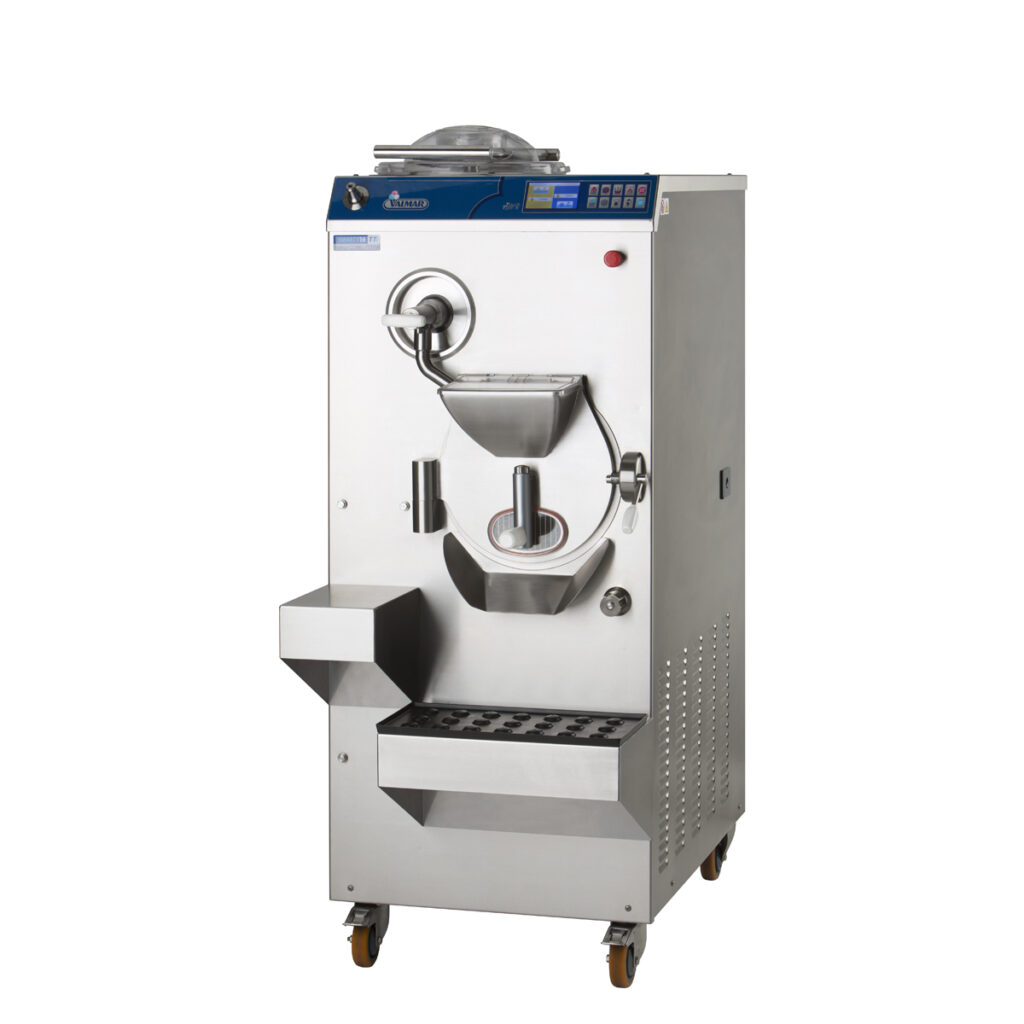
Commercial Batch Freezers and Gelato Equipment
Commercial Ice Cream Maker Methods & Equipment are designed for much higher output than home machines. Batch freezers are built to freeze and churn a measured quantity of mix in a short service cycle. They are common in ice cream shops, restaurants, hotels, and food businesses.
Gelato equipment follows a similar basic goal but supports a product that is usually denser and served at a warmer temperature than traditional hard ice cream. The machine choice should match the recipe, production rate, serving style, and storage plan.
Commercial equipment also brings extra concerns. Electrical load, floor or counter space, cleaning, sanitation, ventilation, water supply, noise, maintenance, and replacement parts all matter. The cheapest machine is not always the lowest-cost option over time.

- ✦ Production volume
Commercial machines can handle larger quantities and repeated production cycles.
- ✦ Durability
Business equipment is built for more frequent use than most home appliances.
- ✦ Service support
Access to parts and qualified service can be important when equipment supports daily sales.
- ✦ Sanitation
Food-contact areas need a clear cleaning and sanitation routine that follows the machine maker’s instructions and applicable local rules.
Key Equipment for a Small Ice Cream Business
A production setup may need more than a freezer. Depending on the product and scale, useful equipment can include a batch freezer, pasteurization or cooking equipment, refrigerated storage, dipping cabinets, blast or hardening equipment, digital scales, thermometers, storage containers, and cleaning tools.
A good workflow keeps raw ingredients, prepared mix, frozen product, and finished servings organized. This reduces wasted time and makes temperature control easier.
- ✦ Batch freezer
Freezes and churns the prepared mix into a soft frozen product ready for hardening or service.
- ✦ Storage freezer
Holds finished hard ice cream at a stable frozen temperature.
- ✦ Digital scale
Helps measure ingredients with repeatable accuracy.
- ✦ Food thermometer
Helps check temperatures during preparation, chilling, and storage.
Ice Cream Maker Equipment Beyond the Machine
A good machine is only one part of effective Ice Cream Maker Methods & Equipment. The right supporting tools can make the process faster and more consistent. They also help you control temperature, portion size, storage, and cleanup.
For home users, the equipment list can stay simple. A digital kitchen scale, instant-read thermometer, sturdy spatula, storage container, and quality scoop can cover most needs. A blender or immersion blender can also help create smooth fruit or chocolate bases.
For higher-volume work, the supporting equipment becomes more important. Large batches need reliable measurement, fast chilling, safe storage, and a clear cleaning routine.
- ✦ Digital kitchen scale
Use weight instead of volume when you want repeatable recipes and accurate ingredient ratios.
- ✦ Instant-read thermometer
Useful for checking cooked bases and confirming that mixtures cool as planned.
- ✦ Freezer-safe containers
Use containers that close well and are suitable for frozen food storage.
- ✦ Ice cream scoop
A sturdy scoop makes portioning easier once the ice cream reaches the right serving temperature.
- ✦ Spatula
A flexible spatula helps remove the churned product without wasting ice cream around the bowl.
- ✦ Cleaning tools
Keep brushes, cloths, and approved cleaning products ready for food-contact parts.
Choosing the Right Capacity
Do not choose a machine only because it has the largest bowl. Ice cream expands during churning, so the usable capacity is often lower than the physical bowl size. Always check the manufacturer’s recommended maximum mix volume.
For a typical household, a smaller batch can be easier to chill, churn, store, and finish. Larger machines make more sense when you regularly serve many people or need repeated production.
- ✦ Small household
A compact machine can be enough for occasional family batches.
- ✦ Frequent home use
A compressor model can make repeated batches more convenient.
- ✦ Business use
Commercial equipment should be sized around expected demand and service hours.
How to Choose Between Ice Cream Maker Methods & Equipment
The right Ice Cream Maker Methods & Equipment choice starts with your routine. Think about how often you make frozen desserts, how many people you serve, whether you want soft or hard ice cream, and how much storage space you have.
Budget matters, but it should not be the only factor. A low-cost machine may be a good fit for occasional use. A more advanced model may make sense when you make several batches each week and value faster setup.
Also think about cleanup. Ice cream equipment has food-contact parts that need careful washing and, where required, sanitizing. A machine that is difficult to clean may become frustrating even if it makes good ice cream.

- ✦ Choose freezer-bowl equipment
Pick this method when you want a simple home machine and do not mind freezing the bowl ahead of time.
- ✦ Choose a compressor machine
Pick this method when you make ice cream often and want to avoid pre-freezing a bowl.
- ✦ Choose hand-crank equipment
Pick this method when you want a traditional, hands-on process for family activities or outdoor use.
- ✦ Choose soft-serve equipment
Pick this method when your goal is immediate dispensing and soft-serve service.
- ✦ Choose commercial batch equipment
Pick this method when you need repeated production for a shop, restaurant, event business, or other food operation.
Questions to Ask Before Buying
A short checklist can prevent an expensive mistake. Look at the whole workflow, not just the machine’s headline features. The best Ice Cream Maker Methods & Equipment choice is the one that fits your kitchen, recipes, schedule, and cleaning routine.
- ✦ How often will I use it?
Occasional users may not need a compressor or commercial machine.
- ✦ How much can I make?
Compare recommended batch size rather than relying only on the advertised bowl volume.
- ✦ Do I have freezer space?
A freezer-bowl machine needs room for the bowl before use.
- ✦ How easy is it to clean?
Check which parts can be removed and how the manufacturer recommends cleaning them.
- ✦ Can I get replacement parts?
For frequent use, support and replacement parts can be as important as the original purchase.
Best Practices for Better Ice Cream From Any Machine
Even expensive Ice Cream Maker Methods & Equipment cannot fix every recipe problem. A warm base, poor ingredient balance, or weak storage container can still lead to icy or hard results. Good technique starts before the machine is switched on.
Chill the base well when the recipe calls for it. Measure ingredients carefully, keep the machine within its recommended capacity, and avoid leaving the finished ice cream exposed to warm air for long periods.
After churning, transfer the ice cream to a freezer-safe container and smooth the surface. A well-fitting lid helps reduce exposure to air and temperature changes. Let the ice cream firm up before serving if the texture is too soft straight from the machine.
%3Amax_bytes(150000)%3Astrip_icc()/ses-primary-ice-cream-maker-wdickey-wdickey-249-926296ac98ed4873b999d8626139425c.jpeg "Ice cream maker for homemade frozen desserts")
- ✦ Measure accurately
Small changes in sugar, water, fat, and solids can affect freezing and texture.
- ✦ Chill the base
A cold starting mix gives the machine an easier job and can support faster freezing.
- ✦ Do not overfill
Use the manufacturer’s recommended maximum mix level so the paddle has room to work.
- ✦ Watch the texture
Stop when the product reaches the texture recommended by the recipe or machine instructions.
- ✦ Store quickly
Move finished ice cream to the freezer soon after churning to limit melting and refreezing.
- ✦ Keep equipment clean
Clean food-contact parts after use and follow the manufacturer’s care instructions.
Common Problems and Simple Fixes
If ice cream comes out too soft, first check the starting temperature, batch size, and machine condition. A freezer-bowl machine may also have a bowl that was not frozen long enough. A compressor machine may need time to reach its operating temperature.
If the result is icy, look at the recipe as well as the equipment. Too much free water, poor storage, slow freezing, and repeated melting can all increase ice crystal size. Good Ice Cream Maker Methods & Equipment work best when paired with a balanced recipe and steady cold storage.
- ✦ Too soft
Check base temperature, bowl freezing, batch size, machine settings, and the recommended churn time.
- ✦ Too icy
Review the recipe’s water balance and improve freezing and storage practices.
- ✦ Machine stops
Some machines stop when the mixture becomes too thick. Follow the manufacturer’s instructions rather than forcing the motor.
- ✦ Hard to scoop
Allow the container to sit briefly at serving temperature if the product is very firm.