Microwave Electrical Requirements: Installation Guide
Most microwaves require a dedicated 120V circuit, 15–20 amps, proper outlet and wiring.
I’ve worked with kitchen installs and appliance specs long enough to confidently walk you through microwave electrical requirements. This guide explains voltages, amperage, dedicated circuits, outlet types, wiring, breaker sizes, and safety rules. Read on to learn exactly what your microwave needs, how to install it safely, and real-world tips I’ve learned from field work.

How microwaves use electricity
Microwaves convert electrical energy into microwave radiation to heat food. That requires a transformer, magnetron, fan, and controls. Those parts draw a steady current when running and a small surge when the magnetron starts.
Understanding microwave electrical requirements means knowing voltage, amperage, and whether the unit needs a dedicated circuit. Most household countertop and over-the-range microwaves use standard 120V. Some built-in or commercial units use 240V. Knowing the right specs avoids trips, fires, or damaged appliances.
Common terms to know
- Voltage: electrical force measured in volts. Typical US homes use 120V or 240V for appliances.
- Amperage: current draw measured in amps. The microwave electrical requirements list the running and maximum amps.
- Circuit: the wiring and breaker that deliver power. A dedicated circuit serves one appliance.
- Breaker size: the amp rating of the protective device. It must match wiring and load.
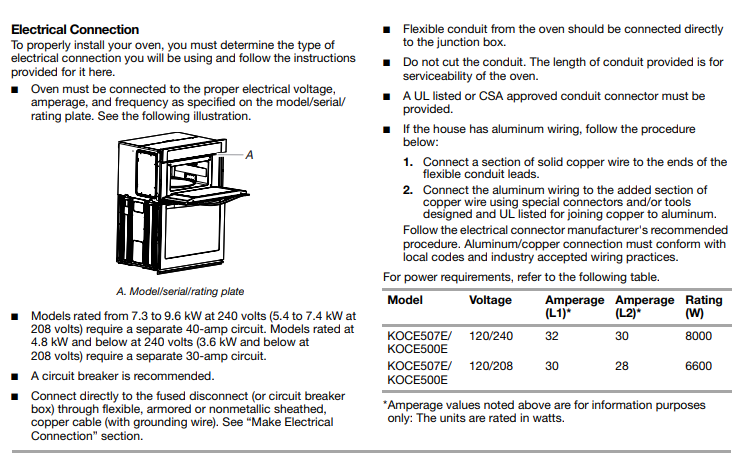
Common electrical requirements by microwave type
Countertop microwaves
- Most run on 120V and draw 5–12 amps depending on wattage.
- They plug into a standard 15A or 20A kitchen outlet.
- Often share circuits with other small appliances, but best practice is a dedicated outlet if possible.
Over-the-range microwaves
- Usually 120V and commonly require a dedicated 15A or 20A circuit.
- Hardwired connections are common. Follow manufacturer instructions for wiring and conduit.
- Venting and mounting add installation complexity; electrical and mechanical work often pair.
Built-in and commercial microwaves
- Some use 240V and need a dedicated 30A or larger circuit.
- Installation often requires an electrician to match the microwave electrical requirements to home wiring.
- These units can have higher continuous loads and strict code requirements.
Typical specs by wattage
- 700–900 watt microwave: usually 5–8 amps at 120V.
- 1000–1500 watt microwave: usually 8–12.5 amps at 120V.
- Commercial 1500W+ or built-in units: may use 240V and 15–30+ amps.

Dedicated circuits, wiring, and breaker sizes
When to use a dedicated circuit
- If the manual specifies a dedicated circuit, follow it exactly.
- Over-the-range and built-in microwaves often require one.
- A dedicated circuit reduces nuisance trips and prevents overloading.
Selecting wire gauge and breaker
- 14 AWG with a 15A breaker is common for small countertop microwaves.
- 12 AWG with a 20A breaker supports higher-draw 120V microwaves and is a common kitchen standard.
- 10 AWG or larger with a 30A breaker or more may be needed for 240V or high-power units.
Wiring best practices
- Use copper conductors for reliability.
- Keep circuit length reasonable to reduce voltage drop.
- Ensure proper grounding and bonding per local code.
- Use GFCI or AFCI protection where required by code.
Load calculations and continuous vs. intermittent load
- Calculate continuous loads at 125% when sizing breakers if the microwave runs for long periods.
- Most household microwaves are intermittent, but follow the manual and local code for safe sizing.

Outlets, plugs, and installation tips
Outlet types and placement
- Standard 120V microwaves use a NEMA 5-15 or 5-20 receptacle.
- Locate outlets near the microwave cavity or in the cabinet above for built-ins.
- Avoid loose or damaged outlets; replace any with signs of heat damage.
Hardwired vs. plug-in
- Hardwired installations are common for over-the-range and built-in microwaves. They must be installed by a qualified electrician.
- Plug-in countertop units are simpler. Use a dedicated outlet when practical.
GFCI and AFCI requirements
- Kitchens often require GFCI protection. Check local code for microwave placement.
- AFCI protection may be required to prevent arcing fires. Modern kitchens increasingly use AFCI breakers.
Surge protection and longevity
- Microwaves are sensitive to voltage spikes. Whole-house surge protection or a quality surge strip can help.
- Avoid stacking heavy loads on the same circuit to reduce stress on the transformer and magnetron.
Practical installation tips I learned on the job
- Measure depth and clearance before ordering a built-in microwave.
- Check the outlet location against the template included with the unit.
- Label the microwave circuit in the panel for easy future maintenance.

Safety, code, and troubleshooting
Safety basics
- Always disconnect power before servicing or replacing wiring.
- Use an electrician for hardwired or 240V installations.
- Replace frayed cords, damaged plugs, or scorched outlets immediately.
Common problems and fixes
- Circuit trips: likely overloaded circuit or a faulty microwave. Try the microwave on a known good dedicated circuit.
- No power to the microwave: check the breaker, outlet, and plug. Test outlet with a meter.
- Sparking or burning smell: stop using the microwave and have it inspected. This can indicate electrical arcing or internal faults.
Code considerations
- Follow national and local electrical code for kitchen circuits, GFCI/AFCI, and dedicated circuits.
- Permit and inspection may be required for new wiring or hardwired microwave installations.
- Manufacturer installation manuals are part of compliant installation; keep them accessible.

Energy use and efficiency
How microwaves compare to other appliances
- Microwaves are one of the most energy-efficient ways to heat small portions.
- They use less energy than ovens for short cooking times due to targeted heating.
Estimating energy use
- Calculate watts divided by 1,000 to get kW. Multiply by hours used for kWh.
- Example: a 1,200W microwave used 0.25 hours per day uses about 0.3 kWh daily.
Tips to save energy
- Match power level to food type; full power is not always necessary.
- Use microwave-safe covers to reduce cook time and improve efficiency.
- Keep the unit clean to maintain airflow and efficiency.

Personal experience and practical tips
From years installing kitchens, here’s what I’ve learned
- Always read the microwave electrical requirements in the manual first. Manuals spell out voltage, amp draw, and circuit needs.
- Test the outlet with a multimeter before installing. It saves time and prevents damage.
- Use a dedicated 20A circuit for over-the-range microwaves when possible. It reduces trips and extends appliance life.
Mistakes to avoid
- Don’t assume all microwaves are the same. Wattage and specs vary widely.
- Don’t overload a circuit with multiple high-draw appliances.
- Don’t skip permits or inspections for hardwired installs. They protect you and your home.
Quick checklist before install
- Confirm voltage and amperage from the manual.
- Verify outlet type and location.
- Decide if hardwiring or plug-in is required.
- Hire an electrician for new circuits, 240V, or hardwired installs.
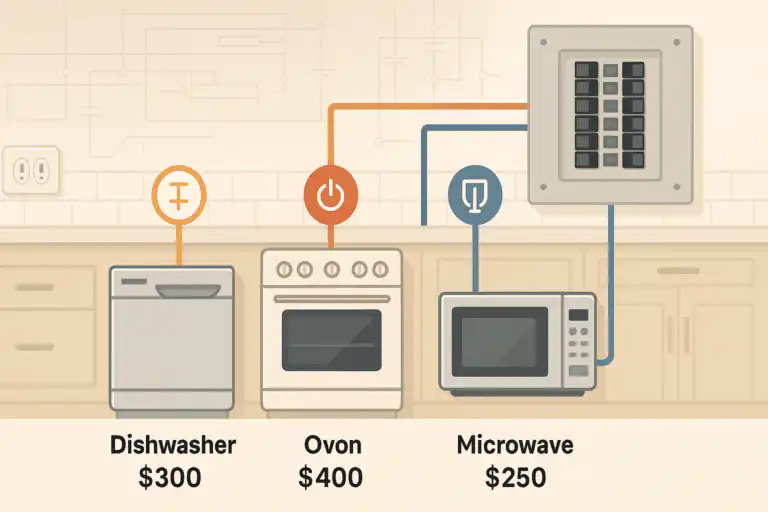
Frequently Asked Questions of microwave electrical requirements
What circuit size does a typical microwave need?
Most household microwaves need a 120V circuit and commonly use a 15A or 20A breaker. Check the microwave electrical requirements in the manual for exact amperage.
Can I plug a microwave into a regular kitchen outlet?
Yes, many countertop microwaves plug into standard 120V kitchen outlets, but a dedicated outlet is recommended to avoid tripping other circuits. Over-the-range and built-in models often require hardwiring.
Do microwaves ever require 240V power?
Some commercial or high-powered built-in microwaves require 240V and larger breakers. Always verify the microwave electrical requirements on the nameplate or manual.
Is GFCI or AFCI protection required for microwave circuits?
Local codes vary, but kitchens often require GFCI protection and newer codes may require AFCI breakers. Follow local electrical code and manufacturer guidance.
How do I know if my outlet can handle the microwave load?
Check the outlet rating, wiring gauge, and breaker size. Use a multimeter and inspect wire gauge and breaker labels, or hire an electrician to confirm compatibility.
Conclusion
You now have a clear, practical view of microwave electrical requirements: voltage, amperage, dedicated circuits, outlet types, wiring, breakers, and safety steps. Apply the checklist, follow manufacturer specs, and hire a licensed electrician for hardwired or high-voltage installs. Take action today by checking your microwave manual and outlet, and label circuits for future peace of mind. Share your installation questions or experiences below or subscribe for more appliance and kitchen wiring tips.