Kitchen Knife Cleaning & Maintenance: Complete Guide to Keeping Blades Sharp and Safe
Kitchen Knife Cleaning & Maintenance is a simple habit that keeps blades sharp, safe, and ready for daily cooking. In American kitchens, where chef knives, paring knives, and utility knives handle many meals each week, proper care can make a major difference.
After years of working with kitchen tools, I have found that most knife problems come from small mistakes. Leaving blades wet, placing them loose in drawers, or using harsh cleaners can shorten a knife’s life. A few careful steps prevent most damage.
Why Kitchen Knife Cleaning & Maintenance Matters
A clean knife is easier to use and safer to handle. Food residue can affect the blade surface and create unpleasant smells if it stays for too long.
Good Kitchen Knife Cleaning & Maintenance also protects the edge. A sharp knife needs less force, which gives you better control while cutting.

- ✦ Better blade life
Regular care helps reduce rust, stains, and edge damage.
- ✦ Safer cooking
Sharp and clean knives are easier to control during food preparation.
Common Causes of Knife Damage
Moisture, acidic foods, rough cutting boards, and improper storage are common causes of knife wear.
Many home cooks do not realize that a dishwasher cycle can harm handles and dull fine edges.
- ✦ Dishwasher heat
High heat and movement can damage blades and handles.
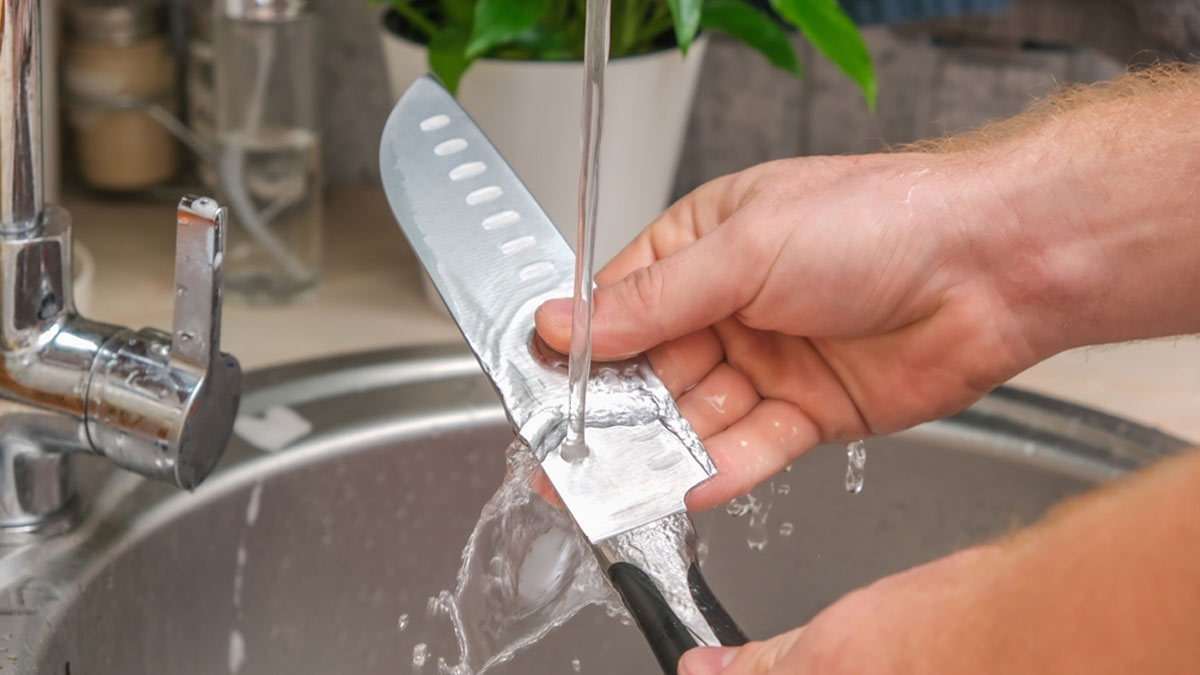
How to Clean a Kitchen Knife Correctly
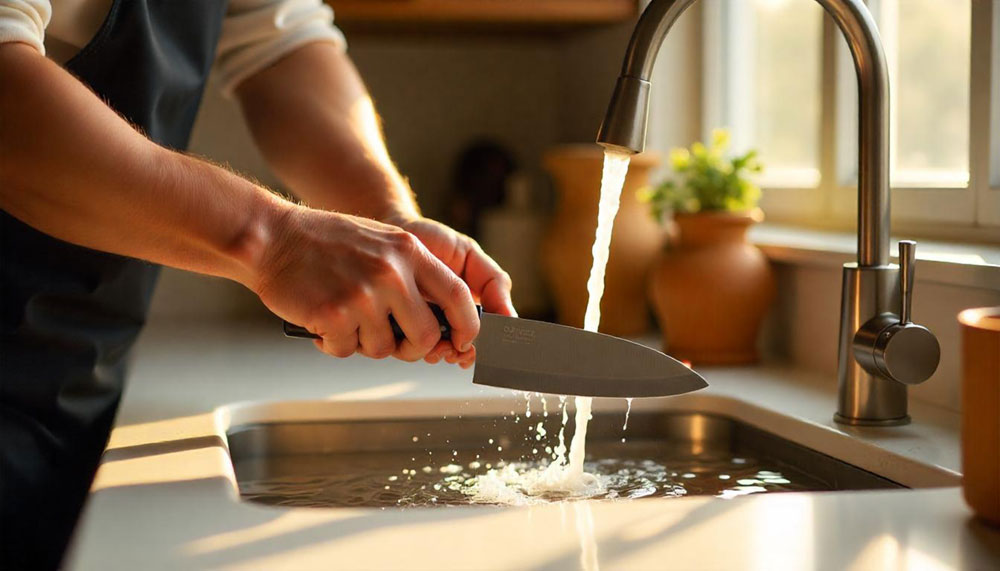
The best Kitchen Knife Cleaning & Maintenance routine starts right after use. Rinse the blade, remove food particles, and avoid letting residue dry on the surface.
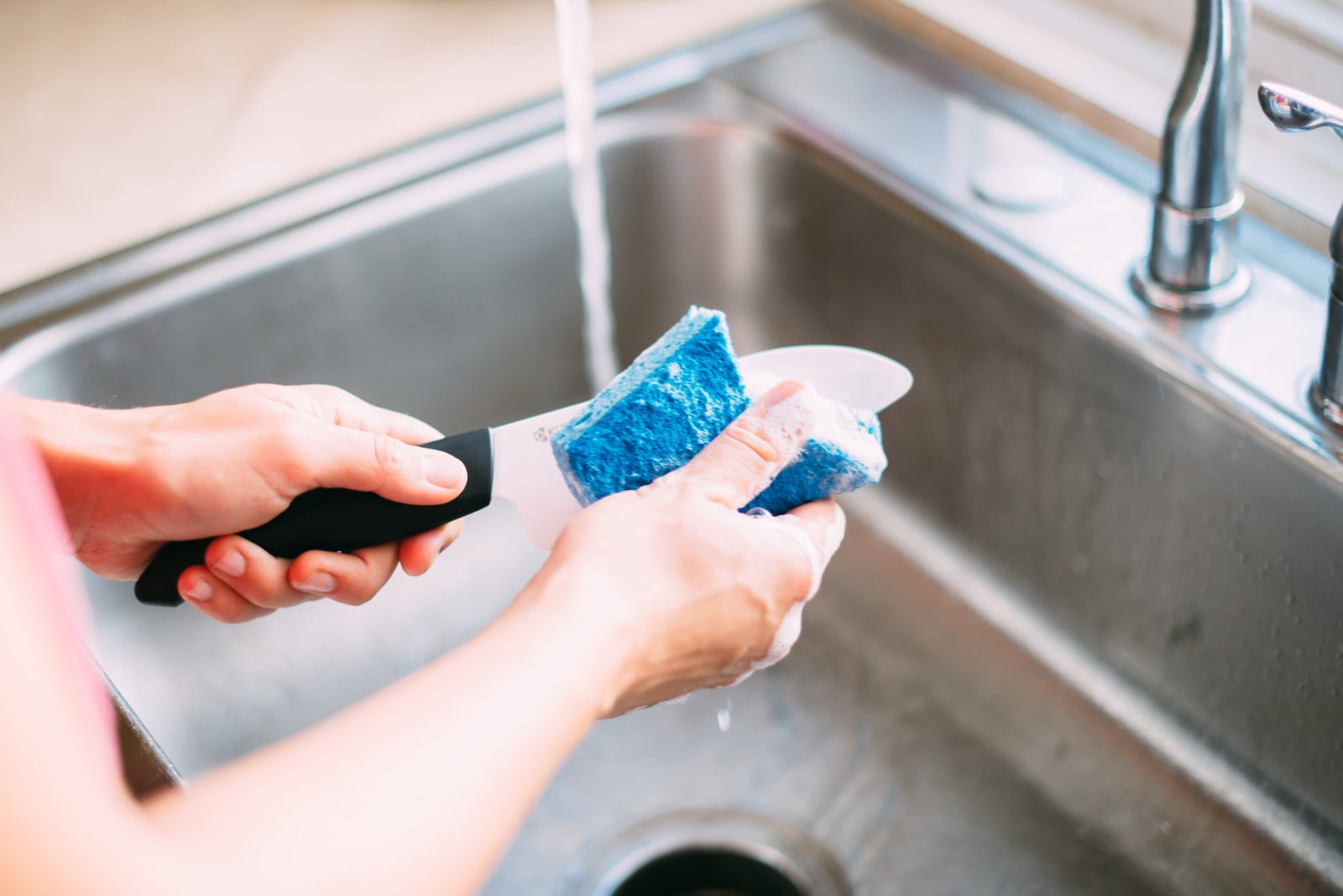
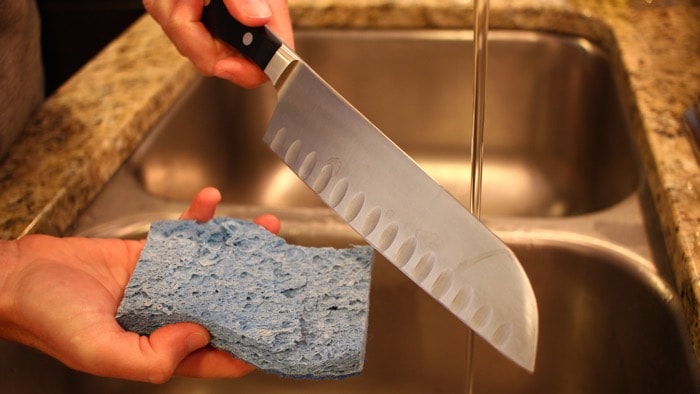
Use a soft sponge or cloth instead of abrasive scrubbers. Hold the knife safely and keep your fingers away from the cutting edge.
- ✦ Step one
Rinse the knife with warm water to remove loose food.
- ✦ Step two
Wash with mild dish soap and a soft sponge.
- ✦ Step three
Dry the entire knife immediately with a clean towel.
Why Hand Washing Is Recommended
Hand washing gives you control over cleaning and protects delicate knife materials. This is especially important for high-carbon steel knives.
Careful washing is one of the easiest Kitchen Knife Cleaning & Maintenance habits to build.
Drying and Preventing Rust on Kitchen Knives
Drying is one of the most important parts of Kitchen Knife Cleaning & Maintenance. Water left on a blade can cause spots, corrosion, and rust over time.
Carbon steel knives need extra attention because they react faster with moisture and acidic foods.

- ✦ Dry completely
Wipe both sides of the blade and the handle area.
- ✦ Use oil when needed
A small amount of food-safe oil can protect some carbon steel blades.
Signs Your Knife Needs Extra Care
Small dark marks, rough spots, or orange rust areas show that the blade needs attention.
Early treatment is easier than repairing deep corrosion.
- ✦ Inspect often
Check blades during regular cleaning routines.
Honing, Sharpening, and Blade Care
Kitchen Knife Cleaning & Maintenance includes more than washing. Honing helps realign the edge, while sharpening removes metal to create a new edge.
A honing rod is useful for regular upkeep, but a dull knife may need a proper sharpening tool or professional service.

- ✦ Honing frequency
Many home cooks hone their knives regularly based on use.
- ✦ Sharpening schedule
Sharpen when the knife no longer cuts smoothly after honing.
Choosing the Right Cutting Surface
Wood and quality plastic boards are kinder to knife edges than hard surfaces like glass or stone.
The right cutting board supports long-term Kitchen Knife Cleaning & Maintenance.
Safe Storage Solutions for Kitchen Knives
Proper storage prevents accidental cuts and protects the blade edge. Loose drawer storage allows knives to hit other tools and become damaged.
A complete Kitchen Knife Cleaning & Maintenance plan should always include safe storage after every cleaning session.
- ✦ Knife block
Keeps blades separated and easy to access.
- ✦ Magnetic strip
Provides visible storage when installed safely.
- ✦ Blade guards
Protect knives stored inside drawers.
Mistakes to Avoid
Avoid storing wet knives, cutting on hard surfaces, and using damaged tools.
Small daily choices have a large effect on knife performance.