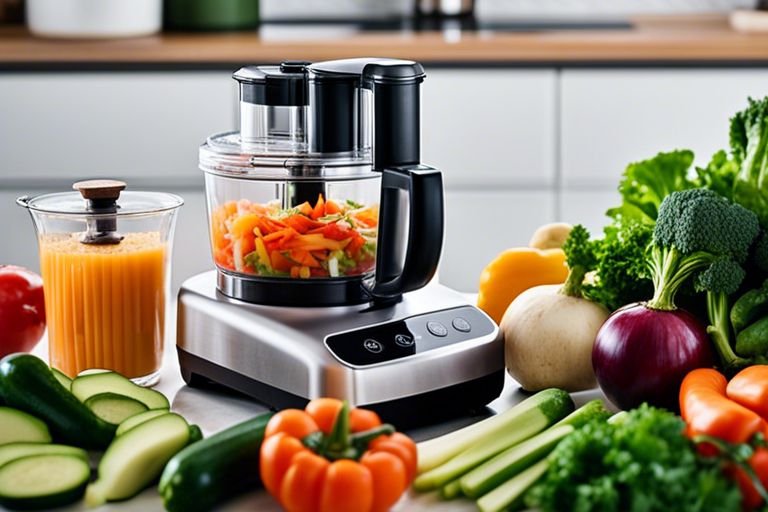
Food Processor Vegetable: How to Chop, Slice, Shred, and Prep Vegetables
Preparing vegetables by hand can take a lot of time. A good food processor can turn this slow job into a quick kitchen task. It is useful for weeknight meals, meal prep, soups, salads, sauces, and many other dishes.
The key is to match the vegetable and task with the right blade or setting. In my experience with food preparation, the best results come from using short pulses, keeping pieces similar in size, and working in small batches when needed. This gives you more control and helps keep vegetables crisp instead of turning them into a paste.

What Can a Food Processor Do With Vegetables?
A food processor can handle many common vegetable prep jobs. The main tasks include chopping, slicing, shredding, grating, mixing, and pureeing. Some models also have special discs for thin slices or julienne cuts.
The texture depends on the blade, speed, food size, and processing time. A few short pulses can create a rough chop, while longer processing can make a smooth puree. This makes a Food Processor Vegetable setup useful for both simple meals and more detailed recipes.
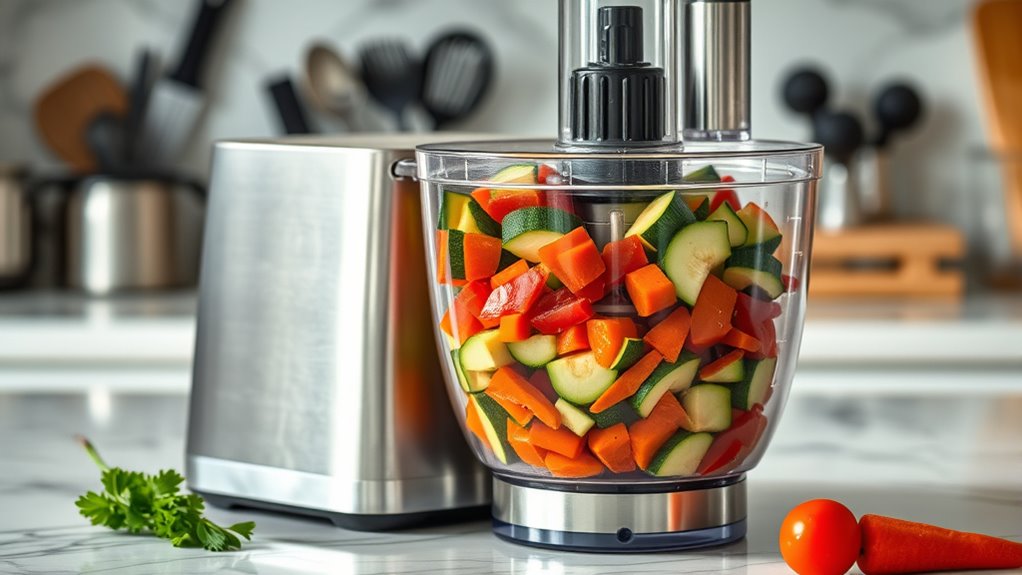
- ✦ Chopping
Use the standard S-shaped blade for onions, carrots, celery, peppers, and many other vegetables.
- ✦ Slicing
Use a slicing disc to make even slices of vegetables such as cucumbers, potatoes, zucchini, and carrots.
- ✦ Shredding
Use a shredding disc for carrots, cabbage, potatoes, and similar vegetables.
- ✦ Pureeing
The main blade can turn cooked vegetables into smooth soups, sauces, dips, and baby food.
Vegetables That Work Well in a Food Processor
Many firm and medium-firm vegetables work very well in a food processor. Carrots, onions, celery, cabbage, potatoes, zucchini, bell peppers, and cauliflower are common choices.
Very soft vegetables can also work, but they need more care. Tomatoes, cooked vegetables, and ripe peppers can become watery or mushy if you process them for too long.
- ✦ Firm vegetables
Carrots, potatoes, cabbage, beets, and celery usually hold their shape well during processing.
- ✦ Medium vegetables
Zucchini, bell peppers, mushrooms, and broccoli need shorter processing times.
- ✦ Soft vegetables
Tomatoes and cooked vegetables should be processed in short bursts to control texture.
How to Chop Vegetables in a Food Processor
Chopping is one of the easiest Food Processor Vegetable tasks. Start by washing and trimming the vegetables. Remove tough stems, damaged parts, skins, or seeds when the recipe calls for it.
Cut large vegetables into smaller pieces before adding them to the bowl. This helps the blade work more evenly. Do not pack the bowl too tightly, as crowded vegetables can produce uneven pieces.
Place the lid on the bowl and use short pulses. Check the texture after a few pulses. Stop when the vegetables reach the size you need instead of letting the machine run continuously.
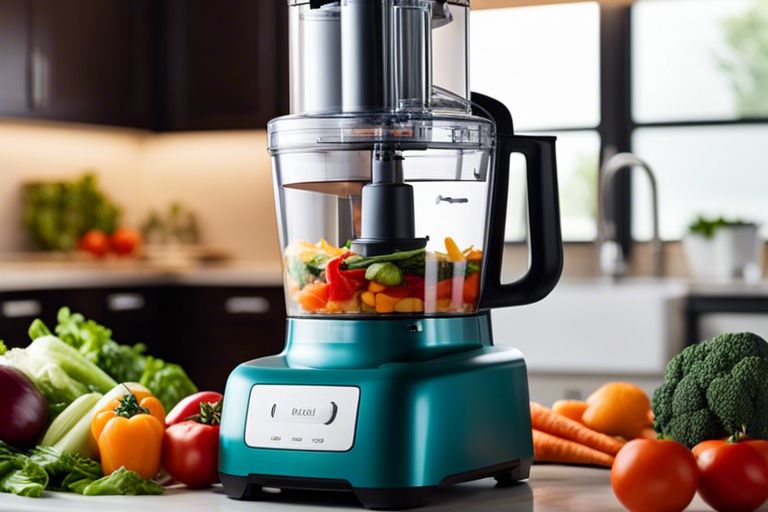
- ✦ Step 1: Wash and trim
Clean the vegetables and remove unwanted stems, skins, seeds, or damaged areas.
- ✦ Step 2: Cut large pieces
Cut large vegetables into smaller chunks that fit comfortably around the blade.
- ✦ Step 3: Add a moderate amount
Leave enough space for the vegetables to move around the bowl.
- ✦ Step 4: Pulse
Use short pulses and check the texture between pulses.
- ✦ Step 5: Stop early
Stop as soon as the vegetables reach the desired size to avoid over-processing.
How to Get an Even Vegetable Chop
Even pieces start with even chunks. If one piece is much larger than another, the small piece may become mushy before the large piece is chopped.
For a rough chop, use fewer pulses. For a finer chop, add a few more pulses. Shake or redistribute the bowl between pulses when needed so the blade can reach more of the vegetables.
- ✦ Keep pieces similar
Cut vegetables into roughly similar chunks before processing.
- ✦ Use pulses
Short pulses give better control than running the motor continuously.
- ✦ Check often
Open and check the texture when the recipe needs a specific cut.
How to Slice Vegetables With a Food Processor
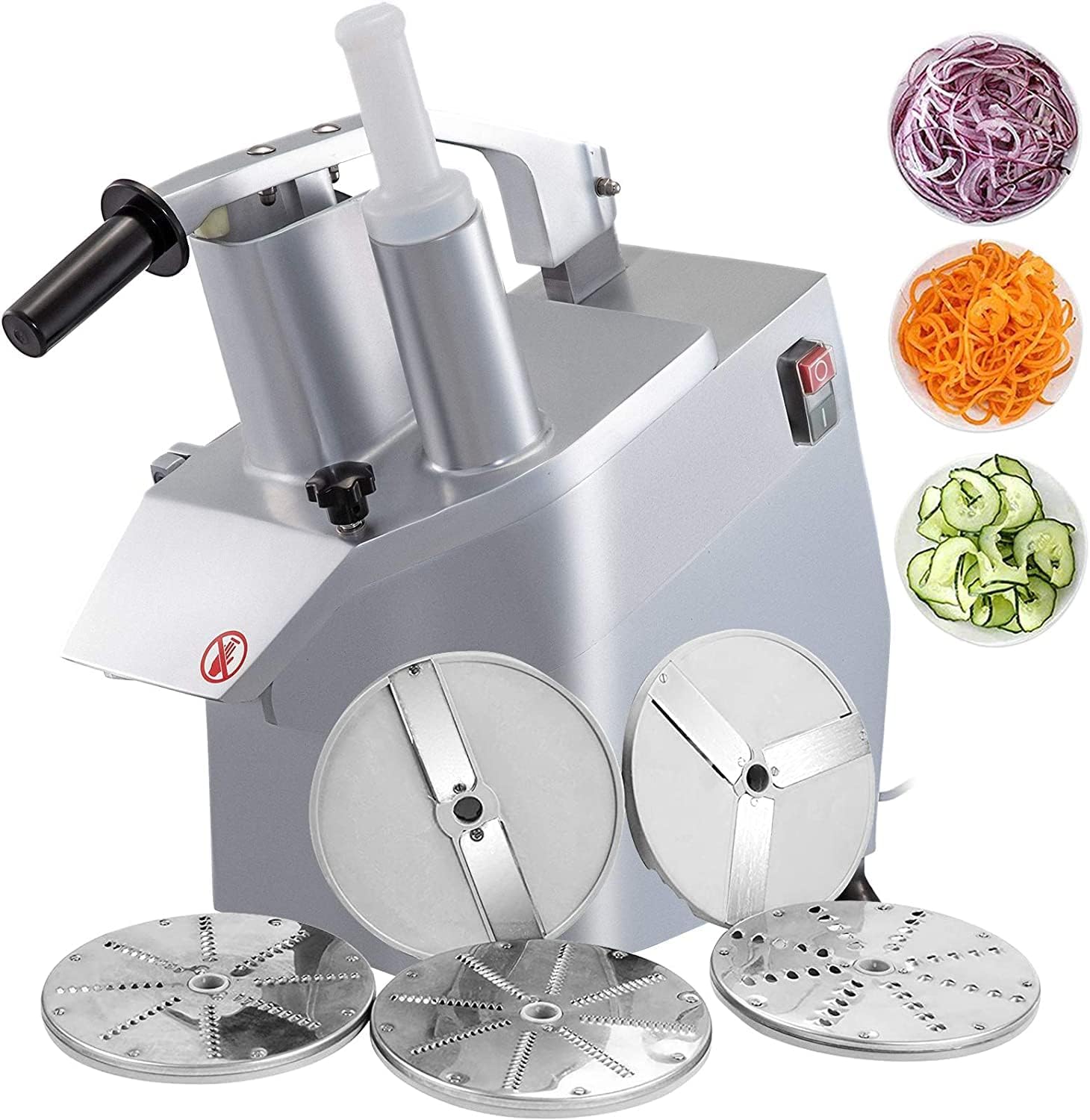
A slicing disc is useful when you want many pieces with a similar thickness. It can save time when preparing potatoes, cucumbers, carrots, zucchini, cabbage, and other vegetables.
Choose the disc that matches the thickness you need. Feed the vegetables through the chute with steady pressure. Avoid forcing them down, since too much pressure can change the cut or strain the machine.
Long vegetables should fit safely into the feed tube. If needed, cut them to a suitable length first. For best results, choose vegetables that are firm enough to hold their shape during slicing.

- ✦ Use the correct disc
Choose a thin, medium, or thick slicing disc based on the recipe.
- ✦ Prepare the vegetables
Trim long or uneven vegetables so they fit safely into the feed tube.
- ✦ Apply steady pressure
Use the food pusher with smooth pressure rather than forcing the vegetable.
- ✦ Keep the feed tube suitable
Avoid adding pieces that are too large for the chute or that could jam the machine.
Best Vegetables for Food Processor Slicing
Firm vegetables usually give the cleanest slices. Potatoes, carrots, cucumbers, zucchini, and onions are common choices. Cabbage can also be sliced with the right disc and a suitable bowl size.
The freshness of the vegetable matters too. Very limp vegetables may bend or break instead of producing neat slices. Chilling some soft vegetables before slicing can help them stay firm.
- ✦ Potatoes
Useful for casseroles, gratins, fries, and other dishes that need repeated slices.
- ✦ Cucumbers
A slicing disc can create quick, even pieces for salads and sandwiches.
- ✦ Carrots
Firm carrots slice well when cut to fit the feed tube.
- ✦ Zucchini
Use gentle pressure to reduce crushed or uneven slices.
How to Shred and Grate Vegetables
A shredding or grating disc can make fast work of vegetables that would take much longer with a hand grater. Carrots, potatoes, cabbage, and some firm root vegetables are common choices.
Shredding is useful for slaws, hash browns, vegetable fritters, salads, and toppings. The disc creates long pieces, so the size of the feed opening and the way you position the vegetable can affect the final result.
Always use the food pusher instead of your fingers. Keep hands away from the feed tube and the moving disc. The disc can be very sharp, even when the appliance is switched off.

- ✦ Carrot shredding
Shredded carrots work well in salads, slaws, muffins, and cooked dishes.
- ✦ Potato shredding
A shredding disc can quickly prepare potatoes for hash browns and similar recipes.
- ✦ Cabbage shredding
Shredded cabbage can be used for slaw, stir-fries, soups, and other dishes.
- ✦ Root vegetables
Firm roots can often be shredded when the food processor and disc are designed for the task.
Shredding Versus Grating
Shredding creates larger strips, while grating creates smaller pieces. The exact result depends on the disc design, so check your food processor manual before choosing an attachment.
Use shredding when you want visible strands. Use a finer grating surface when the recipe needs smaller pieces that blend more easily into the food.
- ✦ Shredding
Creates longer, larger pieces that work well for slaws and hash browns.
- ✦ Grating
Creates smaller pieces that can blend into mixtures, sauces, or vegetable cakes.
How to Process Different Types of Vegetables
Not every vegetable behaves the same way in a food processor. Firm vegetables can handle more force, while soft vegetables need more control. Knowing this difference helps prevent uneven cuts and unwanted mush.
The Food Processor Vegetable method should also match the recipe. A soup may need a fine chop, while a salad may need clean slices. Choose the blade and processing time based on the final texture you want.
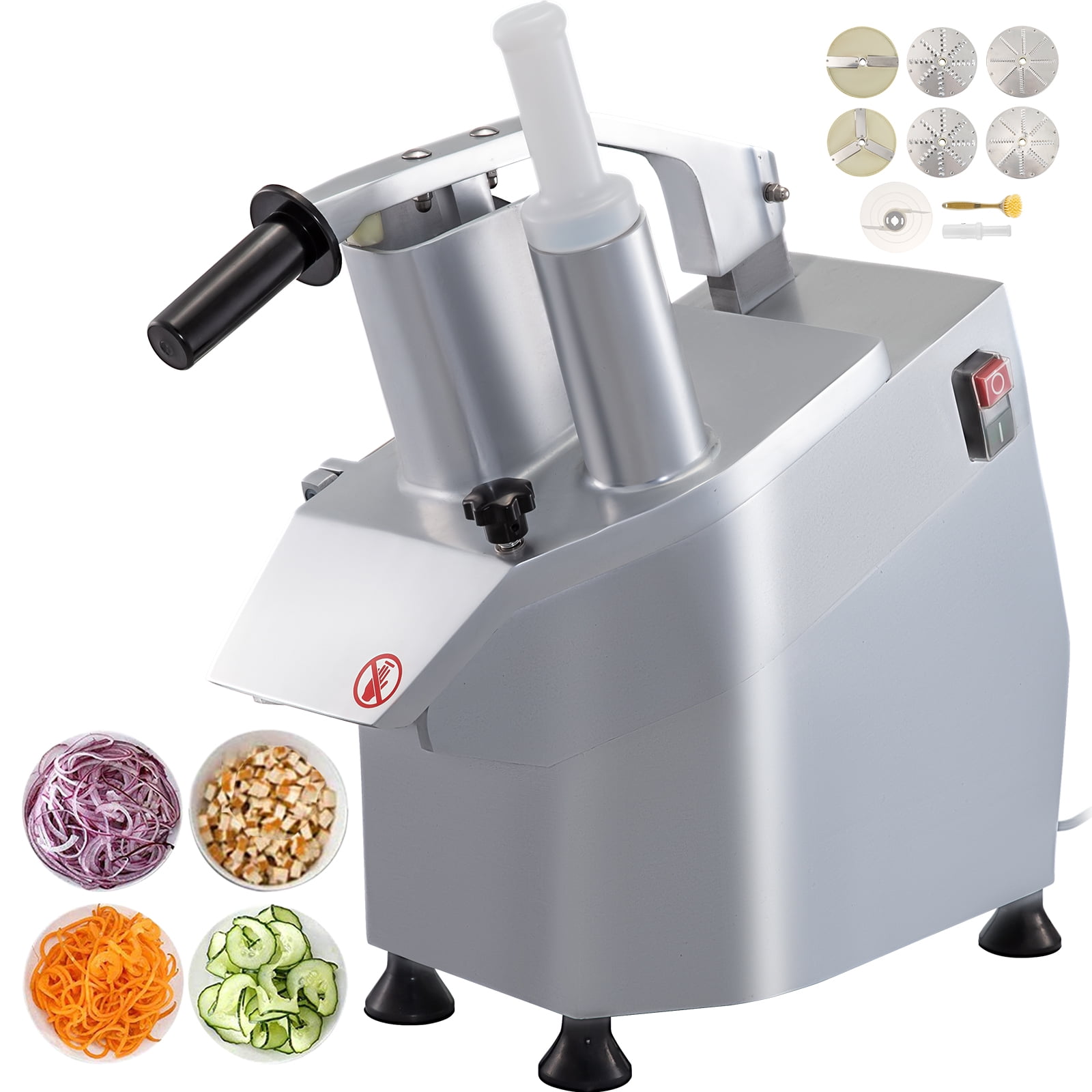
- ✦ Onions
Peel and quarter onions, then use short pulses. Stop early if you want a chunky chop.
- ✦ Carrots
Cut thick carrots into smaller pieces for chopping, or use a slicing or shredding disc.
- ✦ Celery
Trim the stalks and cut them into shorter pieces before pulsing.
- ✦ Bell peppers
Remove the stem and seeds. Use short pulses because the flesh can become soft quickly.
- ✦ Cabbage
Remove the tough core and cut the cabbage into pieces that fit the feed tube or bowl.
- ✦ Broccoli
Cut the florets into smaller pieces and pulse for a rough chop or use a suitable attachment.
- ✦ Cauliflower
Florets can be pulsed into small pieces for dishes that need a rice-like texture.
- ✦ Potatoes
Use a slicing or shredding disc for many preparations, and avoid excessive processing with the main blade.
- ✦ Tomatoes
Use very short pulses because tomatoes contain a lot of water and can quickly become a thin mixture.
Soft Vegetables Need More Control
Soft vegetables can break apart quickly. Tomatoes, cooked squash, and cooked potatoes are good examples. If you run the processor too long, you may get a puree when you wanted a rough chop.
For these foods, use short pulses and inspect the bowl often. If the recipe needs clean pieces, a knife may still give better control.
- ✦ Pulse briefly
Short bursts reduce the chance of turning soft vegetables into puree.
- ✦ Avoid overfilling
A smaller batch can give you better control over texture.
- ✦ Use a knife when needed
Hand chopping may be better when a recipe requires very precise pieces.
Food Processor Vegetable Prep for Common Meals
A Food Processor Vegetable routine can make everyday cooking much faster. Instead of preparing each vegetable from scratch during every meal, you can prep several ingredients at once.
This works well for busy U.S. households that cook during the week. You can chop onions and peppers for dinner, shred carrots for lunch salads, or slice vegetables for roasted dishes.
- ✦ Soups
Chop onions, carrots, celery, and other vegetables before cooking. Puree cooked vegetables when a smooth soup is needed.
- ✦ Salads
Slice cucumbers, carrots, cabbage, and other vegetables for quick meal prep.
- ✦ Slaw
Shred cabbage and carrots with a shredding disc for a fast slaw base.
- ✦ Salsa
Pulse tomatoes, onions, peppers, and other ingredients in short bursts for a chunky texture.
- ✦ Fritters
Shred vegetables such as zucchini or potatoes before mixing them with the other ingredients.
- ✦ Roasted vegetables
Slice or chop vegetables into similar sizes so they can cook more evenly.
Meal Prep Tips
Plan the vegetables you need before turning on the machine. Wash, trim, and group them by task. This reduces repeated setup and cleanup.
After processing, store vegetables in clean containers and follow safe food storage practices. Keep cut produce chilled when it needs refrigeration, and use it within a suitable time for the food.
- ✦ Plan first
Know which vegetables you need and which attachment fits each task.
- ✦ Batch similar jobs
Chop several vegetables with the same blade before changing attachments.
- ✦ Store safely
Move prepared vegetables into clean containers and refrigerate foods that require cold storage.
Common Food Processor Vegetable Mistakes
Most poor results come from using the wrong attachment or processing for too long. A food processor is fast, so even a few extra seconds can change the texture.
Another common mistake is filling the bowl too much. When the bowl is crowded, some vegetables may sit above the blade while others get processed too much. Working in smaller batches often gives a more even result.

- ✦ Running the motor too long
Continuous processing can turn chopped vegetables into a paste. Use pulses when you want pieces.
- ✦ Using the wrong blade
A standard blade is not always the best choice for slicing or shredding.
- ✦ Overfilling the bowl
Too much food can lead to uneven processing and may strain the machine.
- ✦ Skipping prep cuts
Very large pieces can process unevenly and may not move properly around the blade.
- ✦ Ignoring the manual
Each food processor has its own limits, attachments, and safety instructions.
- ✦ Using your hands near blades
Always use the supplied pusher and follow the manufacturer’s safety instructions.
Why Vegetables Turn Mushy
Mushy vegetables usually result from too much processing. The blade keeps cutting as long as the motor runs, so vegetables can quickly move from chopped to crushed.
Moisture also matters. Soft vegetables release water as they break down. Use short pulses and smaller batches when texture matters.
- ✦ Too many pulses
Stop as soon as the vegetables reach the desired size.
- ✦ Wet vegetables
Very moist vegetables can become soft or watery during extended processing.
- ✦ Crowded bowl
A crowded bowl can cause some pieces to stay large while others become over-processed.
Cleaning and Caring for a Food Processor After Vegetable Prep
Cleaning soon after vegetable prep makes the job easier. Food bits can dry around the blade, lid, feed tube, and bowl if they sit for too long.
Unplug the appliance before cleaning it. Remove the blade or disc carefully by handling it as directed by the manufacturer. Wash removable parts according to the manual, since not every part is safe for a dishwasher.
- ✦ Unplug first
Disconnect the appliance from power before removing blades or cleaning the motor base.
- ✦ Handle blades carefully
Sharp blades and discs should be handled by safe areas and stored securely.
- ✦ Clean the bowl
Wash away vegetable pieces and residue soon after use.
- ✦ Clean the lid and feed tube
Vegetable scraps can collect around seals and narrow openings.
- ✦ Keep the motor base dry
Wipe the motor base with a damp cloth rather than immersing it in water.
How to Keep the Food Processor Working Well
Regular care can help keep the machine ready for the next Food Processor Vegetable task. Check the blade, bowl, lid, and seals for damage or wear.
Do not force ingredients into the feed tube. If the machine struggles, stop and check the food size, amount, and attachment. Follow the manufacturer’s instructions for capacity and safe use.
- ✦ Inspect parts
Check blades, discs, seals, and bowls for damage before regular use.
- ✦ Respect capacity
Use the maximum fill level listed in the product manual.
- ✦ Store attachments safely
Keep sharp discs and blades in a safe place where they will not cause accidental cuts.
Food Processor Vegetable vs. Hand Chopping
A food processor saves time when you need a large amount of prepared vegetables. It is especially useful for repeated cuts, shredded vegetables, soup bases, and large meal-prep batches.
Hand chopping still has an important place. A knife gives precise control over shape and size, which can matter for delicate salads, garnishes, or dishes where the pieces must look neat.
- ✦ Choose a food processor
Use it when speed, volume, slicing, shredding, or repeated cuts matter most.
- ✦ Choose a knife
Use a knife when you need exact shapes, very small batches, or fine visual control.
- ✦ Use both
Many cooks use the processor for bulk prep and a knife for final trimming or detailed cuts.
When a Food Processor Is Worth Using
The biggest benefit is speed. If a recipe calls for several cups of chopped or shredded vegetables, a processor can reduce repetitive knife work.
It can also improve consistency for tasks such as shredding carrots or slicing potatoes. The best choice depends on the recipe, the amount of food, and the texture you want.
- ✦ Large batches
A processor is useful when preparing many vegetables at once.
- ✦ Repeated cuts
A disc can create many similar slices or shreds with less manual work.
- ✦ Fast meal prep
It can shorten the prep stage before cooking during busy weekdays.