Cutting Board Materials: Wood, Plastic, Bamboo, Composite, and More
Choosing among cutting board materials can feel harder than it should. Stores sell boards made from wood, plastic, bamboo, rubber, composite fibers, glass, stone, and other materials. Each one behaves differently under a knife and during daily cleaning.
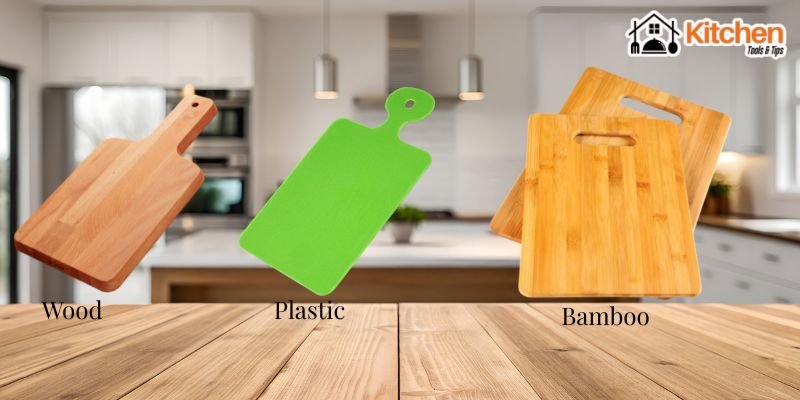
For most U.S. home kitchens, wood and plastic are practical starting points. Wood feels good under a knife and can last for years with proper care. Plastic is easy to clean and offers a simple option for raw meat and poultry. The right choice depends less on looks and more on how you cook.
A useful way to compare Cutting Board Materials is to look at the whole life of the board. Think about cutting performance, moisture, cleaning, knife wear, stains, odors, storage, and when the board should be replaced. This guide breaks down those points in plain language.

Why Cutting Board Materials Matter
A cutting board is more than a flat surface. It affects how your knife moves, how easy your prep work feels, and how you clean up after cooking. The material also affects how well the board handles water, heat, stains, and repeated knife cuts.
Some Cutting Board Materials are softer and kinder to knife edges. Others are hard and very easy to wipe clean. Some need regular oiling, while others need little care beyond washing and drying.
The board should also match the food. A board used for raw chicken needs careful cleaning after each use. A board used for bread, fruit, or herbs may have different needs. Using separate boards can make kitchen cleanup simpler.
- ✦ Knife feel
The surface should give your knife a controlled, comfortable cutting feel without quickly damaging the edge.
- ✦ Cleaning
A good board should be easy to wash and dry after food preparation.
- ✦ Moisture control
The material should handle normal kitchen moisture without excessive swelling, cracking, or warping.
- ✦ Food safety
The board must be cleaned properly after contact with raw meat, poultry, seafood, or other foods that can carry harmful germs.
The Main Factors to Compare
When comparing Cutting Board Materials, do not focus on one feature alone. A very durable board may be hard on knives. A soft board may feel great but need more care. A low-maintenance board may not offer the same feel as natural wood.
- ✦ Durability
Consider how well the board handles daily cuts, washing, and long-term use.
- ✦ Maintenance
Check whether the board needs hand washing, drying, oiling, or other regular care.
- ✦ Size and weight
A board should give you enough room to work and stay stable on the counter.
Wood Cutting Boards
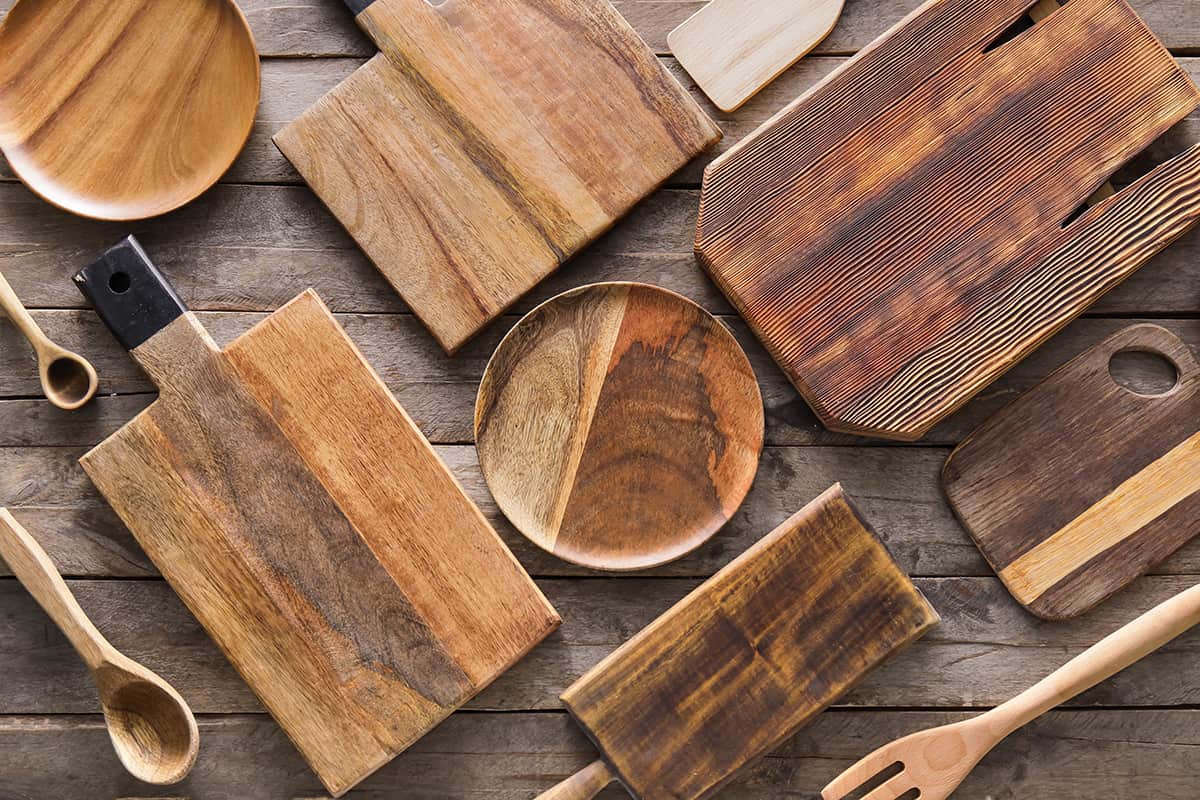
Wood is one of the most popular cutting board materials for home cooks and professional kitchens. Common choices include maple, walnut, cherry, beech, and acacia. The exact feel depends on the wood species, board design, grain direction, thickness, and finish.
A good wood board gives a comfortable surface for chopping, slicing, and mincing. It can also be repaired or resurfaced when deep marks build up. With sensible care, a quality wood board can stay useful for many years.
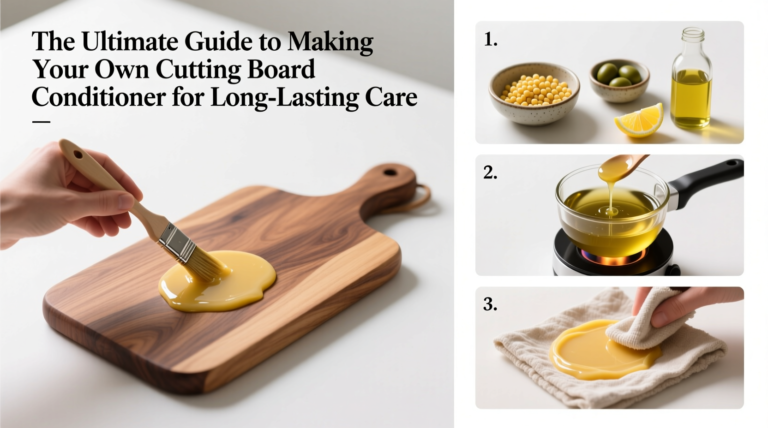
Wood does need more care than many plastic boards. It should not sit in water for long periods, and many wood boards should be treated from time to time with a food-safe board oil. Never assume that every wood board has the same care instructions.
- ✦ Pros
Wood offers a pleasant cutting feel, can be durable, and can often be resurfaced when the surface becomes heavily marked.
- ✦ Cons
Wood can warp, crack, or split when exposed to poor care, excess water, or uneven drying.
- ✦ Best uses
Wood works well for vegetables, fruit, herbs, bread, cheese, and general food preparation.
End-Grain vs. Edge-Grain Wood
End-grain boards place the cut ends of wood fibers at the surface. This construction can provide a durable cutting surface and a distinctive look. Edge-grain boards use the long edges of wood pieces and can offer a lighter and often less costly option.
The quality of the construction still matters. A thick, well-made board with a stable design can perform better than a poorly made board, regardless of its grain style.
- ✦ End grain
Often thick and sturdy, with a surface designed for repeated chopping.
- ✦ Edge grain
Often lighter and more affordable while still providing a solid wood cutting surface.
Popular Wood Species
Maple is a common choice because it provides a hard but useful cutting surface. Walnut is valued for its darker color and comfortable feel. Acacia is also widely sold because it has an attractive grain and can offer good durability when properly made and maintained.
- ✦ Maple
A classic choice for a durable kitchen cutting board.
- ✦ Walnut
Known for its dark appearance and comfortable cutting feel.
- ✦ Acacia
Popular for its natural grain, durability, and attractive appearance.
Plastic Cutting Boards
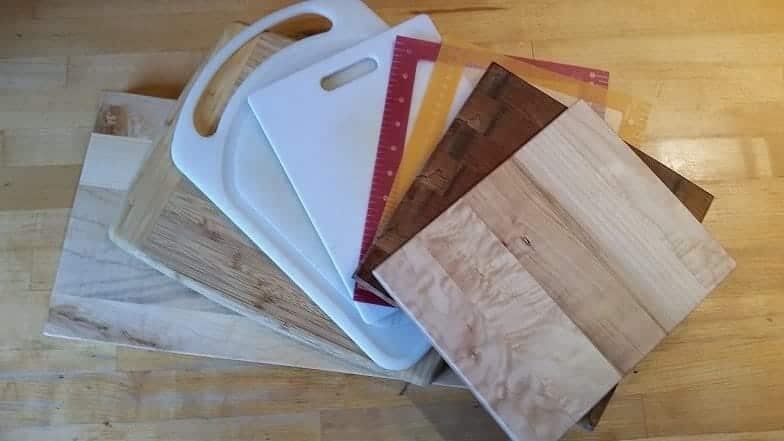
Plastic is another major category among Cutting Board Materials. Many plastic boards use polyethylene, often in high-density polyethylene forms. They are light, practical, and widely available in many sizes and colors.
One major benefit is simple cleanup. Some plastic boards are dishwasher safe, but you should always follow the maker’s instructions. Plastic also works well when you want separate boards for different foods.
The surface can develop knife grooves over time. Deep grooves can make the board harder to clean well, so a heavily worn plastic board should be replaced rather than kept forever.
- ✦ Pros
Plastic boards are usually affordable, light, easy to store, and simple to clean.
- ✦ Cons
Deep knife marks can build up over time, and some thin boards can slide or bend during use.
- ✦ Best uses
Plastic is a practical choice for raw meat, poultry, seafood, and everyday food preparation when cleaned correctly.
Are Plastic Cutting Boards Safe?
A plastic cutting board can be used safely when you clean it properly and replace it when the surface becomes badly worn. The material alone does not make a board safe or unsafe. Cleaning habits, board condition, and how you handle raw foods matter too.
For raw meat and poultry, use a board that you can wash thoroughly after each use. Keeping a separate board for raw foods can also reduce the chance of spreading germs to ready-to-eat foods.
- ✦ Wash after raw food
Clean the board with hot, soapy water after preparing raw meat, poultry, or seafood.
- ✦ Inspect the surface
Replace a board when deep cuts, cracks, or hard-to-clean areas become a problem.
Bamboo Cutting Boards
Bamboo is often grouped with wood cutting boards, but bamboo is a grass rather than a traditional hardwood. It has become popular because it is hard, light, and easy to find in stores across the United States.
Bamboo boards can resist moisture better than some softer wood products, but that does not mean they are waterproof. They still need proper washing and drying. Many bamboo boards also use glue to join strips together, so construction quality matters.
Because bamboo can be quite hard, some boards may feel less forgiving under a knife than softer wood. If knife edge care is important to you, compare the board’s surface feel before choosing one.

- ✦ Pros
Bamboo is light, attractive, widely available, and can provide a firm cutting surface.
- ✦ Cons
It can feel hard under a knife and still requires care to limit moisture damage.
- ✦ Best uses
Bamboo works well for general kitchen prep, especially when you want a light natural-looking board.
Bamboo vs. Traditional Wood
Both materials can work well, but they feel different. Traditional wood gives you a broad range of choices in hardness, grain, thickness, and construction. Bamboo is often lighter and has a distinct look, but its laminated construction can vary between products.
Look at the board as a whole rather than choosing only by material name. Thickness, stability, finish, construction, and care instructions all affect daily performance.
- ✦ Choose wood for feel
Traditional wood offers many options if you want to fine-tune knife feel and board thickness.
- ✦ Choose bamboo for simplicity
Bamboo can be a practical choice when you want a light board with a natural appearance.
Composite and Fiber Cutting Boards
Composite boards use materials that are bonded, pressed, or formed into a solid cutting surface. Some use wood fibers or paper-based fibers with resin. These boards can offer a useful middle ground between natural wood and plastic.
Many composite boards have a smooth, firm surface and can handle frequent use. Some are dishwasher safe, which can make them appealing for busy households. Always check the manufacturer’s care directions because heat and water resistance can vary.
Composite boards are worth considering when you want a board that needs less maintenance than traditional wood. They may not have the same natural look or cutting feel as a solid wood board, but their practical design can suit everyday cooking.

- ✦ Low maintenance
Some composite boards need less routine care than traditional wood boards.
- ✦ Stable surface
Many composite designs provide a firm surface that stays steady during food preparation.
- ✦ Care varies
Dishwasher and heat resistance depend on the exact material and product design.
When Composite Boards Make Sense
Composite Cutting Board Materials can suit cooks who want a balance of durability and easy care. They are useful when you want the look or feel of a solid board without committing to the same maintenance routine as some wood products.
Before buying, check the maker’s cleaning rules. A board that looks similar to another composite board may have very different limits for heat, soaking, or dishwasher use.
- ✦ Busy kitchens
Composite boards can suit people who want simple daily care.
- ✦ Frequent prep
A stable composite surface can work well for repeated chopping and slicing.
Rubber, Silicone, Glass, Stone, and Metal Boards
Other Cutting Board Materials also exist, but they serve more specific needs. Rubber boards are valued by some cooks for their stable feel and knife-friendly surface. Silicone is flexible and easy to handle, but the exact cutting performance depends on the product.
Glass and stone boards are hard and easy to wipe clean, but that hardness can be rough on knife edges. They are often better suited to serving or specific food tasks than as an everyday chopping surface.
Metal boards are durable and easy to clean, but they are very hard on knives. For most home cooks, the benefits do not outweigh the effect on knife edges for normal chopping and slicing.

- ✦ Rubber
Can provide strong stability and a comfortable cutting surface, especially in demanding kitchen settings.
- ✦ Silicone
Flexible and easy to handle, though cutting feel varies by product.
- ✦ Glass
Easy to clean but very hard, which can quickly dull knife edges.
- ✦ Stone
Useful for some specialty tasks but generally too hard for regular knife work.
- ✦ Metal
Very durable and easy to clean but harsh on knife edges.
Why Very Hard Surfaces Can Be a Problem
Your knife edge meets the cutting board thousands of times during normal cooking. A very hard board gives the edge little room to move or absorb impact. This can lead to faster edge wear and a less pleasant cutting experience.
That is why the hardest surface is not always the best surface. A board should be firm enough to support food but not so hard that it quickly works against your knife.
- ✦ Protect the knife
Choose a surface that offers a good balance between firmness and a knife-friendly feel.
- ✦ Think about the task
Use specialty hard surfaces only when their specific benefits make sense.
Cutting Board Materials Compared
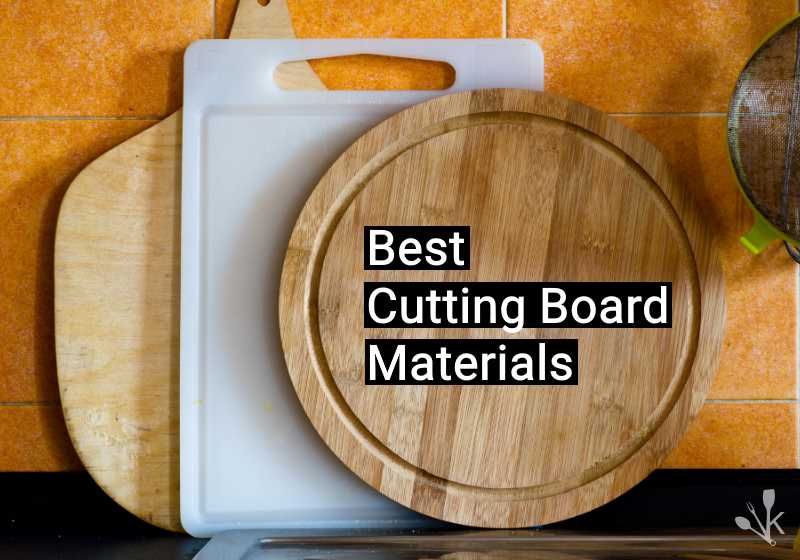
There is no single winner across all categories. Each material gives you a different mix of knife feel, cleaning effort, durability, price, and appearance. Your cooking habits should guide the choice.
For many kitchens, owning more than one board is more useful than trying to find one board that does everything. A large wood board can handle daily produce and prep, while a separate plastic board can be used for raw meat and poultry.
- ✦ Wood
Best suited to cooks who value a natural look, good cutting feel, and long-term repairability.
- ✦ Plastic
Best suited to cooks who want easy cleaning, low cost, and a practical board for raw foods.
- ✦ Bamboo
Best suited to cooks who want a light natural material with a firm cutting surface.
- ✦ Composite
Best suited to cooks who want low maintenance and a stable surface.
- ✦ Rubber
Best suited to cooks who want strong stability and a surface designed for repeated knife work.
- ✦ Glass or stone
Best suited to limited specialty or serving uses rather than regular chopping.
A Simple Buying Checklist
Before buying any of the Cutting Board Materials discussed here, think about your normal kitchen routine. The best board is one you will use safely, clean correctly, and maintain without frustration.
- ✦ Pick the right size
Choose a board large enough to keep food on the surface while you cut.
- ✦ Check stability
Look for enough weight or non-slip features to keep the board steady.
- ✦ Review care instructions
Know whether the board needs hand washing, drying, oiling, or other care before you buy it.
- ✦ Check knife compatibility
Avoid very hard surfaces if preserving knife edges is a priority.
- ✦ Plan for raw foods
Consider keeping a separate board for raw meat, poultry, and seafood.
How to Care for Different Cutting Board Materials
Good care can extend the useful life of almost any cutting board. The basic rule is simple: clean the board after use, dry it well, and follow the maker’s instructions for the material.
Wood boards need special attention to water. Do not leave them soaking in a sink. Dry both sides after washing, and use a food-safe board oil when the manufacturer’s instructions call for it.
Plastic and some composite boards may allow dishwasher cleaning, but repeated high heat can affect certain products. Check the product label instead of assuming that all plastic or composite boards have the same care requirements.
- ✦ Wash after use
Use the cleaning method recommended for the board, especially after preparing raw foods.
- ✦ Dry properly
Allow the board to dry fully instead of storing it while wet.
- ✦ Avoid long soaking
Long exposure to water can damage many wood and laminated boards.
- ✦ Do not use harsh methods without checking
Heat, bleach, abrasive cleaners, and dishwashers may not suit every board.
- ✦ Replace worn boards
Deep cracks, splits, or grooves that cannot be cleaned well are signs that replacement may be needed.
Cleaning Boards Used for Raw Meat
Raw meat, poultry, and seafood need careful handling. After use, wash the board with hot, soapy water and clean nearby surfaces that may have been touched by raw food. Keep ready-to-eat foods away from raw-food preparation areas.
A separate board for raw foods can make this routine easier. Color-coding boards can also help a household remember which board is used for which type of food.
- ✦ Use separate boards
A dedicated raw-food board can help reduce cross-contact during meal prep.
- ✦ Clean the work area
Wash utensils, counters, and other surfaces that may have contacted raw food.