Deep Frying Temperature & Oil Safety: Complete Guide to Perfect Frying and Safer Cooking
Deep Frying Temperature & Oil Safety is the foundation of good frying at home and in professional kitchens. When oil reaches the correct heat, food cooks faster, develops a golden crust, and absorbs less excess oil. When the temperature is too low, food becomes greasy. When it is too high, oil can break down and create safety risks.
After years of working with cooking guides and kitchen practices, one lesson stays clear: temperature control matters more than expensive equipment. A simple thermometer, proper oil choice, and careful handling can make a major difference in both flavor and safety for American home cooks preparing foods like chicken, fries, fish, and appetizers.
Understanding Deep Frying Temperature & Oil Safety Basics
Deep frying works by transferring heat from hot oil into food. The oil temperature controls how quickly moisture leaves the food and how the outer layer becomes crisp. Most deep frying recipes work best when the oil stays between 325°F and 375°F.
Deep Frying Temperature & Oil Safety is not only about reaching a target number. It also means keeping the heat stable during cooking. Adding cold food can quickly lower oil temperature, which may lead to uneven cooking and oily results.

- ✦ Low Temperature Frying
Oil below 325°F often makes food absorb more oil and creates a soft or greasy texture.
- ✦ Medium Frying Temperature
A range around 350°F is suitable for many foods, including vegetables, chicken pieces, and fries.
- ✦ High Temperature Frying
Temperatures near 375°F can create fast browning but require careful monitoring to avoid burning.
Why Temperature Control Changes Food Quality
The right oil temperature creates a quick seal around food. This helps maintain moisture inside while forming a crisp outside layer. Poor temperature control often causes soggy coatings or burnt surfaces.
Many professional kitchens check oil temperature throughout service because even small changes can affect consistency. The same practice works well for home cooks using a countertop fryer or large pot.
Choosing the Best Oil for Deep Frying Safety
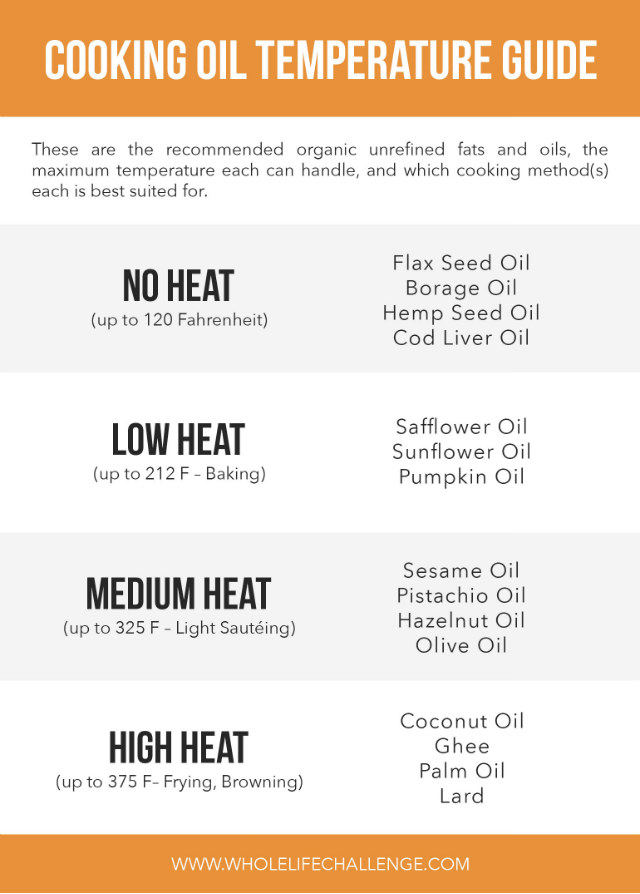
Choosing the right oil is an important part of Deep Frying Temperature & Oil Safety. Different oils have different smoke points, flavors, and stability levels. Oils with higher smoke points are usually better for deep frying because they handle heat for longer periods.
Common choices in U.S. kitchens include peanut oil, canola oil, vegetable oil, and sunflower oil. Each option has different qualities, so the best choice depends on flavor preference, allergies, availability, and cooking needs.
- ✦ Peanut Oil
A popular frying oil with good heat stability and a mild nutty flavor.
- ✦ Canola Oil
A budget-friendly option with a neutral taste and useful frying performance.
- ✦ Vegetable Oil
A common household choice that works well for many fried foods.
Understanding Smoke Point
The smoke point is the temperature where oil begins producing visible smoke and starts breaking down. Frying beyond this point can damage oil quality and create unpleasant flavors.
A good frying routine keeps oil below its smoke point while maintaining enough heat to cook food properly.
How to Measure and Maintain Frying Oil Temperature
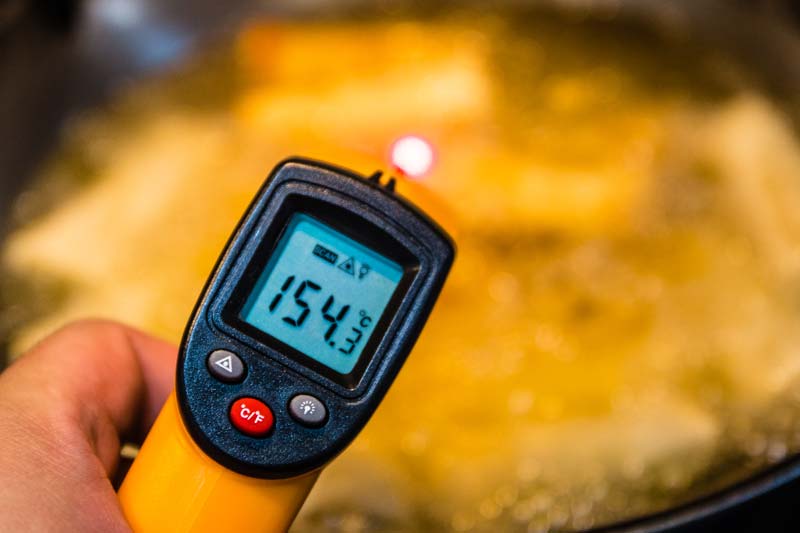
A reliable thermometer is one of the simplest tools for improving Deep Frying Temperature & Oil Safety. Digital kitchen thermometers make it easier to monitor oil and prevent accidental overheating.
Avoid guessing oil temperature by appearance alone. While some cooks test oil with small food pieces, a thermometer provides a more accurate reading and better control.
- ✦ Use a Cooking Thermometer
Check oil before adding food and during cooking to maintain steady heat.
- ✦ Avoid Overcrowding
Adding too much food at once lowers oil temperature and reduces crispiness.
- ✦ Adjust Heat Slowly
Small temperature changes are easier to control than sudden high heat adjustments.
Recommended Temperatures for Popular Foods
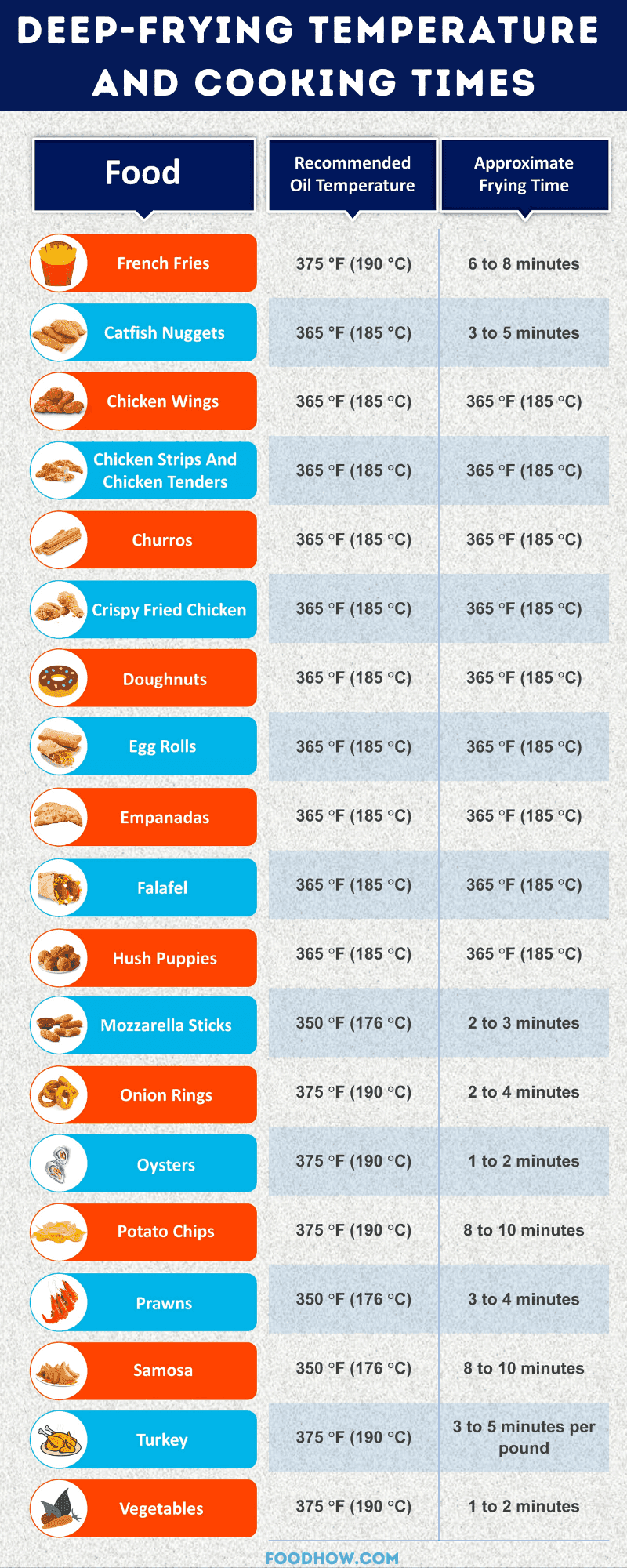
Different foods need different frying temperatures. French fries often benefit from a two-step frying method, while chicken usually requires enough heat to create a crisp coating while cooking safely inside.
Following recipe instructions and checking internal food temperature are both important parts of safe frying.
- ✦ French Fries
Often fried around 325°F to 375°F depending on the cooking method.
- ✦ Chicken
Usually cooked around 350°F while ensuring the inside reaches a safe temperature.
Safe Handling Practices When Deep Frying at Home
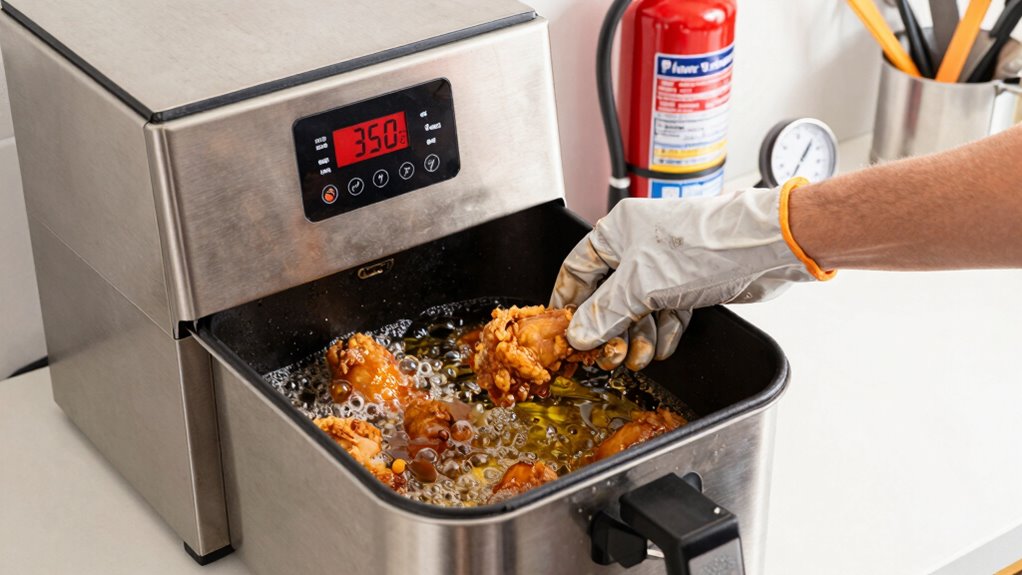
Deep frying involves hot oil, so careful handling is essential. Small mistakes, such as adding wet food or leaving oil unattended, can create dangerous situations.
Deep Frying Temperature & Oil Safety includes preparation steps before cooking. A clean workspace, dry ingredients, and proper equipment help reduce common kitchen risks.
- ✦ Keep Water Away From Hot Oil
Water can cause hot oil to splash because steam expands quickly when it contacts heated oil.
- ✦ Do Not Leave Heating Oil Alone
Unattended oil can overheat and create a serious fire risk.
- ✦ Use Proper Containers
Choose deep, stable pots or approved fryers designed for high-temperature cooking.
How to Store Used Frying Oil
Used oil can often be stored and reused if it remains clean and has not been overheated. Allow oil to cool, strain out food particles, and store it in a sealed container.
Discard oil when it smells bad, becomes very dark, becomes thick, or creates excessive smoke during normal heating.
Common Deep Frying Mistakes That Reduce Safety and Quality
Many frying problems come from simple mistakes rather than the equipment itself. Understanding these issues can improve cooking results and extend oil life.
Deep Frying Temperature & Oil Safety improves when cooks focus on prevention. Small habits create safer and more consistent meals.
- ✦ Using Old Oil Too Long
Repeated heating breaks down oil and can affect taste, smell, and cooking performance.
- ✦ Frying Wet Food
Moisture increases splattering and can lower oil temperature quickly.
- ✦ Ignoring Temperature Changes
Frequent temperature drops can result in uneven cooking and poor texture.
Signs That Frying Oil Needs Replacement
Fresh oil usually looks clear and has a mild smell. Oil that becomes dark, foamy, sticky, or smoky at normal temperatures may no longer perform well.
Replacing damaged oil helps maintain food quality and supports safer cooking habits.