Food Processor Processing Settings & Techniques: A Complete Guide
A food processor can do far more than chop vegetables. With the right Food Processor Processing Settings & Techniques, one machine can slice potatoes, shred cheese, make hummus, mix sauces, knead dough, grind nuts, and turn cooked food into a smooth puree. The key is not simply pressing a button. Good results come from knowing how the machine moves food and how long to process it.
In everyday U.S. kitchens, a food processor can save time during meal prep, especially when you need to prepare several ingredients at once. The most useful skill is learning when to pulse, when to process continuously, and when to stop. Small changes in food size, temperature, bowl load, and processing time can make a big difference in the final texture.
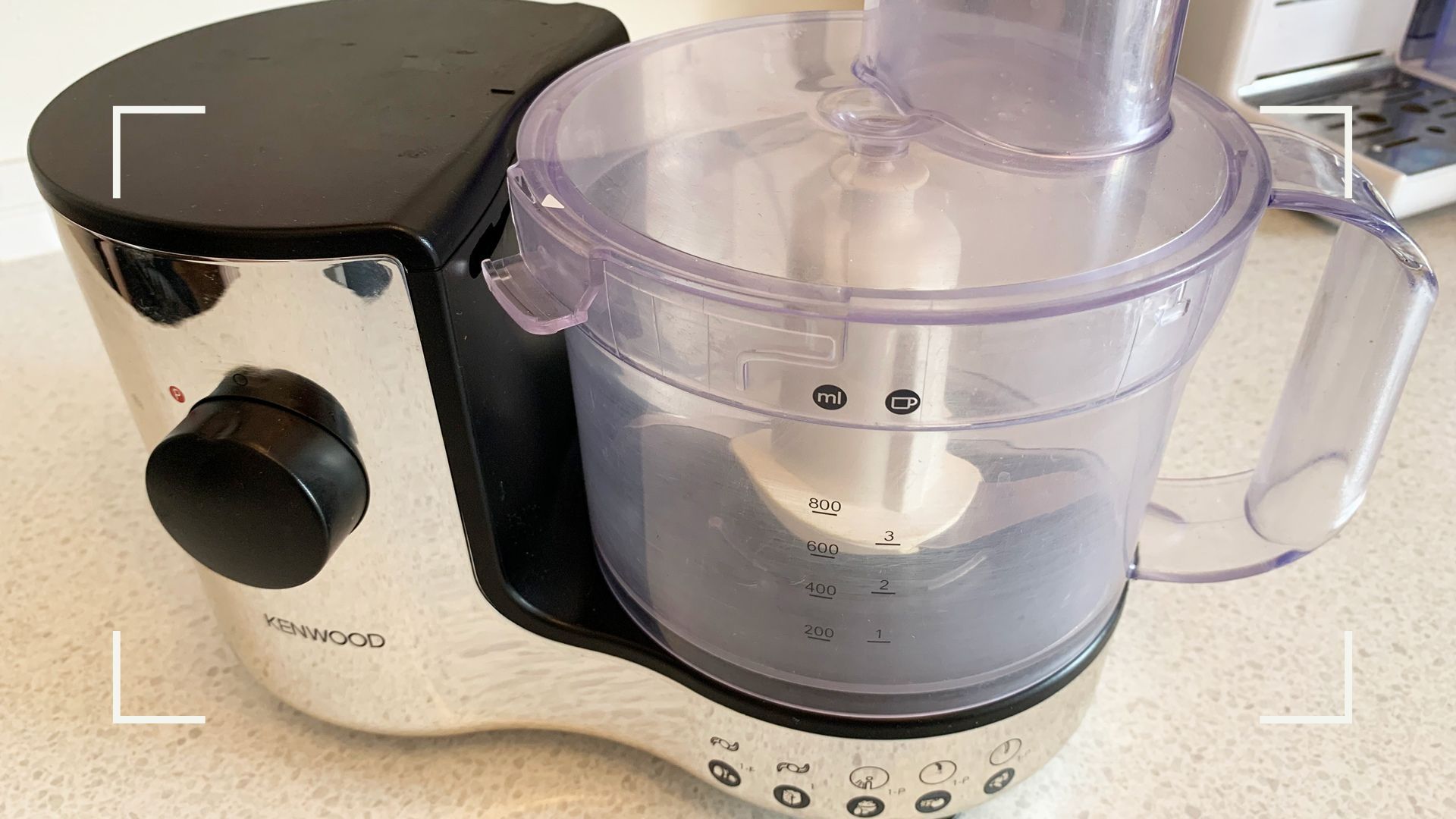
The best Food Processor Processing Settings & Techniques also depend on the machine. Some models have simple pulse and on controls. Others have several speeds, automatic programs, or specialized settings. Your owner’s manual should always take priority because motor power, bowl capacity, and blade limits vary by model.
Understanding Food Processor Settings
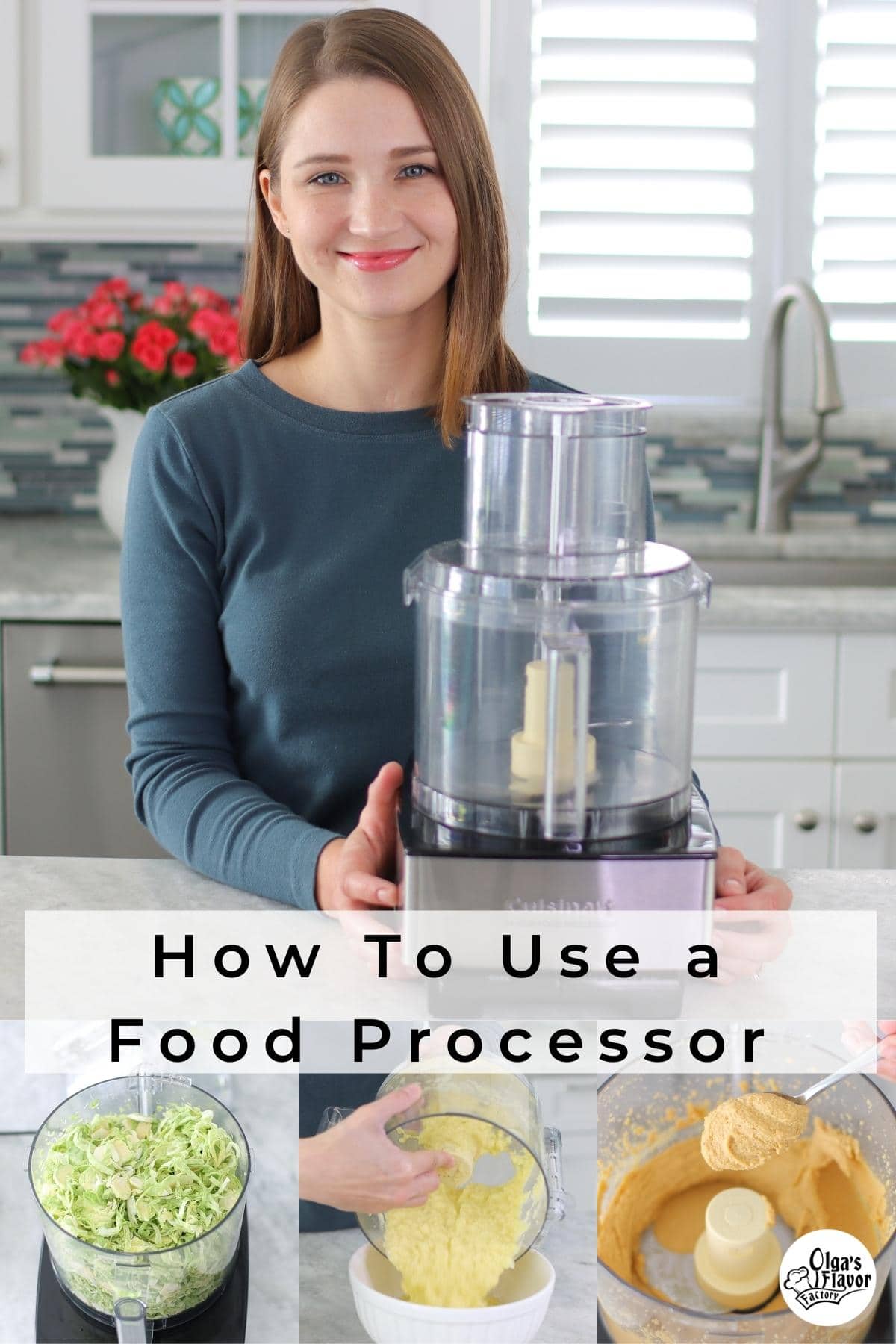
Before using advanced Food Processor Processing Settings & Techniques, learn what each basic control does. Most food processors use some form of pulse, continuous processing, and speed control. These settings change how much control you have over texture and how quickly the food breaks down.
Pulse is usually the most useful setting for chopping. Each short burst moves the blade for a brief time, so you can check the food between bursts. Continuous processing works better when you want a smooth mixture or a dough that needs steady movement.
If your machine has multiple speeds, start at a lower setting when you need control. Move to a faster setting when you need a smoother blend or quicker processing. Always follow the speed guidance in your machine’s manual.
- ✦ Pulse
Use short bursts for chopped vegetables, nuts, herbs, and other foods where you want to control the final size.
- ✦ Low speed
A lower speed can help with controlled mixing and some tasks where you do not want food to break down too quickly.
- ✦ High speed
A faster setting can help create smooth purees, sauces, and other fine mixtures when the machine supports speed control.
- ✦ Continuous processing
Use continuous operation when a recipe needs steady cutting, mixing, emulsifying, or kneading.
Why the Pulse Setting Matters
Pulse gives you more control than simply running the motor. Each burst lets the blade cut some food while leaving other pieces larger. This makes it useful for salsa, chopped onions, vegetables, nuts, and breadcrumbs.
A common mistake is to hold the pulse button too long. That can turn a coarse mixture into a fine paste. Short bursts with quick checks are one of the simplest Food Processor Processing Settings & Techniques to master.
- ✦ Start with short bursts
Use a few quick pulses, then open or inspect the bowl when it is safe to do so.
- ✦ Shake or scrape when needed
If food sticks to the bowl wall, stop the machine and redistribute it according to the manufacturer’s instructions.
When Continuous Processing Works Better
Continuous processing is useful when you want the food to become smooth and uniform. It can work well for hummus, purees, sauces, nut butter, and some doughs.
The longer the machine runs, the more heat and mechanical action the food receives. Watch the texture instead of following time alone. Stop as soon as the food reaches the result you want.
- ✦ Watch texture
Use the appearance and consistency of the food as your main guide.
- ✦ Avoid unnecessary running
Stopping once the desired texture is reached helps prevent over-processing and excess heat.
Choosing the Right Blade or Disc
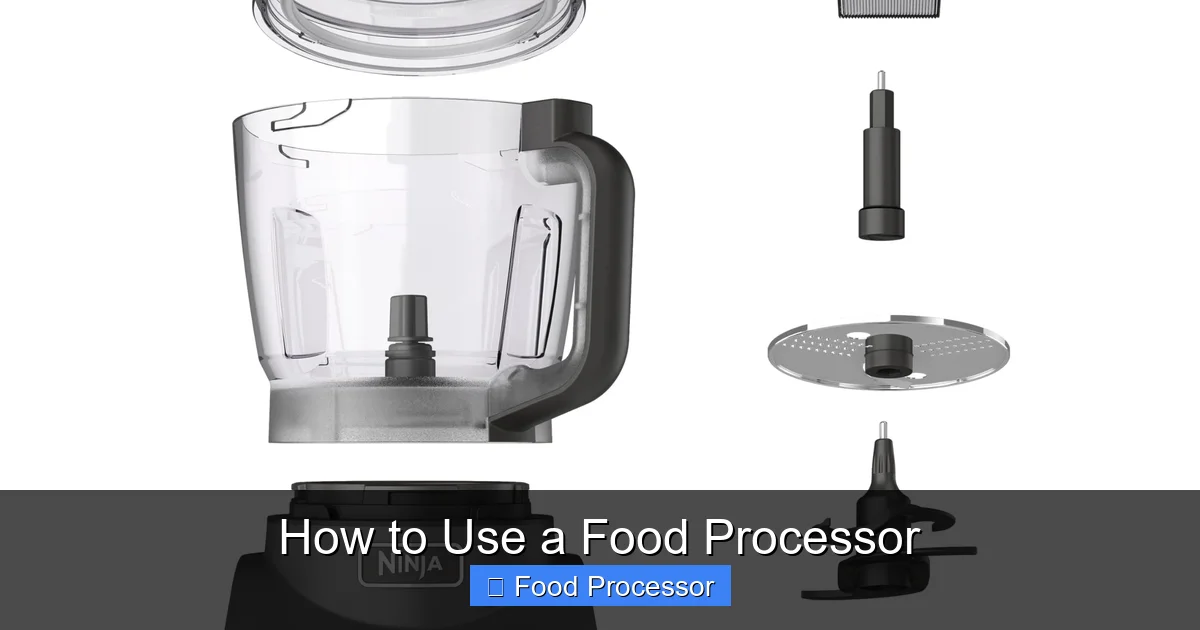
The attachment often matters as much as the speed. A standard S-shaped blade is made for many chopping, mixing, blending, and pureeing tasks. A slicing or shredding disc is designed to create more even pieces than the main blade can provide.
Using the correct attachment makes Food Processor Processing Settings & Techniques easier to control. It also helps you avoid using the main blade for a job that a disc can handle better.
Never assume that every attachment fits every machine. Check the owner’s manual before installing a blade or disc, and handle sharp parts with care.

- ✦ S-shaped blade
Commonly used for chopping, mincing, mixing, pureeing, sauces, dips, and many other food preparation tasks.
- ✦ Slicing disc
Used to create slices of foods such as vegetables, fruit, potatoes, and other suitable ingredients.
- ✦ Shredding disc
Useful for shredding cheese and firm vegetables such as carrots, cabbage, and potatoes.
- ✦ Dough blade
Some machines include a dough blade for bread or other dough recipes. Use it only when your model allows it.
Blade Choice for Soft and Firm Foods
Soft foods can break down quickly, while firm foods may need more pulses or longer processing. A sharp standard blade can turn ripe tomatoes or cooked vegetables into a puree in a short time.
For firm foods, cut large pieces into smaller chunks first. This helps the blade work more evenly and reduces the chance of having very large pieces mixed with very small ones.
- ✦ Soft foods
Use shorter processing times and check often because soft ingredients can become smooth very quickly.
- ✦ Firm foods
Use even pieces and process in controlled batches when needed.
Food Processor Chopping Techniques
Chopping is one of the most common uses for a food processor. The goal is to make pieces that are fairly even without turning the food into a paste. Good Food Processor Processing Settings & Techniques begin with similar food sizes and short pulses.
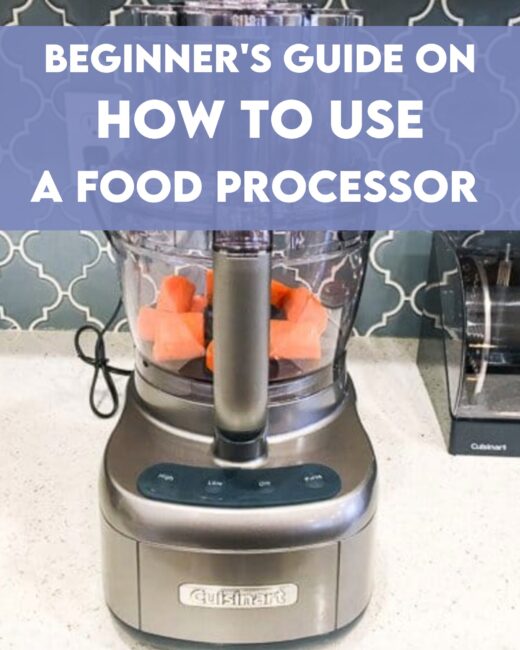
Cut large ingredients into rough chunks before placing them in the bowl. Spread the pieces as evenly as practical, secure the lid, and use several short pulses. Check the texture between bursts until the pieces look right.
This method works well for onions, carrots, celery, peppers, nuts, and many herbs. For very soft ingredients, use fewer pulses and stop sooner.
- ✦ Cut first
Break large vegetables or other ingredients into similar-sized chunks before processing.
- ✦ Use pulses
Pulse instead of running the machine continuously when you want a chopped texture.
- ✦ Check often
Stop before the pieces become smaller than your recipe requires.
- ✦ Process in batches
A smaller batch can give more even results when the bowl is crowded.
How to Chop Onions Without Making a Paste
Peel the onion and cut it into large chunks. Place the pieces in the bowl and use short pulses. Do not let the blade run for too long because onions release moisture as their cells break down.
For salsa or cooked dishes, stop when the pieces reach the size you need. If you keep processing, the onion can become wet and fine.
- ✦ Use cold onion
A firm, chilled onion can be easier to control than a soft one.
- ✦ Pulse in short bursts
Short bursts help reduce the risk of over-processing.
Slicing and Shredding Techniques
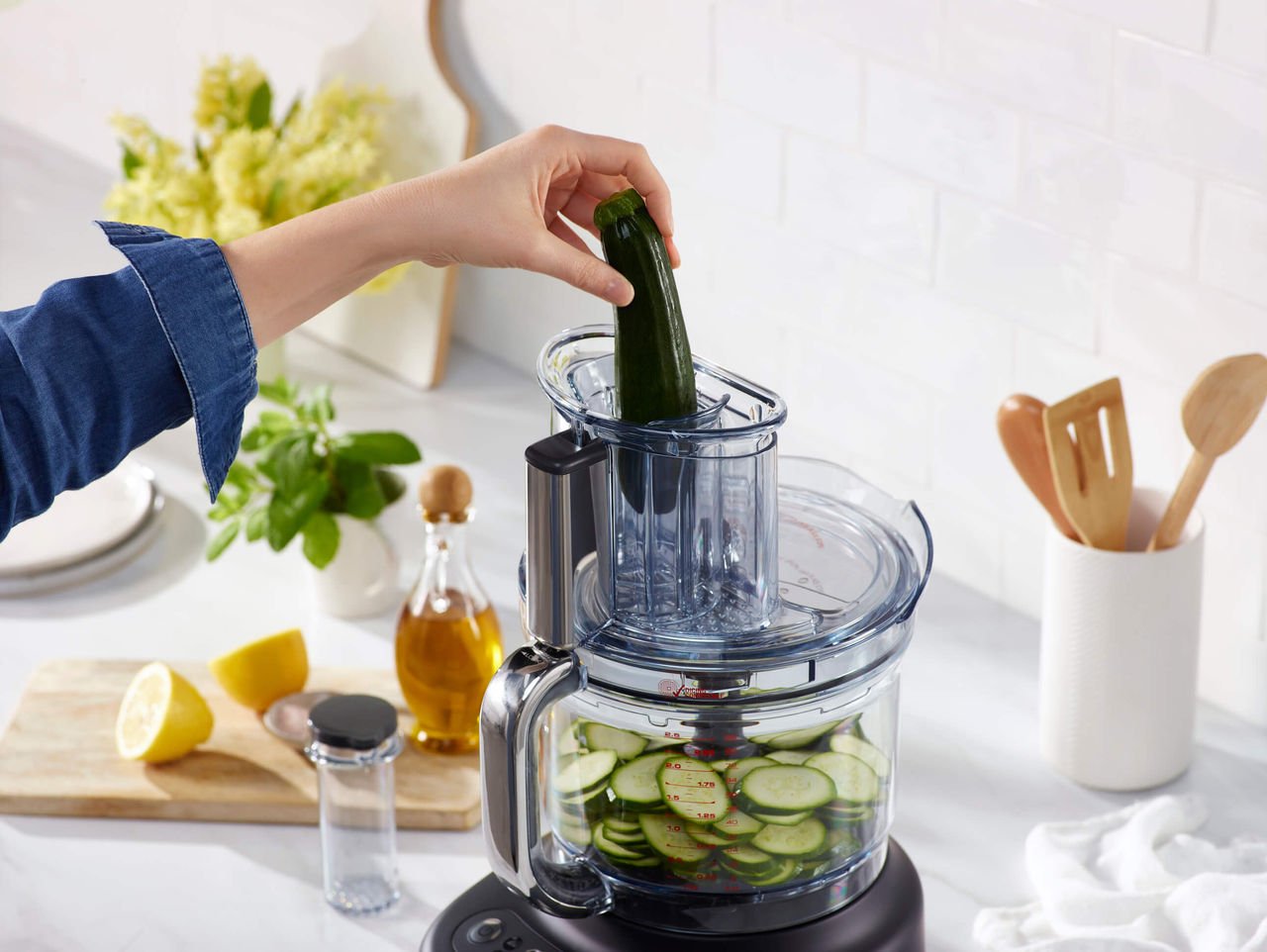
Slicing and shredding are different from chopping. The disc does the cutting as you feed food through the chute. This can produce more even slices or shreds and can save time when you prepare a large amount of food.
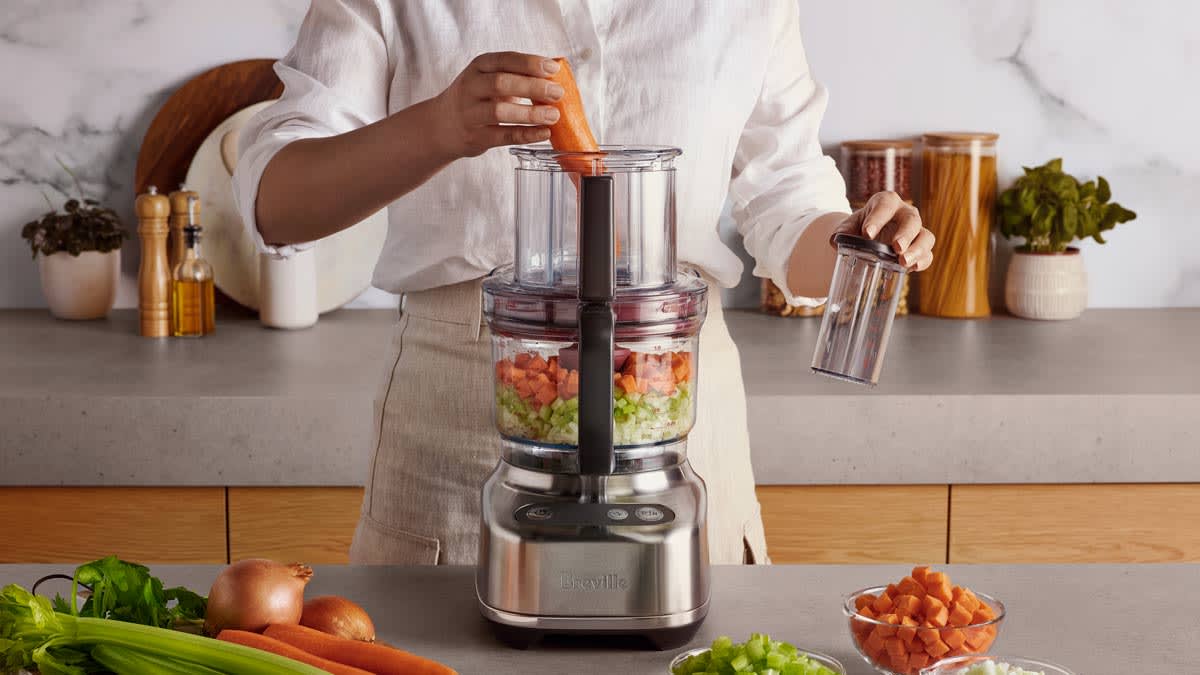
For the best Food Processor Processing Settings & Techniques, choose food that fits the feed tube without forcing it. Place it in a stable position and use the pusher as directed. Steady pressure can help create more consistent results.
Firm foods often work well with slicing and shredding discs. Very soft or wet foods may compress instead of cutting cleanly.

- ✦ Potatoes
Use a suitable slicing disc for even potato slices when preparing dishes such as gratins.
- ✦ Carrots
A shredding disc can quickly create fine or medium shreds, depending on the disc.
- ✦ Cheese
Firm, chilled cheese often shreds more cleanly than very soft cheese.
- ✦ Cabbage
Cut large pieces to fit the feed tube safely, then feed them with steady pressure.
How Feed Pressure Changes the Result
The pressure you use on the food pusher can affect the shape of the cut. Too much force can compress softer foods, while too little control may allow food to move unevenly.
Use the pusher only as intended by the manufacturer. Never use your fingers or another object to push food toward a moving disc.
- ✦ Use steady pressure
A smooth motion can help the disc make more consistent cuts.
- ✦ Do not force food
If food does not move easily, stop and check the setup rather than applying excessive force.
Pureeing, Blending, and Emulsifying
A food processor can create smooth purees and emulsions when you use the right amount of food and enough processing time. These tasks usually need continuous processing rather than short pulses. The goal is to keep the food moving around the blade until the texture becomes smooth.
For Food Processor Processing Settings & Techniques involving sauces or dressings, adding liquid slowly can help create a more even mixture. Many food processors have a small opening in the lid that allows ingredients to be added while the machine runs. Follow your model’s instructions when using this feature.
Do not expect every food processor to replace a high-speed blender. A processor is excellent for many thick mixtures, but very smooth, thin liquids may work better in a blender designed for that task.
- ✦ Hummus
Process chickpeas, tahini, lemon juice, and other ingredients until the mixture reaches the desired texture.
- ✦ Pesto
Pulse or process herbs, nuts, cheese, and other ingredients while checking the texture often.
- ✦ Mayonnaise
Use a suitable food processor method that adds oil slowly so the mixture can form a stable emulsion.
- ✦ Cooked vegetables
Process cooked vegetables with a suitable amount of liquid until smooth, taking care with hot food and following the manufacturer’s temperature limits.
How to Avoid Over-Processing Purees
Over-processing can make a mixture thinner, warmer, or more sticky than you want. This is especially easy with foods that contain a lot of water or starch.
Stop the machine as soon as the texture is right. If the mixture is not moving, scrape the bowl only after turning the machine off and unplugging it when appropriate.
- ✦ Use enough liquid
Some thick mixtures need enough moisture to move around the blade, but too much liquid can make the result thin.
- ✦ Stop at the right moment
Do not keep processing once the desired texture has been reached.
Kneading Dough in a Food Processor
Many food processors can mix and knead certain doughs. The fast blade action can bring flour, fat, water, and other ingredients together quickly. This is useful for pie dough, pizza dough, and some bread doughs when the machine is designed for the job.
Food Processor Processing Settings & Techniques for dough differ from chopping. You usually want to combine the ingredients without running the motor longer than needed. Excessive processing can warm the dough and may change its texture.
Always check your manual for dough capacity and recommended settings. Dough can place a high load on the motor, so the machine’s limits matter.
- ✦ Measure carefully
Accurate ingredient amounts help the dough form without placing unnecessary strain on the machine.
- ✦ Add liquid with care
Add liquid according to the recipe and machine instructions, stopping when the dough begins to come together.
- ✦ Avoid over-kneading
Process only as long as needed for the recipe and the machine’s recommended method.
- ✦ Watch the motor
If the machine struggles, stop and follow the manufacturer’s guidance instead of forcing it through a heavy load.
Pie Dough Technique
For pie dough, short pulses can help cut cold fat into flour while keeping control over the mixture. The pieces should not be processed until the mixture looks completely smooth.
Add the liquid in small amounts and pulse only until the dough starts to hold together. The exact method depends on the recipe, but the main rule is simple: stop early rather than processing too much.
- ✦ Keep fat cold
Cold fat can help create a more workable pastry texture when the recipe calls for it.
- ✦ Look for small pieces
Do not process the fat and flour into a fully smooth paste.
Grinding, Mincing, and Making Crumbs
A food processor can quickly reduce many dry or firm ingredients into smaller pieces. Nuts, seeds, bread, crackers, and cooked meat can be processed for different recipes when the machine and blade are suitable for the task.
The key Food Processor Processing Settings & Techniques here is to match pulse length to the desired texture. Short pulses create larger pieces. Longer processing creates finer particles and can eventually release oils from foods such as nuts.
Do not fill the bowl beyond the recommended level. If you need a large amount, work in batches so the food can move around the blade.
- ✦ Breadcrumbs
Use pulses to turn stale or toasted bread into coarse or fine crumbs.
- ✦ Cracker crumbs
Pulse crackers until they reach the texture needed for a crust or topping.
- ✦ Nuts
Use short pulses for chopped nuts and longer processing for a finer meal or butter, when appropriate for the machine.
- ✦ Cooked meat
Use short pulses and small batches when a recipe calls for finely chopped or processed cooked meat.
Making Nut Butter
Nut butter takes more work than simple chopping because the nuts move from pieces to meal and then to a thick paste. The nuts release their natural oils as the blade continues to process them.
Use a food processor that is rated for the task and stay within its capacity. Stop if the motor becomes unusually hot or strained, and follow the machine’s manual for safe operation.
- ✦ Start with dry nuts
Use the type and preparation of nuts called for by the recipe.
- ✦ Use pauses
Short pauses can let the machine cool and give you a chance to check the mixture.
Processing Food by Temperature and Texture
Food temperature has a major effect on processing. Cold, firm ingredients usually hold their shape better, while warm or soft ingredients break down faster. This is why the same setting can produce very different results with different foods.
For Food Processor Processing Settings & Techniques, think about texture before you start. If you need clean cuts, choose ingredients that are firm enough for the attachment. If you need a puree, softer cooked food may be easier to process.
Hot food needs special care. Steam can build pressure in a sealed container, and some food processors have strict limits on hot ingredients. Follow your manufacturer’s instructions before processing anything hot.
- ✦ Cold and firm
Often easier to slice, shred, or chop without losing shape.
- ✦ Room temperature
Can work well for many mixing and chopping tasks, depending on the ingredient.
- ✦ Soft and ripe
Usually needs shorter processing because it can turn smooth very quickly.
- ✦ Hot
Requires special care and must stay within the temperature limits set by the manufacturer.
Why Moisture Changes Processing
Moisture helps some foods move around the bowl, but too much liquid can make a mixture thin. Dry foods may bounce or sit near the sides instead of reaching the blade evenly.
If food is not moving well, stop the machine and check the load. A smaller batch or a small amount of recipe-approved liquid may improve movement, but do not add liquid without considering the final texture.
- ✦ Too dry
Food may not move through the blade area evenly.
- ✦ Too wet
The result may become thinner than intended or may process unevenly.
Batch Size, Bowl Loading, and Food Placement
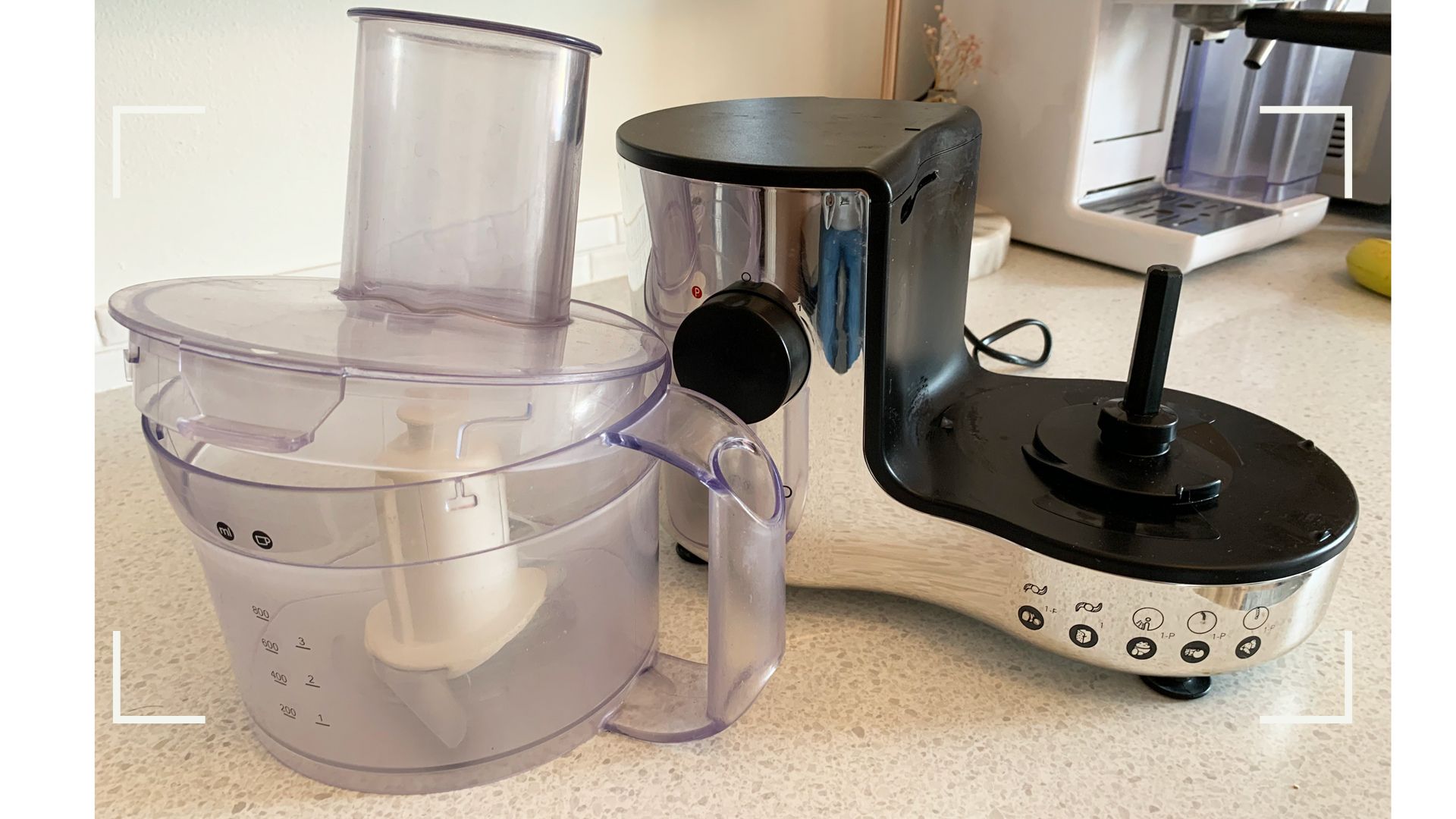
How much food you place in the bowl can change the result. An overloaded bowl may leave some food untouched while the bottom becomes too fine. An extremely small amount may also fail to contact the blade properly.
Good Food Processor Processing Settings & Techniques include using a practical batch size. Stay below the maximum fill line and follow your manual for special limits, especially when working with dough or heavy foods.
Food placement matters too. Similar-sized pieces help the blade process more evenly. With a feed tube and disc, place food in a stable position and use the supplied pusher as directed.
- ✦ Respect the fill line
Never exceed the bowl’s marked capacity or the special limits in the owner’s manual.
- ✦ Use even pieces
Similar-sized chunks can help the main blade work more consistently.
- ✦ Do not pack tightly
Food needs room to move when the blade is processing it.
- ✦ Use batches when needed
Two smaller batches can produce a more even texture than one overloaded batch.
How to Tell When the Bowl Is Too Full
If the food stays packed around the sides or the blade cannot move it evenly, the bowl may be too full. You may also see large pieces remain while the bottom becomes very fine.
Stop the machine before adjusting the food. If the recipe allows it, remove some food and process it in a second batch.
- ✦ Uneven texture
Large pieces mixed with very fine pieces can signal poor food movement.
- ✦ Slow processing
A heavy load may make the motor work harder and reduce processing efficiency.
Common Processing Mistakes and How to Fix Them
Many food processor problems come from using the right machine in the wrong way. The blade may be correct, but the batch may be too large, the food may be too soft, or the motor may run longer than needed.
Learning from these mistakes is one of the most useful Food Processor Processing Settings & Techniques skills. Small changes often improve texture without changing the recipe.
If a machine behaves in an unusual way, stop using it and check the owner’s manual. Do not ignore burning smells, damaged parts, unusual noises, or other signs of a possible equipment problem.
- ✦ Problem: Food becomes mushy
Use shorter pulses, firmer ingredients, or a smaller batch when the recipe calls for chopped food.
- ✦ Problem: Food stays in large pieces
Cut ingredients smaller, redistribute the load, or process a smaller batch.
- ✦ Problem: Mixture will not move
Stop and check whether the batch is too dry, too thick, too small, or overloaded.
- ✦ Problem: Dough gets warm
Use shorter processing periods and follow the manufacturer’s dough capacity and speed guidance.
- ✦ Problem: Cheese sticks to the blade
Chill suitable cheese and use a shredding disc when the recipe and machine support it.
Avoiding Over-Processing
Over-processing is one of the easiest mistakes to make because the change can happen in seconds. A mixture can move from chopped to fine, or from thick to thin, very quickly.
Set a goal before pressing the button. If you need a rough chop, check after several pulses. If you need a puree, stop as soon as it becomes smooth enough.
- ✦ Use a timer only as a guide
Recipe times can vary by machine and ingredient, so texture should guide the final stop.
- ✦ Inspect between pulses
Checking often gives you more control over the final size.
Avoiding Uneven Chopping
Uneven chopping often starts before the machine is turned on. Large chunks mixed with tiny pieces can produce an uneven result because the blade reaches each piece differently.
Cut the food into similar chunks and avoid filling the bowl too much. Short pulses can then give the blade time to work without quickly turning the smallest pieces into puree.
- ✦ Match piece size
Use similar-sized chunks before processing.
- ✦ Pulse and check
Stop regularly so the smallest pieces do not become too fine.
A Practical Food Processor Technique Chart
There is no single setting that works for every ingredient. The best Food Processor Processing Settings & Techniques depend on the texture you want and the food you are using.
Use the guide below as a starting point rather than a fixed rule. Your recipe and your machine’s manual should always take priority.
- ✦ Coarse chop
Use the S-blade and short pulses. Check after each group of pulses.
- ✦ Fine chop
Use more pulses than for a coarse chop, but stop before the food turns into a paste.
- ✦ Puree
Use continuous processing when suitable and stop once the mixture reaches the desired smoothness.
- ✦ Slice
Use the correct slicing disc and feed firm food through the chute with steady, safe pressure.
- ✦ Shred
Use the correct shredding disc and choose firm, suitable ingredients for cleaner results.
- ✦ Crumbs
Use pulses and stop at the crumb size needed by the recipe.
- ✦ Dough
Use the blade or dough attachment approved for your machine and process only as long as the recipe requires.
- ✦ Nut butter
Use a machine rated for the task and allow suitable pauses if the motor or mixture becomes hot.
A Simple Rule for Choosing a Setting
Think of the setting as a control for texture. If you want pieces, start with pulses. If you want a smooth mixture, use steady processing. If you want slices or shreds, use the matching disc instead of the main blade.
This simple approach makes Food Processor Processing Settings & Techniques much easier to remember. First choose the attachment, then choose the speed, then decide when to stop.
- ✦ Step one
Choose the attachment that matches the job.
- ✦ Step two
Prepare the food in suitable pieces and amounts.
- ✦ Step three
Select pulse, continuous processing, or an approved speed.
- ✦ Step four
Stop and check the texture before processing further.
Safety and Care During Processing
Safe operation is part of good Food Processor Processing Settings & Techniques. Blades and discs are very sharp, and the motor can move them with high force. Keep hands away from moving parts and use the food pusher when the design calls for one.
Turn the machine off before removing the lid, changing an attachment, or clearing food near the blade. Unplug the appliance when the manufacturer’s instructions call for it, especially before handling the blade or cleaning parts.
Never exceed the bowl capacity or process foods that your manual does not allow. Hot liquids, hard foods, heavy dough, and other demanding ingredients can have special limits.
- ✦ Handle blades carefully
Hold blades by safe areas designed for handling and keep fingers away from cutting edges.
- ✦ Stop before adjusting food
Never reach into a bowl while the blade or disc is moving.
- ✦ Follow hot-food limits
Check the manufacturer’s instructions before processing hot ingredients.
- ✦ Check parts
Do not use damaged blades, cracked bowls, loose parts, or other components that may make the appliance unsafe.
- ✦ Clean after use
Wash and dry removable parts according to the manufacturer’s cleaning instructions.
Keeping Processing Results Consistent
Clean equipment can help maintain consistent results. Food residue on a blade or disc can change how ingredients move and may affect later recipes.
Keep blades sharp and in good condition according to the manufacturer’s guidance. Replace damaged parts with approved parts rather than trying to repair cutting edges yourself.
- ✦ Clean the bowl
Remove food residue after each use according to the care instructions.
- ✦ Inspect attachments
Check blades, discs, seals, and other parts for damage before use.