Pizza Oven Cleaning & Maintenance: A Complete Guide for a Cleaner, Safer Oven
Pizza tastes better when the oven is clean and well cared for. A dirty oven can leave old food bits, ash, or grease near fresh pizza. Regular Pizza Oven Cleaning & Maintenance also helps you spot small problems before they become costly repairs.
The right routine depends on the oven type. A wood-fired oven needs careful ash removal and attention to the flue or chimney. A gas or electric oven has different parts and may need a gentler approach. In my experience with oven care, the biggest mistake is treating every pizza oven the same.
For a home pizza oven in the United States, a simple routine works well. Brush away loose food after cooking, remove ash when the oven is fully cool, wipe the outside as needed, and inspect the oven at regular intervals. Always check the owner’s manual first because heat limits, removable parts, and cleaning methods can vary by model.

Why Pizza Oven Cleaning & Maintenance Matters
Pizza ovens work at very high heat. Food crumbs, flour, cheese, oil, and ash can build up over time. Most small food bits burn away during later cooking, but heavy buildup can still affect the oven and create smoke or unwanted odors.
Good Pizza Oven Cleaning & Maintenance also helps protect the cooking floor. A pizza stone or refractory surface can crack if you clean it with water while it is very hot. Sudden temperature changes can stress the material.
Cleaning is also a safety task. Grease and soot should not be allowed to build up around burners, vents, exhaust paths, or other parts that the manufacturer says must stay clear. Commercial kitchens may also have extra cleaning duties under local fire and health rules.
- ✦ Better cooking
A clean cooking surface helps reduce burnt crumbs and old food from getting onto fresh pizza.
- ✦ Safer operation
Regular cleaning helps limit unwanted grease, ash, and debris around heat and airflow areas.
- ✦ Longer service life
Careful cleaning and inspection can help protect oven surfaces, doors, seals, burners, and other parts.
- ✦ Easier problem finding
A clean oven makes cracks, loose parts, blocked vents, and other changes easier to see.
What You Need to Clean a Pizza Oven
You do not need a large set of chemicals for most home pizza ovens. In many cases, a suitable oven brush, a dry cloth, a small scraper approved for the cooking surface, and a safe ash tool are enough.
Choose tools based on the oven maker’s instructions. A metal tool may damage some surfaces. Harsh cleaners may leave residue or harm coatings. Never use a cleaning product inside the oven unless the manufacturer says it is safe for that surface.
- ✦ Oven brush
Use a brush that is designed for pizza ovens and suitable for the cooking surface.
- ✦ Ash shovel or scoop
Use a dedicated tool to remove cooled ash from wood-fired ovens.
- ✦ Dry or slightly damp cloth
Use it on approved exterior surfaces after the oven has cooled.
- ✦ Approved scraper
Use a scraper only when the manufacturer permits it and only on surfaces that can handle it.
- ✦ Heat-safe gloves
Use proper gloves when handling warm removable parts, but never treat gloves as protection from extreme heat.
Cleaning Products to Avoid
Avoid bleach, strong degreasers, oven sprays, and other chemicals inside the cooking chamber unless the manual specifically approves them. Residue can remain on surfaces and may create smoke or odors when the oven heats again.
Also avoid soaking pizza stones or refractory cooking floors. These materials can absorb water, and trapped moisture can cause damage when the oven is reheated.
- ✦ No chemical spray by default
Use the manufacturer’s cleaning instructions instead of assuming a common kitchen cleaner is safe.
- ✦ No soaking
Keep porous cooking surfaces dry unless the manufacturer gives different instructions.
How to Clean a Pizza Oven Step by Step
The safest Pizza Oven Cleaning & Maintenance routine starts with cooling. Turn the oven off and wait until it reaches a safe temperature for the cleaning method in your owner’s manual. Do not rush this step.
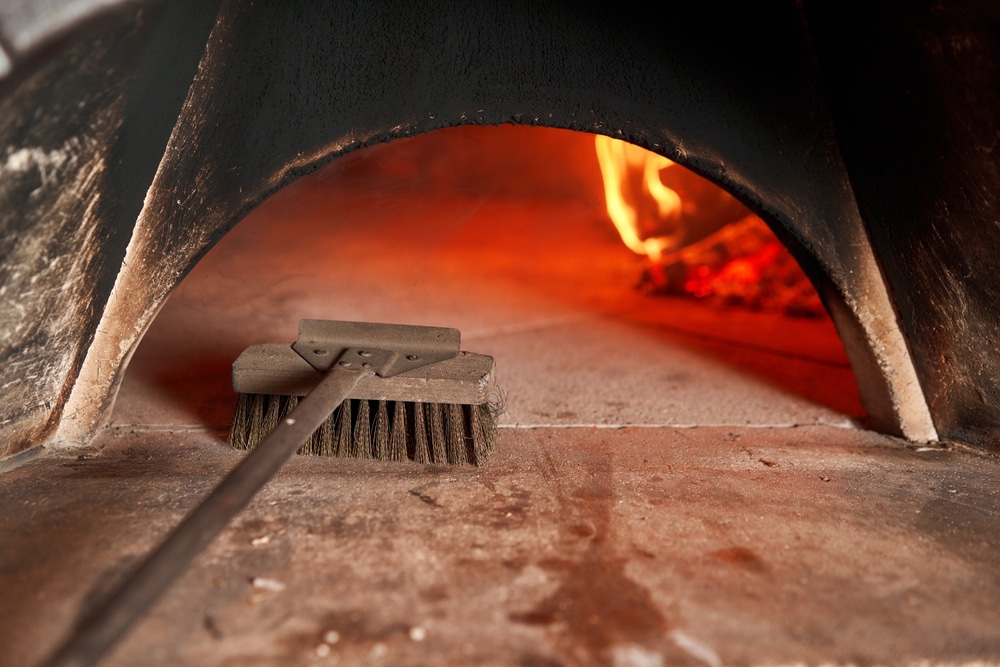
Once the oven is cool enough, remove loose debris. Brush crumbs toward the oven opening and collect them with a suitable tool. Do not push debris into burners, vents, or other openings.
After the loose material is gone, inspect the cooking floor and inside walls. Look for stuck cheese, burned toppings, cracks, soot, grease, or loose material. Deal with each issue according to the oven maker’s instructions.
- ✦ 1. Turn the oven off
Stop the fuel or power supply as required by the oven’s instructions and allow the unit to cool.
- ✦ 2. Remove loose debris
Brush away crumbs, flour, and burned food from the cooking surface.
- ✦ 3. Remove cooled ash
For wood-fired ovens, scoop out ash only after it has fully cooled.
- ✦ 4. Clean stuck food
Use an approved brush or scraper for stubborn residue. Do not damage the cooking surface.
- ✦ 5. Clean the exterior
Wipe approved exterior surfaces with a suitable cloth and cleaner recommended by the manufacturer.
- ✦ 6. Check the oven
Inspect the door, cooking floor, burner area, vents, seals, chimney, and visible fittings as applicable.
- ✦ 7. Let parts dry
If a removable part was cleaned with water, make sure it is fully dry before use and reinstall it correctly.
How to Clean the Cooking Floor
The cooking floor is one of the most important parts of the oven. Brush away loose food after cooking, then remove stubborn dry residue with an approved tool. Do not use soap or soak a porous pizza stone unless the manufacturer clearly permits it.
Dark marks do not always mean the cooking floor is dirty. Pizza stones and refractory surfaces often change color with use. Focus on loose debris, food buildup, grease, cracks, and other signs that need attention.
- ✦ Brush first
Start with dry cleaning to remove loose food and flour.
- ✦ Avoid thermal shock
Never cool a very hot stone or refractory floor with water.
- ✦ Check for cracks
Inspect the cooking floor during routine cleaning and follow the maker’s advice if you find damage.
How to Clean the Oven Interior
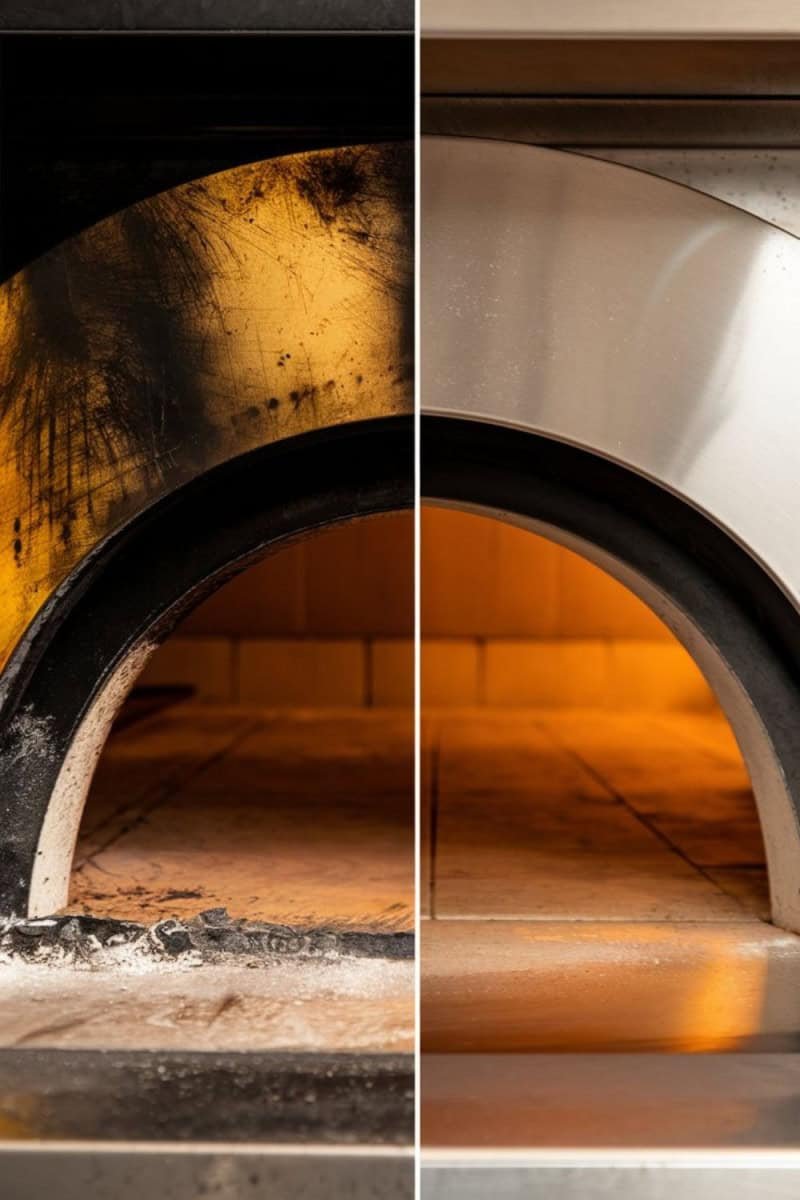
The inside walls often collect soot, smoke marks, and small food particles. In a wood-fired oven, some darkening is normal. You do not need to make every interior surface look new.
Remove loose debris and clean only the areas that the manufacturer says can be cleaned. If heavy grease or unusual buildup appears, stop and identify its source before using the oven again.
- ✦ Normal soot
Wood-fired ovens can develop dark soot and smoke marks during normal use.
- ✦ Heavy buildup
Thick grease or unusual deposits may need a deeper inspection and a manufacturer-approved cleaning method.
Wood-Fired Pizza Oven Cleaning and Maintenance
Wood-fired ovens need special care because they create ash, smoke, soot, and embers. The main task is to remove ash and burned food while keeping the cooking floor dry and safe.
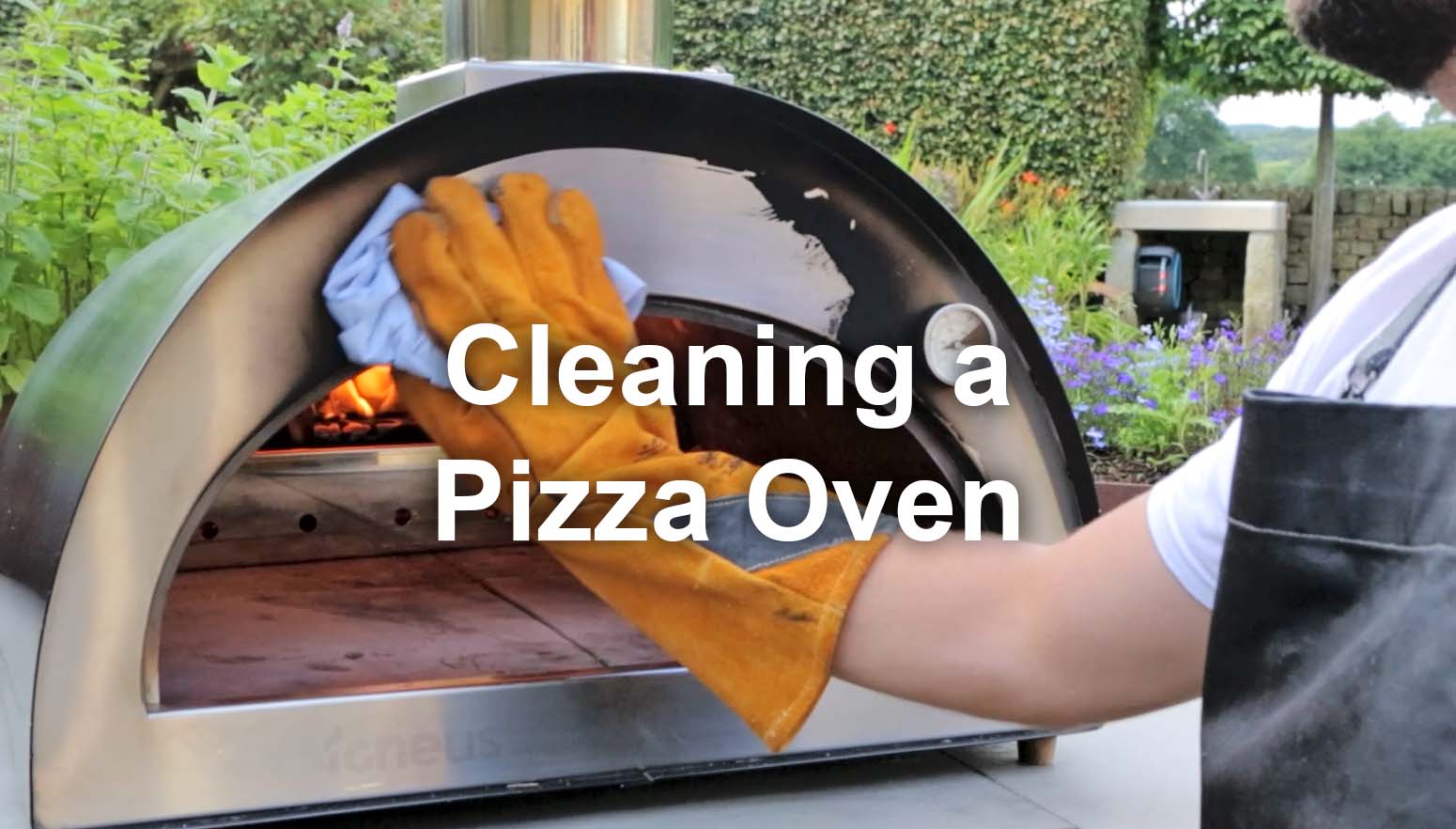
After a cooking session, allow the fire and embers to die out fully. Once the oven is cool, remove the ash with a suitable shovel or brush. Store or dispose of cooled ash in a safe way that follows local fire guidance.
The chimney or flue also matters. If your oven has a chimney, inspect it as directed by the manufacturer. Heavy soot or creosote buildup can create a fire risk, so professional inspection or cleaning may be needed for some installations.
- ✦ Remove ash regularly
Do not let a deep layer of ash build up around the cooking area.
- ✦ Keep the floor dry
Avoid putting water on a hot or porous cooking floor.
- ✦ Inspect the chimney
Follow the oven and chimney maker’s instructions for inspection and cleaning.
- ✦ Use suitable wood
Burn only fuel that the oven maker approves. Avoid treated, painted, or coated wood.
How Often Should You Remove Wood-Fired Oven Ash?
The right frequency depends on how often you cook and how much wood you burn. For frequent home use, check the ash after each session and remove it when the oven is fully cool and the ash level calls for it.
Do not leave live embers unattended. Ash can hide hot material for a long time. Treat all ash as potentially hot until you are certain it has cooled.
- ✦ After cooking
Check the oven after each fire and plan ash removal once everything is completely cool.
- ✦ Before the next fire
Make sure old ash and loose debris will not interfere with the next cooking session.
Gas Pizza Oven Cleaning and Maintenance
Gas pizza ovens do not produce wood ash, but they still need regular cleaning. Food crumbs, grease, flour, and carbon deposits can collect inside the oven. Gas burners and air openings also need clear airflow.
Before cleaning a gas oven, turn it off and follow the manufacturer’s shutdown steps. Never poke or scrape burner ports with a tool unless the manual specifically tells you how to clean them.
If you smell gas, see damaged gas fittings, or notice unusual burner behavior, stop using the oven. Follow the manufacturer’s safety instructions and contact a qualified professional when needed.
- ✦ Keep burner openings clear
Do not allow crumbs, grease, or debris to block burner or air openings.
- ✦ Inspect visible fittings
Look for damage or changes around accessible gas connections and controls.
- ✦ Watch the flame
An unusual flame pattern can signal a problem that needs attention.
- ✦ Never ignore a gas smell
Stop use and follow proper gas safety steps rather than trying to repair the system yourself.
Electric Pizza Oven Cleaning and Maintenance
Electric pizza ovens need a different approach because they contain heating elements and electrical parts. Unplug the oven when the manufacturer’s instructions require it before cleaning. Keep water away from electrical controls, heating elements, plugs, and connections.
Brush or wipe food debris from approved surfaces after the oven cools. Do not spray cleaner into the oven. If grease reaches an electrical area or an element becomes damaged, stop using the oven until the issue has been checked.

- ✦ Disconnect power when required
Follow the manual before cleaning areas near electrical parts.
- ✦ Keep electrical parts dry
Do not spray water or cleaner near controls, wiring, plugs, or heating elements.
- ✦ Inspect heating elements
Look for visible damage, unusual marks, or changes in operation.
- ✦ Keep vents clear
Make sure the oven has the airflow required by the manufacturer.
How to Maintain a Pizza Stone and Baking Surface
A pizza stone or refractory cooking floor needs gentle care. Its job is to hold and transfer heat, so cracks and trapped moisture can cause problems. A stone also develops a darker look with normal use, which is not always a sign that it needs deep cleaning.
For Pizza Oven Cleaning & Maintenance, dry cleaning is often the safest starting point. Remove loose food with a suitable brush and use an approved scraper for stuck material when the manufacturer allows it.
Do not use soap on a porous stone unless the maker says it is safe. Soap and water can soak into some materials and may affect cooking or cause damage when the stone heats again.

- ✦ Do not soak porous stones
Porous materials can hold water, so keep them dry unless the manufacturer gives different instructions.
- ✦ Expect color changes
Dark spots and marks can be normal after repeated high-heat cooking.
- ✦ Remove burnt food
Brush or scrape approved surfaces carefully without gouging the stone.
- ✦ Replace damaged parts
If a stone or cooking surface has serious cracks or damage, check the manufacturer’s replacement guidance.
Can You Use Soap on a Pizza Stone?
Usually, you should not use soap on a porous pizza stone unless the manufacturer specifically permits it. The stone can absorb moisture and cleaning residue.
Dry brushing is often enough for routine care. For a removable stone, use only the cleaning method stated in the product manual.
How to Clean the Outside of a Pizza Oven
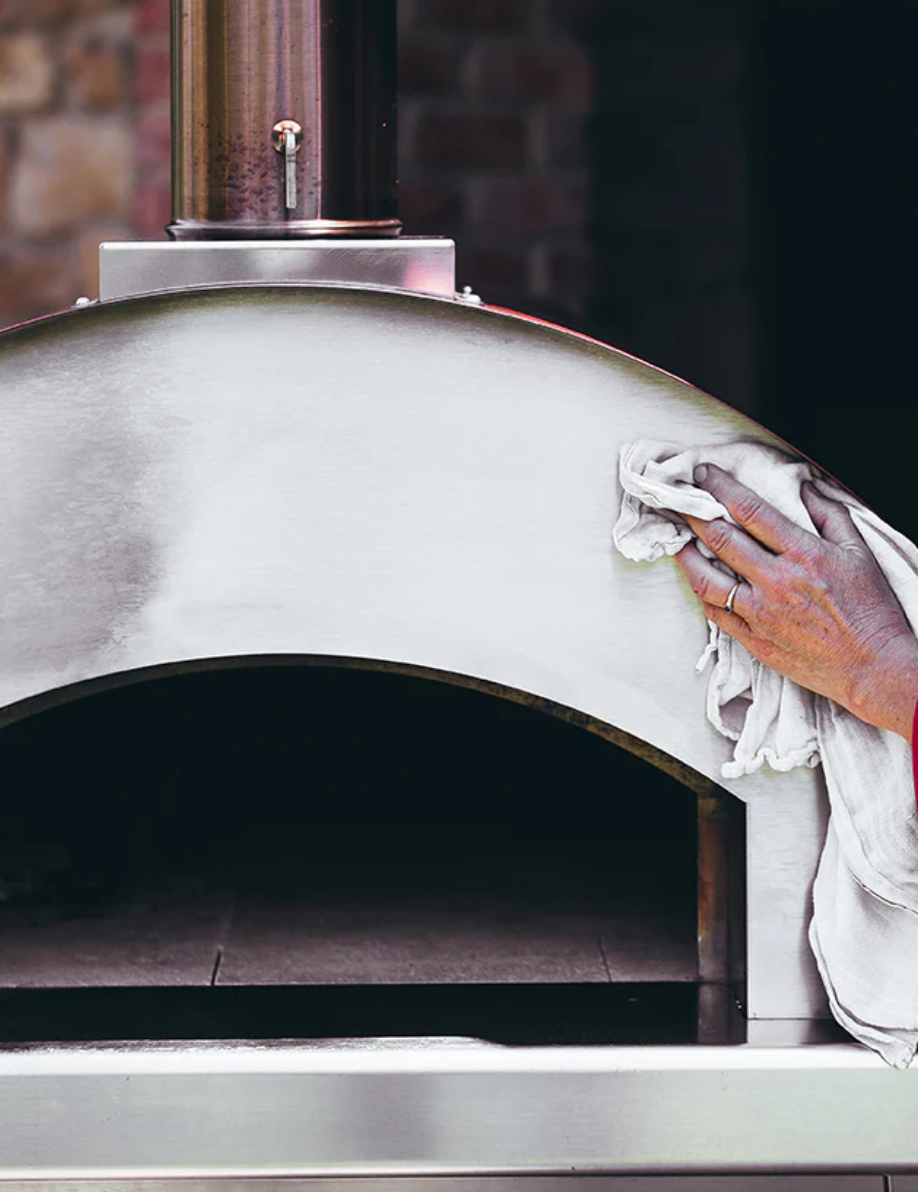
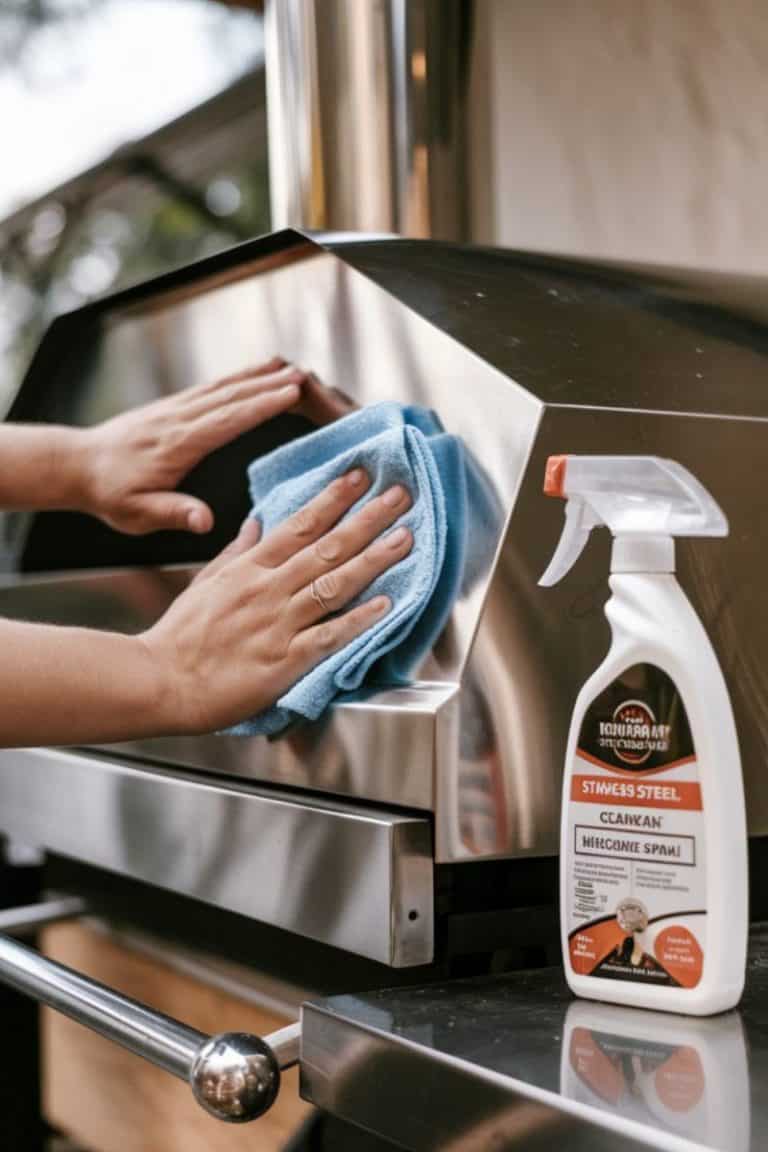
The outside of a pizza oven collects dust, grease, fingerprints, rain marks, and outdoor dirt. Clean it after the oven has cooled. Use a soft cloth and a cleaner that matches the exterior material.
Stainless steel needs special care because rough pads can scratch the surface. Wipe in the direction recommended for the finish and remove cleaner residue when the product instructions call for it.
Outdoor ovens also need protection from weather. If the oven maker recommends a cover, use one that fits and allows the oven to cool before covering it. Keep the unit dry and protect exposed parts from standing water.
- ✦ Stainless steel
Use a soft cloth and an approved cleaner to reduce scratches and streaks.
- ✦ Outdoor covers
Use a suitable cover only after the oven is cool and dry.
- ✦ Weather exposure
Check outdoor ovens for rust, water entry, damaged covers, and other signs of weather wear.
Pizza Oven Cleaning & Maintenance Schedule
A simple schedule makes Pizza Oven Cleaning & Maintenance easier. You do not need to deep clean the whole oven after every pizza. Instead, match the task to how dirty the oven is and how often you use it.
Home users may need only a few minutes after each cooking session. Heavy users, rental properties, restaurants, and commercial kitchens may need more frequent checks and professional service.
- ✦ After each use
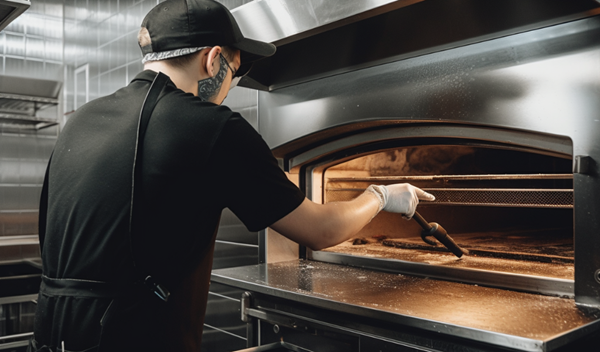
Remove loose food and flour, check for spills, and leave the oven in the condition recommended by the manufacturer.
- ✦ Weekly
With frequent use, inspect the cooking surface, interior, exterior, vents, and removable parts for buildup or damage.
- ✦ Monthly
Perform a more careful inspection of visible fittings, seals, doors, burners, heating elements, chimney areas, and weather protection as applicable.
- ✦ Seasonally
For outdoor ovens, check for rust, water damage, cracks, cover problems, and signs of weather exposure.
- ✦ As recommended
Follow the owner’s manual for deep cleaning, chimney care, burner service, electrical checks, and replacement parts.
A Simple Home Routine
For many home cooks, a short routine is enough. Brush the cooking surface after use, remove cooled ash from wood-fired ovens, wipe spills from accessible areas, and check the oven before the next cooking session.
The goal is not to make the oven look brand new. The goal is to keep food debris, grease, ash, and damage under control while protecting the parts that make the oven work.
Common Pizza Oven Cleaning Mistakes to Avoid
Many oven problems come from cleaning too aggressively rather than not cleaning enough. High heat can make people rush, while porous cooking surfaces can make water and harsh chemicals risky.
Good Pizza Oven Cleaning & Maintenance is about using the least aggressive method that safely removes the problem. When in doubt, stop and check the owner’s manual before trying a new cleaner or tool.
- ✦ Pouring water into a hot oven
A sudden temperature change can damage stone, refractory material, metal, or other parts.
- ✦ Using harsh chemicals
Strong cleaners can leave residue or damage surfaces that were not designed for them.
- ✦ Scrubbing too hard
Aggressive tools can scratch metal, damage coatings, or gouge a cooking surface.
- ✦ Cleaning live embers
Never handle or dispose of ash as though it is cold until you are sure there are no live embers.
- ✦ Blocking airflow
Do not place tools, covers, food debris, or other objects where they can block required vents or air paths.
- ✦ Ignoring damage
Cracks, gas smells, damaged wiring, broken seals, or unusual heating should be treated as maintenance issues, not just cleaning issues.
When to Call a Professional
Routine cleaning is often a simple home task, but some jobs need trained help. Gas systems, electrical parts, commercial exhaust systems, and chimney work can involve risks that are not worth guessing about.
For commercial pizza ovens, cleaning may also need to meet local fire, building, health, or workplace rules. Follow the equipment maker’s service instructions and local requirements.
Call a qualified professional when you find a gas leak or suspected gas problem, damaged wiring, serious burner trouble, major structural damage, heavy chimney buildup, or another issue outside normal user maintenance.
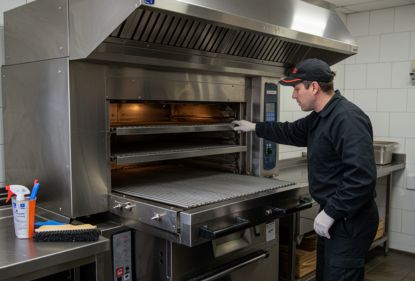
- ✦ Gas problems
Have suspected leaks, damaged gas lines, or burner faults handled by a qualified professional.
- ✦ Electrical faults
Get professional help for damaged wiring, repeated electrical trips, exposed electrical parts, or serious heating-element problems.
- ✦ Chimney or flue buildup
Use a qualified chimney or oven professional when the installation requires specialized inspection or cleaning.
- ✦ Commercial equipment
Follow the cleaning and inspection plan required for the oven, kitchen, and local regulations.
Signs You Should Stop Using the Oven
Stop using the oven if you notice a gas smell, exposed wiring, severe cracking, uncontrolled smoke, flames where they should not appear, or another sudden change in normal operation. Let the oven cool when safe and follow the manufacturer’s emergency and service guidance.
Do not try to solve a fuel, electrical, or structural problem with a cleaning tool. Cleaning can remove debris, but it cannot replace a proper repair.