Food Processing Methods & Technologies: A Complete Guide to Modern Food Processing
Food processing is part of daily life in the United States. Bread, canned beans, frozen vegetables, yogurt, cheese, packaged meat, juice, and ready-to-eat meals all pass through some form of processing. Even simple steps such as washing, cutting, grinding, or chilling can count as food processing.
The goal is not always to make food more processed. A good process should solve a clear problem while keeping food safe and useful. In professional food plants, the process must also control time, temperature, moisture, contamination, equipment performance, and product quality.
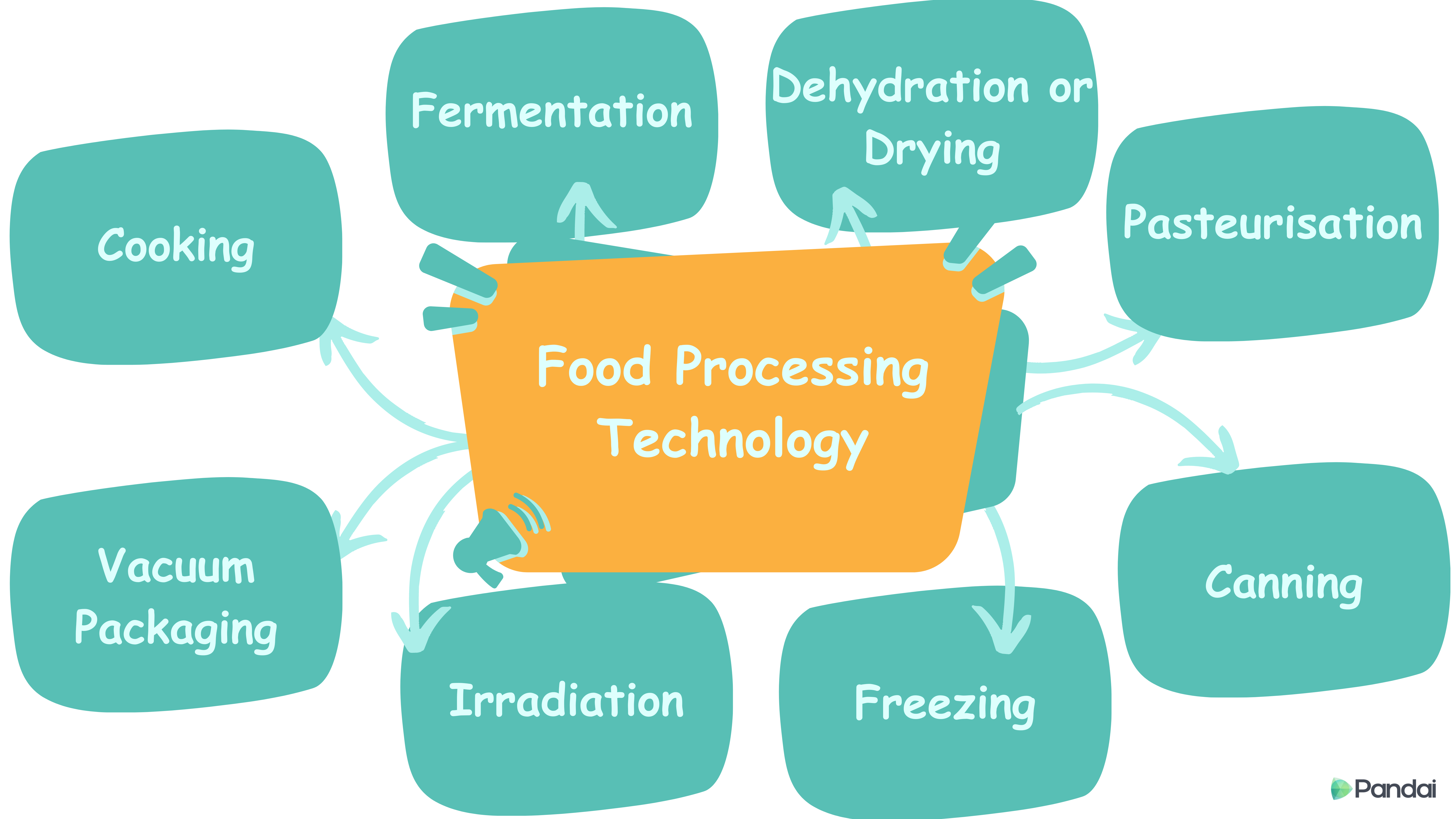
In practice, the most useful way to understand Food Processing Methods & Technologies is to look at what each method does. Some methods kill harmful microbes. Others slow microbial growth, remove water, control texture, extend shelf life, or make food easier to store and transport. Modern plants often combine several methods rather than relying on one step.
What Is Food Processing?
Food processing means changing raw food into a safer, more stable, more useful, or more convenient food product. The change can be very simple, such as washing and cutting, or more complex, such as heating, drying, fermenting, or applying high pressure.
Food processing methods and technologies are used across farms, food plants, restaurants, bakeries, dairy facilities, meat plants, beverage companies, and home kitchens. The scale changes, but the basic goals remain similar: control hazards, protect quality, reduce waste, and make food practical to store and eat.
Processing does not automatically make a food unhealthy. The nutritional effect depends on the food, the process, the ingredients added, and how the final product is eaten. For example, freezing can preserve many nutrients well, while some high-heat processes can change heat-sensitive vitamins.
- ✦ Safety
Processing can reduce harmful bacteria, parasites, and other hazards when the process is properly designed and controlled.
- ✦ Shelf life
Drying, freezing, canning, chilling, and other methods can slow spoilage and help food last longer.
- ✦ Convenience
Cutting, cooking, mixing, and packaging can make food easier to prepare, transport, and use.
- ✦ Quality control
Controlled processing can help create a consistent taste, texture, color, size, and product weight.
Processing Levels
Foods can be processed at many levels. Minimally processed foods may be washed, cut, frozen, or dried with few added ingredients. More complex products may contain several ingredients and go through cooking, mixing, shaping, and packaging.
The term ultra-processed describes a category of foods made with industrial formulations and often several added ingredients. It is useful to separate this concept from the basic act of processing because nearly all food sold today can undergo some type of processing.
- ✦ Minimal processing
Examples include washed produce, cut vegetables, frozen fruit, and roasted nuts.
- ✦ Processed foods
Examples include canned vegetables, cheese, bread, and some preserved foods.
- ✦ Highly formulated foods
These products may use several ingredients, additives, flavor systems, and industrial processing steps.
Primary Food Processing Methods
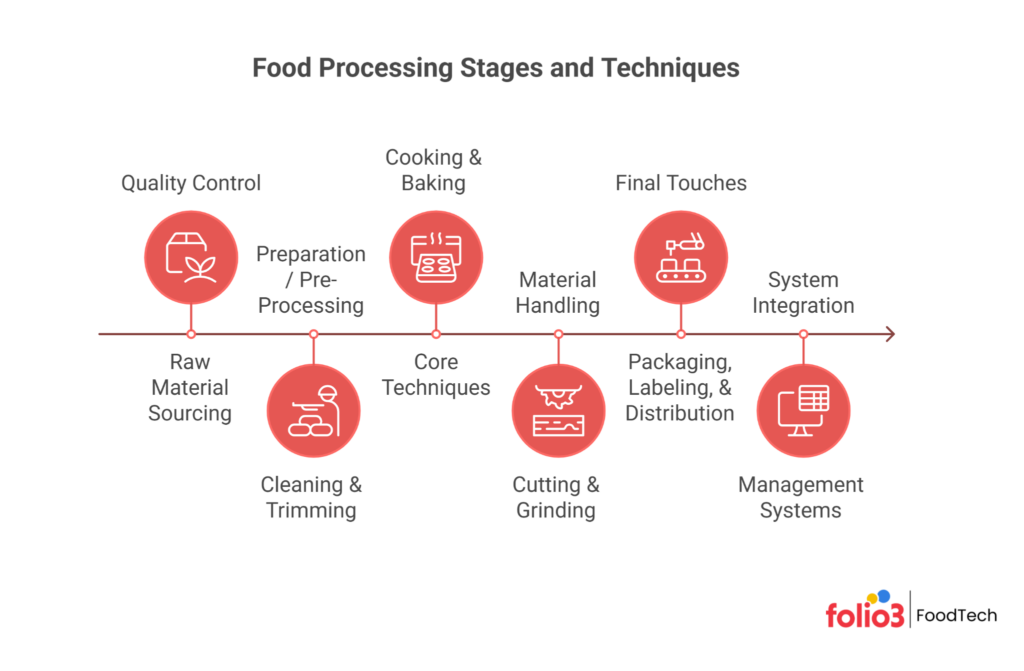
Primary processing starts with raw agricultural products. It often prepares food for later processing or direct use. Cleaning, sorting, grading, peeling, cutting, milling, and shelling are common examples.
These steps may look simple, but they affect food safety and final quality. Poor cleaning can leave soil or microbes on a product. Poor cutting can create uneven pieces that cook or dry at different rates.

- ✦ Cleaning
Removes soil, plant debris, insects, and other unwanted material from raw foods.
- ✦ Sorting
Separates products based on size, color, shape, maturity, defects, or other quality traits.
- ✦ Peeling
Removes skins or outer layers from foods such as potatoes, carrots, fruits, and some roots.
- ✦ Cutting and slicing
Creates pieces with a controlled size and shape for cooking, drying, freezing, or packaging.
- ✦ Milling
Reduces grains and other materials into flour, meal, powder, or smaller particles.
- ✦ Grinding
Breaks food into smaller particles and can improve mixing, cooking, and product uniformity.
Why Size Control Matters
Particle size can change how fast heat and moisture move through food. This matters during drying, frying, cooking, and freezing. Uniform pieces usually give more predictable results.
Modern plants may use mechanical cutters, optical sorters, screens, conveyors, and automated inspection systems. These tools reduce manual work and help maintain consistent product quality.
- ✦ Better cooking
Similar piece sizes can help food cook at a more even rate.
- ✦ Better drying
Uniform pieces can make moisture removal easier to control.
- ✦ Less waste
Accurate cutting and sorting can reduce damaged or unusable product.
Thermal Food Processing Technologies
Thermal processing uses heat to cook food, improve texture, reduce microbial hazards, or extend shelf life. It remains one of the most important groups of Food Processing Methods & Technologies used in commercial food production.
The key variables are time and temperature. A process must deliver enough heat to achieve its safety or quality goal without causing unnecessary damage to flavor, color, texture, or nutrients.
Thermal methods include pasteurization, commercial sterilization, blanching, baking, roasting, boiling, steaming, and frying. Each method uses heat in a different way and serves a different product need.
- ✦ Pasteurization
Uses controlled heat to reduce harmful microorganisms while aiming to preserve product quality.
- ✦ Commercial sterilization
Uses a stronger heat process for shelf-stable foods, often in sealed containers.
- ✦ Blanching
Uses short heating followed by cooling. It is common before freezing or drying vegetables.
- ✦ Baking
Uses hot air and heat transfer to cook foods such as bread, cakes, cookies, and baked snacks.
- ✦ Frying
Uses hot oil to cook food rapidly while creating a crisp surface and distinct flavor.
Pasteurization vs. Sterilization
Pasteurization and sterilization are not the same. Pasteurization uses a controlled heat treatment designed to reduce harmful microbes while maintaining product quality. Commercial sterilization uses a more intense process designed to make packaged foods stable for long storage under defined conditions.
Milk, juices, liquid eggs, and some other foods may use pasteurization. Shelf-stable canned foods use processes designed for much stronger microbial control.
- ✦ Main goal
Pasteurization mainly reduces harmful microorganisms. Commercial sterilization aims for a much higher level of microbial stability.
- ✦ Product effect
Both can affect taste, texture, color, and nutrients, so processors select conditions with quality in mind.
Cold Processing: Refrigeration and Freezing
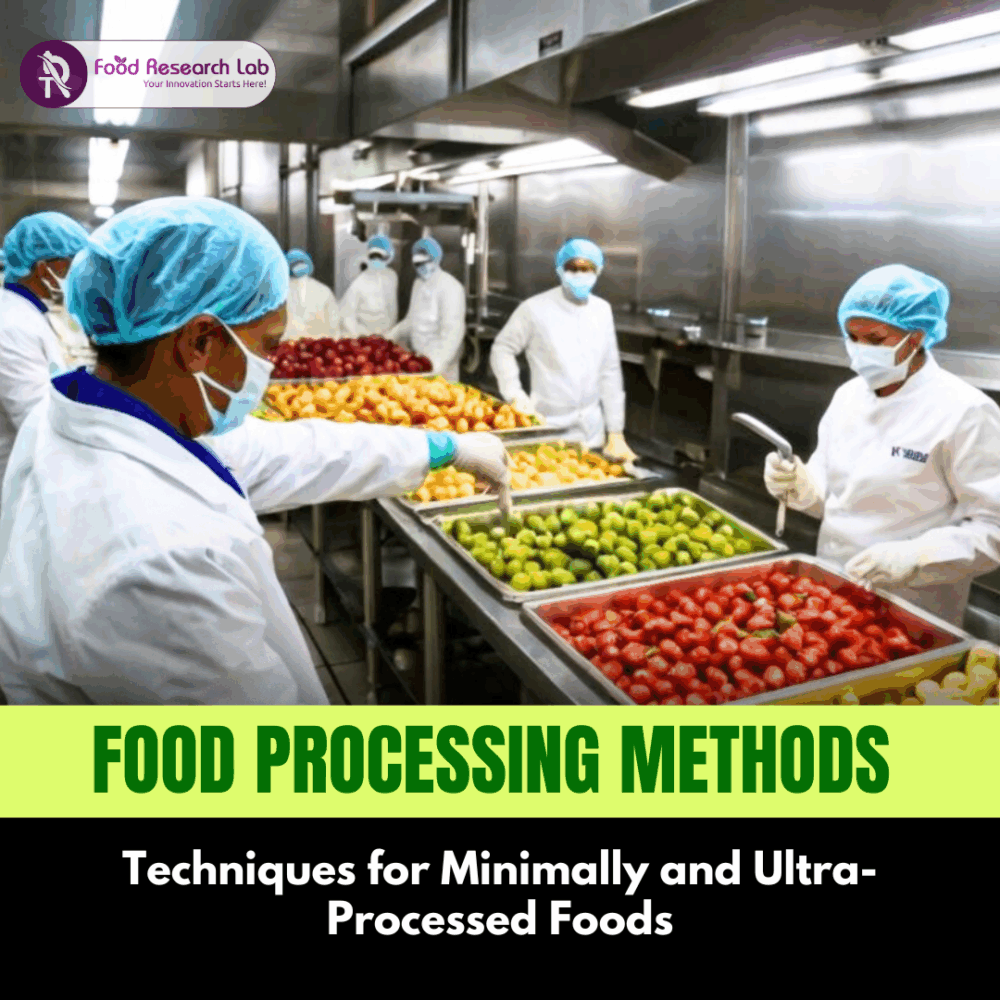
Cold processing slows food spoilage rather than relying on high heat. Refrigeration lowers the growth rate of many microorganisms and slows chemical changes. Freezing lowers temperature much further and turns much of the available water into ice.
Cold storage is a major part of the U.S. food supply chain. Meat, seafood, dairy products, frozen vegetables, fruit, prepared meals, and many other foods depend on controlled temperatures from production to retail.
Freezing can preserve food for long periods, but it does not remove every food safety risk. Safe handling, suitable packaging, correct storage temperature, and proper thawing still matter.
- ✦ Refrigeration
Keeps food cold enough to slow microbial growth and quality loss.
- ✦ Freezing
Reduces temperature enough to freeze water in food and greatly slow many spoilage reactions.
- ✦ Cold chain
Maintains suitable temperature during storage, transport, distribution, and retail.
- ✦ Thawing
Should be controlled to reduce time spent in temperatures that allow rapid microbial growth.
How Freezing Affects Food Quality
Ice crystals form when food freezes. Large crystals can damage cell structure and cause softer texture after thawing. Faster freezing can create smaller crystals and may help protect texture in many products.
Packaging also matters. Good packaging limits moisture loss and helps prevent freezer burn. The final result depends on the food, freezing rate, storage time, temperature, and packaging.
- ✦ Freezer burn
Occurs when moisture leaves exposed food surfaces during frozen storage, causing dry or discolored areas.
- ✦ Texture change
Foods with high water content may become softer after thawing because freezing can damage cell structures.
Drying and Dehydration Technologies
Drying removes water from food. Lower water availability makes it harder for many microorganisms to grow and can slow several chemical reactions. This makes drying one of the oldest and most useful Food Processing Methods & Technologies.
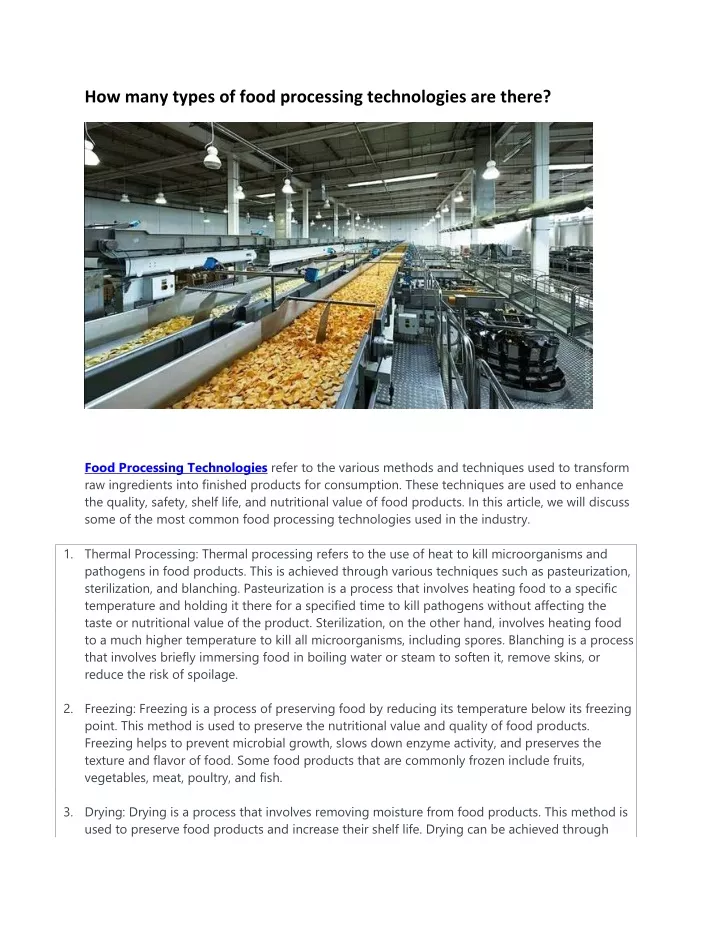
Traditional sun drying still has a place in some settings, but commercial food plants use controlled systems. Hot-air dryers, spray dryers, drum dryers, vacuum dryers, freeze dryers, and other systems allow processors to control temperature, air movement, pressure, and drying time.
Drying can greatly reduce weight and volume. This can lower transport needs and make food easier to store. However, excess heat can change flavor, color, texture, and some nutrients.
- ✦ Hot-air drying
Uses heated air to move moisture from food into the surrounding air.
- ✦ Spray drying
Turns a liquid or slurry into small droplets that dry rapidly in a stream of hot air.
- ✦ Freeze drying
Freezes food and removes ice through a low-pressure process, helping retain shape and some quality traits.
- ✦ Vacuum drying
Uses reduced pressure to allow moisture removal at lower temperatures than some conventional systems.
Water Activity and Shelf Life
Water activity is different from total moisture. It describes how much water is available for microbial growth and chemical reactions. Food processors use water activity as an important control when designing shelf-stable products.
Dry food is not automatically safe. A product still needs proper processing, packaging, storage, and handling. Moisture can also enter a dry product after processing if the package does not protect it well.
- ✦ Microbial control
Lower water activity can prevent or slow the growth of many microorganisms.
- ✦ Package protection
Moisture-resistant packaging can help keep a dried product stable during storage.
Chemical and Biological Food Processing
Some Food Processing Methods & Technologies use chemical or biological changes to preserve food or create a desired product. Salt, sugar, acids, and controlled fermentation are common examples.
Fermentation uses microorganisms such as selected bacteria, yeasts, or molds to change food components. This process can create acids, gases, alcohol, flavors, and other compounds that change the food.
Pickling, yogurt making, cheese production, bread making, and some cured foods rely on controlled biological or chemical changes. These processes need careful control because the wrong conditions can lead to spoilage or safety problems.
- ✦ Fermentation
Uses selected microorganisms to create controlled changes in food.
- ✦ Salting
Uses salt to reduce available water and create conditions that slow many spoilage organisms.
- ✦ Sugaring
Uses high sugar levels to reduce water availability in foods such as jams and preserves.
- ✦ Pickling
Uses acid, salt, or fermentation to create an environment that helps preserve food.
Fermentation as a Food Technology
Fermentation is both an old craft and a modern industrial technology. Commercial producers select microbial cultures and control temperature, acidity, time, oxygen, and other conditions to create a predictable result.
The process can improve flavor and texture while helping preserve certain foods. Still, fermentation is not a substitute for all other safety controls. Manufacturers must use validated processes and good hygiene.
- ✦ Yogurt
Selected bacteria convert lactose into lactic acid, which changes the taste and texture of milk.
- ✦ Bread
Yeast produces carbon dioxide during fermentation, helping dough rise.
- ✦ Cheese
Cultures and enzymes help change milk into a product with specific texture, flavor, and storage properties.
Non-Thermal Food Processing Technologies
Non-thermal processing aims to control microorganisms or change food properties without relying mainly on traditional heat. These Food Processing Methods & Technologies are important because processors often want better retention of fresh taste, color, texture, or nutrients.
High-pressure processing is one of the best-known examples. Other technologies include pulsed electric fields, ultraviolet treatment for suitable liquids and surfaces, and certain forms of cold plasma. Each technology has a specific range of applications and limits.
Non-thermal does not mean risk-free or chemical-free. Every process needs suitable equipment, validated operating conditions, sanitation, packaging, and quality controls.

- ✦ High-pressure processing
Uses very high pressure to control microorganisms in suitable packaged foods while applying relatively little heat.
- ✦ Pulsed electric fields
Uses short electrical pulses and is mainly studied or applied for certain liquid and semi-liquid foods.
- ✦ Ultraviolet treatment
Uses UV energy to reduce microorganisms on suitable food surfaces or in clear liquids.
- ✦ Cold plasma
Uses an energized gas and is being developed for selected food and packaging applications.
High-Pressure Processing
High-pressure processing, often called HPP, places packaged food under very high pressure. The pressure can damage many microorganisms while causing less heat exposure than conventional thermal treatment.
HPP works well for selected products such as some refrigerated juices, dips, sauces, and ready-to-eat foods. It does not suit every product, and processors must consider package strength, product structure, microbial targets, cost, and storage conditions.
- ✦ Quality benefit
Lower heat exposure can help protect some fresh-like qualities in suitable foods.
- ✦ Processing limit
HPP does not replace every preservation method and may not control all hazards under every condition.
Food Processing Equipment and Automation
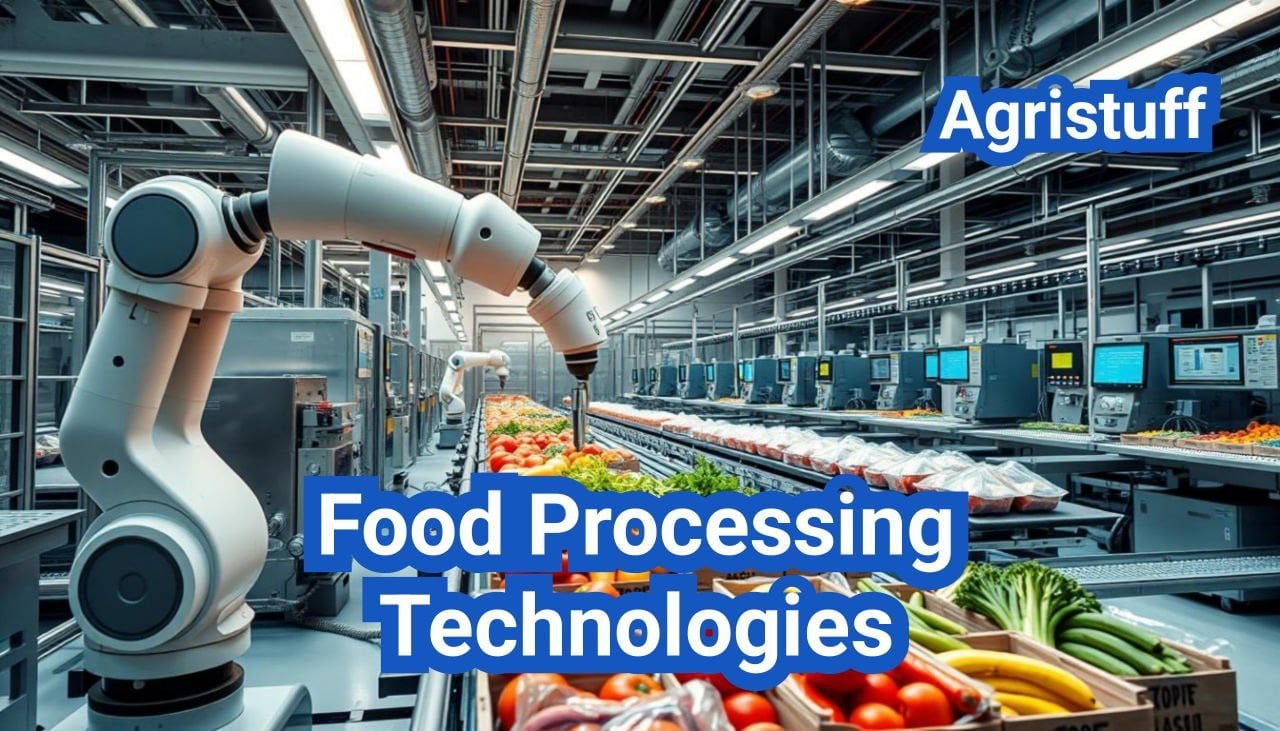
Modern food plants depend on equipment that can move, cut, mix, heat, cool, dry, inspect, and package food at a controlled rate. Equipment design also affects cleaning, worker safety, energy use, and product consistency.
Automation is changing how processors monitor these systems. Sensors can measure temperature, pressure, flow, weight, moisture, and other process variables. Software can collect this information and alert operators when a value moves outside a set range.
Automation does not remove the need for skilled people. Operators, engineers, food scientists, maintenance teams, and quality staff still need to understand the process. Technology works best when people use good data and clear procedures.

- ✦ Sensors
Measure process conditions such as temperature, pressure, flow, weight, and moisture.
- ✦ Robotics
Can perform selected tasks such as picking, sorting, packing, palletizing, and material movement.
- ✦ Machine vision
Uses cameras and software to inspect products for size, color, shape, defects, or package problems.
- ✦ Process control
Uses measured data to keep production conditions within defined limits.
Artificial Intelligence in Food Processing
Artificial intelligence can help analyze large amounts of production data. A system may detect patterns linked to equipment faults, product defects, energy use, or changes in process performance.
AI can support human decisions, but it should not be treated as a replacement for food safety validation. Safety limits must come from sound process design, scientific evidence, and appropriate controls.
- ✦ Predictive maintenance
Data patterns can help identify signs of equipment problems before a major failure occurs.
- ✦ Quality inspection
Computer vision can help find visible defects and sort products at high speed.
- ✦ Process optimization
Data analysis can help identify ways to reduce waste, energy use, downtime, or process variation.
Food Packaging and Processing Technologies
Processing does not end when food leaves the production line. Packaging is part of the preservation system. A good package can protect food from oxygen, moisture, light, physical damage, and contamination.
Common packaging systems include cans, glass jars, plastic containers, flexible films, cartons, trays, and pouches. The correct choice depends on the food and its storage needs.
Modern systems may use modified-atmosphere packaging, vacuum packaging, active packaging, or smart labels. These technologies can help control the package environment or provide useful information about the product.
- ✦ Vacuum packaging
Removes much of the air from a package before sealing, which can help protect certain foods from oxidation and quality loss.
- ✦ Modified-atmosphere packaging
Changes the gas mix around food to help manage respiration, oxidation, or microbial growth for suitable products.
- ✦ Aseptic packaging
Combines commercially sterile product and packaging under controlled conditions to create shelf-stable products.
- ✦ Smart packaging
May provide information about temperature history, freshness, package condition, or product tracking.
Why Packaging Is Part of Food Safety
A safe process can lose its value if food becomes contaminated after processing. Sealing, handling, storage, and transport must protect the product after the main processing step.
Packaging also affects shelf life. Oxygen barriers can reduce oxidation. Moisture barriers can protect dry foods. Light barriers can help protect products that are sensitive to light.
- ✦ Barrier properties
Packaging can limit oxygen, moisture, light, and other factors that damage food.
- ✦ Seal integrity
A good seal helps prevent contamination and unwanted air or moisture exchange.
Food Safety Controls in Processing Plants
Food safety must be built into the process. A processor should identify hazards, decide where control is needed, set measurable limits, monitor those limits, and keep records that show the system works.
Hazards can be biological, chemical, physical, or allergen-related. The control method depends on the hazard. Heat may control some microorganisms, while sanitation, filtration, inspection, separation, or allergen management may control other risks.
Good manufacturing practices, sanitation programs, preventive controls, employee training, equipment maintenance, and traceability all support safe production. In the United States, food businesses also operate within federal and state food safety rules that vary by product and facility.
- ✦ Biological hazards
Include harmful bacteria, viruses, parasites, and other biological agents.
- ✦ Chemical hazards
Can include cleaning chemicals, naturally occurring toxins, pesticide residues, or other unwanted substances.
- ✦ Physical hazards
Can include unwanted objects such as metal, glass, stone, or hard plastic.
- ✦ Allergens
Require careful ingredient control, cleaning, labeling, and prevention of unintended cross-contact.
HACCP and Preventive Food Safety
HACCP stands for Hazard Analysis and Critical Control Points. It is a structured approach that identifies food safety hazards and focuses control on points where a hazard can be prevented, eliminated, or reduced to an acceptable level.
Not every process has the same critical points. A dairy plant, bakery, seafood plant, and frozen meal facility may need different controls. The plan should match the actual food, process, equipment, and hazards.
- ✦ Hazard analysis
Identify hazards that may occur at each important step.
- ✦ Critical limits
Set measurable limits when a process step must stay within a defined range.
- ✦ Monitoring
Check the process often enough to show that critical limits remain under control.
- ✦ Corrective action
Define what workers should do when a process moves outside the required limit.
How to Choose the Right Food Processing Method
There is no single best processing method for every food. A processor must balance safety, quality, shelf life, cost, production volume, equipment, energy use, packaging, and consumer expectations.
For example, freezing may suit vegetables that need a fresh-like texture, while canning may suit foods that need long shelf life without refrigeration. A refrigerated juice may benefit from pasteurization or a suitable non-thermal process depending on the product and safety target.
The process should also be tested and validated. Small changes in product acidity, thickness, package size, moisture, or equipment settings can change how a process performs.
- ✦ Food characteristics
Consider acidity, moisture, fat, protein, particle size, viscosity, and sensitivity to heat or pressure.
- ✦ Safety target
Define which hazards must be controlled and what level of control is required.
- ✦ Shelf-life goal
Decide whether the food needs hours, days, weeks, months, or longer storage.
- ✦ Quality target
Set expectations for flavor, color, texture, nutrients, and appearance.
- ✦ Cost and scale
Compare equipment cost, labor, energy, maintenance, throughput, packaging, and product loss.
- ✦ Consumer use
Consider whether the final food will be refrigerated, frozen, shelf stable, cooked at home, or eaten without further cooking.
A Practical Selection Process
Start with the product and define the main problem. If the goal is to reduce microbial risk, focus on validated safety controls. If the main goal is moisture removal, compare drying technologies and their effect on product quality.
Then compare process combinations. A food may use washing, cutting, blanching, freezing, packaging, and cold storage as one complete system. Looking at the entire chain often gives a better result than optimizing one machine in isolation.
- ✦ Step 1
Define the product, consumer use, safety risks, and desired shelf life.
- ✦ Step 2
List possible thermal, cold, chemical, biological, mechanical, and non-thermal options.
- ✦ Step 3
Test safety, quality, cost, throughput, energy use, and packaging needs.
- ✦ Step 4
Validate the selected process before full commercial production.
Benefits and Limitations of Modern Food Processing
Modern Food Processing Methods & Technologies can provide major benefits. They help move food safely through large supply chains, reduce seasonal limits, extend shelf life, and create convenient products. They can also reduce certain types of food waste when processing and storage are well managed.
At the same time, every method has trade-offs. Heat can change some nutrients and flavors. Drying can change texture. Freezing needs continuous cold storage. Advanced equipment can require high capital costs, skilled workers, maintenance, and energy.
A sound food process does not chase technology for its own sake. The best system uses enough technology to meet the product goal while controlling safety, quality, cost, and environmental impact.
- ✦ Longer shelf life
Preservation methods can slow spoilage and make food available beyond its harvest or production period.
- ✦ Convenience
Processed foods can reduce preparation time and simplify storage and cooking.
- ✦ Food availability
Processing and preservation help move food across long distances and different seasons.
- ✦ Consistency
Controlled systems can produce more uniform food from batch to batch.
- ✦ Resource use
Some processes require significant water, energy, packaging, or equipment, so efficiency matters.
Nutrition and Processing
Processing can both protect and change nutrients. Freezing and canning can preserve many nutrients, while cooking may improve the availability of some compounds. Other nutrients, especially some heat-sensitive vitamins, can decline during certain processes.
Nutrition also depends on the final recipe. A food may start as a nutrient-rich ingredient but become less favorable when large amounts of added sugar, sodium, saturated fat, or refined ingredients are included.
- ✦ Preservation
Some processing methods help protect nutrients by slowing spoilage and oxidation.
- ✦ Heat effects
High temperatures and long heating times can reduce some heat-sensitive nutrients.
- ✦ Recipe matters
The nutritional quality of a finished product depends on its complete ingredient profile, not just the processing method.
Future Trends in Food Processing Technology
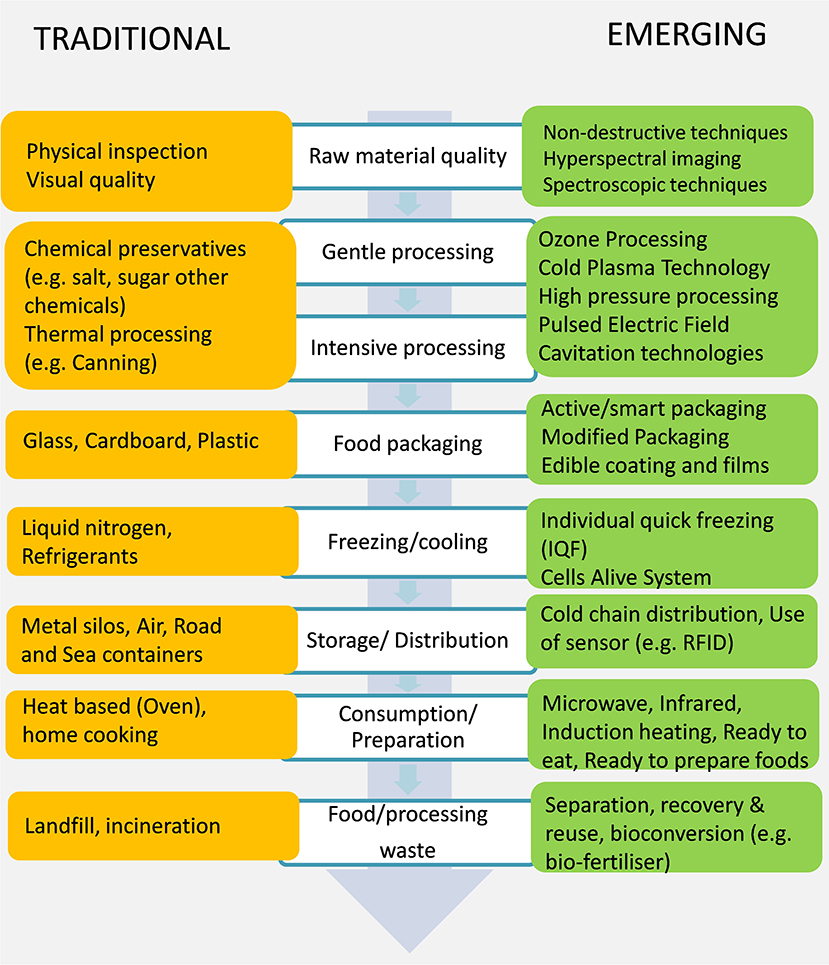
Food processing is moving toward greater automation, better sensing, lower resource use, and more precise control. Producers want systems that can maintain safety while using less energy, water, labor, and raw material.
Digital systems are also making it easier to track production data. Sensors, machine vision, connected equipment, predictive maintenance, and data analysis can help processors find problems earlier and improve production decisions.
Non-thermal processing, precision fermentation, improved drying systems, advanced packaging, and flexible automation are also important areas of development. Adoption will depend on product fit, regulation, cost, consumer acceptance, and proven performance.
- ✦ Smarter sensors
More precise sensors can provide better information about food and equipment conditions.
- ✦ Connected factories
Production equipment can share data to improve monitoring, traceability, maintenance, and planning.
- ✦ Advanced non-thermal processing
New systems aim to improve microbial control while reducing unwanted heat effects.
- ✦ Resource efficiency
Processors are seeking ways to reduce energy, water, packaging, waste, and production losses.
- ✦ Flexible automation
Robots and software are becoming more useful for plants that make many products or package formats.
The Role of Data
Data can turn a food plant from a reactive system into a more controlled one. Instead of waiting for a quality problem, teams can watch trends in temperature, pressure, speed, moisture, downtime, and defects.
The value comes from good measurement and good decisions. A large amount of poor-quality data does not create a better process. Food companies still need trained people who understand what the numbers mean.
- ✦ Traceability
Digital records can make it easier to follow ingredients and finished products through the supply chain.
- ✦ Early detection
Process trends can reveal changes before they become larger production problems.
- ✦ Continuous improvement
Historical data can help teams compare batches and identify repeat causes of waste or variation.