Food Processor Cheese & Dairy Preparation: A Complete Guide
Food Processor Cheese & Dairy Preparation can make everyday cooking much faster. A good machine can turn a block of cheese into shreds in seconds. It can also crumble firm cheese, mix soft dairy ingredients, and blend cheese into smooth sauces. For busy U.S. kitchens, this can save both time and effort.
The key is to match the food and the tool. Hard cheese and chilled semi-firm cheese often work well with a shredding or slicing disc. Soft cheese needs more care. Short pulses, small batches, and cold ingredients can help keep the texture under control. These simple habits make Food Processor Cheese & Dairy Preparation cleaner and more predictable.
What Can a Food Processor Do With Cheese and Dairy?
A food processor is more useful for cheese than many people expect. It can handle several forms of preparation with the correct attachment. The most common jobs include shredding, slicing, grating, crumbling, chopping, mixing, and blending.
Food Processor Cheese & Dairy Preparation works best when the cheese has the right firmness for the task. A cold block of cheddar is easy to shred. A firm Parmesan-style cheese can be grated or crumbled. Soft cheese, cream cheese, and dairy spreads call for gentler processing.
The machine can also combine dairy ingredients with other foods. It can mix cheese into dips, blend cottage cheese into a smoother texture, or make a cheese-based sauce base. The goal is not simply speed. The goal is to get the texture you want without overworking the food.
- ✦ Shredding
Use a shredding disc for cheddar, Monterey Jack, mozzarella, Swiss cheese, and other firm cheeses.
- ✦ Slicing
A slicing disc can cut firm cheese into even pieces for sandwiches, casseroles, and meal prep.
- ✦ Crumbling
Short pulses can break firm cheese into small crumbs for toppings, fillings, and pasta dishes.
- ✦ Blending
A standard blade can blend suitable soft dairy foods with other ingredients for dips, spreads, and sauces.
Cheese Types That Work Well
Firm cheeses are often the easiest choice for Food Processor Cheese & Dairy Preparation. Cheddar, Colby, Monterey Jack, Swiss, and similar cheeses can usually be shredded or sliced with a suitable disc. Hard cheeses such as Parmesan can also be processed, but the task and attachment may differ.
Very soft cheese can behave differently. Brie, fresh mozzarella, cream cheese, and similar foods may stick to the blade or smear along the bowl. For these foods, chilling and short processing times can help.
- ✦ Firm cheese
Usually works well for shredding and slicing.
- ✦ Hard cheese
Often suits grating, crumbling, or fine chopping when the processor and blade are designed for the task.
- ✦ Soft cheese
Needs short pulses and careful temperature control to reduce smearing.
How to Shred Cheese in a Food Processor
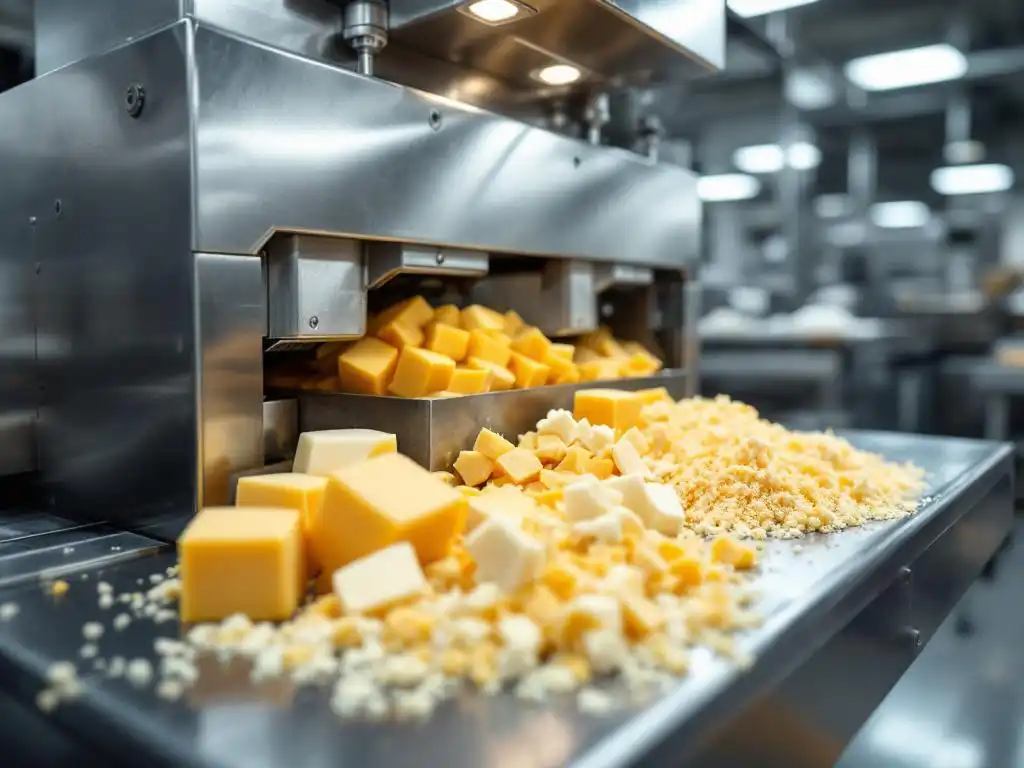
Shredding is one of the most useful parts of Food Processor Cheese & Dairy Preparation. It is especially helpful when a recipe needs several cups of cheese. Instead of using a hand grater for each piece, you can process a whole block in a short time.
Start with a clean and dry processor bowl. Fit the shredding disc as directed by the manufacturer. Cut the cheese into pieces that fit the feed tube without forcing them. Keep the cheese cold, since warm cheese is more likely to soften and stick.
Feed the cheese through the tube with steady pressure. Do not push hard. Let the disc do the work. Stop when the cheese reaches the desired amount, then remove the disc before taking the shredded cheese from the bowl.
- ✦ Chill the cheese
Cold cheese tends to hold its shape better and can produce cleaner shreds.
- ✦ Cut large blocks
Cut cheese into pieces that fit the feed tube safely and comfortably.
- ✦ Use steady pressure
Guide the cheese through the feed tube without forcing it.
- ✦ Avoid overfilling
Process large amounts in batches when needed so the bowl and disc can work properly.
Why Cold Cheese Often Works Better
Temperature has a major effect on texture. A cold block of cheese is firmer than cheese that has been sitting on the counter. This can help the shredding disc cut instead of smear.
If the cheese becomes warm during a long prep session, pause and chill it again. This small step can improve Food Processor Cheese & Dairy Preparation, especially when working with softer varieties.
- ✦ Cleaner shreds
Firm cheese is less likely to flatten or stick together during processing.
- ✦ Less mess
Cool cheese tends to leave less residue on the disc and bowl.
Slicing, Grating, and Crumbling Cheese
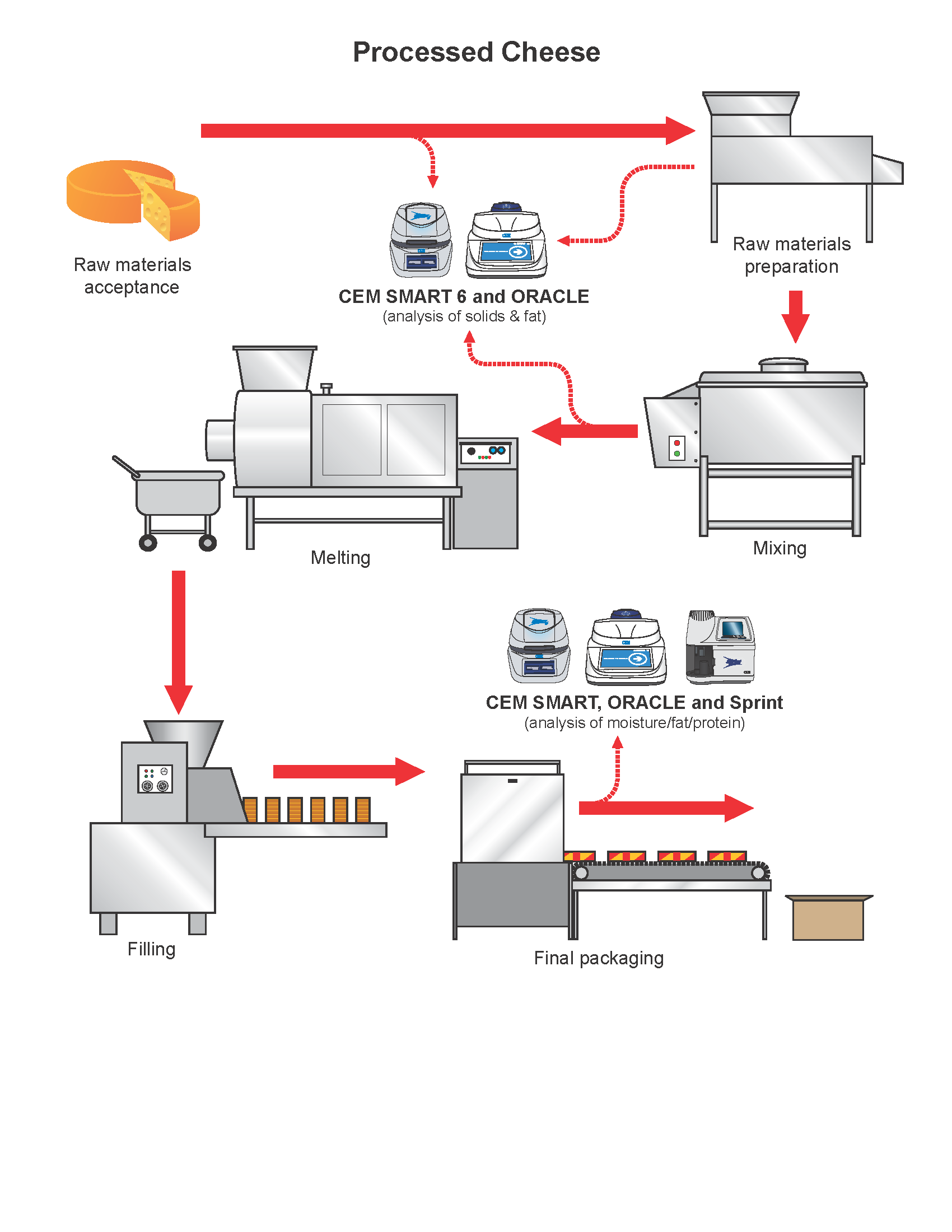
Food Processor Cheese & Dairy Preparation is not limited to shredded cheese. Many processors include a slicing disc and a standard chopping blade. These tools give you more ways to prepare cheese for salads, sandwiches, pasta, pizza, casseroles, and snacks.
A slicing disc is useful when you want pieces with a similar thickness. A standard blade can break firm cheese into small pieces or crumbs. For very hard cheese, always follow the processor maker’s instructions because some models are not designed for heavy grating work.
Short processing runs give you more control. Check the texture often. Once cheese reaches the size you want, stop the machine. Extra processing can turn small pieces into a fine meal or paste.
- ✦ For thin slices
Use a suitable slicing disc and feed firm cheese through the tube in controlled pieces.
- ✦ For small crumbles
Use short pulses with firm cheese and check the texture after each pulse.
- ✦ For fine cheese
Use the attachment recommended for the cheese and your specific processor model.
- ✦ For pizza and pasta
Shred cheese in advance and store it safely until you are ready to cook.
Choosing the Right Attachment
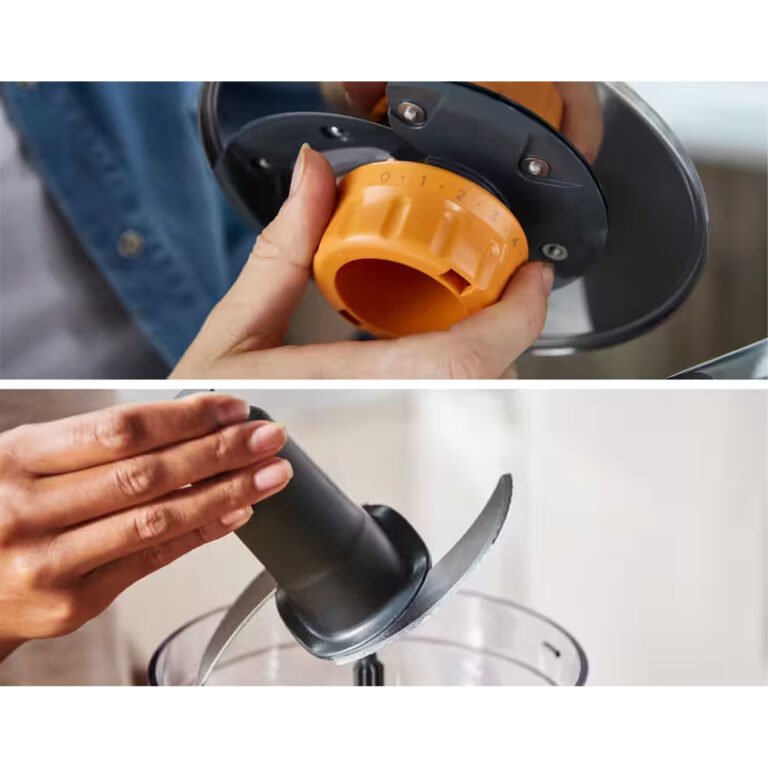
The attachment controls the shape of the finished cheese. A shredding disc creates long strands. A slicing disc creates flat pieces. The main blade chops food into smaller pieces and can blend some dairy mixtures.
Read the manual before using a processor with a hard or dense cheese. A tool that works well for soft vegetables may not be suited to very hard foods. Correct attachment choice is an important part of safe Food Processor Cheese & Dairy Preparation.
- ✦ Shredding disc
Best for long cheese shreds.
- ✦ Slicing disc
Best for even cheese slices.
- ✦ Main blade
Useful for chopping, crumbling, and blending suitable dairy mixtures.
Processing Soft Cheese, Cream Cheese, and Dairy Mixtures
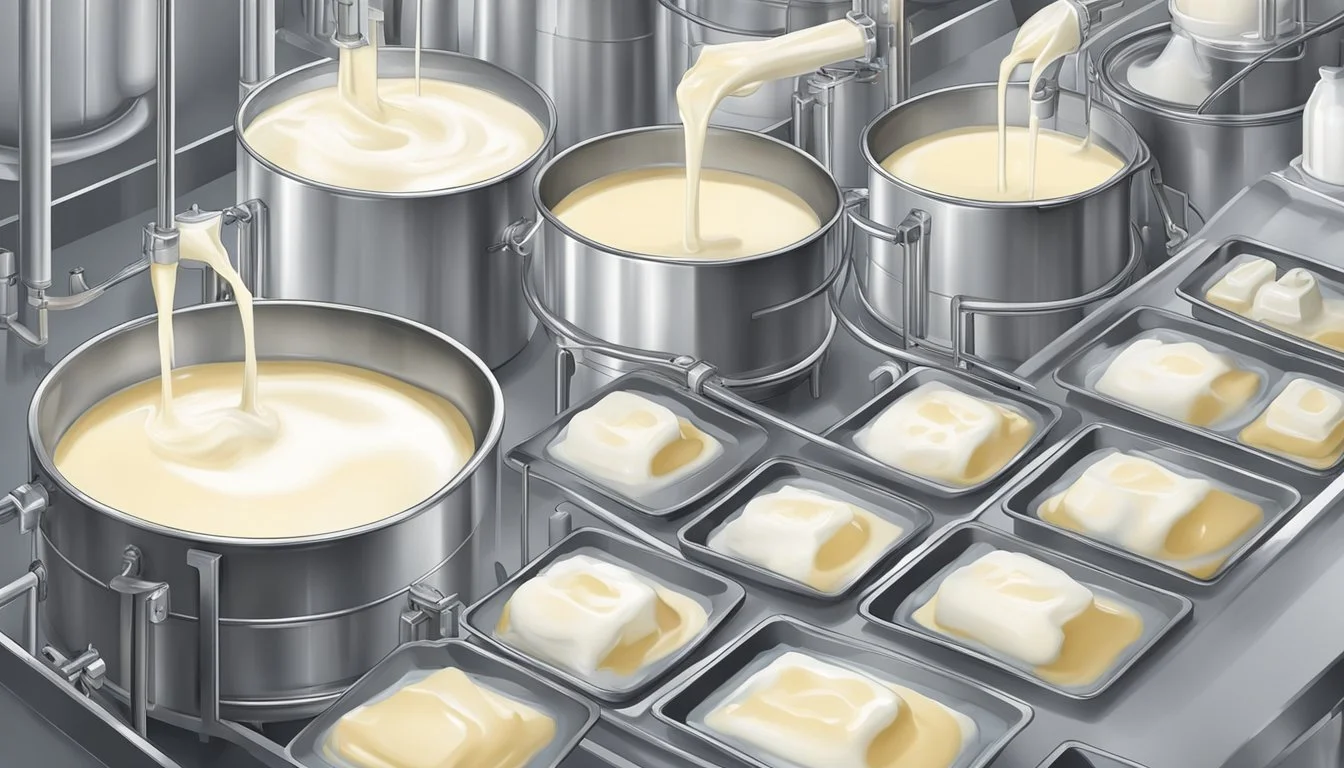
Soft dairy foods need a different approach. Cream cheese, cottage cheese, ricotta, and soft spreads can stick to the bowl and blade. Long processing can also make them thinner than you want.
For Food Processor Cheese & Dairy Preparation with soft dairy, use short pulses. Scrape the bowl only when the machine is off and unplugged. If the recipe calls for a smooth mixture, add liquid in small amounts rather than all at once.
Cottage cheese and ricotta can be processed into a smoother texture for dips, fillings, and sauces. Cream cheese can also be mixed with other ingredients, but very cold cream cheese may need a short rest before blending if it is too firm to process evenly.
- ✦ Use short pulses
Pulsing gives better control and helps prevent soft dairy from becoming too thin.
- ✦ Add liquid slowly
Small additions make it easier to control the final thickness.
- ✦ Stop and scrape safely
Turn off and unplug the machine before moving food away from the sides of the bowl.
- ✦ Watch the texture
Stop as soon as the mixture reaches the texture required by the recipe.
Making Smooth Dairy Blends
A food processor can turn some coarse dairy foods into smooth mixtures. This can be useful for dips, fillings, spreads, and cooked dishes. Start with the dairy food in the bowl, then add other ingredients in a controlled way.
Do not assume that longer processing always gives a better result. Heat from the motor and blade can change the texture of some foods. Short runs with checks between them are often easier to manage.
- ✦ Start with a small batch
A smaller batch can make it easier to judge texture and prevent uneven mixing.
- ✦ Use pulses first
Pulsing helps combine ingredients without immediately overprocessing them.
Food Safety and Storage for Cheese and Dairy
Food safety matters whenever a food processor touches dairy. Start with clean hands, a clean work surface, and clean processor parts. Dairy can support the growth of harmful bacteria when it stays at unsafe temperatures for too long.
Food Processor Cheese & Dairy Preparation should fit into a safe kitchen workflow. Take cheese and dairy foods from the refrigerator when you are ready to process them. Return prepared food to cold storage promptly when you are finished.
Keep raw ingredients separate from ready-to-eat foods. Do not use a dirty processor bowl for dairy after it has held raw foods unless you have washed and sanitized it as appropriate. When in doubt, follow the food safety directions on the product and the guidance for your appliance.

- ✦ Clean first
Wash food-contact parts before dairy preparation and make sure they are suitable for the food.
- ✦ Keep dairy cold
Limit the time dairy spends at room temperature and refrigerate prepared food promptly.
- ✦ Prevent cross-contact
Keep dairy preparation tools and surfaces clean, especially after handling raw foods.
- ✦ Use safe storage
Place prepared cheese or dairy mixtures in clean containers and refrigerate them as needed.
Allergen Awareness
Milk is a major food allergen in the United States. If someone in the home has a milk allergy, careful cleaning and separation can be important. Check packaged ingredients when making dairy mixtures with sauces, seasonings, or other prepared foods.
A processor that has handled dairy should be cleaned well before it is used for food intended for a person who must avoid milk. Follow the appliance maker’s cleaning directions and use separate equipment when needed.
- ✦ Check labels
Review ingredient labels on cheese, sauces, seasonings, and other packaged foods used in a dairy recipe.
- ✦ Clean food-contact parts
Wash the bowl, lid, blades, and discs according to the appliance instructions.
Common Problems and How to Fix Them
Even a good food processor can produce poor results when the cheese is too warm, the batch is too large, or the wrong attachment is used. Most problems are easy to correct once you know what caused them.
Food Processor Cheese & Dairy Preparation should feel controlled rather than rushed. If cheese sticks to the disc, pause and chill it. If a dairy mixture looks too thin, stop processing and adjust the recipe rather than running the machine longer.
A simple check before each batch can prevent most issues. Look at the cheese texture, select the correct attachment, check the batch size, and make sure the processor is clean and ready.
- ✦ Cheese sticks to the disc
Chill the cheese and use shorter processing runs. Warm cheese is more likely to smear.
- ✦ Shreds are uneven
Cut the cheese into suitable pieces and use steady pressure through the feed tube.
- ✦ Cheese turns into crumbs
Stop sooner or switch to the shredding disc when long shreds are needed.
- ✦ Soft cheese becomes a paste
Use short pulses and stop as soon as the desired texture appears.
- ✦ The processor struggles
Stop the machine, reduce the batch size, and check the manual for food limits.
How to Get More Consistent Results
Consistency comes from repeating the same basic process. Keep cheese at a suitable temperature, cut it into similar pieces, and avoid overloading the bowl. These steps make Food Processor Cheese & Dairy Preparation easier to repeat.
It also helps to process one type of cheese at a time. Different cheeses can have different moisture and firmness levels. Mixing them in the same batch may lead to uneven shreds or different textures.
- ✦ Keep pieces similar
Similar pieces feed more evenly and help produce a more consistent result.
- ✦ Process in batches
Smaller batches can reduce crowding and give you better control.
Cleaning and Maintaining a Food Processor After Dairy Use
Cheese and dairy can leave fat and residue on the bowl, lid, discs, and blade. Cleaning soon after use is usually easier than allowing the residue to dry. It also helps keep odors and old food from building up.
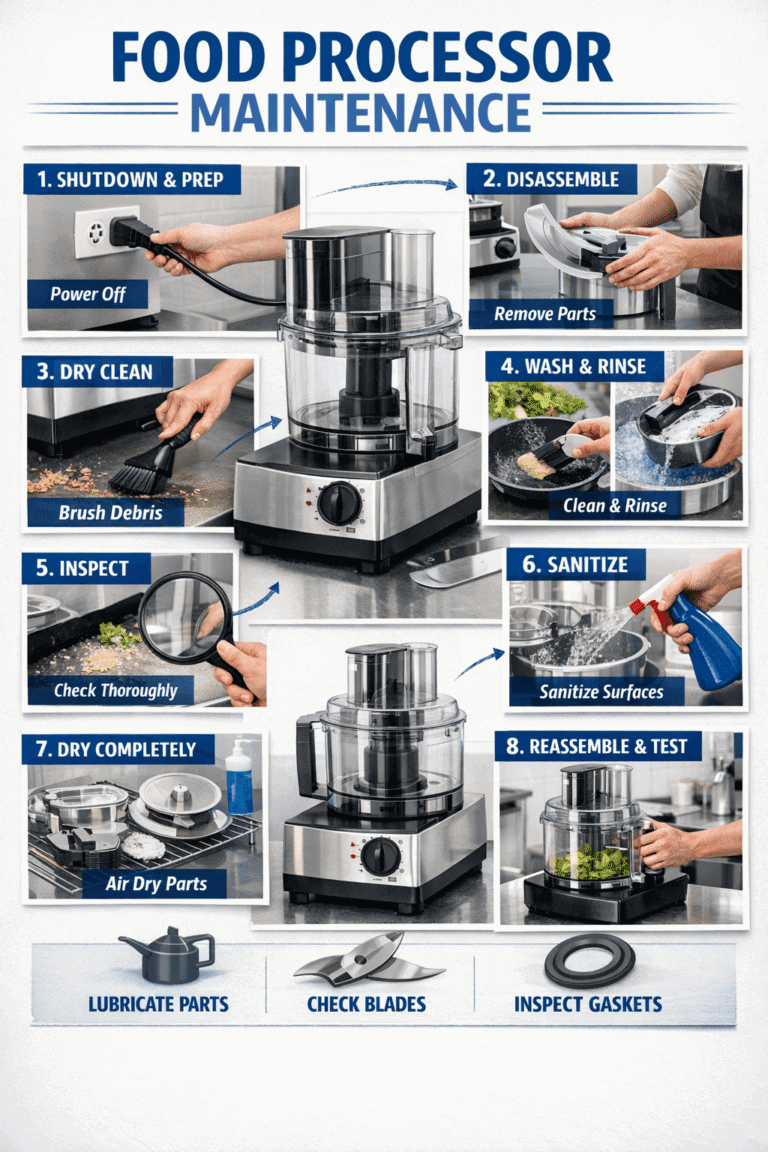
After Food Processor Cheese & Dairy Preparation, unplug the machine before removing or cleaning cutting parts. Follow the appliance maker’s directions for washing the bowl, lid, blade, and discs. Some parts may be dishwasher safe, while others may need hand washing.
Pay close attention to grooves, feed tubes, and the area around the blade. Small pieces of cheese can hide in these spots. Dry parts fully before storing them to help keep the processor ready for the next use.
- ✦ Unplug first
Disconnect the appliance from power before removing blades or cleaning around cutting parts.
- ✦ Wash food-contact parts
Clean the bowl, lid, discs, and blade according to the manufacturer’s instructions.
- ✦ Clean hidden areas
Check feed tubes, grooves, and blade hubs for trapped dairy residue.
- ✦ Dry before storage
Allow washable parts to dry fully before putting the processor away.
When to Replace or Check Parts
Inspect blades, discs, seals, and bowls from time to time. A damaged or cracked food-contact part may affect safe use. A dull or damaged cutting tool can also produce poor results.
Use replacement parts made for your processor model when needed. Do not force a disc, blade, or bowl into place. Correct fit is part of safe Food Processor Cheese & Dairy Preparation.
- ✦ Inspect for damage
Look for cracks, chips, loose parts, or other signs of wear.
- ✦ Use compatible parts
Choose replacement parts that match the specific processor model.