Food Processor Cleaning & Maintenance: Complete Care Guide
A food processor can save a lot of time in a busy U.S. kitchen. It can chop onions, shred cheese, slice vegetables, mix dough, and make sauces in minutes. But food residue can collect around the blade, lid, feed tube, and bowl if you leave the machine dirty after use.
Good Food Processor Cleaning & Maintenance is simple when it becomes part of the cooking routine. The key is to clean the right parts in the right way. You also need to know which parts can go in the dishwasher and which parts need hand washing, because this varies by model.
One useful lesson from regular kitchen care is that small habits prevent bigger problems. A quick rinse soon after use is often easier than removing dried dough or sticky nut butter later. Careful drying and storage also reduce wear on seals, blades, and plastic parts.

Why Food Processor Cleaning & Maintenance Matters
A food processor touches many types of food. Raw vegetables, cheese, meat, flour, oils, sauces, and sticky mixtures can leave different kinds of residue. If that residue stays in the machine, it can cause smells, stains, hard-to-clean buildup, or unwanted food contact during the next use.
Food Processor Cleaning & Maintenance also helps you spot small problems early. A cracked bowl, loose seal, damaged cord, dull blade, or worn lid lock is easier to deal with before it becomes a larger safety issue.
You do not need a long cleaning routine after every recipe. Most home users can handle basic cleaning in a few minutes. The important part is consistency and following the care instructions for your exact model.
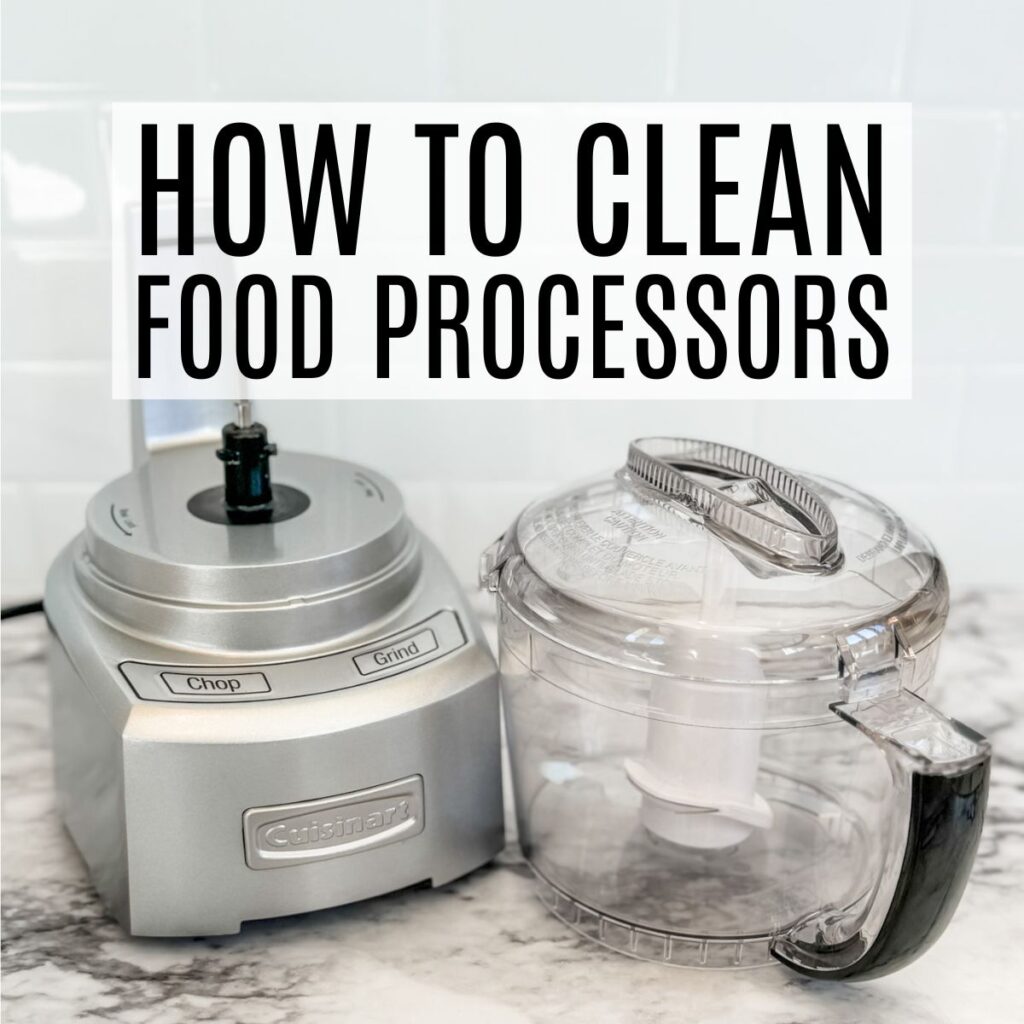
- ✦ Better hygiene
Removing food residue helps keep surfaces clean and reduces the chance of old food mixing with fresh ingredients.
- ✦ Less odor
Quick cleaning helps stop strong smells from foods such as garlic, onions, herbs, and nut butter from lingering.
- ✦ Longer service life
Gentle cleaning and regular inspection can reduce avoidable wear on plastic parts, seals, blades, and other components.
- ✦ Safer use
Routine checks can reveal cracks, damaged cords, loose parts, or blade problems before the next cooking session.
What Happens When a Food Processor Is Not Cleaned
Dried food can collect under the blade hub, around the lid seal, and inside the feed tube. Greasy residue can also attract dust and make later cleaning harder. Over time, trapped moisture may contribute to unpleasant smells.
The biggest issue is often not the visible bowl. Small gaps and moving parts can hold residue that is easy to miss. That is why complete Food Processor Cleaning & Maintenance includes both cleaning and inspection.
- ✦ Hidden residue
Food can stay under seals, around blade hubs, and in small grooves.
- ✦ Sticky buildup
Oil, nut butter, dough, and sauces can become much harder to remove after they dry.
How to Clean a Food Processor After Each Use
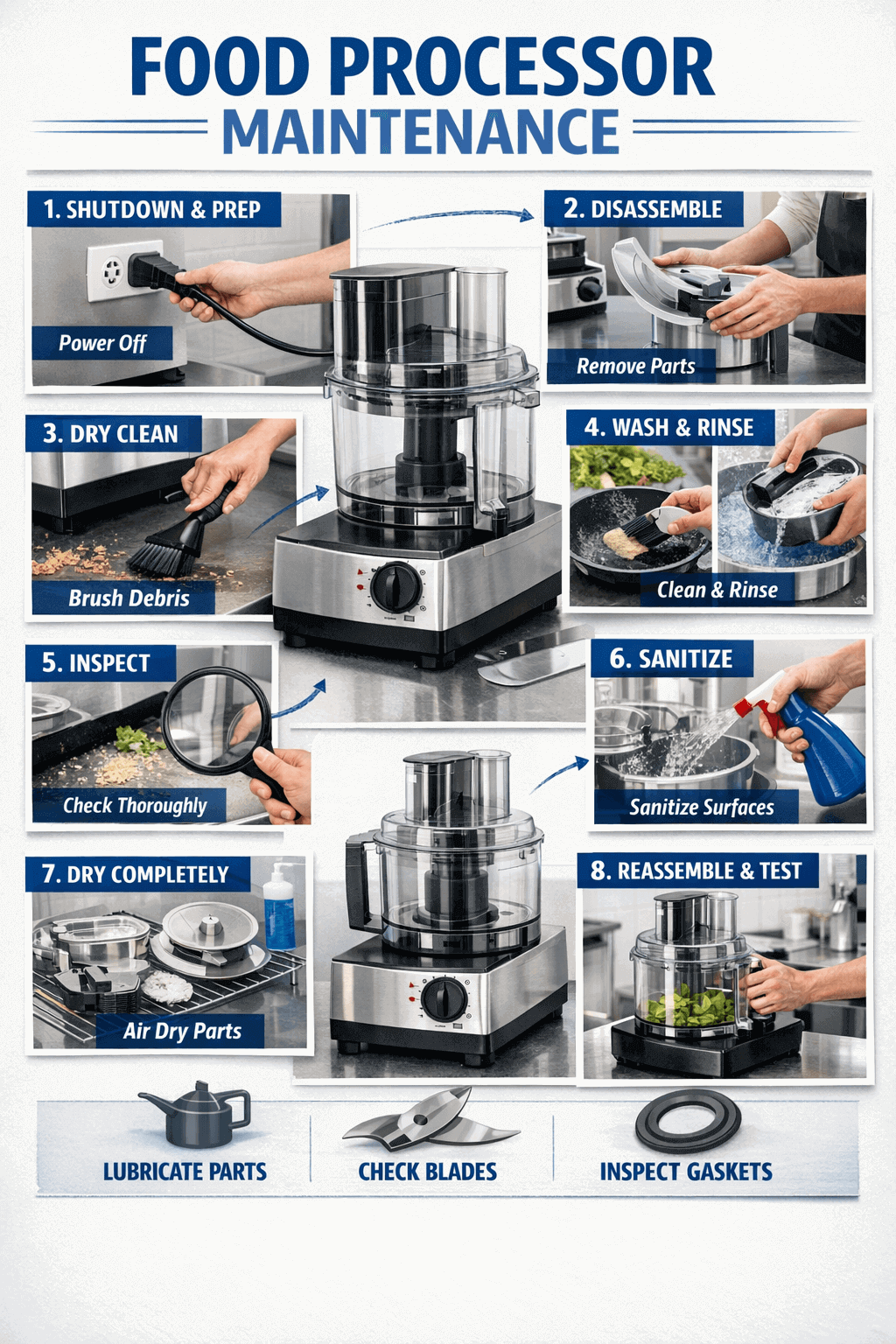
The easiest cleaning routine starts right after the food leaves the processor. First, turn off the machine and unplug it. Then remove the bowl, lid, pusher, blade, disc, and other removable parts according to the manufacturer’s instructions.
Do not reach into the bowl with your bare hand while a sharp blade or disc is inside. Hold cutting parts by their safe grip areas. If food is stuck, use a soft brush, sponge, or suitable utensil rather than your fingers.
For Food Processor Cleaning & Maintenance, warm water and mild dish soap are enough for most routine jobs. Check the manual before putting any part in the dishwasher, since heat and strong detergent can affect some plastics, seals, coatings, or accessories.
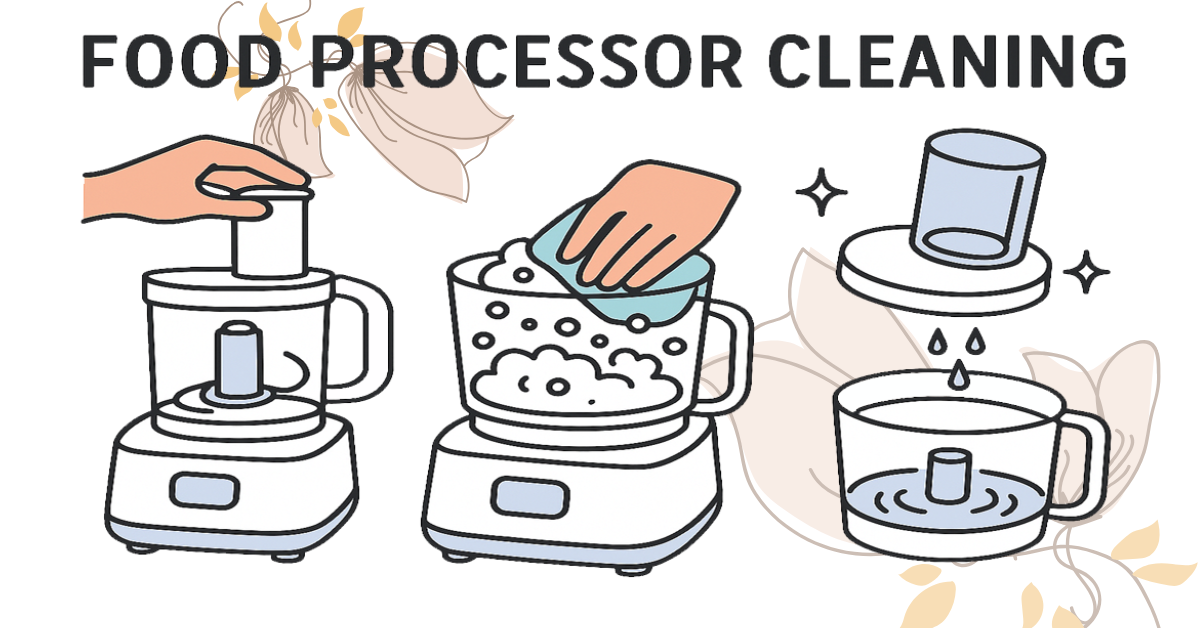
- ✦ Step 1: Unplug
Switch the processor off and disconnect it from power before taking it apart.
- ✦ Step 2: Remove parts
Take off the bowl, lid, pusher, blade, disc, and other removable parts as directed by the manual.
- ✦ Step 3: Remove food
Scrape away large pieces with a suitable spatula or utensil before washing.
- ✦ Step 4: Wash
Wash approved parts with warm water and mild dish soap, or use the dishwasher if the manual allows it.
- ✦ Step 5: Rinse
Rinse away soap and loosened food from every surface and groove.
- ✦ Step 6: Dry
Let parts air-dry fully or dry them with a clean towel before storage.
- ✦ Step 7: Wipe the base
Clean the motor base with a soft, slightly damp cloth and keep liquid away from openings.
Can You Put Food Processor Parts in the Dishwasher?
Some food processor bowls, lids, pushers, blades, and discs are dishwasher safe. Others are not. The safest rule is to check the manual or care label for your exact model before using a dishwasher.
Even when a part is dishwasher safe, sharp blades and delicate seals may benefit from careful hand washing. High heat and repeated dishwasher cycles can also cause some plastic parts to age faster.
- ✦ Check the manual
Use the manufacturer’s instructions as the final guide for dishwasher safety.
- ✦ Protect sharp parts
Place blades and discs where they cannot damage other items or cause injury when the dishwasher is unloaded.
How to Clean the Motor Base Safely
The motor base needs a different approach. Unlike removable parts, it should not be soaked or placed under running water. Moisture can reach electrical components and create a safety risk or damage the machine.
For routine Food Processor Cleaning & Maintenance, unplug the base first. Wipe the outside with a soft cloth that is slightly damp, then use a dry cloth to remove remaining moisture.
Pay attention to food that collects around the shaft, control buttons, vents, and feet. Use a small soft brush or cotton swab for dry debris when appropriate, but do not push dirt deeper into openings.
- ✦ Keep it unplugged
Always disconnect the machine from power before cleaning the motor housing.
- ✦ Use little moisture
A damp cloth is usually enough for the outer surface.
- ✦ Avoid soaking
Never immerse the motor base unless the manufacturer clearly states that it is designed for such cleaning.
- ✦ Keep openings clear
Remove loose crumbs and dry debris without forcing material into vents or other openings.
What If Water Gets Into the Motor Base?
If water enters the motor base, unplug the appliance and do not turn it back on until you have followed the manufacturer’s safety guidance. Do not guess that the unit is safe just because the outside looks dry.
If the appliance behaves oddly after liquid exposure, stop using it and seek guidance from the manufacturer or a qualified service professional.
- ✦ Stop using it
Disconnect power and avoid testing the machine if liquid may have reached electrical parts.
- ✦ Follow model guidance
Use the manufacturer’s instructions for inspection, drying, or service.
Cleaning Food Processor Blades, Discs, and Attachments
Blades and discs need extra care because their edges can be very sharp. Hold them by the center or designated grip area, not by the cutting edge. A soft brush can help remove food from small spaces without putting your fingers near the blade.
Drying is just as important as washing. Water left around metal parts can lead to spots, discoloration, or corrosion on materials that are not designed for prolonged moisture.
Good Food Processor Cleaning & Maintenance also means checking accessories after cleaning. Look for bent discs, cracks, loose parts, unusual marks, or other damage. Replace damaged accessories rather than trying to repair a cutting edge at home.
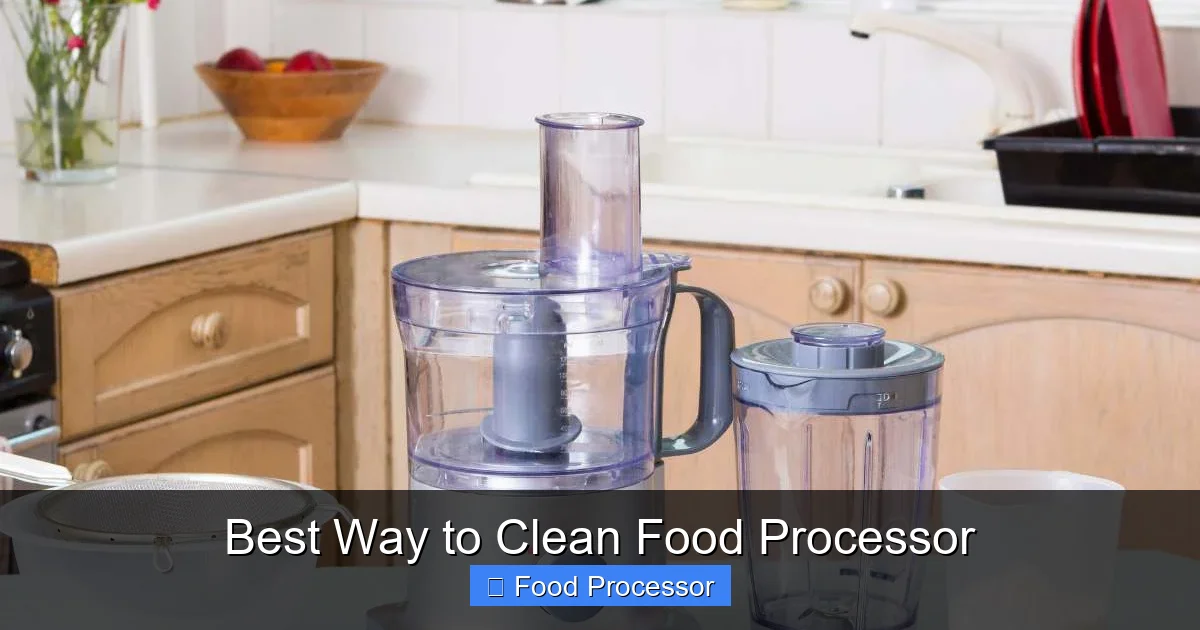
- ✦ Hold safely
Grip the center or handle area and keep fingers away from cutting edges.
- ✦ Use a soft brush
A soft brush can clean food from grooves and around the blade hub.
- ✦ Dry promptly
Dry metal parts after washing to limit prolonged exposure to moisture.
- ✦ Inspect often
Check blades and discs for damage before putting them back into service.
How to Remove Dried Food From a Blade
Do not scrape dried food with your fingers. Instead, let the removable part soak if the manufacturer’s instructions allow it, then use a soft brush or sponge to loosen the residue.
For thick dough or nut butter, patience works better than force. A short soak can soften the residue and make the part much easier to clean.
- ✦ Soften first
Use a suitable warm-water soak when allowed for that accessory.
- ✦ Brush gently
Work around the food rather than pressing hard against the cutting edge.
How to Remove Food Processor Odors and Stains
Some foods leave stronger smells than others. Garlic, onions, curry spices, herbs, and nut mixtures can leave odors in plastic bowls or lids even after normal washing. A good first step is a thorough wash with warm water and mild dish soap.
If an odor remains, use only cleaning methods that your appliance maker allows. Avoid harsh chemicals, abrasive powders, or aggressive scrubbing that can scratch plastic and create places where residue can collect.
For Food Processor Cleaning & Maintenance, prevention is often easier than odor removal. Wash strong-smelling foods soon after processing and leave clean parts fully dry before closing them for storage.
- ✦ Wash soon
Clean strong-smelling ingredients before residue has time to dry.
- ✦ Rinse well
Make sure soap and food residue are fully removed from bowls, lids, and accessories.
- ✦ Dry completely
Let clean parts dry before storing them together.
- ✦ Avoid abrasives
Harsh scrubbing can scratch surfaces and make future cleaning harder.
How to Deal With Food Stains
Colored foods such as tomato, carrot, turmeric, and some spices can leave marks on light plastic. A normal wash may not remove every stain, and a stain does not always mean the surface is dirty.
Use the care method recommended for your specific material. Avoid using a cleaning product simply because it works on another kitchen surface.
- ✦ Know the material
Plastic, metal, rubber, and coated parts may need different care.
- ✦ Avoid harsh treatment
Do not use aggressive chemicals or abrasive tools unless the manufacturer specifically approves them.
Food Processor Maintenance: What to Check Regularly
Cleaning removes food, but maintenance goes one step further. A food processor has moving and locking parts that need regular attention. A short inspection can help you find wear before it affects normal use.
Check the bowl and lid for cracks. Inspect seals for damage or poor fit. Look at blades and discs for visible wear. Also inspect the power cord and plug for damage.
The exact maintenance needs depend on the model and how often you use it. A home cook who runs a processor several times a week may need more frequent checks than someone who uses it once a month.

- ✦ Bowl
Look for cracks, chips, deep scratches, or other damage.
- ✦ Lid
Make sure the lid fits correctly and that locking parts work as intended.
- ✦ Seals
Check seals and gaskets for cracks, stretching, or poor fit.
- ✦ Blades and discs
Look for damage, bending, corrosion, or other changes that could affect safe use.
- ✦ Power cord
Check for cuts, exposed wires, damaged plugs, or other signs of electrical wear.
- ✦ Motor behavior
Pay attention to unusual noise, smell, vibration, or changes in normal operation.
How Often Should You Maintain a Food Processor?
Clean removable parts after every use. Perform a quick safety check whenever you use the machine, especially if it has been stored for a long time. Do a more careful inspection every few weeks or based on the manufacturer’s care schedule.
Heavy users should inspect parts more often. If you use the processor for dough, hard vegetables, nuts, or other demanding jobs, pay close attention to blades, discs, bowl condition, and unusual motor behavior.
- ✦ After every use
Clean food-contact parts and check for obvious residue or damage.
- ✦ Every few weeks
Inspect seals, accessories, bowl, lid, cord, and other commonly used parts.
- ✦ Before heavy use
Check the machine before demanding jobs such as kneading dough or processing hard foods.
Best Storage Practices for a Food Processor
Storage is part of Food Processor Cleaning & Maintenance because a clean machine can still develop problems if it is stored while wet or packed too tightly. Make sure all washable parts are dry before putting the processor away.
Store blades and discs in a safe place where their edges cannot cause accidental cuts. If your model has a storage case or designed accessory holder, use it when practical.
Avoid wrapping the power cord tightly around the motor base unless the manufacturer designed the base for that storage method. Keep the appliance in a dry area and avoid placing heavy items on plastic parts.
- ✦ Dry before storage
Make sure bowls, lids, blades, discs, and seals are fully dry.
- ✦ Protect sharp parts
Store blades and discs so their cutting edges are protected and easy to handle safely.
- ✦ Give parts room
Do not force accessories into spaces that can bend, crack, or deform them.
- ✦ Choose a dry place
Keep the processor away from areas with excess moisture or heat.
Should You Store the Bowl With the Lid On?
It depends on the design and your storage setup. If every part is fully dry, storing the bowl and lid together can keep dust away. However, leaving a little airflow around damp parts is better than sealing moisture inside.
If you often notice odors, make drying a priority before closing the bowl for storage. The best method is the one that keeps parts dry, clean, protected, and easy to inspect.
- ✦ For dry parts
A closed bowl can help keep dust away when all surfaces are fully dry.
- ✦ For damp parts
Allow moisture to escape before sealing parts together for long-term storage.
Common Food Processor Cleaning Mistakes to Avoid
Most cleaning problems come from a few simple mistakes. People may rush the job, use too much water, ignore hidden areas, or treat every accessory as dishwasher safe. These habits can make Food Processor Cleaning & Maintenance less effective.
The goal is not to scrub every part as hard as possible. The goal is to remove food safely while protecting the materials and electrical parts of the appliance.
When in doubt, use the manufacturer’s instructions. Food processors differ in design, materials, locking systems, seals, and dishwasher guidance, so one cleaning method does not fit every model.
- ✦ Do not wash the motor base under running water
Electrical components need protection from moisture.
- ✦ Do not grab blades by the cutting edge
Use the center or designated grip area when handling sharp accessories.
- ✦ Do not assume every part is dishwasher safe
Check the manual before using a dishwasher.
- ✦ Do not store parts while wet
Trapped moisture can contribute to odors and material problems.
- ✦ Do not ignore cracks
Replace damaged bowls, lids, seals, or accessories when the manufacturer recommends replacement.
- ✦ Do not use harsh cleaners without approval
Strong chemicals can damage surfaces, seals, coatings, or plastic parts.
When Should You Stop Using a Food Processor?
Stop using the appliance if you see a damaged power cord, exposed wire, cracked part that affects safe operation, severe blade damage, or another clear safety problem. Unusual burning smells, smoke, sudden changes in motor behavior, or repeated electrical issues also deserve attention.
Do not try to bypass a safety lock or use a damaged component just to finish a recipe. Follow the manufacturer’s instructions for replacement or service.
- ✦ Electrical damage
Stop using the machine if the cord, plug, or electrical housing shows unsafe damage.
- ✦ Severe mechanical damage
Do not operate the processor with a cracked bowl, damaged lid lock, or badly damaged blade.
- ✦ Abnormal operation
Stop and investigate unusual smoke, burning odor, noise, vibration, or repeated faults.