Food Processing Safety & Regulations: A Complete U.S. Guide
Every day, Americans eat foods that have passed through many steps before reaching a store or restaurant. A product may be washed, cut, mixed, cooked, cooled, packed, stored, and shipped. Each step can add a food safety risk if workers do not control time, temperature, hygiene, allergens, equipment, or contamination.
Food Processing Safety & Regulations provide a framework for managing those risks. In the United States, food safety duties are shared across federal, state, and local authorities. The U.S. Food and Drug Administration, U.S. Department of Agriculture, state agencies, and local health authorities each have roles that can vary by product and operation.
Good food safety work is practical. A processor needs clean equipment, safe water, trained workers, controlled temperatures, reliable suppliers, sound packaging, and clear records. The goal is not simply to pass an inspection. The goal is to build a process in which unsafe food is less likely to be made, packed, or shipped.
The most useful way to understand Food Processing Safety & Regulations is to connect the rules with the daily work of a plant. This guide explains the main U.S. rules, common hazards, preventive controls, HACCP, sanitation, allergen control, inspections, records, recalls, and steps that can help a food business stay ready for review.

What Food Processing Safety & Regulations Mean
Food Processing Safety & Regulations cover the rules and practices used to make food safe from production through distribution. They address hazards such as harmful bacteria, viruses, chemicals, foreign objects, allergens, and unsafe processing conditions.
Food safety and food quality are related, but they are not the same. Quality often deals with taste, texture, appearance, or freshness. Food safety focuses on whether the product could harm someone when made, stored, or used as intended.
For a processor, safety starts before production begins. The business must understand its hazards, choose suitable controls, train workers, maintain equipment, check results, and act when a control fails.

- ✦ Food safety
Focuses on preventing hazards that can make food unsafe or cause illness.
- ✦ Food sanitation
Covers cleaning, sanitizing, personal hygiene, pest control, and conditions that help prevent contamination.
- ✦ Regulatory compliance
Means meeting the food safety laws, regulations, permits, controls, and record duties that apply to the business.
- ✦ Preventive control
Uses planned steps to stop or reduce a known hazard before unsafe food reaches consumers.
Why Processing Creates Food Safety Risks
Processing can change food in ways that affect safety. Cutting can spread contamination. Mixing can spread an allergen through a batch. Cooking can reduce harmful microbes, while poor cooling can let some microbes grow again.
Packaging also matters. A damaged seal can expose food to contamination or reduce shelf life. Storage and transport add more risks when temperature, humidity, or handling are not controlled.
- ✦ More handling
More steps and more contact points can create more chances for contamination.
- ✦ Process changes
Heating, cooling, drying, cutting, and mixing can change how hazards behave.
- ✦ Complex supply chains
Ingredients and finished foods may move through many suppliers, warehouses, carriers, and facilities.
Who Regulates Food Processing in the United States?
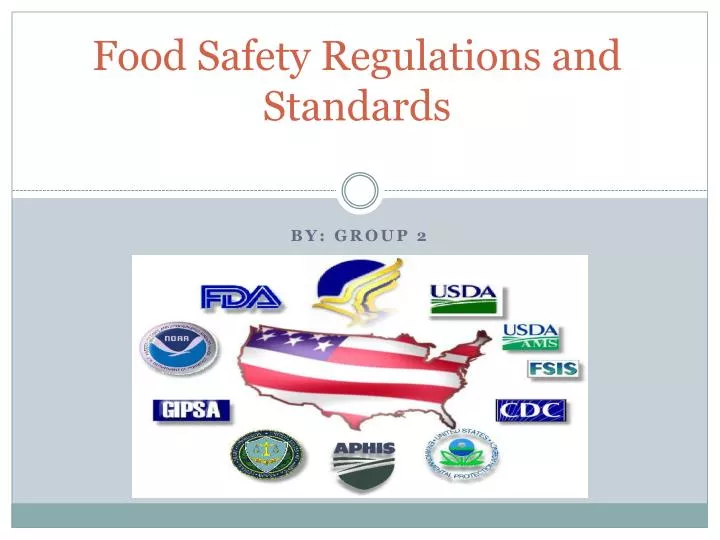
Food Processing Safety & Regulations in the United States come from more than one authority. The FDA regulates most foods, while the USDA Food Safety and Inspection Service regulates meat, poultry, and certain egg products under federal law.
State and local agencies also play important roles. A facility may need to meet state licensing rules, local sanitation requirements, building rules, water standards, or other requirements. The exact duties depend on the product, facility, location, and type of operation.
This split matters because a processor cannot assume that one federal rule covers every product. A business should identify every agency and rule that applies to its specific operation.

- ✦ FDA
The FDA oversees most foods, food ingredients, food facilities, and many food processing activities under federal food law.
- ✦ USDA FSIS
The USDA Food Safety and Inspection Service oversees regulated meat, poultry, and certain egg products.
- ✦ State agencies
State authorities may license facilities, inspect operations, and enforce state food safety rules.
- ✦ Local authorities
Local health departments may inspect certain food businesses and enforce local health requirements.
The Food Safety Modernization Act
The Food Safety Modernization Act, often called FSMA, changed the U.S. food safety system by placing greater emphasis on prevention. For many facilities covered by the rule, this means identifying known or reasonably foreseeable hazards and putting preventive controls in place.
FSMA does not apply in exactly the same way to every food business. Exemptions, modified requirements, product-specific rules, and other conditions can affect what a facility must do. A processor should check the rule that applies to its operation rather than rely on a general summary.
- ✦ Hazard analysis
The facility evaluates hazards that could affect food safety.
- ✦ Preventive controls
The facility uses suitable controls to prevent or reduce significant hazards.
- ✦ Monitoring
Workers check whether important controls operate as planned.
- ✦ Corrective action
The business responds when a control does not meet its required limit or standard.
The Main Food Safety Hazards in Processing Plants
A food processor must look for hazards before deciding how to control them. The three classic hazard groups are biological, chemical, and physical hazards. Allergens also need special attention because they can cause serious reactions in sensitive people.
Not every hazard has the same level of risk. A processor should consider how likely a hazard is to occur and how serious the harm could be. The assessment should also consider how the product is made, stored, packed, shipped, and used.
A strong hazard review follows the actual process from receiving to shipping. Walking through each step can reveal risks that may not be obvious from a written procedure alone.
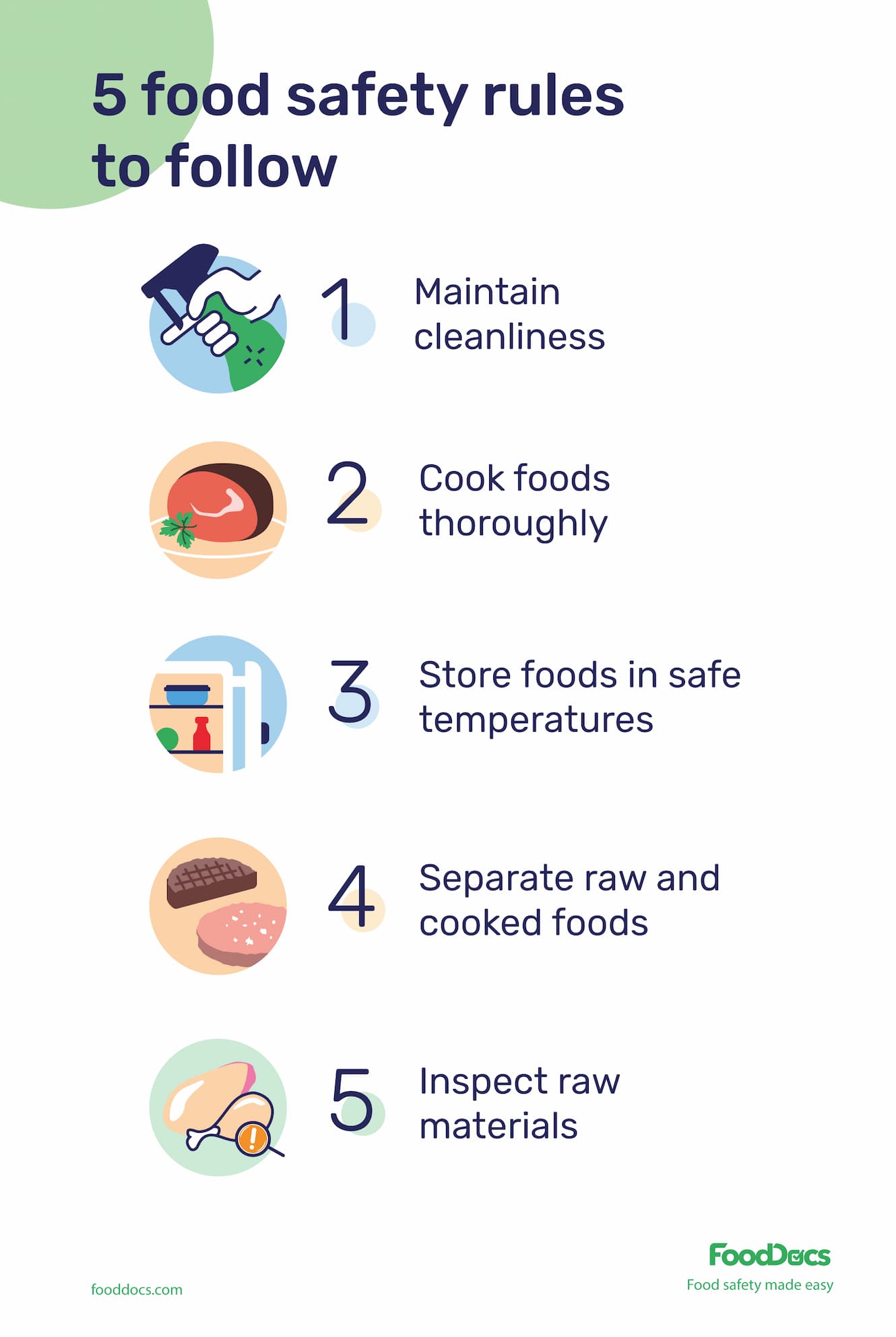
- ✦ Biological hazards
These include harmful bacteria, viruses, parasites, and some toxins made by microbes.
- ✦ Chemical hazards
These can include cleaning chemicals, lubricants, pesticides, naturally occurring toxins, and other harmful substances.
- ✦ Physical hazards
These include foreign objects such as metal, glass, hard plastic, stones, or other material that should not be in the food.
- ✦ Allergen hazards
These occur when a major food allergen is present without proper control or labeling, or when allergen cross-contact occurs.
Biological Hazards
Microbial hazards can grow or spread when food receives poor temperature control, unsafe water, poor hygiene, or inadequate processing. Common concerns include Salmonella, Listeria monocytogenes, pathogenic E. coli, and other organisms linked to foodborne illness.
Cooking can reduce many microbial hazards, but the process must achieve the needed result. Cooling, storage, and handling after cooking also matter because a safe cooking step does not protect food from later contamination.
- ✦ Time and temperature
Processors should control conditions that allow harmful microbes to grow.
- ✦ Hygiene
Workers need practices that reduce contamination from hands, clothing, tools, and illness.
Chemical and Physical Hazards
Chemical hazards can enter food through ingredients, water, cleaning products, maintenance materials, or other sources. Physical hazards may enter through damaged equipment, packaging materials, raw ingredients, or poor handling.
Supplier approval, equipment maintenance, proper chemical storage, and effective inspection steps can reduce these risks. The best control depends on the source and nature of the hazard.
- ✦ Chemical storage
Keep chemicals identified, controlled, and separated from food and food-contact materials.
- ✦ Equipment checks
Inspect equipment for wear, damage, loose parts, and materials that could enter food.
- ✦ Supplier controls
Set clear food safety requirements for ingredients and materials received from suppliers.
HACCP and Preventive Controls
HACCP stands for Hazard Analysis and Critical Control Points. It is a structured method for finding important food safety hazards and controlling them at specific points in a process.
A HACCP plan normally identifies hazards, critical control points, critical limits, monitoring methods, corrective actions, verification steps, and records. Not every food business uses HACCP in exactly the same way, and some U.S. regulations require specific HACCP systems for certain sectors.
Preventive controls under FSMA use a broader food safety framework for covered facilities. Depending on the operation, preventive controls can include process controls, allergen controls, sanitation controls, supply-chain controls, and recall plans.

- ✦ Map the process
List each important processing step from receiving through shipping.
- ✦ Analyze hazards
Identify known or reasonably foreseeable hazards linked to each step.
- ✦ Choose controls
Select controls that can prevent, eliminate, or reduce important hazards to an acceptable level.
- ✦ Set limits
Where required, define measurable limits that show whether a critical control is working.
- ✦ Monitor
Use planned checks to confirm that the process stays within required limits.
- ✦ Verify
Review records, testing, calibration, observations, or other evidence to confirm the system works.
Critical Control Points
A critical control point is a step where control is essential to prevent, eliminate, or reduce a food safety hazard. A cooking step may serve this role when a validated heat process is needed to control a microbial hazard.
A control point is not automatically a critical control point. The decision should come from the hazard analysis and the specific process. Adding too many critical points can make a system hard to manage without improving safety.
- ✦ Measure what matters
Use clear measurements such as time, temperature, pH, or another suitable process value when the hazard requires it.
- ✦ Use reliable tools
Monitoring devices should be suitable for the job and checked or calibrated as required.
Sanitation, Hygiene, and Employee Training
Sanitation is a core part of Food Processing Safety & Regulations. A plant can have a well-designed process and still create unsafe food if equipment, surfaces, water, air, or workers introduce contamination.
Cleaning removes soil and food residue. Sanitizing is a separate step that reduces microorganisms on a properly cleaned surface. The two steps work together and should follow procedures suited to the equipment, food, soil, and sanitizer.
Employee training also matters. Workers should know why a rule exists, how to follow it, what problems to report, and what to do when something goes wrong. Training should be practical and repeated when procedures or risks change.
- ✦ Personal hygiene
Workers should follow site rules for handwashing, protective clothing, illness reporting, and behavior around exposed food.
- ✦ Cleaning schedules
Written schedules should identify what must be cleaned, how often, how it is cleaned, and who performs the task.
- ✦ Sanitizer control
Use the correct sanitizer and follow the approved concentration, contact time, and use instructions.
- ✦ Pest control
Monitor for pests and address entry points, food sources, water sources, and other conditions that attract pests.
- ✦ Employee training
Train workers on food safety duties before they perform tasks that can affect food safety.
Environmental Monitoring
Some facilities use environmental monitoring to look for harmful organisms in areas around food production. This can be especially important for ready-to-eat foods and processes where contamination after a kill step could create a serious risk.
A good program does more than collect samples. It uses a planned sampling approach, defined actions for positive results, trend review, and follow-up to find and fix the source of a problem.
- ✦ Trend results
Review results over time instead of treating each sample as an isolated event.
- ✦ Find the source
When a result shows a concern, investigate the area, equipment, traffic, water, cleaning, and other possible routes.
Allergen Control and Food Labeling
Allergen control is one of the most important parts of Food Processing Safety & Regulations. In the United States, major food allergens must be declared on labels when applicable, and facilities need controls that reduce the risk of unintended allergen cross-contact.
Cross-contact can happen when shared equipment, utensils, storage areas, dust, rework, or employee movement carries an allergen into another product. A written allergen program should address these routes instead of relying only on label checks.
Label control is also a process issue. The right label must reach the right product. A wrong package or wrong ingredient statement can create a serious food safety problem even when the food itself was made correctly.
- ✦ Ingredient review
Know which ingredients contain major food allergens and keep supplier information current.
- ✦ Storage controls
Store allergen ingredients in a way that reduces spills, mix-ups, and unintended contact.
- ✦ Production order
Use a production sequence that helps reduce allergen carryover when appropriate.
- ✦ Cleaning
Use cleaning methods that are suitable for removing the allergen from shared equipment.
- ✦ Label checks
Verify that the correct package and ingredient statement are used for each product.
The Major Food Allergens
U.S. food labeling rules identify nine major food allergens: milk, egg, fish, Crustacean shellfish, tree nuts, peanuts, wheat, soybeans, and sesame. A facility should know which allergens are present in its ingredients and finished products.
Allergen rules can change, and labeling duties can depend on the product and how an ingredient is used. Processors should use current regulatory requirements when creating or reviewing labels.
- ✦ Ingredient identity
Keep accurate records for incoming ingredients and their allergen status.
- ✦ Formula control
Make sure production uses the approved formula and ingredient version.
Traceability, Records, Inspections, and Recalls
Records are a key part of Food Processing Safety & Regulations because they show what a facility did and when it did it. Good records can also help a business find the source of a problem and decide which products may be affected.
Useful records may include receiving information, processing checks, sanitation records, temperature logs, allergen checks, supplier documents, calibration records, corrective actions, employee training, and product distribution details.
Traceability helps a business follow ingredients and finished products through the supply chain. If a serious food safety problem occurs, clear records can help narrow the affected lots and support a faster, more focused response.

- ✦ Receiving records
Record key information about ingredients and materials received, including supplier and lot information when required.
- ✦ Process records
Document important process measurements and monitoring results.
- ✦ Sanitation records
Show when required cleaning and sanitation work was completed and checked.
- ✦ Corrective action records
Explain what happened, what product was affected, what action was taken, and how recurrence will be reduced.
- ✦ Distribution records
Maintain information that supports product tracing and recall activities.
What Happens During a Food Safety Inspection?
An inspection may involve a review of the facility, equipment, production practices, sanitation, records, procedures, and food safety controls. Inspectors may observe operations and ask employees how tasks are performed.
Preparation should be part of normal operations. A plant that keeps records current and follows its written procedures each day is less likely to discover major gaps only when an inspector arrives.
- ✦ Keep records current
Complete records at the time of the activity and correct errors according to approved procedures.
- ✦ Know the process
Workers should understand the food safety steps that apply to their jobs.
- ✦ Fix problems
Do not ignore small issues. Investigate recurring findings and document effective corrective action.
Food Recalls
A recall is a way to remove food from the market when it may violate the law or present a safety risk. A processor needs a written recall plan when required and should know who makes decisions, who must be contacted, how affected lots are identified, and how products are controlled.
A recall plan should be tested before a real emergency. A mock recall can reveal missing lot codes, weak distribution records, unclear responsibilities, or slow communication.
- ✦ Identify the product
Use lot, batch, date, and distribution information to define the affected product.
- ✦ Stop movement
Control affected inventory and prevent further distribution when a recall decision requires it.
- ✦ Communicate
Use the recall plan to communicate with the required parties and provide accurate product information.
How Food Processors Can Build a Strong Compliance Program
A useful compliance program should fit the real plant. A small processor may not need the same systems as a large national manufacturer, but both need controls that match their hazards and legal duties.
Start with a clear process map. Walk through receiving, storage, preparation, processing, cooling, packaging, finished product storage, and shipping. At each step, ask what could make the food unsafe and how the business controls that risk.
Then connect each control to a person, a procedure, a measurement, a record, and a corrective action. This turns Food Processing Safety & Regulations from a collection of rules into a working daily system.
- ✦ 1. Identify applicable rules
Determine which federal, state, and local requirements apply to the products, facility, and activities.
- ✦ 2. Perform a hazard analysis
Review biological, chemical, physical, allergen, and other relevant hazards at each process step.
- ✦ 3. Set preventive controls
Use process, sanitation, allergen, supply-chain, or other controls that address significant hazards.
- ✦ 4. Train employees
Give workers clear instructions and teach them how to spot and report food safety problems.
- ✦ 5. Monitor controls
Check important controls at planned times and use suitable measurement tools.
- ✦ 6. Verify the system
Review records, testing, observations, calibration, audits, and other evidence that controls work.
- ✦ 7. Correct failures
Investigate deviations, control affected food, fix the immediate issue, and address the root cause.
- ✦ 8. Review the program
Update the food safety system when products, suppliers, equipment, processes, regulations, or hazards change.
Common Compliance Mistakes
Many food safety failures come from gaps between written procedures and actual work. A procedure may look complete on paper while employees use a different method on the production floor.
Another common problem is weak follow-up. A processor may record a failed check but fail to investigate why it happened. Effective corrective action should protect the product and reduce the chance that the same failure happens again.
- ✦ Outdated procedures
Review procedures after important process, equipment, product, or regulatory changes.
- ✦ Incomplete records
Make records clear, timely, accurate, and complete enough to show what happened.
- ✦ Weak verification
Do not assume a control works simply because employees perform the task.
- ✦ Poor change control
Assess food safety effects before changing formulas, suppliers, equipment, labels, or processing steps.
Using Technology Without Losing Human Oversight
Digital systems can make food safety work easier by organizing records, sending alerts, tracking corrective actions, and showing trends. Sensors can also help monitor temperature and other process conditions.
Technology does not replace food safety judgment. A bad sensor, wrong setting, missing entry, or poorly designed alert can create false confidence. Digital tools should support a clear food safety plan, not become a substitute for one.
- ✦ Automated alerts
Use alerts to flag process values that need attention.
- ✦ Digital records
Use electronic records when they meet the applicable requirements and remain accurate and accessible.
- ✦ Trend analysis
Look for repeated sanitation, temperature, allergen, or process problems over time.
Food Processing Safety & Regulations for Consumers
Consumers also benefit from understanding how food safety works. Processed foods sold in the United States must meet applicable safety and labeling requirements, but safe handling at home still matters.
A product can leave a regulated facility safely and become unsafe if it is stored at the wrong temperature, handled with dirty hands, or exposed to cross-contamination. Consumers should follow package storage and cooking instructions and pay attention to recalls.
When a recall affects a food product, consumers should check the product name, package details, lot information, and other identifying information provided in the recall notice. Do not eat a recalled product unless the relevant authority or manufacturer clearly says it is safe to do so.
- ✦ Follow storage directions
Keep refrigerated and frozen foods at suitable temperatures and follow package instructions.
- ✦ Prevent cross-contamination
Keep raw foods separate from ready-to-eat foods and clean hands and surfaces after handling raw ingredients.
- ✦ Follow cooking directions
Use the cooking method and temperature guidance provided for the product.
- ✦ Check recalls
Pay attention to food recall notices and compare the affected product details with food at home.
Why Consumer Awareness Still Matters
Food safety is a shared chain. A processor controls many hazards before a product reaches the store, but retailers, restaurants, transporters, and consumers also affect safety after production.
Simple habits can protect that chain. Safe storage, clean hands, separation of raw and ready-to-eat foods, and proper cooking all help reduce foodborne illness risks.
- ✦ Store food safely
Use suitable refrigeration, freezing, and storage practices.
- ✦ Use food promptly
Follow package dates and storage instructions instead of keeping food under unsafe conditions.