Dishwasher Drainage & Clogging: Causes, Fixes, Prevention, and Troubleshooting Guide
Dishwasher drainage and clogging can turn a normal wash cycle into a messy problem. You may open the door and find dirty water sitting in the bottom, notice a bad smell, or see food bits left on clean dishes. In many homes, the first signs seem small, but they can point to a blocked part of the drain system.
The good news is that many Dishwasher Drainage & Clogging problems have simple causes. Food waste can collect in the filter or sump area. Grease can build up over time. A drain hose can kink or become blocked, while a poor connection to a garbage disposal can stop water from leaving the machine.
A useful service lesson is to start with the simplest checks before replacing parts. Cleaning the filter and drain area costs little and can solve many problems. If the dishwasher still will not drain, then the hose, pump, check valve, air gap, or household drain should be checked in a logical order.
What Is Dishwasher Drainage & Clogging?
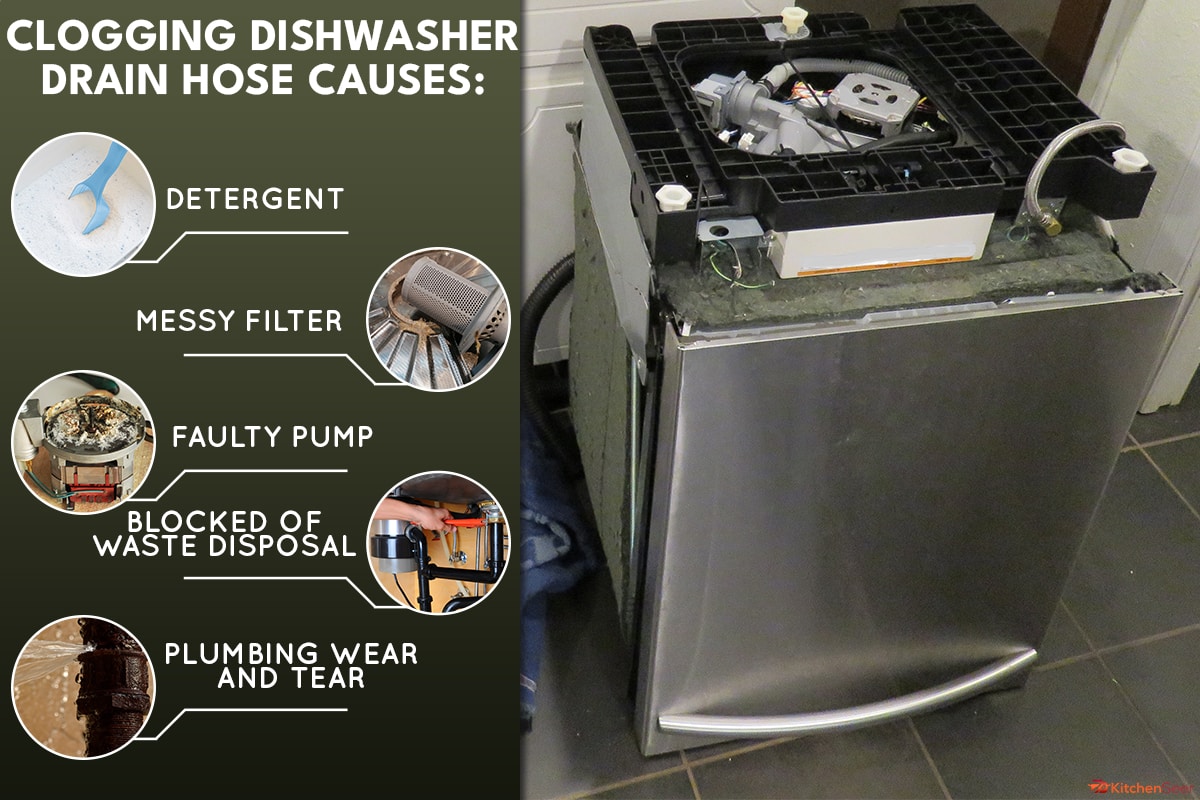
Dishwasher drainage is the process that carries used water out of the tub after a wash or rinse cycle. The water normally moves through the filter and sump area, then into the drain pump and drain hose. From there, it leaves through a garbage disposal, sink drain, air gap, or other approved plumbing connection.
Dishwasher Drainage & Clogging happens when this path becomes partly or fully blocked. A small amount of water may drain slowly at first. A complete blockage can leave a pool of dirty water in the bottom of the tub.
Not every small amount of water means there is a fault. Some dishwasher designs leave a small amount of water below the filter area to keep seals from drying out. However, water that covers the filter or remains dirty after the cycle can signal a drainage problem.
- ✦ Normal drainage
Used water leaves the tub through the filter, sump, pump, and drain hose before reaching the household drain.
- ✦ Partial clog
Water drains, but it takes too long. You may also notice odors, dirty water, or poor cleaning.
- ✦ Full clog
Water stays in the tub because a major part of the drain path is blocked or the pump cannot move the water.
How the Dishwasher Drain System Works
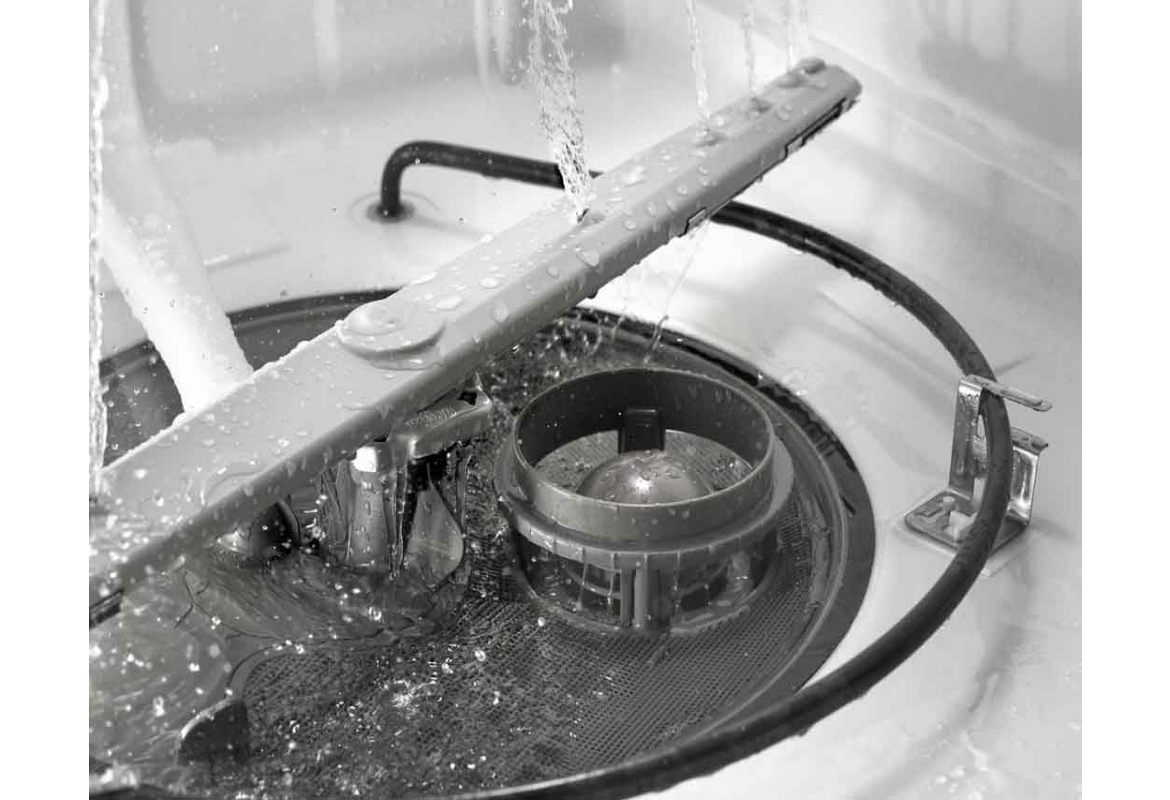
During the drain part of a cycle, the drain pump pushes used water away from the tub. The filter helps stop larger food particles from reaching parts that should stay clear. The drain hose then carries the water to the home’s drain connection.
The exact layout varies by dishwasher model. Some homes also have a countertop air gap, while others use a high drain loop under the sink. Knowing your setup makes Dishwasher Drainage & Clogging easier to troubleshoot.
- ✦ Filter
Catches food particles and other debris before they reach the drain system.
- ✦ Sump and drain pump
The sump collects water near the bottom, while the pump moves it out of the dishwasher.
- ✦ Drain hose
Carries wastewater from the dishwasher toward the household drain.
- ✦ Drain connection
The final connection may lead to a garbage disposal, sink drain, air gap, or other approved plumbing point.
Common Causes of Dishwasher Drainage & Clogging
A dishwasher can stop draining for several reasons. The most common ones involve debris, buildup, poor hose routing, or a blocked drain connection. In some cases, the problem is mechanical rather than a simple clog.
Start with the areas that are easy to reach. If the filter is packed with food or the drain opening is covered with debris, cleaning those parts may restore normal drainage. If they are clear, move outward through the drain path.

- ✦ Dirty or blocked filter
Food particles can cover the filter and slow the flow of wastewater.
- ✦ Food debris in the sump
Small bones, labels, seeds, broken glass, and food scraps can collect near the drain opening.
- ✦ Blocked drain hose
Grease, debris, or a foreign object can restrict the hose. A kink can also limit water flow.
- ✦ Blocked air gap
If your kitchen uses an air gap, debris inside it can stop dishwasher water from reaching the drain.
- ✦ Garbage disposal connection
A clogged disposal connection can prevent the dishwasher from draining. A newly installed disposal can also cause trouble if its dishwasher drain inlet knockout plug was not removed.
- ✦ Drain pump blockage
A foreign object can interfere with the pump impeller or stop the pump from moving water.
- ✦ Kinked drain hose
A hose that bends sharply under the sink can reduce or stop wastewater flow.
- ✦ Household drain blockage
A blocked sink drain or plumbing line can affect the dishwasher because both systems may share a drain path.
Why Food Debris Causes So Many Problems
Modern dishwashers can handle small amounts of food residue, but that does not mean large food scraps should enter the machine. Rice, pasta, bones, labels, fruit pits, seeds, and other hard debris can collect around the filter or sump.
Grease can also stick to parts of the drain system. Over time, grease and food particles can form a thick layer that reduces water flow. This is one reason a dishwasher may drain well after cleaning but slowly again after several weeks.
- ✦ Scrape large scraps
Remove large pieces of food from plates before loading them.
- ✦ Keep labels out
Paper labels can come loose from jars and may collect in the filter or drain area.
- ✦ Clean the filter
A clean filter gives food debris less chance to build up around the drain.
Signs Your Dishwasher Has a Drainage Problem
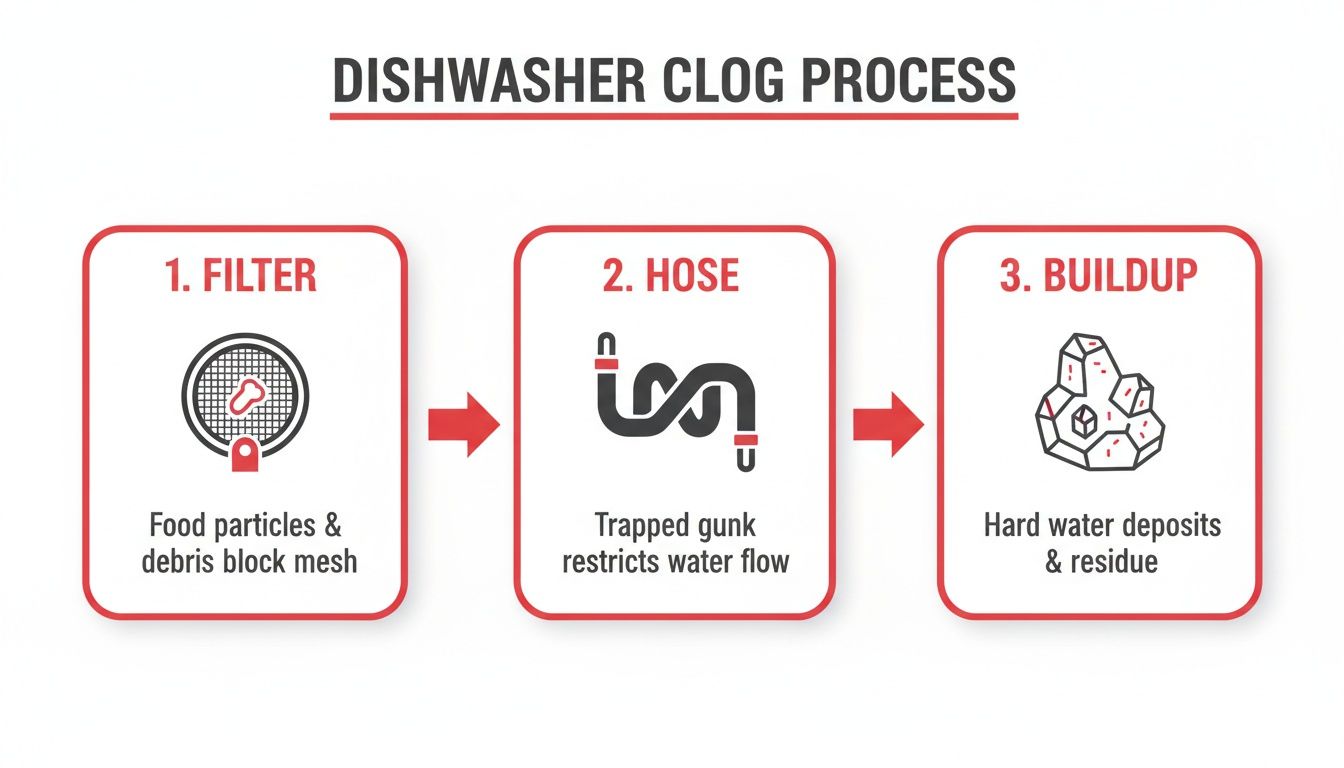
A dishwasher does not always stop draining without warning. Early signs can include slow drainage, dirty water, unpleasant smells, or water that returns to the tub. Paying attention to these signs can help you fix the issue before it becomes a larger problem.
Dishwasher Drainage & Clogging can also affect cleaning results. If dirty water cannot leave the machine, fresh rinse water may become contaminated. That can leave spots, food particles, or a stale smell on dishes.
- ✦ Standing water
A noticeable pool of dirty water remains in the bottom after the cycle ends.
- ✦ Slow draining
Water eventually leaves the tub, but the process takes longer than normal.
- ✦ Bad smell
Trapped food and dirty water can create a strong or sour odor.
- ✦ Dirty dishes
Food particles may remain on dishes because dirty water is not leaving the machine correctly.
- ✦ Gurgling sounds
Unusual gurgling can occur when water moves through a restricted drain path.
- ✦ Drain error
Some dishwashers display a drain-related error code when the machine detects a problem.
- ✦ Water backing up
Water may rise in the sink or return toward the dishwasher when the shared drain path is blocked.
When Standing Water Is a Warning
A small amount of clean water may remain in some dishwasher designs. The concern is water that sits above the normal sump area, looks dirty, smells bad, or remains after repeated drain cycles.
Before assuming the pump has failed, inspect the filter and drain area. These simple checks can save time and may prevent an unnecessary part replacement.
- ✦ Check the water level
Look at where the water sits in relation to the filter and sump area.
- ✦ Check the filter
Remove visible food and wash the filter according to the appliance instructions.
- ✦ Run a drain cycle
After cleaning, test the dishwasher and watch whether water leaves the tub normally.
How to Safely Unclog a Dishwasher
Before working on Dishwasher Drainage & Clogging, turn off the dishwasher. If you need to reach electrical parts, disconnect power at the plug or circuit breaker. Wear gloves when removing food waste or checking the drain area because broken glass and sharp debris can hide under water.
Use a simple process and test the dishwasher after each major step. Do not remove parts unless you know how they fit back together. Your owner’s manual is the best guide for model-specific instructions.

- ✦ 1. Remove standing water
Use a cup and container to remove dirty water from the tub. A sponge can help with the last small amount.
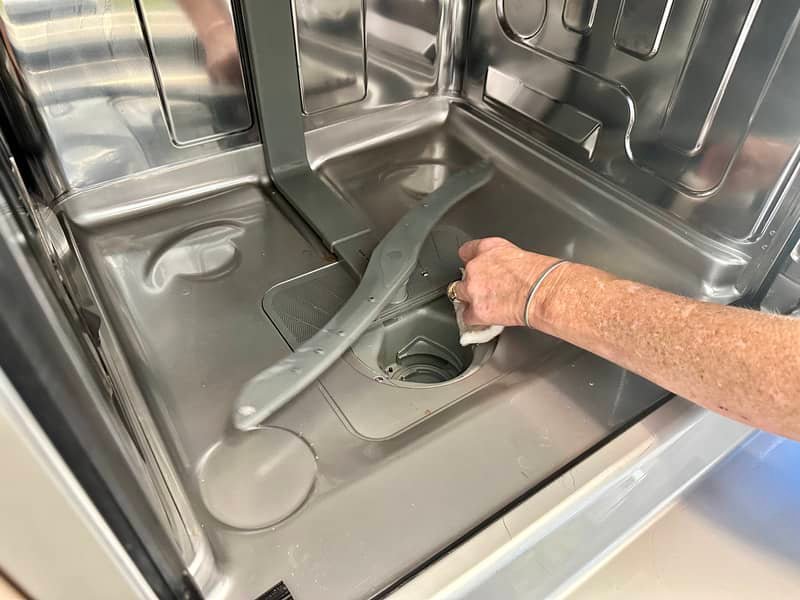
- ✦ 2. Remove and clean the filter
Take out the filter if your model allows it. Rinse it with warm water and gently remove trapped food.
- ✦ 3. Inspect the drain opening
Look for food, labels, glass, or other objects near the sump and drain area.
- ✦ 4. Check the drain hose
Look under the sink for sharp bends, kinks, crushing, or visible blockage.
- ✦ 5. Check the drain connection
Inspect the garbage disposal, sink connection, or air gap if your dishwasher uses one.
- ✦ 6. Test the dishwasher
Restore power and run a short cycle or drain function. Watch and listen for normal water flow.
Cleaning the Dishwasher Filter
The filter is one of the first places to check during Dishwasher Drainage & Clogging troubleshooting. Turn the filter as directed by the manufacturer and lift it out carefully. Rinse away food and grease with warm water, then reinstall it securely.
Do not use a sharp tool to damage the filter mesh. If the filter has cracks, broken sections, or heavy damage, check the manufacturer’s replacement part information.
- ✦ Use warm water
Warm water helps loosen greasy food residue from the filter.
- ✦ Use a soft brush
A soft brush can help remove debris without damaging the filter.
- ✦ Lock it back in place
A filter that is not seated correctly may allow debris into the drain system.
Checking the Drain Hose
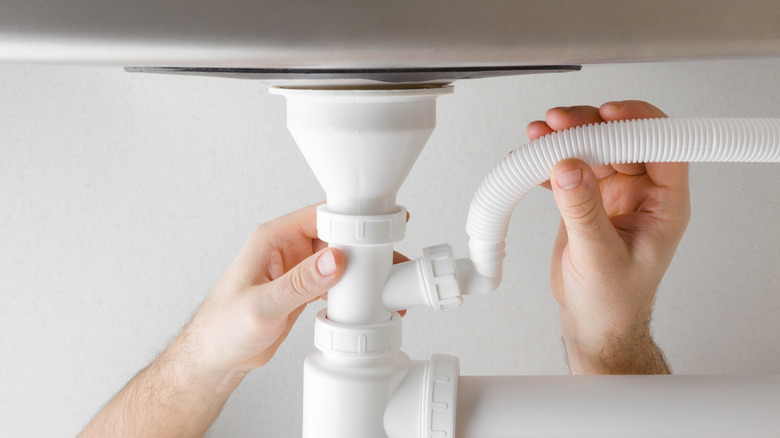
The drain hose runs from the dishwasher toward the sink or disposal connection. Look for a sharp bend, crushed section, or loose connection. If you need to disconnect the hose, place a container underneath because trapped water may spill out.
Some dishwasher installations use a high loop or air gap to help prevent dirty sink water from flowing back into the appliance. Follow the installation instructions for your specific model rather than changing the hose route at random.
- ✦ Look for kinks
A tight bend can restrict water flow even when the hose looks clean.
- ✦ Check connections
A loose or poorly fitted connection can cause leaks or drainage problems.
- ✦ Inspect before flushing
Do not force debris deeper into the hose with a sharp object.
How to Check the Garbage Disposal and Air Gap
In many U.S. kitchens, the dishwasher drain hose connects to the garbage disposal. This makes the disposal connection an important part of Dishwasher Drainage & Clogging troubleshooting. If the disposal is clogged, the dishwasher may not drain properly.
If a new garbage disposal was recently installed, check that the dishwasher drain inlet knockout plug was removed when required. A dishwasher can be fully functional but still fail to drain if that plug remains in place.
Some homes use an air gap mounted near the sink faucet. If the air gap is blocked with food debris, water may back up or spill from the air gap instead of reaching the drain.
- ✦ Check the disposal
Make sure the disposal drain path is clear before blaming the dishwasher.
- ✦ Check a new disposal
Confirm the dishwasher inlet was prepared correctly during installation.
- ✦ Inspect the air gap
If your kitchen has an air gap, clean visible debris and follow its cleaning instructions.
- ✦ Watch for sink backup
Water backing up in the sink can point to a shared household drain restriction.
Dishwasher Connected to a Garbage Disposal
A dishwasher drain hose often enters a port on the garbage disposal. If that path is blocked, dishwasher water can stay in the tub. A disposal that drains poorly can therefore look like a dishwasher problem.
Run the disposal only when it is safe to do so and follow the disposal manufacturer’s instructions. Never put your hand into a disposal to search for an object.
- ✦ Shared drain path
The dishwasher and disposal may rely on the same plumbing route.
- ✦ Recent installation
A recent disposal replacement makes the dishwasher inlet plug an important check.
Dishwasher Drain Pump Problems
If the filter, drain area, hose, and household drain are clear, the drain pump deserves attention. The pump is the part that moves wastewater out of the dishwasher. A blocked impeller can stop drainage, while a failed pump may make unusual noises or fail to move water.
Pump access varies by model. Some designs make inspection easier, while others require more disassembly. Because electrical and water connections are involved, follow the manufacturer’s service instructions or use a qualified appliance technician when the pump needs to be removed.
Do not assume that a noisy dishwasher needs a new pump. A small foreign object can create noise or stop the impeller from turning correctly. A proper inspection can separate a simple blockage from an actual pump failure.
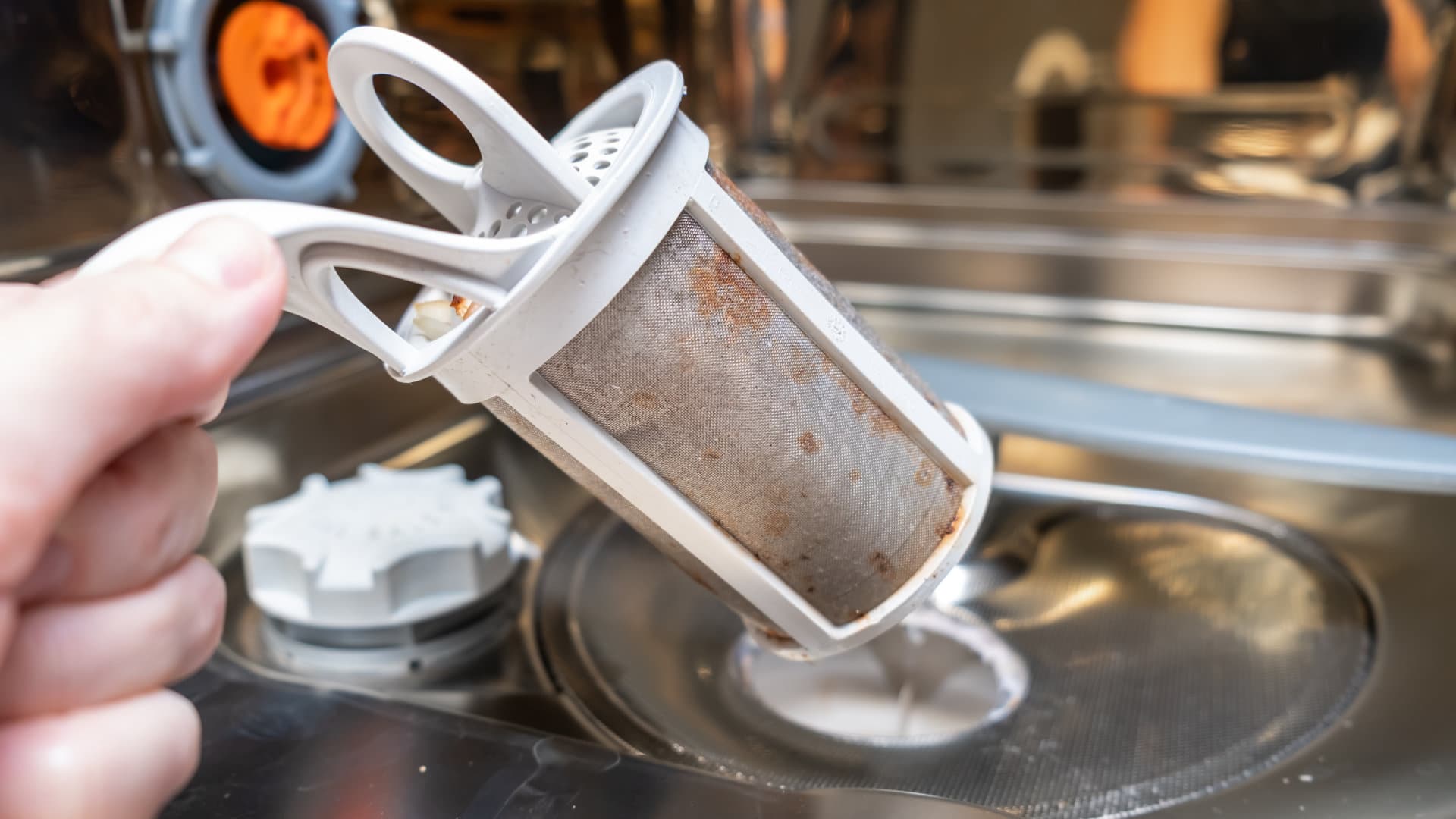
- ✦ Foreign object
Glass, plastic, labels, or hard food debris can interfere with the pump.
- ✦ Pump blockage
A blocked impeller can reduce or stop wastewater flow.
- ✦ Pump failure
An electrical or mechanical fault can prevent the pump from moving water.
- ✦ Unusual noise
Grinding, humming, or other new sounds can be a reason to inspect the drain system.
When a Professional Should Check the Pump
Call an appliance professional if basic cleaning does not solve the issue and the dishwasher still leaves substantial standing water. Professional help also makes sense when the pump requires electrical testing or significant disassembly.
Stop using the dishwasher if it leaks onto the floor, produces a burning smell, trips the electrical breaker, or shows signs of damaged wiring. These problems need more than routine Dishwasher Drainage & Clogging maintenance.
- ✦ Electrical issue
Burning smells, damaged wires, or repeated breaker trips should be handled by a qualified professional.
- ✦ Persistent blockage
Repeated clogs after proper cleaning may point to a deeper mechanical or plumbing problem.
- ✦ Water leak
A leak from the dishwasher or drain connection should be addressed before more cycles are run.
Dishwasher Drainage & Clogging Prevention
Prevention is easier than repeated unclogging. A few simple habits can keep the drain path cleaner and help the dishwasher work as designed. The goal is not to make dishes perfectly clean before loading them, but to keep large food waste and problem debris out of the machine.
A regular filter check is one of the easiest maintenance steps. The right cleaning interval depends on how often you run the dishwasher and how much food residue enters it, so inspect the filter when you notice debris, odor, or slower drainage.
- ✦ Scrape large food scraps
Remove bones, fruit pits, large pieces of food, and other hard debris before loading.
- ✦ Clean the filter
Inspect and rinse the filter as recommended by the dishwasher manufacturer.
- ✦ Keep labels out
Remove loose paper labels from jars and containers before washing them.
- ✦ Load dishes correctly
Avoid blocking the filter or spray arms with large dishes and cookware.
- ✦ Check the drain area
Look for visible debris when cleaning the filter.
- ✦ Inspect the hose
Check under the sink for kinks or crushed sections after plumbing work.
- ✦ Keep the disposal drain clear
If the dishwasher connects to the disposal, keep that shared drain path working properly.
How Often Should You Clean a Dishwasher Filter?
There is no single schedule that fits every home. A household that runs the dishwasher often and leaves more food residue on plates may need to inspect the filter more often than a household with lighter use.
Check your owner’s manual first because filter designs differ. As a practical habit, inspect the filter when you notice food debris, odor, poor cleaning, or slower drainage.
- ✦ High-use homes
Inspect the filter more often when the dishwasher runs frequently.
- ✦ Visible debris
Clean the filter when food particles collect on or around it.
- ✦ Odor or slow drainage
Use these changes as signs that the filter and drain area deserve inspection.
Mistakes That Can Make Dishwasher Clogs Worse
Some quick fixes can create new problems. Dishwasher Drainage & Clogging is best handled with gentle cleaning and a clear troubleshooting process. Avoid forcing objects into hoses or drain openings because you may damage seals, pumps, or hoses.
Strong chemical drain cleaners are also a poor first choice for a dishwasher. They may not solve the actual blockage and can create chemical hazards or damage appliance components. Use the cleaning methods listed by the dishwasher manufacturer.
- ✦ Using harsh drain chemicals
Do not treat the dishwasher like a household sink unless the appliance manufacturer specifically allows the product.
- ✦ Pushing debris deeper
Sharp tools can damage plastic parts, hoses, seals, or pump components.
- ✦ Ignoring the filter
Replacing a pump without checking a dirty filter can waste money and leave the real cause untouched.
- ✦ Ignoring a kinked hose
A simple hose restriction can mimic a more serious pump problem.
- ✦ Running repeated cycles with standing water
Repeated cycles can leave more dirty water in the machine and may increase the risk of leaks or odors.
- ✦ Removing parts without instructions
Model-specific parts can break or fit incorrectly if removed without the correct procedure.
Why Chemical Drain Cleaners Are Not a Good First Step
A dishwasher drain problem is not the same as a simple sink clog. The dishwasher contains seals, plastic components, filters, pumps, and other parts that may not tolerate strong drain chemicals.
If a chemical product is already inside the dishwasher, avoid mixing it with another cleaner. Follow the product label and appliance manufacturer’s safety guidance before doing anything else.
- ✦ Protect appliance parts
Use manufacturer-approved cleaning methods instead of guessing which chemicals are safe.
- ✦ Avoid chemical mixing
Never combine drain cleaners, bleach, vinegar, or other cleaners unless the instructions clearly permit it.
When Dishwasher Drainage & Clogging Needs Professional Help
Many simple clogs can be handled with basic cleaning. But a dishwasher that keeps failing to drain after the filter, drain area, hose, and drain connection are clear may need professional diagnosis.
Professional help is especially useful when the problem involves the drain pump, wiring, internal plumbing, or a blocked household drain. A technician can test the parts instead of replacing them based only on symptoms.
The cost of a repair depends on the appliance model, failed part, labor, and local service rates. For an older dishwasher, it can also help to compare the expected repair cost with the condition and age of the appliance before deciding what to do.
- ✦ The dishwasher still will not drain
Basic cleaning and hose checks have not restored normal drainage.
- ✦ The pump may be faulty
The dishwasher hums, makes unusual sounds, or fails to move water despite a clear drain path.
- ✦ There is an active leak
Water reaches the floor or leaks from a hose, pump, seal, or connection.
- ✦ Electrical symptoms appear
Burning smells, damaged wires, sparks, or repeated breaker trips require professional attention.
- ✦ The household drain is blocked
If the sink and dishwasher both drain poorly, the problem may be in the home’s plumbing rather than the dishwasher.
A Simple Troubleshooting Order
A logical order prevents wasted work. Start inside the dishwasher, then move toward the hose and household drain. If every visible part is clear but the problem remains, investigate the pump or call a professional.
This approach also helps explain the problem to a technician. You can tell them what you checked and whether the dishwasher makes a normal drain sound, which can speed up diagnosis.
- ✦ Step 1
Check for standing water and remove it safely.
- ✦ Step 2
Clean the filter and inspect the sump area.
- ✦ Step 3
Check the drain hose for kinks or visible blockage.
- ✦ Step 4
Check the air gap, garbage disposal, and drain connection.
- ✦ Step 5
Test the dishwasher and listen for unusual pump sounds.
- ✦ Step 6
Seek professional service if the problem remains or safety concerns appear.